Link Copied!
Augustus De Morgan Quotes (1806-1871)
Mathematician








About Augustus De Morgan
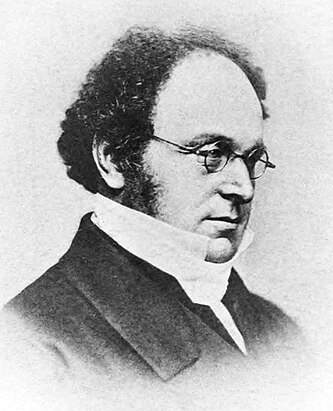
Augustus De Morgan (June 27 1806 – March 18 1871) was an Indian-born British mathematician and logician; he was the first professor of mathematics at University College London. He formulated De Morgan's laws and was the first to introduce the term, and make rigorous the idea of mathematical induction. De Morgan crater on the Moon is named after him.
Best Augustus De Morgan Quotes
Shortest
Earliest
Explore our curated collection of the most famous and impactful Augustus De Morgan quotes.
“A large quantity of examples is indispensable.”
“I did not hear what you said, but I absolutely disagree with you.”
“The moving power of mathematical invention is not reasoning, but imagination.”


“During the last two centuries and a half, physical knowledge has been gradually made to rest upon a basis which it had not before. It has become mathematical.”

“I will not, from henceforward, talk to any squarer of the circle, trisector of the angle, duplicator of the cube, constructor of perpetual motion, subverter of gravitation, stagnator of the earth, builder of the universe, etc.”
“If much difficulty should be experienced in the elementary chapters, I know of no work which I can so confidently recommend to be used with the present one, as that of M. Duhamel.”
“All existing things upon this earth, which have knowledge of their own existence, possess, some in one degree and some in another, the power of thought, accompanied by perception, which is the awakening of thought by the effects of external objects upon the senses.”
“The absolute requisites for the study of this work... are a knowledge of algebra to the binomial at least, plane and solid geometry, plane trigonometry, and the most simple part of the usual applications of algebra to geometry.
...A. De Morgan. London July 1, 1836”
...A. De Morgan. London July 1, 1836”

“There never has been, and till we see it we never shall believe that there can be, a system of geometry worthy of the name, which has any material departures (we do not speak of corrections or extensions or developments) from the plan laid down by Euclid''.”

“The manner in which a paradoxer will show himself, as to sense or nonsense, will not depend upon what he maintains, but upon whether he has or has not made a sufficient knowledge of what has been done by others, especially as to the mode of doing it, a preliminary to inventing knowledge for himself.”
“We know that mathematicians care no more for logic than logicians for mathematics. The two eyes of exact science are mathematics and logic: the mathematical sect puts out the logical eye, the logical sect puts out the mathematical eye; each believing that it can see better with one eye than with two.”
“Spinoza's Philosophia Scripturæ Interpres, Exercitatio Paradoxa, printed anonymously ...is properly paradox, though also heterodox. It supposes, contrary to all opinion, orthodox and heterodox, that philosophy can... explain the Athanasian doctrine so as to be at least compatible with orthodoxy. The author would stand almost alone, if not quite; and this is what he meant.”
“I cannot see why it is necessary that every deduction from algebra should be bound to certain conventions incident to an earlier stage of mathematical learning, even supposing them to have been consistently used up to the point in question. I should not care if any one thought this treatise unalgebraical, but should only ask whether the premises were admissible and the conclusions logical.”
“Aspiring to lead others, they have never given themselves the fair chance of being first led by other others into something better than they can start for themselves; and that they should first do this is what both those classes of others have a fair right to expect. New knowledge... must come by contemplation of old knowledge... mechanical contrivance sometimes, not very often, escapes this rule.”
“In every age of the world there has been an established system, which has been opposed from time to time by isolated and dissentient reformers. The established system has sometimes fallen, slowly and gradually: it has either been upset by the rising influence of some one man, or it has been sapped by gradual change of opinion in the many.”

“I... subjoin references to those parts of the work for which I have not been indebted to my knowledge of what has been written before me: much of what is cited is probably not new, indeed it is dangerous for any one at the present day to claim anything as belonging to himself; several things which I once thought to have entered in this list have been since found (either by myself, or by a friend to whom I referred it) in preceding writers.”
“Modern discoveries have not been made by large collections of facts, with subsequent discussion, separation, and resulting deduction of a truth thus rendered perceptible. A few facts have suggested an hypothesis, which means a supposition, proper to explain them. The necessary results of this supposition are worked out, and then, and not till then, other facts are examined to see if their ulterior results are found in nature.”
“The number of mathematical students, increased as it has been of late years, would be much augmented if those who hold the highest rank in science would condescend to give more effective assistance in clearing the elements of the difficulties which they present. If any one claiming that title should think my attempt obscure or enormus, he must share the blame with me, since it is through his neglect that I have been enabled to avail myself of an opportunity to perform a task which I would gladly have seen confided to more skilful hands.”
“The Object of this Treatise is—(1) To point out to the student of Mathematics, who has not the advantage of a tutor, the course of study which it is most advisable that he should follow, the extent to which he should pursue one part of the science before he commences another, and to direct him as to the sort of applications which he should make. (2) To treat fully of the various points which involve difficulties and which are apt to be misunderstood by beginners, and to describe at length the nature without going into the routine of the operations.”
“Experience has convinced me that the proper way of teaching is to bring together that which is simple from all quarters, and, if I may use such a phrase, to draw upon the surface of the subject a proper mean between the line of closest connexion and the line of easiest deduction. This was the method followed by Euclid, who, fortunately for us, never dreamed of a geometry of triangles, as distinguished from a geometry of circles, or a separate application of the arithmetics of addition and subtraction; but made one help out the other as he best could.”
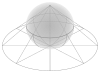
“I have throughout introduced the Integral Calculus in connexion with the Differential Calculus. ...Is it always proper to learn every branch of a direct subject before anything connected with the inverse relation is considered? If so why are not multiplication and involution in arithmetic made to follow addition and precede subtraction? The portion of the Integral Calculus, which properly belongs to any given portion of the Differential Calculus increases its power a hundred-fold...”

“There is a mistake into which several have fallen, and have deceived others, and perhaps themselves, by clothing some false reasoning in what they called a mathematical dress, imagining that by the application of mathematical symbols to their subject, they secured mathematical argument. This could not have happened if they had possessed a knowledge of the bounds within which the empire of mathematics is contained. That empire is sufficiently wide, and might have been better known, had the time which has been wasted in aggressions upon the domains of others, been spent in exploring the immense tracts which are yet untrodden.”

Augustus De Morgan Quotes by Topic
Find exactly what you are looking for by browsing this categorized list of Augustus De Morgan quotes by topic.
Augustus De Morgan on Euclid’s Elements 5 quotes
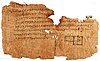
“The sacred writings excepted, no Greek has been so much read and so variously translated as Euclid.”
Augustus De Morgan on History of calculus 3 quotes
“I have throughout introduced the Integral Calculus in connexion with the Differential Calculus. ...Is it always proper to learn every branch of a direct subject before anything connected with the inverse relation is considered? If so why are not multiplication and involution in arithmetic made to follow addition and precede subtraction? The portion of the Integral Calculus, which properly belongs to any given portion of the Differential Calculus increases its power a hundred-fold...”

Augustus De Morgan on Mathematics 2 quotes
“We know that mathematicians care no more for logic than logicians for mathematics. The two eyes of exact science are mathematics and logic: the mathematical sect puts out the logical eye, the logical sect puts out the mathematical eye; each believing that it can see better with one eye than with two.”
Augustus De Morgan on Deductive reasoning 2 quotes
“I cannot see why it is necessary that every deduction from algebra should be bound to certain conventions incident to an earlier stage of mathematical learning, even supposing them to have been consistently used up to the point in question. I should not care if any one thought this treatise unalgebraical, but should only ask whether the premises were admissible and the conclusions logical.”
Augustus De Morgan on History of algebra 2 quotes
“The following Treatise... has been endeavoured to make the theory of limits, or ultimate ratios... the sole foundation of the science, without any aid whatsoever from the theory of series, or algebraical expansions. I am not aware that any work exists in which this has been avowedly attempted, and I have been the more encouraged to make the trial from observing that the objections to the theory of limits have usually been founded either upon the difficulty of the notion itself, or its unalgebraical character, and seldom or never upon anything not to be defined or not to be received in the conception of a limit...”

Augustus De Morgan on Mathematics education 2 quotes
“Although there is no study which presents so simple a beginning as that of geometry, there is none in which difficulties grow more rapidly as we proceed, and what may appear at first rather paradoxical, the more acute the student the more serious will the impediments in the way of his progress appear. This necessarily follows in a science which consists of reasoning from the very commencement, for it is evident that every student will feel a claim to have his objections answered, not by authority, but by argument, and that the intelligent student will perceive more readily than another the force of an objection and the obscurity arising from an unexplained difficulty, as the greater is the ordinary light the more will occasional darkness be felt. To remove some of these difficulties is the principal object of this Treatise.”

Augustus De Morgan on History of mathematics 2 quotes
“The late Professor Leslie... [i]n his Philosophy of Arithmetic... entered... into much of its history. ...[O]ne principal, thing to be cautious of is, his almost monomaniac antipathy to every thing Hindoo—a most unfortunate turn... Leslie... generalises... fearfully every now and then. He informs us that it was the practice throughout Europe to reduce the rules of arithmetic to memorial verses, and that [William] Buckley's Arithmetica Memorativa appears at one period to have gained possession of the schools and colleges of England. Now the truth... the verses attributed to Sacrobosco had never... been printed when Leslie wrote; and Buckley... was printed only once... and two or three times as an appendix to a work on logic. Dr. Peacock expresses the truth in saying... before the invention of printing, the practice of writing memorial verses was common, as appears by manuscript libraries. ...[H]ad the practice of using them been common, the presses of the fifteenth and sixteenth centuries would have given them forth in great numbers. But I cannot learn that any metrical work was printed in the fifteenth century, except the Compotus of [Magister] Anianus, and that only once.”

Augustus De Morgan on The Bible
Augustus De Morgan on Integration
“Common integration is only the memory of differentiation... The artifices by which it [integration] is effected, are changes, not from the unknown to the known, but from the forms in which memory will not serve to those in which it will”
Augustus De Morgan on Fleas
Augustus De Morgan on Infinity
Augustus De Morgan on Insect suffering
What Augustus De Morgan Said About Others
Discover personal opinions Augustus De Morgan shared regarding contemporaries.
Augustus De Morgan on Euclid
“There never has been, and till we see it we never shall believe that there can be, a system of geometry worthy of the name, which has any material departures (we do not speak of corrections or extensions or developments) from the plan laid down by Euclid.”

Augustus De Morgan on Gregory St. Vincent
“Gregory St. Vincent is the greatest of circle-squarers, and his investigations led him into many truths: he found the property of the arc of the hyperbola which led to Napier's logarithms being called hyperbolic. Montucla says of him, with sly truth, that no one ever squared the circle with so much genius, or, excepting his principal object, with so much success.”

Augustus De Morgan on Joseph Louis Lagrange
“Lagrange, in one of the later years of his life, imagined that he had overcome the difficulty [of the parallel axiom]. He went so far as to write a paper, which he took with him to the Institute, and began to read it. But in the first paragraph something struck him which he had not observed : he muttered II faut que fy songe encore, and put the paper in his pocket.”

Augustus De Morgan on Jean-Étienne Montucla
“Montucla says, speaking of France, that he finds three notions prevalent among cyclometers: 1. That there is a large reward offered for success; 2. That the longitude problem depends on that success; 3. That the solution is the great end and object of geometry. The same three notions are equally prevalent among the same class in England. No reward has ever been offered by the government of either country. The longitude problem hi no way depends upon perfect solution; existing approximations are sufficient to a point of accuracy far beyond what can be wanted. And geometry, content with what exists, has long passed on to other matters. Sometimes a cyclometer persuades a skipper who has made land in the wrong place that the astronomers are at fault, for using a wrong measure of the circle; and the skipper thinks it a very comfortable solution! And this is the utmost that the problem has to do with longitude.”

Quotes About Augustus De Morgan
Gain deeper perspective through quotes about Augustus De Morgan from others.
E. W. Hobson on Augustus De Morgan
“A very interesting detailed account of the peculiarities of the circle squarer, and of the futility of the attempts on the part of the Mathematicians to convince him of his errors, will be found in Augustus De Morgan's Budget of Paradoxes.”

Cecil J. Monro on Augustus De Morgan
“The fact is known that having very thoroughly worked at the generalisations of Mathematics in theory and practice, Mr. De Morgan was enabled to establish with perfect precision the most highly generalised conception of Logic, perhaps, which it is possible to entertain. It is no new doctrine that Logic deals with the necessary laws of action of thought, and that Mathematics apply these laws to necessary matter of thought; but by showing that these laws can and must be applied with equal precision and equal necessity to all kinds of relations, and not only to those which the Aristotelian theory takes account of, he so enlarged the scope and intensified the power of Logic as an instrument, that we may hope for coming generations, as he must have hoped... another instalment of the kind... Mathematics are, meanwhile, and perhaps will always remain, the completest and most accurate example of the generalised Logic. At any rate, in the mind of the author, Logic and Mathematics as 'the two great branches of exact science, the study of the necessary laws of thought, the study of the necessary matter of thought, were always viewed in connection and antithesis.”
Sophia Elizabeth De Morgan on Augustus De Morgan
“Dr. George Boole, author of The Laws of Thought had introduced himself in the year 1842 to Mr. De Morgan by a letter on the Differential and Integral Calculus then recently published. His character and pursuits were in many points like those of the author who found great pleasure in his correspondence and friendship. ...In 1847, his attention having been drawn to the subject by the publication of Mr. De Morgan's Formal Logic, he published the Mathematical Analysis of Logic and in the following year communicated... a paper on the Calculus of Logic. His great work, An Investigation into the Laws of Thought... was a development of the principle laid down in the Calculus...”
About Augustus De Morgan
Augustus De Morgan (June 27 1806 – March 18 1871) was an Indian-born British mathematician and logician; he was the first professor of mathematics at University College London. He formulated De Morgan's laws and was the first to introduce the term, and make rigorous the idea of mathematical induction. De Morgan crater on the Moon is named after him.