Dr. George Boole, author of The Laws of Thought had introduced himself in the year 1842 to Mr. De Morgan by a letter on the Differential and Integral Calculus then recently published. His character and pursuits were in many points like those of the author who found great pleasure in his correspondence and friendship. ...In 1847, his attention having been drawn to the subject by the publication of Mr. De Morgan's Formal Logic, he published the Mathematical Analysis of Logic and in the following year communicated... a paper on the Calculus of Logic. His great work, An Investigation into the Laws of Thought... was a development of the principle laid down in the Calculus...
What It Means
This is a placeholder explanation generated by the low-overhead model. It interprets "Dr. George Boole, author of The Laws of Thought had introduced himself in the year 1842 to Mr. De Morgan by a letter on the Differential and Integral Calculus then recently published. His character and pursuits were in many points like those of the author who found great pleasure in his correspondence and friendship. ...In 1847, his attention having been drawn to the subject by the publication of Mr. De Morgan's Formal Logic, he published the Mathematical Analysis of Logic and in the following year communicated... a paper on the Calculus of Logic. His great work, An Investigation into the Laws of Thought... was a development of the principle laid down in the Calculus..." in the context of "Sophia Elizabeth De Morgan, Memoir of Augustus De Morgan (1882) Section VII. From 1846-1855" to mean that wisdom is timeless.
Tags
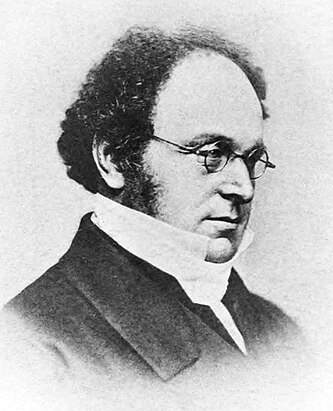
About Augustus De Morgan