Link Copied!
Ambrose Quotes (340-397)





























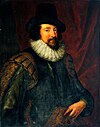





































































































































































About Ambrose
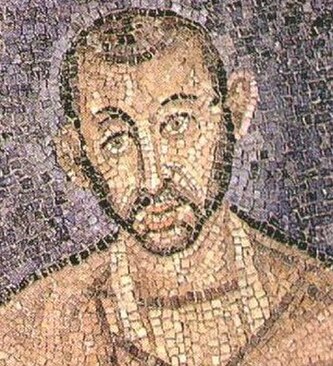
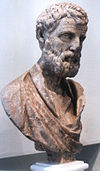
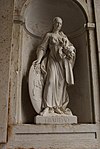
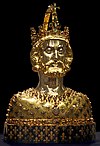
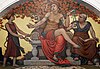
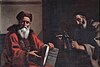
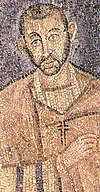
Saint Ambrose, Latin: Sanctus Ambrosius, "Ambrosius episcopus Mediolanensis"; Italian: Sant'Ambrogio; Lombard: Sant'Ambroeus) (c. 340 – 4 April 397), bishop of Milan (Mediolanum in Latin), was one of the most eminent bishops of the 4th century. Together with Augustine of Hippo, Jerome, and Gregory I, he is counted as one of the four doctors of the West of antique church history.
Best Ambrose Quotes
Shortest
Earliest
Explore our curated collection of the most famous and impactful Ambrose quotes.


“Si fueris Romae, Romano vivito more;
Si fueris alibi, vivito sicut ibi.”
Si fueris alibi, vivito sicut ibi.”
“Sed non solum locum Ecclesiae zelare debemus, sed hanc quoque interiorem in nobis domum Dei; ne sit domus negotiationis, aut spelunca latronum.”
“Neither angel, nor archangel, nor yet even the Lord Himself (who alone can say "I am with you"), can, when we have sinned, release us, unless we bring repentance with us.”


“"You are not making a gift of what is yours to the poor man, but you are giving him back what is his. You have been appropriating things that are meant to be for the common use of everyone. The earth belongs to everyone, not to the rich."”
“Quid autem aliud Ioannes nisi honestatem consideravit? ut inhonestas nuptias etiam in rege non posset perpeti, dicens: Non licet tibi illam uxorem habere. Potuit tacere, nisi indecorum sibi iudicasset mortis metu verum non dicere, inclinare regi propheticam auctoritatem, adulationem subtexere. Sciebat utique moriturum se esse, quia regi adversabatur: sed honestatem saluti praetulit. Et tamen quid utilius quam quod passionis viro sancto advexit gloriam?”
“Christ has taken obedience upon Himself, obedience even to taking on Him our flesh, the cross even to gaining our salvation. Thus where the work lies, there too is the Author of the work. When therefore, all things have become subject to Christ, through Christ's obedience, so that all bend their knees in His name, then He Himself will be all in all. For now, since all do not believe, all do not seem to be in subjection. But when all have believed and done the will of God, then Christ will be all and in all. And when Christ is all and in all, then will God be all and in all (1 Cor 15:28); for the Father abides ever in the Son.”
“How far, O rich, do you extend your senseless avarice? Do you intend to be the sole inhabitants of the earth? Why do you drive out the fellow sharers of nature, and claim it all for yourselves? The earth was made for all, rich and poor, in common. Why do you rich claim it as your exclusive right? The soil was given to the rich and poor in common—wherefore, oh, ye rich, do you unjustly claim it for yourselves alone? Nature gave all things in common for the use of all; usurpation created private rights. Property hath no rights. The earth is the Lord's, and we are his offspring. The pagans hold earth as property. They do blaspheme God.”

“Ante agnus offerebatur, offerebatur et vitulus, nunc Christus offertur...et offert se ipse quasi sacerdos, ut peccata nostra dimittat. Hic in imagine, ibi in veritate, ubi apud Patrem pro nobis quasi advocatus intervenit.
• Alternate translation: In old times a lamb, a Calf was offered; now Christ is offered. But He is offered as man and as enduring suffering. And He offers Himself as a priest to take away our sins, here in an image, there in truth, where with the Father He intercedes for us as our Advocate. http://www.newadvent.org/fathers/34011.htm”
• Alternate translation: In old times a lamb, a Calf was offered; now Christ is offered. But He is offered as man and as enduring suffering. And He offers Himself as a priest to take away our sins, here in an image, there in truth, where with the Father He intercedes for us as our Advocate. http://www.newadvent.org/fathers/34011.htm”
Ambrose Quotes by Topic
Find exactly what you are looking for by browsing this categorized list of Ambrose quotes by topic.
Ambrose on Politics 4 quotes
View all 4 quotes on Politics →Ambrose on Reason 3 quotes
View all 3 quotes on Reason →Ambrose on Pork 3 quotes
“LITIGATION, n. A machine which you go into as a pig and come out of as a sausage.”
Ambrose on Friendship 2 quotes
“BEFRIEND, v.t. To make an ingrate.”

Ambrose on Lying 2 quotes
“LIAR, n. A lawyer with a roving commission.”

Ambrose on United States Congress 2 quotes
“CONGRESS, n. A body of men who meet to repeal laws.”

Ambrose on Homeopathy 2 quotes
“HOMOEOPATHIST, n. The humorist of the medical profession.”

Ambrose on Ghosts 2 quotes
“GHOST, n. The outward and visible sign of an inward fear.”
Ambrose on Mice 2 quotes
“MOUSE, n. An animal which strews its path with fainting women.”

Ambrose on Begging 2 quotes
“BEGGAR, n. One who has relied on the assistance of his friends.”

Ambrose on President of the United States 2 quotes
View all 2 quotes on President of the United States →Ambrose on Clergy 2 quotes
“ARCHBISHOP, n. An ecclesiastical dignitary one point holier than a bishop.”
Ambrose on Beauty 2 quotes
View all 2 quotes on Beauty →Ambrose on Lawsuit 2 quotes
“LITIGATION, n. A machine which you go into as a pig and come out of as a sausage.”
Ambrose on Sauce 2 quotes
“MAYONNAISE, n.: One of the sauces that serve the French in place of a state religion.”

Ambrose on Marriage 2 quotes
“Marriage, n. A community consisting of a master, a mistress, and two slaves, making in all, two.”

Ambrose on Syllogism 2 quotes
“SYLLOGISM, n. A logical formula consisting of a major and a minor assumption and an inconsequent.”

Ambrose on Wit 2 quotes
“WIT, n. The salt with which the American humorist spoils his intellectual cookery by leaving it out.”

Ambrose on Public speaking 2 quotes
“LECTURER, n. One with his hand in your pocket, his tongue in your ear and his faith in your patience.”

Ambrose on Justice 2 quotes
“Men were singing the praises of Justice.
“Not so loud,” said an angel; “if you wake her she will put you all to death.””
Ambrose on Magic (supernatural) 2 quotes
“MAGIC, n. An art of converting superstition into coin. There are other arts serving the same high purpose, but the discreet lexicographer does not name them.”
Ambrose on Man 2 quotes
“MALE, n. A member of the unconsidered, or negligible sex. The male of the human race is commonly known (to the female) as Mere Man. The genus has two varieties: good providers and bad providers.”

Ambrose on Property 2 quotes
“Nature gave all things in common for the use of all; usurpation created private rights. Property hath no rights. The earth is the Lord's, and we are his offspring. The pagans hold earth as property. They do blaspheme God.”

Ambrose on Werewolves 2 quotes
“WEREWOLF, n. A wolf that was once, or is sometimes, a man. All werewolves are of evil disposition, having assumed a bestial form to gratify a beastial appetite, but some, transformed by sorcery, are as humane as is consistent with an acquired taste for human flesh.”

Ambrose on Insanity 2 quotes
“Mad, adj. Affected with a high degree of intellectual independence; not conforming to standards of thought, speech, and action derived by the conformants from study of themselves; at odds with the majority; in short, unusual. It is noteworthy that persons are pronounced mad by officials destitute of evidence that they themselves are sane.”
What Ambrose Said About Others
Discover personal opinions Ambrose shared regarding contemporaries.
Ambrose on Robert G. Ingersoll
“No images nor idols make For Robert Ingersoll to break.”

Ambrose on Wives
Ambrose on Queen
“QUEEN, n. A woman by whom the realm is ruled when there is a king, and through whom it is ruled when there is not.”
Ambrose on Stephen Crane
“This young man has the power to feel. He knows nothing of war, yet he is drenched in blood. Most beginners who deal with this subject spatter themselves merely with ink.”

Ambrose on William Cowper, 1st Earl Cowper
Ambrose on Walt Whitman
“Incompossible, adj. Unable to exist if something else exists. Two things are incompossible when the world of being has scope enough for one of them, but not enough for both—as Walt Whitman's poetry and God's mercy to man.”

Ambrose on Politicians
“POLITICIAN, n. An eel in the fundamental mud upon which the superstructure of organized society is reared. When he wriggles he mistakes the agitation of his tail for the trembling of the edifice. As compared with the statesman, he suffers the disadvantage of being alive.”

Ambrose on Thomas Robert Malthus
“MALTHUSIAN, adj. Pertaining to Malthus and his doctrines. Malthus believed in artificially limiting population, but found that it could not be done by talking. One of the most practical exponents of the Malthusian idea was Herod of Judea, though all the famous soldiers have been of the same way of thinking.”

Ambrose on Michel de Montaigne
“The most offensive egotist is he that fears to say "I" and "me." "It will probably rain "—that is dogmatic. "I think it will rain"—that is natural and modest. Montaigne is the most delightful of essayists because so great is his humility that he does not think it important that we see not Montaigne. He so forgets himself that he employs no artifice to make us forget him.”

Ambrose on René Descartes
“CARTESIAN, adj. Relating to Descartes, a famous philosopher, author of the celebrated dictum, Cogito ergo sum -- whereby he was pleased to suppose he demonstrated the reality of human existence. The dictum might be improved, however, thus: Cogito cogito ergo cogito sum -- "I think that I think, therefore I think that I am;" as close an approach to certainty as any philosopher has yet made.”

Ambrose on Maiden
“MAIDEN, n. A young person of the unfair sex addicted to clewless conduct and views that madden to crime. The genus has a wide geographical distribution, being found wherever sought and deplored wherever found. The maiden is not altogether unpleasing to the eye, nor (without her piano and her views) insupportable to the ear, though in respect to comeliness distinctly inferior to the rainbow, and, with regard to the part of her that is audible, bleating out of the field by the canary — which, also, is more portable.”
About Ambrose
Saint Ambrose, Latin: Sanctus Ambrosius, "Ambrosius episcopus Mediolanensis"; Italian: Sant'Ambrogio; Lombard: Sant'Ambroeus) (c. 340 – 4 April 397), bishop of Milan (Mediolanum in Latin), was one of the most eminent bishops of the 4th century. Together with Augustine of Hippo, Jerome, and Gregory I, he is counted as one of the four doctors of the West of antique church history.
QuotesCosmos Cross-Civilizational Archive
Explore Related Wisdom Pillars, Worldviews & Canonical Works
Discover how humanity's greatest philosophers, sacred scriptures, and literary masterpieces address the core questions of existence.
30 Wisdom Pillars
22 Worldviews & Traditions
Canonical Books & Scriptures