Link Copied!
Alexander the Great Quotes (-356--323)
King
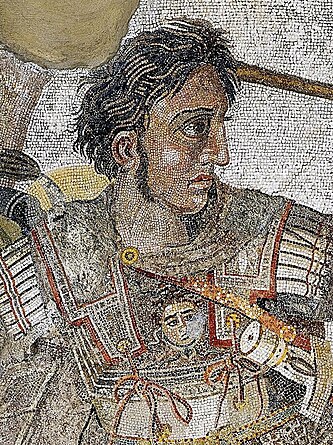




About Alexander the Great
Alexander III of Macedon (20/21 July 356 BC – 11 June 323 BC), commonly known as Alexander the Great, was a Macedonian king who ruled the kingdom of Macedon. He succeeded his father King Philip II to the throne at the age of 20, and spent most of his ruling years conducting a lengthy military campaign throughout Western Asia and Northeastern Africa. By the age of thirty, he had created one of the largest empires in history, stretching from Greece to northwestern India. He was undefeated in battle and is widely considered to be one of history's greatest and most successful military commanders.
Best Alexander the Great Quotes
Shortest
Earliest
Explore our curated collection of the most famous and impactful Alexander the Great quotes.

Orison Swett Marden's 1896 self-help book uses this powerful phrase to inspire readers to overcome challenges, even when facing seemingly insurmountable obstacles, like storming a fortress.
“There is nothing impossible to him who will try.”


“Are you still to learn that the end and perfection of our victories is to avoid the vices and infirmities of those whom we subdue?”
“Shall I pass by and leave you lying there because of the expedition you led against Greece, or shall I set you up again because of your magnanimity and your virtues in other respects?”

Attributed to Alexander the Great, this remark, documented in Brewer's dictionary, highlights his focus on generosity and leadership rather than personal gain.
“I consider not what Parmenion should receive, but what Alexander should give.
• Variant: It is not what Parmenio should receive, but what Alexander should give.”
Alexander the Great, justifying his invasion of Persia, accuses Darius III's ancestors of historical aggression against Greece, positioning himself as avenger and conqueror.
“Your ancestors came to Macedonia and the rest of Hellas [Greece] and did us great harm, though we had done them no prior injury. I have been appointed leader of the Greeks, and wanting to punish the Persians I have come to Asia, which I took from you.”

“Now you fear punishment and beg for your lives, so I will let you free, if not for any other reason so that you can see the difference between a Greek king and a barbarian tyrant, so do not expect to suffer any harm from me. A king does not kill messengers.”
“Youths of the Pellaians and of the Macedonians and of the Hellenic Amphictiony and of the Lakedaimonians and of the Corinthians... and of all the Hellenic peoples, join your fellow-soldiers and entrust yourselves to me, so that we can move against the barbarians and liberate ourselves from the Persian bondage, for as Greeks we should not be slaves to barbarians.”
“Holy shadows of the dead, I'm not to blame for your cruel and bitter fate, but the accursed rivalry which brought sister nations and brother people, to fight one another. I do not feel happy for this victory of mine. On the contrary, I would be glad, brothers, if I had all of you standing here next to me, since we are united by the same language, the same blood and the same visions.”
Alexander the Great reportedly uttered this retort, contrasting pragmatic counsel with his ambition, when Parmenion advised accepting a generous peace offering from Darius III after the Battle of Issus.
“So would I, if I were Parmenion.
• As quoted in Lives by Plutarch, after Parmenion suggested to him after the Battle of Issus that he should accept Darius III of Persia's offer of an alliance, the hand of his daughter in marriage, and all Minor Asia, saying "If I were Alexander, I would accept the terms" (Variant translation: I would accept it if I were Alexander).”
“Dinocrates, I appreciate your design as excellent in composition, and I am delighted with it, but I apprehend that anybody who should found a city in that spot would be censured for bad judgement. For as a newborn babe cannot be nourished without the nurse's milk, nor conducted to the approaches that lead to growth in life, so a city cannot thrive without fields and the fruits thereof pouring into its walls.”
“If it were not my purpose to combine barbarian things with things Hellenic, to traverse and civilize every continent, to search out the uttermost parts of land and sea, to push the bounds of Macedonia to the farthest Ocean, and to disseminate and shower the blessings of the Hellenic justice and peace over every nation, I should not be content to sit quietly in the luxury of idle power, but I should emulate the frugality of Diogenes. But as things are, forgive me Diogenes, that I imitate Herakles, and emulate Perseus, and follow in the footsteps of Dionysos, the divine author and progenitor of my family, and desire that victorious Hellenes should dance again in India and revive the memory of the Bacchic revels among the savage mountain tribes beyond the Kaukasos...”
“Our enemies are Medes and Persians, men who for centuries have lived soft and luxurious lives; we of Macedon for generations past have been trained in the hard school of danger and war. Above all, we are free men, and they are slaves. There are Greek troops, to be sure, in Persian service — but how different is their cause from ours! They will be fighting for pay — and not much of at that; we, on the contrary, shall fight for Greece, and our hearts will be in it. As for our foreign troops — Thracians, Paeonians, Illyrians, Agrianes — they are the best and stoutest soldiers in Europe, and they will find as their opponents the slackest and softest of the tribes of Asia. And what, finally, of the two men in supreme command? You have Alexander, they — Darius!”
Alexander the Great Quotes by Topic
Find exactly what you are looking for by browsing this categorized list of Alexander the Great quotes by topic.
Alexander the Great on Barbarian 3 quotes
“Now you fear punishment and beg for your lives, so I will let you free, if not for any other reason so that you can see the difference between a Greek king and a barbarian tyrant, so do not expect to suffer any harm from me. A king does not kill messengers.”
Alexander the Great on Messenger
“A king does not kill messengers.”
Alexander the Great on Pleasure
Alexander the Great on Greece
Refusing peace, Alexander the Great justifies his invasion of Persia by framing it as retribution for historical wrongs committed against Greece by Darius's ancestors.
“Your ancestors came to Macedonia and the rest of Hellas and did us great harm, though we had done them no prior injury. I have been appointed leader of the Greeks, and wanting to punish the Persians I have come to Asia, which I took from you.”
- Alexander the Great, A)

Alexander the Great on Ancient Greece
Alexander the Great, justifying his invasion of Persia in a letter to Darius III, asserts a right to retribution for past Persian aggression against Greece.
“Your ancestors came to Macedonia and the rest of Hellas and did us great harm, though we had done them no prior injury. I have been appointed leader of the Greeks, and wanting to punish the Persians I have come to Asia, which I took from you.”

What Alexander the Great Said About Others
Discover personal opinions Alexander the Great shared regarding contemporaries.
Alexander the Great on Diogenes of Sinope
Alexander the Great on Xerxes I
“Shall I pass by and leave you lying there because of the expedition you led against Greece, or shall I set you up again because of your magnanimity and your virtues in other respects?”

Quotes About Alexander the Great
Gain deeper perspective through quotes about Alexander the Great from others.
Abu'l-Fazl Bayhaqi on Alexander the Great
“What is the purpose of adventuring around the world? A king must be an administrator. ... Alexander was a man full of great sound, lighting, and thunderbolt; [he was] like a cloud in spring or summer, which passed over the kings of the earth, rained upon them, and disappeared—indeed a summer's cloud disappears very soon [saying italicized].”
Arrian on Alexander the Great
“Alexander sacrificed to the gods to whom it was his custom to sacrifice, and gave a public banquet, seated all the Persians, and then any persons from the other peoples who took precedence for rank or any other high quality, and he himself and those around him drank from the same bowl and poured the same libations, with the Greek soothsayers and Magi initiating the ceremony. Alexander prayed for various blessings and especially that the Macedonians and Persians should enjoy harmony as partners in government. The story prevails that those who shared the banquet were nine thousand and that they all poured the same libation and gave the one victory cry as they did.”
Dio Chrysostom on Alexander the Great
“[Diogenes speaking to Alexander] “Now perhaps you kings are also doing something like that: each of you has playmates — the eager followers on his side — he [Darius] his Persians and the other peoples of Asia, and you [Alexander] your Macedonians and the other Greeks.””

Historia Alexandri Magni on Alexander the Great
““Demades said that Xerxes fortified the sea with his ships, covered the land with his armies, concealed the sky with his weapons, and filled Persia with Greek prisoners. And now justly the barbarian is praised by Athenians because he took captive Greeks, but Alexander, a Greek, and leading Greeks, did not take captive those arrayed against him.[...]No one of the Greek kings went to Egypt except Alexander alone, and he went, not to make war, but to consult an oracle as to where he should found a city which would forever bear his name.[...]So Alexander was the first of the Greeks to take Egypt, and so became the first both of Greeks and of barbarians.””
Justice being taken away on Alexander the Great
Augustine of Hippo illustrates the hypocrisy of earthly power through a captured pirate's defiant retort to Alexander the Great, equating empire-building with large-scale robbery lacking justice.
English Translation: "Without justice, what are kingdoms but great robberies? [...] For elegantly and truthfully a certain pirate who had been captured replied to that Alexander the Great. For when the same king asked the man what it seemed to him to hold the sea in terror, he replied with free defiance: 'What seems to you to do to the whole world; but because I do it with a small boat, I am called a robber; because you do it with a large fleet, you are called an emperor.'"
Original (Latin): "Remota itaque iustitia quid sunt regna nisi magna latrocinia? [...] Eleganter enim et ueraciter Alexandro illi Magno quidam comprehensus pirata respondit. Nam cum idem rex hominem interrogaret, quid ei uideretur, ut mare haberet infestum, ille libera contumacia: Quod tibi, inquit, ut orbem terrarum; sed quia ego exiguo nauigio facio, latro uocor; quia tu magna classe, imperator."
“Remota itaque iustitia quid sunt regna nisi magna latrocinia? [...] Eleganter enim et ueraciter Alexandro illi Magno quidam comprehensus pirata respondit. Nam cum idem rex hominem interrogaret, quid ei uideretur, ut mare haberet infestum, ille libera contumacia: Quod tibi, inquit, ut orbem terrarum; sed quia ego exiguo nauigio facio, latro uocor; quia tu magna classe, imperator.”
Original (Latin): "Remota itaque iustitia quid sunt regna nisi magna latrocinia? [...] Eleganter enim et ueraciter Alexandro illi Magno quidam comprehensus pirata respondit. Nam cum idem rex hominem interrogaret, quid ei uideretur, ut mare haberet infestum, ille libera contumacia: Quod tibi, inquit, ut orbem terrarum; sed quia ego exiguo nauigio facio, latro uocor; quia tu magna classe, imperator."







Disputed Quotes
Quotes attributed to Alexander the Great that are questionable.
“There are no more worlds to conquer!
• This may originate from Plutarch's essay On the Tranquility of Mind, part of the essays Moralia, with the opposite intended meaning: Alexander wept when he heard Anaxarchus discourse about an infinite number of worlds, and when his friends inquired what ailed him, "Is it not worthy of tears," he said, "that, when the number of worlds is infinite, we have not yet become lords of a single one?" http://penelope.uchicago.edu/Thayer/E/Roman/Texts/Plutarch/Moralia/De_tranquillitate_animi*.html”
• This may originate from Plutarch's essay On the Tranquility of Mind, part of the essays Moralia, with the opposite intended meaning: Alexander wept when he heard Anaxarchus discourse about an infinite number of worlds, and when his friends inquired what ailed him, "Is it not worthy of tears," he said, "that, when the number of worlds is infinite, we have not yet become lords of a single one?" http://penelope.uchicago.edu/Thayer/E/Roman/Texts/Plutarch/Moralia/De_tranquillitate_animi*.html”
About Alexander the Great
Alexander III of Macedon (20/21 July 356 BC – 11 June 323 BC), commonly known as Alexander the Great, was a Macedonian king who ruled the kingdom of Macedon. He succeeded his father King Philip II to the throne at the age of 20, and spent most of his ruling years conducting a lengthy military campaign throughout Western Asia and Northeastern Africa. By the age of thirty, he had created one of the largest empires in history, stretching from Greece to northwestern India. He was undefeated in battle and is widely considered to be one of history's greatest and most successful military commanders.