• I should prefer an army of stags led by a lion, to an army of lions led by a stag.
• Attributed to Chabrias, who died around the time Alexander was born, thus his is the earliest life to whom such assertions have been attributed; as quoted in A Treatise on the Defence of Fortified Places (1814) by Lazare Carnot, p. 50
• An army of stags led by a lion would be better than an army of lions led by a stag.
• Attributed to Chabrias, A History of Ireland (1857) by Thomas Mooney, p. 760
• An army of stags led by a lion is superior to an army of lions led by a stag.
• Attributed to Chabrias, The New American Cyclopaedia : A Popular Dictionary of General Knowledge (1863), Vol. 4, p. 670
• An army of sheep led by a lion are more to be feared than an army of lions led by a sheep.
• Attributed to Chabrias, The Older We Get, The Better We Were, Marine Corps Sea Stories (2004) by Vince Crawley, p. 67
• It is better to have sheep led by a lion than lions led by a sheep.
• Attributed to Polybius in Between Spenser and Swift: English Writing in Seventeenth Century Ireland (2005) by Deana Rankin, p. 124, citing A Contemporary History of Affairs in Ireland, from 1641 to 1652 (1880) by John Thomas Gilbert Vol. I, i, p. 153 - 157; but in The Histories, which does talk of Alexander the Great, there is only a single reference to lions, and this is largely attributed to Sosibius, even noting that the king (Alexander) wasn't involved in the discussion but only the party of Sosibius; and the idea is not much related to the quote, which is instead the lion and the flock could not safely share the same stall. Polybius, Histories. Book 5, Chapter 35.
• An army composed of sheep but led by a lion is more powerful than an army of lions led by a sheep.
• "Proverb" quoted by Agostino Nifo in De Regnandi Peritia (1523) as cited in Machiavelli - The First Century: Studies in Enthusiasm, Hostility, and Irrelevance (2005) by Mathew Thomson, p. 55
• Greater is an army of sheep led by a lion, than an army of lions led by a sheep.
• Attributed to Daniel Defoe (c. 1659 - 1731)
• I am more afraid of one hundred sheep led by a lion than one hundred lions led by a sheep.
• Attributed to Charles Maurice de Talleyrand-Périgord (1754 – 1838) Variants: I am more afraid of an army of 100 sheep led by a lion than an army of 100 lions led by a sheep.
I am not afraid of an army of one hundred lions led by a sheep. I am afraid of army of 100 sheeps led by a lion.
• Variants quoted as an anonymous proverb:
Better a herd of sheep led by a lion than a herd of lions led by a sheep.
A flock of sheep led by a lion was more powerful than a flock of lions led by a sheep.
An army of sheep led by a lion would defeat an army of lions led by a sheep.
It were better to have an army of sheep led by a lion than an army of lions led by a sheep.
An army of sheep led by a lion, will defeat an army of lions led by a sheep.
An army of sheep led by a lion would be superior to an army of lions led by a sheep.
Unsourced attribution to Alexander: I would not fear a pack of lions led by a sheep, but I would always fear a flock of sheep led by a lion.
• As one lion overcomes many people and as one wolf scatters many sheep, so likewise will I, with one word, destroy the peoples who have come against me.
• This slightly similar statement is the only quote relating to lions in The History of Alexander the Great, Being the Syriac Version of the Pseudo-Callisthenes (1889) as translated by E. A. Wallis Budge, but it is attributed to Nectanebus (Nectanebo II).
An army of sheep led by a lion is better than an army of lions led by a sheep.
What It Means
This is a placeholder explanation generated by the low-overhead model. It interprets "An army of sheep led by a lion is better than an army of lions led by a sheep." in the context of "Attributed to Alexander, as quoted in The British Battle Fleet: Its Inception and Growth Throughout the Centuries to the Present Day (1915) by Frederick Thomas Jane, but many variants of similar statements exist which have been attributed to others, though in research done for Wikiquote definite citations of original documents have not yet been found for any of them:
• I should prefer an army of stags led by a lion, to an army of lions led by a stag.
• Attributed to Chabrias, who died around the time Alexander was born, thus his is the earliest life to whom such assertions have been attributed; as quoted in A Treatise on the Defence of Fortified Places (1814) by Lazare Carnot, p. 50
• An army of stags led by a lion would be better than an army of lions led by a stag.
• Attributed to Chabrias, A History of Ireland (1857) by Thomas Mooney, p. 760
• An army of stags led by a lion is superior to an army of lions led by a stag.
• Attributed to Chabrias, The New American Cyclopaedia : A Popular Dictionary of General Knowledge (1863), Vol. 4, p. 670
• An army of sheep led by a lion are more to be feared than an army of lions led by a sheep.
• Attributed to Chabrias, The Older We Get, The Better We Were, Marine Corps Sea Stories (2004) by Vince Crawley, p. 67
• It is better to have sheep led by a lion than lions led by a sheep.
• Attributed to Polybius in Between Spenser and Swift: English Writing in Seventeenth Century Ireland (2005) by Deana Rankin, p. 124, citing A Contemporary History of Affairs in Ireland, from 1641 to 1652 (1880) by John Thomas Gilbert Vol. I, i, p. 153 - 157; but in The Histories, which does talk of Alexander the Great, there is only a single reference to lions, and this is largely attributed to Sosibius, even noting that the king (Alexander) wasn't involved in the discussion but only the party of Sosibius; and the idea is not much related to the quote, which is instead the lion and the flock could not safely share the same stall. Polybius, Histories. Book 5, Chapter 35.
• An army composed of sheep but led by a lion is more powerful than an army of lions led by a sheep.
• "Proverb" quoted by Agostino Nifo in De Regnandi Peritia (1523) as cited in Machiavelli - The First Century: Studies in Enthusiasm, Hostility, and Irrelevance (2005) by Mathew Thomson, p. 55
• Greater is an army of sheep led by a lion, than an army of lions led by a sheep.
• Attributed to Daniel Defoe (c. 1659 - 1731)
• I am more afraid of one hundred sheep led by a lion than one hundred lions led by a sheep.
• Attributed to Charles Maurice de Talleyrand-Périgord (1754 – 1838) Variants: I am more afraid of an army of 100 sheep led by a lion than an army of 100 lions led by a sheep.
I am not afraid of an army of one hundred lions led by a sheep. I am afraid of army of 100 sheeps led by a lion.
• Variants quoted as an anonymous proverb:
Better a herd of sheep led by a lion than a herd of lions led by a sheep.
A flock of sheep led by a lion was more powerful than a flock of lions led by a sheep.
An army of sheep led by a lion would defeat an army of lions led by a sheep.
It were better to have an army of sheep led by a lion than an army of lions led by a sheep.
An army of sheep led by a lion, will defeat an army of lions led by a sheep.
An army of sheep led by a lion would be superior to an army of lions led by a sheep.
Unsourced attribution to Alexander: I would not fear a pack of lions led by a sheep, but I would always fear a flock of sheep led by a lion.
• As one lion overcomes many people and as one wolf scatters many sheep, so likewise will I, with one word, destroy the peoples who have come against me.
• This slightly similar statement is the only quote relating to lions in The History of Alexander the Great, Being the Syriac Version of the Pseudo-Callisthenes (1889) as translated by E. A. Wallis Budge, but it is attributed to Nectanebus (Nectanebo II)." to mean that wisdom is timeless.
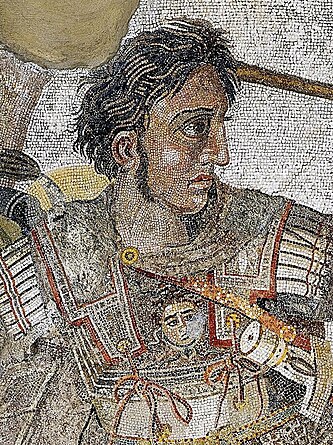
About Alexander the Great