Alexander the Great, as quoted in the Historia Alexandri Magni of Pseudo-Kallisthenes, 1.37.9-13
“
A king does not kill messengers.
— Alexander the Great on Messenger
What It Means
This is a placeholder explanation generated by the low-overhead model. It interprets "A king does not kill messengers." in the context of "Alexander the Great, as quoted in the Historia Alexandri Magni of Pseudo-Kallisthenes, 1.37.9-13" to mean that wisdom is timeless.

Source: Wikiquote: "Messenger" (Quotes)
The 'What it means' explanation text was generated by Google Gemini Flash (accessed February 05, 2026). https://gemini.google.com/app
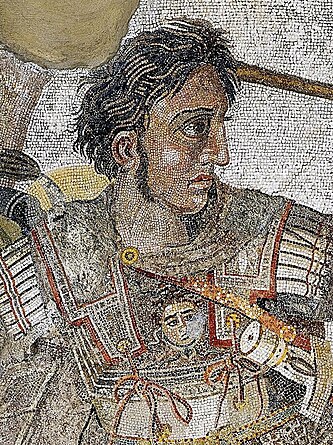
About Alexander the Great
Alexander III of Macedon (20/21 July 356 BC – 11 June 323 BC), commonly known as Alexander the Great, was a Macedonian king who ruled the kingdom of Macedon. He succeeded his father King Philip II to the throne at the age of 20, and spent most of his ruling years conducting a lengthy military campaign throughout Western Asia and Northeastern Africa. By the age of thirty, he had created one of the largest empires in history, stretching from Greece to northwestern India. He was undefeated in battle and is widely considered to be one of history's greatest and most successful military commanders.
View all quotes →