Link Copied!
Adrienne Rich Quotes (1929-2012)
Writer, Poet


















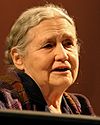













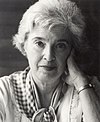



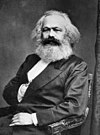

About Adrienne Rich
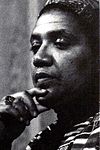
Adrienne Rich (16 May 1929 - 27 March 2012) was an American feminist, poet, teacher, and writer.
Best Adrienne Rich Quotes
Shortest
Earliest
Explore our curated collection of the most famous and impactful Adrienne Rich quotes.
“A thinking woman sleeps with monsters.”
Unsourced — Primary work/page citation not yet verified in the QuotesCosmos archive. Per our Unnamed Sources & Verification Policy, quotes without confirmed primary editions are explicitly marked Unsourced while under editorial review.
“ultimately language alone cannot liberate us”

Unsourced — Primary work/page citation not yet verified in the QuotesCosmos archive. Per our Unnamed Sources & Verification Policy, quotes without confirmed primary editions are explicitly marked Unsourced while under editorial review.
“Anti-Semitism was so intrinsic as not to have a name.”

Unsourced — Primary work/page citation not yet verified in the QuotesCosmos archive. Per our Unnamed Sources & Verification Policy, quotes without confirmed primary editions are explicitly marked Unsourced while under editorial review.
“what isn't named is often more permeating than what is”
Unsourced — Primary work/page citation not yet verified in the QuotesCosmos archive. Per our Unnamed Sources & Verification Policy, quotes without confirmed primary editions are explicitly marked Unsourced while under editorial review.
“we need to know where we have been: we need our history.”
Unsourced — Primary work/page citation not yet verified in the QuotesCosmos archive. Per our Unnamed Sources & Verification Policy, quotes without confirmed primary editions are explicitly marked Unsourced while under editorial review.
“I have to say that what I know I know through making poems.”
Unsourced — Primary work/page citation not yet verified in the QuotesCosmos archive. Per our Unnamed Sources & Verification Policy, quotes without confirmed primary editions are explicitly marked Unsourced while under editorial review.
“The experience of motherhood was eventually to radicalize me.”

Unsourced — Primary work/page citation not yet verified in the QuotesCosmos archive. Per our Unnamed Sources & Verification Policy, quotes without confirmed primary editions are explicitly marked Unsourced while under editorial review.
“The music, the sound of words working together, has always mattered to me.”
Unsourced — Primary work/page citation not yet verified in the QuotesCosmos archive. Per our Unnamed Sources & Verification Policy, quotes without confirmed primary editions are explicitly marked Unsourced while under editorial review.
“one period's necessary strategies can mutate into the monsters of a later time.”
Unsourced — Primary work/page citation not yet verified in the QuotesCosmos archive. Per our Unnamed Sources & Verification Policy, quotes without confirmed primary editions are explicitly marked Unsourced while under editorial review.
“Where connections are being made always feels to me like the point of intensest life.”
Unsourced — Primary work/page citation not yet verified in the QuotesCosmos archive. Per our Unnamed Sources & Verification Policy, quotes without confirmed primary editions are explicitly marked Unsourced while under editorial review.
“women cannot become liberated one by one. But individual revolt is not simply futile.”
Unsourced — Primary work/page citation not yet verified in the QuotesCosmos archive. Per our Unnamed Sources & Verification Policy, quotes without confirmed primary editions are explicitly marked Unsourced while under editorial review.
“No woman is really an insider in the institutions fathered by masculine consciousness.”

Unsourced — Primary work/page citation not yet verified in the QuotesCosmos archive. Per our Unnamed Sources & Verification Policy, quotes without confirmed primary editions are explicitly marked Unsourced while under editorial review.
“People have to put bread on the table and they're trying to do political work as well.”
Unsourced — Primary work/page citation not yet verified in the QuotesCosmos archive. Per our Unnamed Sources & Verification Policy, quotes without confirmed primary editions are explicitly marked Unsourced while under editorial review.
“The split in our language between “political” and “personal” has, I think, been a trap.”
Unsourced — Primary work/page citation not yet verified in the QuotesCosmos archive. Per our Unnamed Sources & Verification Policy, quotes without confirmed primary editions are explicitly marked Unsourced while under editorial review.
“I had been looking for the Women's Liberation movement since the 1950s. I came into it in 1970 (Forward)”
Unsourced — Primary work/page citation not yet verified in the QuotesCosmos archive. Per our Unnamed Sources & Verification Policy, quotes without confirmed primary editions are explicitly marked Unsourced while under editorial review.
“In the interstices of language lie powerful secrets of the culture. (p249, "Motherhood and Daughterhood")”
Unsourced — Primary work/page citation not yet verified in the QuotesCosmos archive. Per our Unnamed Sources & Verification Policy, quotes without confirmed primary editions are explicitly marked Unsourced while under editorial review.
“If it is the present that calls us to activism, it is history that must nourish our choices and commitment.”

Unsourced — Primary work/page citation not yet verified in the QuotesCosmos archive. Per our Unnamed Sources & Verification Policy, quotes without confirmed primary editions are explicitly marked Unsourced while under editorial review.
“To be able to ask even the child's astonished question Why do they hate us so? means knowing how to say "we."”

Unsourced — Primary work/page citation not yet verified in the QuotesCosmos archive. Per our Unnamed Sources & Verification Policy, quotes without confirmed primary editions are explicitly marked Unsourced while under editorial review.
“I believe in the necessity for a poetic language untethered from the compromised language of state and media.”
Unsourced — Primary work/page citation not yet verified in the QuotesCosmos archive. Per our Unnamed Sources & Verification Policy, quotes without confirmed primary editions are explicitly marked Unsourced while under editorial review.
“Something has to die in order for us to begin to know our truths. Perhaps we have to lose our national fantasies.”
Unsourced — Primary work/page citation not yet verified in the QuotesCosmos archive. Per our Unnamed Sources & Verification Policy, quotes without confirmed primary editions are explicitly marked Unsourced while under editorial review.
“poems are like dreams: in them you put what you don't know you know. ("When We Dead Awaken: Writing As Re-Vision")”
Unsourced — Primary work/page citation not yet verified in the QuotesCosmos archive. Per our Unnamed Sources & Verification Policy, quotes without confirmed primary editions are explicitly marked Unsourced while under editorial review.
“I think poets should work in the non-literary, non-academic world, get to know more than a workshop or a university.”
Unsourced — Primary work/page citation not yet verified in the QuotesCosmos archive. Per our Unnamed Sources & Verification Policy, quotes without confirmed primary editions are explicitly marked Unsourced while under editorial review.
“Poems are like dreams: in them you put what you don't know you know. ("When We Dead Awaken'': Writing as Re-Vision")”
Unsourced — Primary work/page citation not yet verified in the QuotesCosmos archive. Per our Unnamed Sources & Verification Policy, quotes without confirmed primary editions are explicitly marked Unsourced while under editorial review.
“The words are purposes.
The words are maps.
I came to see the damage that was done
and the treasures that prevail.”
The words are maps.
I came to see the damage that was done
and the treasures that prevail.”

Unsourced — Primary work/page citation not yet verified in the QuotesCosmos archive. Per our Unnamed Sources & Verification Policy, quotes without confirmed primary editions are explicitly marked Unsourced while under editorial review.
“I think that passion for survival is the great theme of women's poetry. (from "Power and Danger: Works of a Common Woman" 1977)”

Unsourced — Primary work/page citation not yet verified in the QuotesCosmos archive. Per our Unnamed Sources & Verification Policy, quotes without confirmed primary editions are explicitly marked Unsourced while under editorial review.
“According to Nazi logic, my two Jewish grandparents would have made me a Mischling, first-degree-nonexempt from the Final Solution.”
Unsourced — Primary work/page citation not yet verified in the QuotesCosmos archive. Per our Unnamed Sources & Verification Policy, quotes without confirmed primary editions are explicitly marked Unsourced while under editorial review.
“I was admittedly young and trying to educate myself, but I was also doing something that is dangerous: I was flirting with identity.”
Unsourced — Primary work/page citation not yet verified in the QuotesCosmos archive. Per our Unnamed Sources & Verification Policy, quotes without confirmed primary editions are explicitly marked Unsourced while under editorial review.
“A new century, even a new technology, doesn't of itself produce newness. It is live human beings, looking in all directions, who will do this.”

Unsourced — Primary work/page citation not yet verified in the QuotesCosmos archive. Per our Unnamed Sources & Verification Policy, quotes without confirmed primary editions are explicitly marked Unsourced while under editorial review.
“It (1968) was a year of intensifying political awareness for me: the Martin Luther King and Robert Kennedy assassinations, the Columbia strike.”
Unsourced — Primary work/page citation not yet verified in the QuotesCosmos archive. Per our Unnamed Sources & Verification Policy, quotes without confirmed primary editions are explicitly marked Unsourced while under editorial review.
“I guess what I'm searching for always is a way of staying linked to the past, pulling out of it whatever you can use, and continuing to move on.”
Unsourced — Primary work/page citation not yet verified in the QuotesCosmos archive. Per our Unnamed Sources & Verification Policy, quotes without confirmed primary editions are explicitly marked Unsourced while under editorial review.
“Despair, when not the response to absolute physical and moral defeat is, like war, the failure of imagination. (p17, III: "What would we create?")”

Unsourced — Primary work/page citation not yet verified in the QuotesCosmos archive. Per our Unnamed Sources & Verification Policy, quotes without confirmed primary editions are explicitly marked Unsourced while under editorial review.
“Feminism has always been shaped and fired by the question How can things be other than they are? What if...? (p190 "The Soul of a Woman's College")”

Unsourced — Primary work/page citation not yet verified in the QuotesCosmos archive. Per our Unnamed Sources & Verification Policy, quotes without confirmed primary editions are explicitly marked Unsourced while under editorial review.
“at the time I started writing, that was already set up as a problem. If you were going to be writing a truly new poetry, could you use the old forms?”
Unsourced — Primary work/page citation not yet verified in the QuotesCosmos archive. Per our Unnamed Sources & Verification Policy, quotes without confirmed primary editions are explicitly marked Unsourced while under editorial review.
“Lies are usually attempts to make everything simpler - for the liar - than it really is, or ought to be. (from "Women and Honor: Some Notes on Lying")”
Unsourced — Primary work/page citation not yet verified in the QuotesCosmos archive. Per our Unnamed Sources & Verification Policy, quotes without confirmed primary editions are explicitly marked Unsourced while under editorial review.
“Patriarchy is no more an abstraction than imperialism is, once you have tasted it in your mouth, felt it across your flesh. ("North American Tunnel Vision" 1983)”
Unsourced — Primary work/page citation not yet verified in the QuotesCosmos archive. Per our Unnamed Sources & Verification Policy, quotes without confirmed primary editions are explicitly marked Unsourced while under editorial review.
“Most biographers of women still fail to recognize that a woman's central relationship can be to her work, even as lovers come and go. ("Raya Dunayevskaya's Marx")”
Unsourced — Primary work/page citation not yet verified in the QuotesCosmos archive. Per our Unnamed Sources & Verification Policy, quotes without confirmed primary editions are explicitly marked Unsourced while under editorial review.
“It's exhilarating to be alive in a time of awakening consciousness; it can also be confusing, disorienting, and plainful. ("When We Dead Awaken: Writing As Re-Vision")”
Unsourced — Primary work/page citation not yet verified in the QuotesCosmos archive. Per our Unnamed Sources & Verification Policy, quotes without confirmed primary editions are explicitly marked Unsourced while under editorial review.
“I still believe what I wrote in 1971: A change in the of sexual identity is essential if we are not to see the old political order reassert itself in every new revolution.”
Unsourced — Primary work/page citation not yet verified in the QuotesCosmos archive. Per our Unnamed Sources & Verification Policy, quotes without confirmed primary editions are explicitly marked Unsourced while under editorial review.
“There is nothing revolutionary whatsoever about the control of women's bodies by men. The woman's body is the terrain on which patriarchy is erected. (p55, "The 'Sacred Calling'")”

Unsourced — Primary work/page citation not yet verified in the QuotesCosmos archive. Per our Unnamed Sources & Verification Policy, quotes without confirmed primary editions are explicitly marked Unsourced while under editorial review.
“Malcolm X and Martin Luther King, Jr.-both leaders with large constituencies-had been murdered just as each was unscrolling a map on which race and class intersected in a shared landscape.”
Unsourced — Primary work/page citation not yet verified in the QuotesCosmos archive. Per our Unnamed Sources & Verification Policy, quotes without confirmed primary editions are explicitly marked Unsourced while under editorial review.
“I have never believed that poetry is an escape from history, and I do not think it is more, or less, necessary than food, shelter, health, education, decent working conditions. It is as necessary. (Preface)”
Unsourced — Primary work/page citation not yet verified in the QuotesCosmos archive. Per our Unnamed Sources & Verification Policy, quotes without confirmed primary editions are explicitly marked Unsourced while under editorial review.
“motherhood is the great mesh in which all human relations are entangled, in which lurk our most elemental assumptions about love and power. (from "Motherhood: The Contemporary Emergency and the Quantum Leap" 1978)”
Unsourced — Primary work/page citation not yet verified in the QuotesCosmos archive. Per our Unnamed Sources & Verification Policy, quotes without confirmed primary editions are explicitly marked Unsourced while under editorial review.
“It was only in college, when I read a poem by Karl Shapiro beginning "To hate the Negro and avoid the Jew/ is the curriculum," that it flashed on me that there was an untold side to my father's story of his student years.”
Unsourced — Primary work/page citation not yet verified in the QuotesCosmos archive. Per our Unnamed Sources & Verification Policy, quotes without confirmed primary editions are explicitly marked Unsourced while under editorial review.
“These were the 1940s, and we were told a great deal about the Battle of Britain, the noble French Resistance fighters, the brave, starving Dutch-but I did not learn of the resistance of the Warsaw ghetto until I left home.”
Unsourced — Primary work/page citation not yet verified in the QuotesCosmos archive. Per our Unnamed Sources & Verification Policy, quotes without confirmed primary editions are explicitly marked Unsourced while under editorial review.
“A revolutionary poem will not tell you who or when to kill, what and when to burn, or even how to theorize. It reminds you... where and when and how you are living and might live, it is a wick of desire. (XXVIII: "What if")”
Unsourced — Primary work/page citation not yet verified in the QuotesCosmos archive. Per our Unnamed Sources & Verification Policy, quotes without confirmed primary editions are explicitly marked Unsourced while under editorial review.
“Relations of power, as I began to decipher them, have infused a great deal of my work over time—both poetry and prose. But poetry was where I could confront, perhaps transform, what I was experiencing and learning about the world.”

Unsourced — Primary work/page citation not yet verified in the QuotesCosmos archive. Per our Unnamed Sources & Verification Policy, quotes without confirmed primary editions are explicitly marked Unsourced while under editorial review.
“poetry is always being created anew, in new places, by unforetold hands and voices. In this, it is like the many movements against demoralizing power. We don't know where either will come from. This is a story without an end. (Preface)”
Unsourced — Primary work/page citation not yet verified in the QuotesCosmos archive. Per our Unnamed Sources & Verification Policy, quotes without confirmed primary editions are explicitly marked Unsourced while under editorial review.
“Women's Studies can amount simply to compensatory history; too often they fail to challenge the intellectual and political structures that must be challenged if women as a group are ever to come into collective, nonexclusionary freedom.”

Unsourced — Primary work/page citation not yet verified in the QuotesCosmos archive. Per our Unnamed Sources & Verification Policy, quotes without confirmed primary editions are explicitly marked Unsourced while under editorial review.
“Sometimes I feel I have seen too long from too many disconnected angles: white, Jewish, anti-Semite, racist, anti-racist, once-married, lesbian, middle-class, feminist, exmatriate southerner, split at the root-that I will never bring them whole.”
Unsourced — Primary work/page citation not yet verified in the QuotesCosmos archive. Per our Unnamed Sources & Verification Policy, quotes without confirmed primary editions are explicitly marked Unsourced while under editorial review.
“I am a citizen of a country that has just undergone a thieved election, a country deeply and dangerously divided between rich and poor, but also between rich and middle class. What I believe in and what my government represents are not the same thing.”
Unsourced — Primary work/page citation not yet verified in the QuotesCosmos archive. Per our Unnamed Sources & Verification Policy, quotes without confirmed primary editions are explicitly marked Unsourced while under editorial review.
“To become a token woman—whether you win the Nobel Prize or merely get tenure at the cost of denying your sisters—is to become something less than a man … since men are loyal at least to their own world-view, their laws of brotherhood and self-interest.”
Unsourced — Primary work/page citation not yet verified in the QuotesCosmos archive. Per our Unnamed Sources & Verification Policy, quotes without confirmed primary editions are explicitly marked Unsourced while under editorial review.
“I believe that words can help us move or keep us paralyzed, and that our choices of language and verbal tone have something - a great deal - to do with how we live our lives and whom we end up speaking with and hearing... ("Toward a More Feminist Criticism")”

Unsourced — Primary work/page citation not yet verified in the QuotesCosmos archive. Per our Unnamed Sources & Verification Policy, quotes without confirmed primary editions are explicitly marked Unsourced while under editorial review.
“Poetry reaches into places in us that we are suppose to ignore or mistrust, that are perceived as subversive or non-useful, in what is fast becoming known as global culture. (2001)”
Unsourced — Primary work/page citation not yet verified in the QuotesCosmos archive. Per our Unnamed Sources & Verification Policy, quotes without confirmed primary editions are explicitly marked Unsourced while under editorial review.
“Essentially poetry, if it is poetry, does not lend itself to simple readings, to oversimplifications — though people may try to read it that way. It seems to me that the essential nature of a poem is that there is ambivalence and ambiguity quivering underneath.”
Unsourced — Primary work/page citation not yet verified in the QuotesCosmos archive. Per our Unnamed Sources & Verification Policy, quotes without confirmed primary editions are explicitly marked Unsourced while under editorial review.
“Where every public decision has to be justified in the scales of corporate profits, poetry unsettles these apparently self-evident propositions-not through ideology, but by its very presence and ways of being, its embodiment of states of longing and desire. (Preface)”
Unsourced — Primary work/page citation not yet verified in the QuotesCosmos archive. Per our Unnamed Sources & Verification Policy, quotes without confirmed primary editions are explicitly marked Unsourced while under editorial review.
“Dear and cherished graduates: Remember the youth of your generation. Remember all the youths-and the parents who are not here today nor at any commencement in the land. Remember that our true democracy cannot come to birth without their participation. Nor without yours.”
Unsourced — Primary work/page citation not yet verified in the QuotesCosmos archive. Per our Unnamed Sources & Verification Policy, quotes without confirmed primary editions are explicitly marked Unsourced while under editorial review.
“I think my work comes out of both an intense desire for connection and what it means to feel isolated. There's always going to be a kind of tidal movement back and forth between the two. (2001)”

Unsourced — Primary work/page citation not yet verified in the QuotesCosmos archive. Per our Unnamed Sources & Verification Policy, quotes without confirmed primary editions are explicitly marked Unsourced while under editorial review.
“False history gets made all day, any day,
the truth of the new is never on the news
False history gets written every day...
The lesbian archaeologist watches herself
sifting her own life out from the shards she's piecing,
asking the clay all questions but her own.”
the truth of the new is never on the news
False history gets written every day...
The lesbian archaeologist watches herself
sifting her own life out from the shards she's piecing,
asking the clay all questions but her own.”

Unsourced — Primary work/page citation not yet verified in the QuotesCosmos archive. Per our Unnamed Sources & Verification Policy, quotes without confirmed primary editions are explicitly marked Unsourced while under editorial review.
“The impulse to create begins - often terribly and fearfully - in a tunnel of silence. Every real poem is the breaking of an existing silence, and the first question we might ask any poem is, What kind of voice is breaking silence, and what kind of silence is being broken? (p150)”

Unsourced — Primary work/page citation not yet verified in the QuotesCosmos archive. Per our Unnamed Sources & Verification Policy, quotes without confirmed primary editions are explicitly marked Unsourced while under editorial review.
“nothing less than the most radical imagination will carry us beyond this place, beyond the mere struggle for survival, to that lucid recognition of our possibilities which will keep us impatient, and unresigned to mere survival. ("Motherhood: The Contemporary Emergency and the Quantum Leap" 1978)”
Unsourced — Primary work/page citation not yet verified in the QuotesCosmos archive. Per our Unnamed Sources & Verification Policy, quotes without confirmed primary editions are explicitly marked Unsourced while under editorial review.
“As a society in turmoil, we are going to see more, and more various, attempts to simulate order through repression; and art is a historical target for such efforts. A distaste for the political dimensions of art, in this time and place, is a dangerous luxury. (p161, XIX: "The transgressor mother")”

Unsourced — Primary work/page citation not yet verified in the QuotesCosmos archive. Per our Unnamed Sources & Verification Policy, quotes without confirmed primary editions are explicitly marked Unsourced while under editorial review.
“Reading The Second Sex in the 1950s isolation of an academic housewife had felt less dangerous than reading "The Myth of Vaginal Orgasm" or "Woman-identified Woman" in a world where I was in constant debate and discussion with women over every aspect of our lives that we could as yet name.”

Unsourced — Primary work/page citation not yet verified in the QuotesCosmos archive. Per our Unnamed Sources & Verification Policy, quotes without confirmed primary editions are explicitly marked Unsourced while under editorial review.
“diaspora-a multifaceted condition-means never always, or anywhere, being just like other Jews. It means class and cultural difference, dissension, contradiction, different languages and foods, living in different ages and relationships to tradition, world politics, and the "always/already" of anti-Semitism.”

Unsourced — Primary work/page citation not yet verified in the QuotesCosmos archive. Per our Unnamed Sources & Verification Policy, quotes without confirmed primary editions are explicitly marked Unsourced while under editorial review.
“language is this medium that we hand back and forth between us in all human relationships all the time, it doesn't really have a privileged place. It's this coinage in which we keep trying to get a hold of each other or make ourselves clear. So, the fact that poetry was available to me for that is very important.”
Unsourced — Primary work/page citation not yet verified in the QuotesCosmos archive. Per our Unnamed Sources & Verification Policy, quotes without confirmed primary editions are explicitly marked Unsourced while under editorial review.
“I didn't understand then that I was living between two strains of Jewish social identity: the Jew as radical visionary and activist who understands oppression firsthand, and the Jew as part of America's devouring plan in which the persecuted, called to assimilation, learn that the price is to engage in persecution.”
Unsourced — Primary work/page citation not yet verified in the QuotesCosmos archive. Per our Unnamed Sources & Verification Policy, quotes without confirmed primary editions are explicitly marked Unsourced while under editorial review.
“to be “against war” has come to seem too easy a stance. War exists in a texture of possession and deprivation, economic and religious dogmas, racism, colonialist exploitation, nationalism, unequal power. Who decides to make war? Who is destroyed in it? Who creates the rhetoric of “terror” and “democracy”?”

Unsourced — Primary work/page citation not yet verified in the QuotesCosmos archive. Per our Unnamed Sources & Verification Policy, quotes without confirmed primary editions are explicitly marked Unsourced while under editorial review.
“Art and literature have given so many people the relief of feeling connected - pulled us out of isolation. It has let us know that somebody else breathed and dreamed and had sex and loved and raged and knew loneliness the way we do. (2001)”

Unsourced — Primary work/page citation not yet verified in the QuotesCosmos archive. Per our Unnamed Sources & Verification Policy, quotes without confirmed primary editions are explicitly marked Unsourced while under editorial review.
“it came to me that every one of those piles of corpses, mountains of shoes and clothing had contained, simply, individuals, who had believed, as I now believed of myself, that they were intended to live out a life of some kind of meaning, that the world possessed some kind of sense and order, yet this had happened to them.”
Unsourced — Primary work/page citation not yet verified in the QuotesCosmos archive. Per our Unnamed Sources & Verification Policy, quotes without confirmed primary editions are explicitly marked Unsourced while under editorial review.
“The struggle for Black civil rights had such clarity about it for me: I knew that segregation was wrong, that unequal opportunity was wrong, I knew that segregation in particular was more than a set of social and legal rules-it meant that even "decent" white people lived in a network of lies and arrogance and moral collusion.”
Unsourced — Primary work/page citation not yet verified in the QuotesCosmos archive. Per our Unnamed Sources & Verification Policy, quotes without confirmed primary editions are explicitly marked Unsourced while under editorial review.
“One of the most sensual and sensuous women poets I can think of is Audre Lorde. She thinks in images that are most certainly lesbian images. But also images from Afro-Caribbean culture and from African mythology and experience. And that's a very powerful combination. Because that also has not been available in most poetry in English.”
Unsourced — Primary work/page citation not yet verified in the QuotesCosmos archive. Per our Unnamed Sources & Verification Policy, quotes without confirmed primary editions are explicitly marked Unsourced while under editorial review.
“I've said that "American Jews" have paid an intellectual and spiritual price for the narrowing of sight demanded by conformity and reliance on Israel as surrogate identity. Part of this price has been estrangement of many Jews from any Jewish affiliation. But, of course, in reality American Jews disagree like all other Jews, past and future.”
Unsourced — Primary work/page citation not yet verified in the QuotesCosmos archive. Per our Unnamed Sources & Verification Policy, quotes without confirmed primary editions are explicitly marked Unsourced while under editorial review.
“The belief that established science and scholarship-which have so relentlessly excluded women from their making-are "objective" and "value-free" and that feminist studies are "unscholarly," "biased," and "ideological" dies hard. Yet the fact is that all science, and all scholarship, and all art are ideological; there is no neutrality in culture.”

Unsourced — Primary work/page citation not yet verified in the QuotesCosmos archive. Per our Unnamed Sources & Verification Policy, quotes without confirmed primary editions are explicitly marked Unsourced while under editorial review.
“As feminists, we need to be looking above all for the greatness and sanity of ordinary women, and how these women have collectively waged resistance. In searching that territory we find something better than individual heroines: the astonishing continuity of women's imagination of survival, persisting through the great and little deaths of daily life.”

Unsourced — Primary work/page citation not yet verified in the QuotesCosmos archive. Per our Unnamed Sources & Verification Policy, quotes without confirmed primary editions are explicitly marked Unsourced while under editorial review.
“One of the insidious rhetorical devices of the U.S. Right has been to claim (for example) that empathy with others is merely “liberal guilt” or “political correctness,” that compassion is merely sentimental or even hypocritical. I see it as an entirely cynical view that underscores the profit motive as the only real basis for human relationships.”
Unsourced — Primary work/page citation not yet verified in the QuotesCosmos archive. Per our Unnamed Sources & Verification Policy, quotes without confirmed primary editions are explicitly marked Unsourced while under editorial review.
“Dark Fields of the Republic and Midnight Salvage were written during the final decade of the twentieth century and against the grain of their society. The economic and technological expansion, with the terrible human and environmental prices paid, were (and are) accelerating, while at the same time language itself, the medium of my art, was deteriorating.”
Unsourced — Primary work/page citation not yet verified in the QuotesCosmos archive. Per our Unnamed Sources & Verification Policy, quotes without confirmed primary editions are explicitly marked Unsourced while under editorial review.
“Feminist history charges us, as women committed to the liberation of women, to know the past in order to consider what we want to conserve and what we want not to repeat or continue. To see patterns, connections, which the false assimilation of liberal humanism obscures. To draw strength: Memory is nutriment, and seeds stored for centuries can still germinate.”
Unsourced — Primary work/page citation not yet verified in the QuotesCosmos archive. Per our Unnamed Sources & Verification Policy, quotes without confirmed primary editions are explicitly marked Unsourced while under editorial review.
“I have been exceptionally privileged to be able to think of myself as a creative person. There is so much creativity I believe in every infant born and yet so few of us get to develop it, so few of us even get to think about having an audience for our words. So, with the kind of audience that I now have, I want to speak responsibly and for that I need teachers.”

Unsourced — Primary work/page citation not yet verified in the QuotesCosmos archive. Per our Unnamed Sources & Verification Policy, quotes without confirmed primary editions are explicitly marked Unsourced while under editorial review.
“White men need a history that does not simply "include" peoples of color and white women, but that shows the process by which the arrogance of hierarchy and the celebration of violence have reached a point of destructiveness almost out of control. In other words, white men need to start questioning the text handed down from father to son, the dominator's version.”

Unsourced — Primary work/page citation not yet verified in the QuotesCosmos archive. Per our Unnamed Sources & Verification Policy, quotes without confirmed primary editions are explicitly marked Unsourced while under editorial review.
“As a feminist in the United States it seemed necessary to examine how we participate in mainstream North American cultural chauvinism, the sometimes unconscious belief that white North Americans possess a superior right to judge, select, and ransack other cultures, that we are more "advanced" than other peoples of this hemisphere. ("North American Tunnel Vision" 1983)”
Unsourced — Primary work/page citation not yet verified in the QuotesCosmos archive. Per our Unnamed Sources & Verification Policy, quotes without confirmed primary editions are explicitly marked Unsourced while under editorial review.
“from a very young age poetry was always a sustenance for me. It was a way of going deeper into things, it was never escapism. It was a way, as a very young child, of finding out about life...(it told me) many things. And they contradicted each other, of course, but it was a way of reflecting on and maybe testing out emotions and feelings that I had no words for myself.”
Unsourced — Primary work/page citation not yet verified in the QuotesCosmos archive. Per our Unnamed Sources & Verification Policy, quotes without confirmed primary editions are explicitly marked Unsourced while under editorial review.
“Experience is always larger than language. And there's always the next poem, yes. Not necessarily because I feel I've falsified something, but because I wrote it as I knew it then, and I'm going to know it differently in six months. Or I'm going to know something else. Or I'm going to need to know something else, and the only way I can get to it is by writing that poem.”
Unsourced — Primary work/page citation not yet verified in the QuotesCosmos archive. Per our Unnamed Sources & Verification Policy, quotes without confirmed primary editions are explicitly marked Unsourced while under editorial review.
“Any truly revolutionary art is an alchemy through which waste, greed, brutality, frozen indifference, blind sorrow and anger are transmuted into some drenching recognition of the What if?-the possible...Revolutionary art dwells, by its nature, on edges. This is its power: the tension between subject and means, between the is and what can be. (XXVIII: "What if")”
Unsourced — Primary work/page citation not yet verified in the QuotesCosmos archive. Per our Unnamed Sources & Verification Policy, quotes without confirmed primary editions are explicitly marked Unsourced while under editorial review.
“What would it mean to live
in a city whose people were changing
each other's despair into hope?--
You yourself must change it.--
what would it feel like to know
your country was changing?--
You yourself must change it.--
Though your life felt arduous
new and unmapped and strange
what would it mean to stand on the first
page of the end of despair?”
Unsourced — Primary work/page citation not yet verified in the QuotesCosmos archive. Per our Unnamed Sources & Verification Policy, quotes without confirmed primary editions are explicitly marked Unsourced while under editorial review.
“Much male fear of feminism is the fear that, in becoming whole human beings, women will cease to mother men, to provide the breast, the lullaby, the continuous attention associated by the infant with the mother. Much male fear of feminism is infantilism–the longing to remain the mother’s son, to possess a woman who exists purely for him. ("Husband-Right and Father-Right" 1977)”

Unsourced — Primary work/page citation not yet verified in the QuotesCosmos archive. Per our Unnamed Sources & Verification Policy, quotes without confirmed primary editions are explicitly marked Unsourced while under editorial review.
“We may feel bitterly how little our poems can do in the face of seemingly out-of-control technological power and seemingly limitless corporate greed, yet it has always been true that poetry can break isolation, show us to ourselves when we are outlawed or made invisible, remind us of beauty where no beauty seems possible, remind us of kinship where all is represented as separation.”

Unsourced — Primary work/page citation not yet verified in the QuotesCosmos archive. Per our Unnamed Sources & Verification Policy, quotes without confirmed primary editions are explicitly marked Unsourced while under editorial review.
“There’s a poem from the mid-1950s in Snapshots of a Daughter-in-Law, “From Morning Glory to Petersburg”—titles from an encyclopedia volume—that suggests the effort to ask, as a conscious strategy, how do you make livable meaning out of separate bits of classified information? How to live with “facts” you can’t integrate? Well, one way was to integrate them is through poetry.”
Unsourced — Primary work/page citation not yet verified in the QuotesCosmos archive. Per our Unnamed Sources & Verification Policy, quotes without confirmed primary editions are explicitly marked Unsourced while under editorial review.
“A long-lived relationship is about so many things. It is such a dense and complex process — always a process — and it's not to be summed up. It's not to be turned into some kind of vignette. If we are serious, we also have to recognize that even the longest and richest and densest relationship must end, and we see it around us. We see it in that inevitability of time's power, if you will.”
Unsourced — Primary work/page citation not yet verified in the QuotesCosmos archive. Per our Unnamed Sources & Verification Policy, quotes without confirmed primary editions are explicitly marked Unsourced while under editorial review.
“At different times in my life I have wanted to push away one or the other burden of inheritance, to say merely I am a woman; I am a lesbian. If I call myself a Jewish lesbian, do I thereby try to shed some of my southern gentile white woman's culpability? If I call myself only through my mother, is it because I pass more easily through a world where being a lesbian often seems like outsiderhood enough?”

Unsourced — Primary work/page citation not yet verified in the QuotesCosmos archive. Per our Unnamed Sources & Verification Policy, quotes without confirmed primary editions are explicitly marked Unsourced while under editorial review.
“The danger lies in forgetting what we had. The flow between generations becomes a trickle, grandchildren tape-recording grandparents' memories on special occasions perhaps—no casual storytelling jogged by daily life, there being no shared daily life what with migrations, exiles, diasporas, readings, the search for work. Or there is a shared daily life riddled with holes of silence. (XI: "A Leak in History")”

Unsourced — Primary work/page citation not yet verified in the QuotesCosmos archive. Per our Unnamed Sources & Verification Policy, quotes without confirmed primary editions are explicitly marked Unsourced while under editorial review.
“in the women's movement, writers have so often been seen and cited as spokespeople and as leaders. My feeling is that it is the activists who move the rest of us, and that one may explain, describe, praise, deplore or whatever what is actually happening in the way of action-and that's very important, so I'm not selling the word short either when I say this-but, you don't make a political movement simply out of words.”
Unsourced — Primary work/page citation not yet verified in the QuotesCosmos archive. Per our Unnamed Sources & Verification Policy, quotes without confirmed primary editions are explicitly marked Unsourced while under editorial review.
“Some people are tired and burnt-out, but I see new women and men-coming along all the time. And that is very refreshing and very inspiring. It's not as though the same cast of characters that was there in the early seventies still has to be doing it all now. The cast of characters has grown; some have left, some have taken time out and returned, others have come in, many with new understandings, with new contributions.”
Unsourced — Primary work/page citation not yet verified in the QuotesCosmos archive. Per our Unnamed Sources & Verification Policy, quotes without confirmed primary editions are explicitly marked Unsourced while under editorial review.
“we teachers used to talk a lot about who fails the teacher or the student-when you have a classroom situation which is rigged entirely against the student, or in which the teacher is too ignorant to teach. Not ignorant of grammar, but ignorant of the students, ignorant of their culture. So, I was thinking very much about our failures, the map of our failures, we who consider ourselves so possessed of language, so articulate.”
Unsourced — Primary work/page citation not yet verified in the QuotesCosmos archive. Per our Unnamed Sources & Verification Policy, quotes without confirmed primary editions are explicitly marked Unsourced while under editorial review.
“instead of poems about experiences I am getting poems that are experiences, that contribute to my knowledge and my emotional life even while they reflect and assimilate it. In my earlier poems I told you, as precisely and eloquently as I knew how, about something in the more recent poems something is happening, something has happened to me and, if I have been a good parent to the poem, something will happen to you who read it.”
Unsourced — Primary work/page citation not yet verified in the QuotesCosmos archive. Per our Unnamed Sources & Verification Policy, quotes without confirmed primary editions are explicitly marked Unsourced while under editorial review.
“A sense of community seems to arise out of the word. Well, that's true. I believe that. I think that's one of the reasons that communities of poetry, and I don't just mean communities of poets, but everywhere in this country communities of poetry-of people reading poetry, listening to poetry, coming together around poetry-are becoming so widespread. It's as if this gathering around the word occurs in response to worsening conditions.”
Unsourced — Primary work/page citation not yet verified in the QuotesCosmos archive. Per our Unnamed Sources & Verification Policy, quotes without confirmed primary editions are explicitly marked Unsourced while under editorial review.
“In this decade now ending, as more women are entering the professions (though still suffering sexual harassment in the workplace, though still, if they have children, carrying two full-time jobs, though still vastly outnumbered by men in upper-level and decision-making jobs), we need most profoundly to remember that early insight of the feminist movement as it evolved in the late sixties: that no woman is liberated until w all are liberated.”
Unsourced — Primary work/page citation not yet verified in the QuotesCosmos archive. Per our Unnamed Sources & Verification Policy, quotes without confirmed primary editions are explicitly marked Unsourced while under editorial review.
“I think there are many different kinds of dread for many different kinds of people. I think that more and more people feel uncared for, feel that their lives are not only unvalued but meaningless, feel that though they may care for their lives, no one else will, feel that the only way that they can protect their survival and interests is by the gun. I'm afraid that many people feel an enormous desperation which plays into the propaganda of hate.”
Unsourced — Primary work/page citation not yet verified in the QuotesCosmos archive. Per our Unnamed Sources & Verification Policy, quotes without confirmed primary editions are explicitly marked Unsourced while under editorial review.
“It feels to me that I need to know more than I ever did in order to be a poet, that I need to be conscious of what is happening on this planet in ways that I never used to think about. And it's not that that takes the place of the work of the imagination, but that each of us has an imagination that has itself been created by a set of circumstances, some very nourishing, some very negative in terms of becoming blinders-the lacunae, the cartoon-imagery.”
Unsourced — Primary work/page citation not yet verified in the QuotesCosmos archive. Per our Unnamed Sources & Verification Policy, quotes without confirmed primary editions are explicitly marked Unsourced while under editorial review.
“I was thinking a lot about something that wasn't being talked about at the time very much. I was thinking about where sexuality belonged in all this. What is the connection between Vietnam and the lovers' bed? If this insane violence is being waged against a very small country by this large and powerful country in which I live, what does that have to do with sexuality and with what's going on between men and women, which I felt also as a struggle even then?”

Unsourced — Primary work/page citation not yet verified in the QuotesCosmos archive. Per our Unnamed Sources & Verification Policy, quotes without confirmed primary editions are explicitly marked Unsourced while under editorial review.
“when I say "radical" I mean at the root, real. Real social transformation, real change has to come out of a love of life and a love for the world, not hatred of the world. Increasingly what I fear and what I see is a movement of people on the right who are moving from a hatred of human beings, a hatred of the other, a hatred of life. That's why I say there is nothing wrong with personal happiness if you can take it and use it as a key, a measure, a standard.”
Unsourced — Primary work/page citation not yet verified in the QuotesCosmos archive. Per our Unnamed Sources & Verification Policy, quotes without confirmed primary editions are explicitly marked Unsourced while under editorial review.
“If the imagination is to transcend and transform experience it has to question, to challenge, to conceive of alternatives, perhaps to the very life you are living at the moment. You have to be free to play around with the notion that day might be night, love might be hate; nothing can be too sacred for the imagination to turn into its opposite or to call experimentally by another name. For writing is re-naming. ("When We Dead Awaken'': Writing as Re-Vision")”
Unsourced — Primary work/page citation not yet verified in the QuotesCosmos archive. Per our Unnamed Sources & Verification Policy, quotes without confirmed primary editions are explicitly marked Unsourced while under editorial review.
“(“Costs-in a word. So much of your work has been a struggle to speak honestly and openly, whether about poetry itself or about social issues, about racism, about lesbianism. What are the costs of doing so, as a poet, as a person?") What would be the cost of not doing it? I feel as though it's for my survival, first and foremost. This is how I cope, this is how I survive. I have learned from my peers that this way of creating can be a way of surviving. I didn't invent that.”
Unsourced — Primary work/page citation not yet verified in the QuotesCosmos archive. Per our Unnamed Sources & Verification Policy, quotes without confirmed primary editions are explicitly marked Unsourced while under editorial review.
“sometimes I feel inadequate to make any statement as a Jew; I feel the history of denial within me like an injury, a scar. For assimilation has affected my perceptions; those early lapses in meaning, those blanks, are with me still. My ignorance can be dangerous to me and to others. Yet we can't wait for the undamaged to make our connections for us; we can't wait to speak until we are perfectly clear and righteous. There is no purity and, in our lifetimes, no end to this process.”
Unsourced — Primary work/page citation not yet verified in the QuotesCosmos archive. Per our Unnamed Sources & Verification Policy, quotes without confirmed primary editions are explicitly marked Unsourced while under editorial review.
“For myself it is an ever-present challenge to draw lines of connection between personal feelings and their social dimensions, “the body’s pain and the pain on the streets” to recognize that an economic system can impact on human sensibility—Marx’s idea that exploitative relations of production end by affecting all human relations, the most private and intimate included. These are finally not just ideas, they become our feelings. And it’s in feelings that poetry is rooted.”

Unsourced — Primary work/page citation not yet verified in the QuotesCosmos archive. Per our Unnamed Sources & Verification Policy, quotes without confirmed primary editions are explicitly marked Unsourced while under editorial review.
“Our ears, like it or not, take in so much in a day. Maybe some North American ears have trouble with poetry because of the noise from an aggressively voiced ruling ethos—its terminology of war, success, national security, winning and losing, ownership, merchandising, canned information, canned laughter. Poetry can be direct, it can be colloquial, it can be abrupt or angry, but it’s not that vacuous noise; it wants to unseat that kind of language, play other kinds of sound tracks.”
Unsourced — Primary work/page citation not yet verified in the QuotesCosmos archive. Per our Unnamed Sources & Verification Policy, quotes without confirmed primary editions are explicitly marked Unsourced while under editorial review.
“Re-vision – the act of looking back, of seeing with fresh eyes, of entering an old text from a new critical direction – is for woman more than a chapter in cultural history: it is an act of survival. Until we understand the assumptions in which we are drenched we cannot know ourselves. And this drive to self-knowledge, for women, is more than a search for identity: it is part of our refusal of the self-destructiveness of male-dominated society. ("When We Dead Awaken: Writing As Re-Vision")”
Unsourced — Primary work/page citation not yet verified in the QuotesCosmos archive. Per our Unnamed Sources & Verification Policy, quotes without confirmed primary editions are explicitly marked Unsourced while under editorial review.
“It's Black History Month. But this is white history. White hate crimes, white hate speech. I still try to claim I wasn't brought up to hate. But hate isn't the half of it. I grew up in the vast encircling presumption of whiteness-that primary quality of being which knows itself, its passions, only against an otherness that has to be dehumanized. I grew up in white silence that was utterly obsessional. Race was the theme whatever the topic. (XXI: "The distance between language and violence" p 181)”
Unsourced — Primary work/page citation not yet verified in the QuotesCosmos archive. Per our Unnamed Sources & Verification Policy, quotes without confirmed primary editions are explicitly marked Unsourced while under editorial review.
“We don't shed racism or sexism because we're in a liberation movement unless we struggle hard to try to create bridges, to find out where our common base is, to become educated in each other's realities, to search for and document the mistakes of the past so we can stop making them. I'm thinking particularly of the history of the nineteenth-century white suffrage movement, the early North American feminist movement, its visions, and its racist stances, despite its roots in the Abolitionist movement.”
Unsourced — Primary work/page citation not yet verified in the QuotesCosmos archive. Per our Unnamed Sources & Verification Policy, quotes without confirmed primary editions are explicitly marked Unsourced while under editorial review.
“you see your parents first of all as these great looming figures who have no past, no context. They're just there and over and against you. Or they're not there, which is another kind of looming presence-looming absence. But I've been learning to see my father and to think about his life more and more and more in the context of the social and political world, if you will, that he grew up in, to think about the things that brought him to where he was when I knew him, especially the meaning of his Jewishness.”
Unsourced — Primary work/page citation not yet verified in the QuotesCosmos archive. Per our Unnamed Sources & Verification Policy, quotes without confirmed primary editions are explicitly marked Unsourced while under editorial review.
“An early objection to feminism-in both the nineteenth and twentieth centuries-was that it would make women behave like men-ruthlessly, exploitatively, oppressively. In fact, radical feminism looks to a transformation of human relationships and structures in which power, instead of a thing to be hoarded by a few, would be released to and from within the many, shared in the form of knowledge, expertise, decision making, access to tools, as well as in the basic forms of food and shelter and health care and literacy.”
Unsourced — Primary work/page citation not yet verified in the QuotesCosmos archive. Per our Unnamed Sources & Verification Policy, quotes without confirmed primary editions are explicitly marked Unsourced while under editorial review.
“When someone with the authority of a teacher describes the world and you’re not in it, there’s a moment of psychic disequilibrium, as if you looked into a mirror and saw nothing. It takes some strength of soul--and not just individual strength, but collective understanding--to resist this void, this non-being, into which you are thrust, and to stand up, demanding to be seen and heard. And to make yourself visible, to claim that your experience is just as real and normative as any other... ("Invisibility in Academe")”
Unsourced — Primary work/page citation not yet verified in the QuotesCosmos archive. Per our Unnamed Sources & Verification Policy, quotes without confirmed primary editions are explicitly marked Unsourced while under editorial review.
“I think we're at a very interesting watershed, because I have been seeing and noting a tremendous renaissance of poetry in the United States over the past ten to twenty years nourished by the voices of many groups which had been largely silenced before that-by the voices of women, the voices of people of color, the voices of gay men and lesbians, the voices of working-class, white Americans. There is a seething, burgeoning poetry out there, but it's many poetries, and it's coming from many cultures and many communities.”
Unsourced — Primary work/page citation not yet verified in the QuotesCosmos archive. Per our Unnamed Sources & Verification Policy, quotes without confirmed primary editions are explicitly marked Unsourced while under editorial review.
“We tried in the early years of the feminist movement to look under and behind the myths, the legends that always depicted the stepmother as cruel, the bad mother, the myths in popular psychology of the evil mother, the evil mother-daughter bond. We tried to correct those, and in so doing, I think we unearthed a great deal that was real and important and useful. To idealize, to sentimentalize, to mythologize that — those powers, those strengths, those teachers — takes us into yet another place where I think we are disempowered.”
Unsourced — Primary work/page citation not yet verified in the QuotesCosmos archive. Per our Unnamed Sources & Verification Policy, quotes without confirmed primary editions are explicitly marked Unsourced while under editorial review.
“(question about democracy) It is more than troubled. I mean, it may be sliding out of our grasp. It goes without saying that this has never been a full democracy. It has always been a selective democracy, offering a few people the full enjoyment of a democratic society, but it has always been repressive toward certain groups, and I don't think that it is less so now. I think we're seeing a failure of the democratic dream and a cynicism toward that dream, so that the dream becomes mere rhetoric in the mouths of politicians and corporations.”

Unsourced — Primary work/page citation not yet verified in the QuotesCosmos archive. Per our Unnamed Sources & Verification Policy, quotes without confirmed primary editions are explicitly marked Unsourced while under editorial review.
“I believe that poetry asks us to consider the quality of life. Poetry reflects on the quality of life, on us as we are in process on this earth, in our lives, in our relationships, in our communities. It embodies what makes it possible for us to continue as human under the barrage of brute violence, numbing indifference, trivialization, and shallowness that we endure, not to speak of what has come to seem in public life like a total loss on the part of politicians of any desire even to appear consistent, or to appear to adhere to principle.”
Unsourced — Primary work/page citation not yet verified in the QuotesCosmos archive. Per our Unnamed Sources & Verification Policy, quotes without confirmed primary editions are explicitly marked Unsourced while under editorial review.
“Aunt Jennifer's tigers prance across a screen,
Bright topaz denizens of a world of green.
They do not fear the men beneath the tree;
They pace in sleek chivalric certainty.Aunt Jennifer's fingers fluttering through her wool
Find even the ivory needle hard to pull.
The massive weight of Uncle's wedding band
Sits heavily upon Aunt Jennifer's hand.When Aunt is dead, her terrified hands will lie
Still ringed with ordeals she was mastered by.
The tigers in the panel that she made
Will go on prancing, proud and unafraid.”

Unsourced — Primary work/page citation not yet verified in the QuotesCosmos archive. Per our Unnamed Sources & Verification Policy, quotes without confirmed primary editions are explicitly marked Unsourced while under editorial review.
“I intend to go on making poetry. I intend to go on trying to be part of what I think of as an underground stream-of voices resisting the voices that tell us we are nothing, that we are worthless, or that we all hate each other, or should hate each other. I think that there is a real culture of resistance here-of artists' and of other kinds of voices-that will continue, however bad things get in this country. I want to make myself part of that and do my work as well as I can. I want to love those I love as well as I can, and I want to love life as well as I can.”

Unsourced — Primary work/page citation not yet verified in the QuotesCosmos archive. Per our Unnamed Sources & Verification Policy, quotes without confirmed primary editions are explicitly marked Unsourced while under editorial review.
“I drew a lot of nourishment from the poets that I then was aware of and able to be aware of, poets like William Blake, like Emily Dickinson, like Whitman, people whose—and then later, somewhat later, Yeats, who taught me in fact that poetry could be political and still be incredibly beautiful. And on and on, because one is always reading, one is always extending one’s range into the world of poetry translated from other languages, poetry from other centuries. (1997)”
Unsourced — Primary work/page citation not yet verified in the QuotesCosmos archive. Per our Unnamed Sources & Verification Policy, quotes without confirmed primary editions are explicitly marked Unsourced while under editorial review.
“I think I've brought figures of resistance into my poetry for quite a while-going back to the voice of Mary Wollstonecraft in "Snapshots of a Daughter-in-Law" (1960). History has always felt to me an immense resource for art, and poetry as a place where history can be kept alive-not grand master narratives, but otherwise forgotten or erased people and actions. In the 1970s we were rediscovering women whose lives had been dropped out of history or distorted, like Susan B. Anthony, Harriet Tubman, Emily Dickinson, Marie Curie, Ida B. Wells-Barnett, Hannah Senesch, Ethel Rosenberg. (p141)”
Unsourced — Primary work/page citation not yet verified in the QuotesCosmos archive. Per our Unnamed Sources & Verification Policy, quotes without confirmed primary editions are explicitly marked Unsourced while under editorial review.
“One of the things that has been growing in the women's movement in this country-and again, in a society like this it can't, it doesn't happen easily, and it doesn't happen overnight-is the consciousness that we aren't a homogeneous movement, that we are a multi-ethnic movement, that women's experiences across the board are different, even though we share common female experiences. There's been a tremendous enrichment through those understandings, and through the visibility, the leadership, of women of color, and the work of Jewish feminists; that has certainly been part of the last few years.”
Unsourced — Primary work/page citation not yet verified in the QuotesCosmos archive. Per our Unnamed Sources & Verification Policy, quotes without confirmed primary editions are explicitly marked Unsourced while under editorial review.
“the freedom of that library-whatever its limitations-let me know that it's possible and necessary to be interested in everything: Hindu mythology, the mud-blotted villages of Chekhov's peasants in Czarist Russia, the sound of an eighteenth-century English poem ("I wander through each charter'd street / Near where the charter'd Thames doth flow") or Bible cadences ("Would God I had died for thee, O Absalom, my son, my son"); and the French Revolution. To assume that philosophy, history, foreign literatures in translation, novels, plays, poetry of many kinds belonged together in one room of the mind.”
Unsourced — Primary work/page citation not yet verified in the QuotesCosmos archive. Per our Unnamed Sources & Verification Policy, quotes without confirmed primary editions are explicitly marked Unsourced while under editorial review.
“Historical amnesia is starvation of the imagination; nostalgia is the imagination's sugar rush, leaving depression and emptiness in its wake. Breaking silences, telling our tales, is not enough. We can value that process-and the courage it may require-without believing that it is an end in itself. Historical responsibility has, after all, to do with action-where we place the weight of our existences on the line, cast our lot with others, move from an individual consciousness to a collective one. But we all need to begin with the individual consciousness: How did we come to be where we are and not elsewhere?”
Unsourced — Primary work/page citation not yet verified in the QuotesCosmos archive. Per our Unnamed Sources & Verification Policy, quotes without confirmed primary editions are explicitly marked Unsourced while under editorial review.
“I know that in the rest of my life, the next half century or so, every aspect of my identity will have to be engaged. The middle-class white girl taught to trade obedience for privilege. The Jewish lesbian raised to be a heterosexual gentile. The woman who first heard oppression named and analyzed in the Black Civil Rights struggle. The woman with three sons, the feminist who hates male violence. The woman limping with a cane, the woman who has stopped bleeding are also accountable. The poet who knows that beautiful language can lie, that the oppressor's language sometimes sounds beautiful. The woman trying, as part of her resistance, to clean up her act.”
Unsourced — Primary work/page citation not yet verified in the QuotesCosmos archive. Per our Unnamed Sources & Verification Policy, quotes without confirmed primary editions are explicitly marked Unsourced while under editorial review.
“I've written a great deal about that whole issue of dead language, the oppressor's language, a language that is no longer useful, and the need to try to find a new language, a common language, if you will. It's the question of associations with words and of the history of words, and how they come down to us and how we go on with them. But I'm beginning to think and talk a lot more again about that which goes along with language and poetry-which is music, the vibration of a voice. I see that intonation, that vocal quality, as something that is very personal, out of the self, and then combines with the many traditions, the many histories that we've been exposed to, that we come out of.”
Unsourced — Primary work/page citation not yet verified in the QuotesCosmos archive. Per our Unnamed Sources & Verification Policy, quotes without confirmed primary editions are explicitly marked Unsourced while under editorial review.
“("What do you get from those people listening to you here? What happens between you and the audience at a reading?") I have to say again that the kinds of support and the kinds of challenge that I receive from the lives of others around me-poets, non-poets, other kinds of artists, and activists-carries me. I don't feel like a solitary person in my lonely room at all, even though I have to spend hours alone in a room to do what I do. I believe that a poem isn't completed until there's a reader at the other end of it. It can't just be produced, it also has to be received. And so, yes, I feel that the poems are being completed in so many different ways by so many different minds and consciousnesses.”
Unsourced — Primary work/page citation not yet verified in the QuotesCosmos archive. Per our Unnamed Sources & Verification Policy, quotes without confirmed primary editions are explicitly marked Unsourced while under editorial review.
“For a very long time, poems were a way of talking about what I couldn't talk about any other way. And why is it that you're not able to talk about certain things? It's because they are the points of danger, you feel that in the social fabric, you feel there are people who don't want you to raise this question, or if you're a child-to ask this question. That is the threatening place, and of course it becomes a place of great fascination too. I was equipped from a very young age to use language in this way because of how I was brought up, and by whom I was brought up, and the fact that poetry was available to me as a choice, when it might not have been for another seven or ten years if I'd been another child.”
Unsourced — Primary work/page citation not yet verified in the QuotesCosmos archive. Per our Unnamed Sources & Verification Policy, quotes without confirmed primary editions are explicitly marked Unsourced while under editorial review.
“But Sisyphus is not, finally, a useful image. You don't roll some unitary boulder of language or justice uphill; you try with others to assist in cutting and laying many stones, designing a foundation. One of the stonecutter-architects I met was Muriel Rukeyser, whose work I had begun reading in depth in the 1980s. Through her prose Rukeyser had engaged me intellectually; her poetry, however, in its range and daring, held me first and last. "Her Vision" is a tribute to the mentorship of her work. Another was Raya Dunayevskaya, who wrote vividly and trenchantly of the concrete revolutionary lives of women, and whose fusion of Marx's humanism with contemporary feminisms expanded my sense of the possibilities of both.”
Unsourced — Primary work/page citation not yet verified in the QuotesCosmos archive. Per our Unnamed Sources & Verification Policy, quotes without confirmed primary editions are explicitly marked Unsourced while under editorial review.
“(What do you think when you look around this festival and you see Japanese American poets, Chinese American poets, Puerto Rican poets, poets from the white working class?) I feel enormous joy and exhilaration. This is so different from the poetry world into which I was growing up in the 1940s and 1950s. That was a world dominated by a few major figures, mostly from a certain class and of course male: Pound, Williams, Eliot, Stevens. I was saying to a young man, a poet working here, "Your generation doesn't have to look at the field of poetry as a hierarchy. You can draw from this enormously rich cluster of poetries, and you can enrich yourself from so many kinds that this is a wholly different situation than we had in the 1940s and 1950s."”

Unsourced — Primary work/page citation not yet verified in the QuotesCosmos archive. Per our Unnamed Sources & Verification Policy, quotes without confirmed primary editions are explicitly marked Unsourced while under editorial review.
“("What are the obligations of poetry? Have they changed in your lifetime?") I don’t know that poetry itself has any universal or unique obligations. It’s a great ongoing human activity of making, over different times, under different circumstances. For a poet, in this time we call “ours,” in this whirlpool of disinformation and manufactured distraction? Not to fake it, not to practice a false innocence, not pull the shades down on what’s happening next door or across town. Not to settle for shallow formulas or lazy nihilism or stifling self-reference. Nothing “obliges” us to behave as honorable human beings except each others’ possible examples of honesty and generosity and courage and lucidity, suggesting a greater social compact.”
Unsourced — Primary work/page citation not yet verified in the QuotesCosmos archive. Per our Unnamed Sources & Verification Policy, quotes without confirmed primary editions are explicitly marked Unsourced while under editorial review.
“I define “politics” in this sense as the on-going collective struggle for liberation and for the power to create—not only works of art, but also just and nonviolent social institutions. There is no way I can see that the poet can stand outside all that...when you ask, “Do you write political poetry?” I say yes, I have done so since the mid-sixties and the artists’ protests against the Vietnam War. As a very young poet, I had been brought up on that dogma that politics was bad for poetry. What I search for continuously in my art is adequate language, language I hope can stand beyond any particular occasion. What I’m finding is that in our increasingly dysfunctional U.S. society, marvelous poetry is being written—out of and amid the dysfunction.”
Unsourced — Primary work/page citation not yet verified in the QuotesCosmos archive. Per our Unnamed Sources & Verification Policy, quotes without confirmed primary editions are explicitly marked Unsourced while under editorial review.
“(“Do you think there has been a regression during the past ten years from the progress made by the women's movement? Has its momentum slowed, and, if so, will the movement pick up its pace again to what it was in the 1970s? Is there now a sense of exhaustion?”) Well, it very much depends on how you look at the contours of the landscape. An astonishing number of feminist institutions were founded in the seventies. And a lot of movement was going on in existing institutions like universities. But the kind of political retrenchment that began, I think, before Reagan was elected, and in fact led up to his election, inevitably was accompanied by the reassertion of old conservative values about women, and about sexuality. And those attitudes have come down hard.”

Unsourced — Primary work/page citation not yet verified in the QuotesCosmos archive. Per our Unnamed Sources & Verification Policy, quotes without confirmed primary editions are explicitly marked Unsourced while under editorial review.
“I think politics can seem a burden when we feel alone and powerless against enormous and impersonal forces out there in the public realm. The late years of the Vietnam War when a lot of poets were giving antiwar readings was a very crucial time for me. In the 1960s, when poetry was very much part of public life, I began trying to make connections for myself between the havoc being wreaked by my government on a small country thousands of miles away, which I and so many of my friend were protesting, and the relations between human beings within my country, especially the relations between women and men. That kind of synthesis really wasn't happening yet in the public sphere, but I was trying to make that synthesis in my poetry-which was the only way I knew how to do it.”
Unsourced — Primary work/page citation not yet verified in the QuotesCosmos archive. Per our Unnamed Sources & Verification Policy, quotes without confirmed primary editions are explicitly marked Unsourced while under editorial review.
“There is no simple formula for the relationship of art to justice. But I do know that art means nothing if it simply decorates the dinner table of power which holds it hostage. The radical disparities of wealth and power in America are widening at a devastating rate. A President cannot meaningfully honor certain token artists while the people at large are so dishonored. I know you have been engaged in a serious and disheartening struggle to save government funding for the arts, against those whose fear and suspicion of art is nakedly repressive. In the end, I don’t think we can separate art from overall human dignity and hope. My concern for my country is inextricable from my concerns as an artist. I could not participate in a ritual which would feel so hypocritical to me.”
Unsourced — Primary work/page citation not yet verified in the QuotesCosmos archive. Per our Unnamed Sources & Verification Policy, quotes without confirmed primary editions are explicitly marked Unsourced while under editorial review.
“By the time I left my marriage, after seventeen years and three children, I had become identified with the Women's Liberation movement. It was an astonishing time to be a woman of my age. In the 1950s, seeking a way to grasp the pain I seemed to be feeling most of the time, to set it in some larger context, I had read all kinds of things; but it was James Baldwin and Simone de Beauvoir who had described the world-though differently in terms that made the most sense to me. By the end of the sixties there were two political movements-one already meeting severe repression, one just emerging-which addressed those descriptions of the world. And there was, of course, a third movement, or a movement-within-a-movement: the early lesbian manifestoes, the new visibility and activism of lesbians everywhere.”
Unsourced — Primary work/page citation not yet verified in the QuotesCosmos archive. Per our Unnamed Sources & Verification Policy, quotes without confirmed primary editions are explicitly marked Unsourced while under editorial review.
“this is an ignorance that is damaging both to women and to men. Ignorance of the history of more than half the human species. And therefore the history of the entire species is distorted. In some ways we have come a long way; in other ways, I think, not at all. And then outside of the sphere of the kind of education where you would expect to find a certain liberal stance toward feminism, the issue becomes what women have any education available to them at all. Thinking on a global level, how early do women leave school, if they've gone to school at all? The illiteracy rate among women overall is rapidly on the increase. And so it's not just a question of, do we know our history, but do we know how to read, how to write? Do we know that there is such a thing as history, that we can be part of it, makers of it?”
Unsourced — Primary work/page citation not yet verified in the QuotesCosmos archive. Per our Unnamed Sources & Verification Policy, quotes without confirmed primary editions are explicitly marked Unsourced while under editorial review.
“An enormous amount is happening globally-different kinds of struggle in different countries, in different societies. When you look at South Africa, there's enormous leadership by women. Black women in South Africa are maintaining and creating a structure. In that violence-ridden society, in the midst of revolution, they are creating childcare centers, soup kitchens, planting gardens, keeping things going on that human level. Now I don't think that's just women doing the service work of the world; those women are also leaders of their communities. We could talk about feminism in the Philippines, in Latin America, in the Caribbean, not a monolithic global movement but many movements, all over the world, contending within and against many different cultures. The United States movement is only a small part of the picture.”
Unsourced — Primary work/page citation not yet verified in the QuotesCosmos archive. Per our Unnamed Sources & Verification Policy, quotes without confirmed primary editions are explicitly marked Unsourced while under editorial review.
“A series of poems by a lot of poets have been up in the New York subway. The head of the Transit Authority is a lover of poetry and he decided he wanted "poetry in motion." I was very happy to see that. The same thing has been done in the bus system in San Diego, California, and I think it should be happening everywhere. I think the question of "how do we get people to read poetry?" might be to some extent resolved if people saw more poetry out in the world, places where they go, in just the ordinary public places where everybody has to stand on line, or hang from the strap, waiting, because people would be reading poetry. They would find themselves reading it and absorbing it...I hope many people who saw that poem ("Delta") in the subway thought, "Yes-you can't wrap me up in the story of my life. I am more complicated than you can know."”
Unsourced — Primary work/page citation not yet verified in the QuotesCosmos archive. Per our Unnamed Sources & Verification Policy, quotes without confirmed primary editions are explicitly marked Unsourced while under editorial review.
“I look everywhere for signs of that fusion I have glimpsed in the women's movement, and most recently in Nicaragua. I turn to Toni Cade Bambara's The Salt Eaters or Ama Ata Aidoo's Our Sister Killjoy or James Baldwin's Just above My Head; to paintings by Frida Kahlo or Jacob Lawrence; to poems by Dionne Brand or Judy Grahn or Audre Lorde or Nancy Morejón; to the music of Nina Simone or Mary Watkins. This kind of art-like the art of so many others uncanonized in the dominant culture-is not produced as a commodity, but as part of a long conversation with the elders and with the future. (And, yes, I do live and work believing in a future.) Such artists draw on a tradition in which political struggle and spiritual continuity are meshed. Nothing need be lost, no beauty sacrificed. The heart does not turn to a stone. ("Blood, Bread, and Poetry: The Location of the Poet" 1983)”

Unsourced — Primary work/page citation not yet verified in the QuotesCosmos archive. Per our Unnamed Sources & Verification Policy, quotes without confirmed primary editions are explicitly marked Unsourced while under editorial review.
“I'm one of the lesbians who came out through the women's movement. And I don't mean I wouldn't have come out without a women's movement, but it's very hard to imagine the world without the women's liberation movement at this point. However, in my own history, that was the point. It was a time of tremendous intensity among women — women of all kinds. Women who had known they were lesbians all their lives, women who were then coming out, women who were then and have remained heterosexual. There was a kind of intensity around the politics that was very profound and passionate. It was very moving and very exciting to see women taking their strength and taking hold of each other's strength and bringing out the power in each other. ... The passion was political, and the politics was passionate. Yes, it was very sexual, and it was also a milieu and a time that was very political.”
Unsourced — Primary work/page citation not yet verified in the QuotesCosmos archive. Per our Unnamed Sources & Verification Policy, quotes without confirmed primary editions are explicitly marked Unsourced while under editorial review.
“it’s not even an ad hominem thing about President Clinton, although I find him cowardly and spineless. I am concerned about what it means when we have two parties which are so close together in their collaboration with the wealthiest interests in the country and who are so alike in their disregard for the majority of people in this country. And I feel as if the relative creative freedom of artists and intellectuals ultimately depends on the conditions everywhere and the conditions of human labor everywhere. We’re all working. We’re all trying to do our work. And the circumstances, the conditions under which working people exist in the society are not something that can be separated and left aside from the position of the artist. I just don’t see how you can do that. (1997)”
Unsourced — Primary work/page citation not yet verified in the QuotesCosmos archive. Per our Unnamed Sources & Verification Policy, quotes without confirmed primary editions are explicitly marked Unsourced while under editorial review.
“Over many years (I am almost 72) so many poets have touched my imagination and opened paths for me—it hardly makes sense to list them. I have always read a great deal of poetry. Some poets—like Robert Lowell, Denise Levertov, Randall Jarrell, Jean Valentine, Audre Lorde, Hayden Carruth, Jane Cooper, June Jordan, Joy Harjo, Clayton Eshelman—have been my friends, we’ve been comrades in exchanging work and encouraging each other… But I’ve also been powerfully affected by Wallace Stevens, Hart Crane, Muriel Rukeyser, Aimé Césaire, Robert Duncan—poets I met briefly if at all. Baudelaire, Sachs, Celan, Ghalib, Mandelstam…all in translation. This kind of influence isn’t textual, exactly—it’s like having windows open on “what is possible.” And this kind of intensive reading of many poets, and dialogues with a few, seems to me more fertilizing to a poet’s life than immersion in workshops.”
Unsourced — Primary work/page citation not yet verified in the QuotesCosmos archive. Per our Unnamed Sources & Verification Policy, quotes without confirmed primary editions are explicitly marked Unsourced while under editorial review.
“At times in the past decade and a half I have felt like a stranger in my own country. I seem not to speak the official language. I believe many others feel like this, not just as poets or intellectuals but as citizens-accountable yet excluded from power. I began as an American optimist, albeit a critical one, formed by our racial legacy and by the Vietnam War. In both these cases it was necessary to look hard truths in the face in order to change horrible realities. I believed, with many others, that my country's historical aquifers were flowing in that direction of democratic change. I became an American skeptic, not as to the long search for justice and dignity, which is part of all human history, but in the light of my nation's leading role in demoralizing and destabilizing that search, here at home and around the world. Perhaps just such a passionate skepticism, neither cynical nor nihilistic, is the ground for continuing.”
Unsourced — Primary work/page citation not yet verified in the QuotesCosmos archive. Per our Unnamed Sources & Verification Policy, quotes without confirmed primary editions are explicitly marked Unsourced while under editorial review.
“I began as a formalist because that was the poetic tradition—Anglo-European—that I first knew. Walt Whitman and Emily Dickinson were there of course, but Dickinson’s work was edited into a prim textual conformity until 1960 when the poems in their original form exploded my ideas of poetry. Also, my own life pushed me beyond the conventions of formalism—along with reading my direct contemporaries who were exploring open forms, like Denise Levertov, W.S. Merwin, and Galway Kinnell. All this was in the Sixties when the most intense life was lived around politics—the Black Civil Rights movement, the anti-Vietnam War movement, very large moral questions were in the air, along with a great deal of hope, and the revolutions in Africa and Central America were part of that consciousness. That period has been trashed by the Right as mere posturing, violence and drug abuse. But it was in many ways both a practical and a visionary time.”
Unsourced — Primary work/page citation not yet verified in the QuotesCosmos archive. Per our Unnamed Sources & Verification Policy, quotes without confirmed primary editions are explicitly marked Unsourced while under editorial review.
“In the permissive liberalism of academic Cambridge, you could raise your children to be as vaguely or distinctly Jewish as you would, but Christian myth and calendar organized the year. My sons grew up knowing far more about the existence and concrete meaning of Jewish culture than I had. But I don't recall sitting down with them and telling them that millions of people like themselves, many of them children, had been rounded up and murdered in Europe in their parents' lifetime. Nor was I able to tell them that they came in part out of the rich, thousand-year-old Ashkenazic culture of eastern Europe, which the Holocaust destroyed; or that they came from a people whose traditions, religious and secular, included a hatred of oppression and an imperative to pursue justice and care for the stranger-an anti-racist, a socialist, and even sometimes a feminist vision. I could not tell them these things because these things were still too indistinct in my own mind.”

Unsourced — Primary work/page citation not yet verified in the QuotesCosmos archive. Per our Unnamed Sources & Verification Policy, quotes without confirmed primary editions are explicitly marked Unsourced while under editorial review.
“my personal world view at sixteen, as at twenty-six, was itself being created by political conditions. I was not a man; I was white in a white-supremacist society; I was being educated from the perspective of a particular class; my father was an "assimilated" Jew in an anti-Semitic world, my mother a white southern Protestant; there were particular historical currents on which my consciousness would come together, piece by piece. My personal world view was shaped in part by the poetry I had read, a poetry written almost entirely by white Anglo-Saxon men, a few women, Celts and Frenchmen notwithstanding. Thus, no poetry in the Spanish language or from Africa or China or the Middle East. My personal world view, which like so many young people I carried as a conviction of my own uniqueness, was not original with me, but was, rather, my untutored and half-conscious rendering of the facts of blood and bread, the social and political forces of my time and place. ("Blood, Bread, and Poetry: the Location of the Poet")”
Unsourced — Primary work/page citation not yet verified in the QuotesCosmos archive. Per our Unnamed Sources & Verification Policy, quotes without confirmed primary editions are explicitly marked Unsourced while under editorial review.
“Learn to be worthy of the women of every class, culture, and historical age who did otherwise, who spoke boldly when women were jeered and physically harassed for speaking in public, who-like Anne Hutchinson, Mary Wollstonecraft, the Grimké sisters, Abby Kelley, [[Ida B. Wells-Barnett, [[Susan B. Anthony, Lillian Smith, Fannie Lou Hamer-broke taboos, who resisted slavery-their own and other people's. To become a token woman-whether you win the Nobel prize or merely get tenure at the cost of denying your sisters-is to become something less than a man indeed, since men are loyal at least to their own world view, their laws of brotherhood and male self-interest. I am not suggesting that you imitate male loyalties; with the philosopher Mary Daly, I believe that the bonding of women must be utterly different and for an utterly different end: not the misering of resources and power, but the release, in each other, of the yet unexplored resources and transformative power of women, so long despised, confined, and wasted. (p9)”
Unsourced — Primary work/page citation not yet verified in the QuotesCosmos archive. Per our Unnamed Sources & Verification Policy, quotes without confirmed primary editions are explicitly marked Unsourced while under editorial review.
“I'm both a poet and one of the "everybodies" of my country. I live with manipulated fear, ignorance, cultural confusion and social antagonism huddling together on the faultline of an empire. I hope never to idealise poetry — it has suffered enough from that. Poetry is not a healing lotion, an emotional massage, a kind of linguistic aromatherapy. Neither is it a blueprint, nor an instruction manual, nor a billboard. There is no universal Poetry, anyway, only poetries and poetics, and the streaming, intertwining histories to which they belong. There is room, indeed necessity, for both Neruda and César Valléjo, for Pier Paolo Pasolini and Alfonsina Storni, for both Ezra Pound and Nelly Sachs. Poetries are no more pure and simple than human histories are pure and simple. And there are colonised poetics and resilient poetics, transmissions across frontiers not easily traced.”
Unsourced — Primary work/page citation not yet verified in the QuotesCosmos archive. Per our Unnamed Sources & Verification Policy, quotes without confirmed primary editions are explicitly marked Unsourced while under editorial review.
“The emergence of the Civil Rights movement in the sixties I remember as lifting me out of a sense of personal frustration and hopelessness. Reading James Baldwin's early essays in the fifties had stirred me with a sense that apparently "given" situations like racism could be analyzed and described and that this could lead to action, to change. Racism had been so utter and implicit a fact of my childhood and adolescence, had felt so central among the silences, negations, cruelties, fears, superstitions of my early life, that somewhere among my feelings must have been the hope that if Black people could become free of the immense political and social burdens they were forced to bear, I, too, could become free of all the ghosts and shadows of my childhood, named and unnamed. When "the movement" began, it felt extremely personal to me. And it was often Jews who spoke up for the justice of the cause, Jewish students and civil rights lawyers who travelled South; it was two young Jews who were found murdered with a young Black man in Mississippi: Schwerner, Goodman, Chaney.”
Unsourced — Primary work/page citation not yet verified in the QuotesCosmos archive. Per our Unnamed Sources & Verification Policy, quotes without confirmed primary editions are explicitly marked Unsourced while under editorial review.
“I believe in the potential, both tapped and blocked, within each one of you. I believe that the responses to the Simi Valley verdict where hundreds of white youth have joined in demonstrations and uprisings in city after city, where citizens of conscience, whatever their, our origins, are being compelled to consider their, our place in all this-I believe that the civil and moral unrest now moving through the inner nervous system of our country, has a chance of catalyzing one of the great shifts in our history. A chance of building not into some hierarchic, monolithic movement, but into many streams of movement, always in touch with and interrogating each other: African American, Arab American, Asian American, Jewish, Latino, white, lesbian, gay and straight: women and men, old and young. My hope, for you and for us all, is that you refuse docility and shallowness and lend your gifts and intelligence to a rising democracy movement here in the United States, sharing power with sisters and brothers at whose expense that power was acquired: learning what can only be taught by those who are not here today.”
Unsourced — Primary work/page citation not yet verified in the QuotesCosmos archive. Per our Unnamed Sources & Verification Policy, quotes without confirmed primary editions are explicitly marked Unsourced while under editorial review.
“I’ve known great happiness in my life along with great darkness, and a question that has repeatedly entered my poetry has been, how do we use the direct experience of happiness that may be given us, whether of love and sexuality or creativity or the sense of connectedness with other beings, human and otherwise? The philosopher Hannah Arendt writes about the concept of “public happiness”—the sense of being a participant, a citizen, of sharing the power to create collectively. She says that’s what the framers of the U.S. constitution really intended in saying that “men” are endowed with the inalienable right to the “pursuit of happiness.” The idea becomes more tantalizing in a society where most citizens feel individually and collectively disempowered—as just now in the U.S. But the issue of happiness turns up also in the poetry of Charles Olson, and in my poem, “Camino Real,” I have a dialogue with both Olson and Oppen, in which I say, “Why measure? It’s itself the measure.” It occurs to me now that Whitman was not simply inventing an ideal United States; he was trying to show what public happiness would feel like, along with public grief and mourning as in his Civil War poems.”
Unsourced — Primary work/page citation not yet verified in the QuotesCosmos archive. Per our Unnamed Sources & Verification Policy, quotes without confirmed primary editions are explicitly marked Unsourced while under editorial review.
“Of course, like the consciousness behind it, behind any art, a poem can be deep or shallow, glib or visionary, prescient or stuck in an already lagging trendiness. What's pushing the grammar and syntax, the sounds, the images — is it the constriction of literalism, fundamentalism, professionalism — a stunted language? Or is it the great muscle of metaphor, drawing strength from resemblance in difference? Poetry has the capacity to remind us of something we are forbidden to see. A forgotten future: a still uncreated site whose moral architecture is founded not on ownership and dispossession, the subjection of women, outcast and tribe, but on the continuous redefining of freedom — that word now held under house arrest by the rhetoric of the "free" market. This on-going future, written-off over and over, is still within view. All over the world its paths are being rediscovered and reinvented.
There is always that in poetry which will not be grasped, which cannot be described, which survives our ardent attention, our critical theories, our late-night arguments. There is always (I am quoting the poet/translator Américo Ferrari) "an unspeakable where, perhaps, the nucleus of the living relation between the poem and the world resides".”
There is always that in poetry which will not be grasped, which cannot be described, which survives our ardent attention, our critical theories, our late-night arguments. There is always (I am quoting the poet/translator Américo Ferrari) "an unspeakable where, perhaps, the nucleus of the living relation between the poem and the world resides".”
Unsourced — Primary work/page citation not yet verified in the QuotesCosmos archive. Per our Unnamed Sources & Verification Policy, quotes without confirmed primary editions are explicitly marked Unsourced while under editorial review.
“Those of us who came into activism in the sixties and before, who have continued as engaged citizens through the seventies into the nineties-as welfare rights organizers, as feminists, as members of a critical and oppositional press, as community organizers, as lesbian and gay activists, as anti-racism educators, as new and challenging voices in the labor movement, as builders of battered women's shelters and rape crisis centers, as coalition builders among racial and ethnic communities, as creators of socially responsive art-we did not intend for you or any young people to face at your coming-of-age so manipulated and demoralized a society, at once so fearful and so complacement, as this one. But it's not commiseration I feel for you, standing here, but hope. You have had not just educational privilege of a high order, but the privilege of having a time of youth, when you could try on different selves, without fear of being locked into any one of them. Most people your age in this country don't have a time of youth. And for those young men and women, who will not stand today or any day soon in academic robes under a threatening or a clear blue sky, who were early locked by racism and poverty into manhoods and womanhoods they had no time to choose, I also feel, not despair, but hope.”

Unsourced — Primary work/page citation not yet verified in the QuotesCosmos archive. Per our Unnamed Sources & Verification Policy, quotes without confirmed primary editions are explicitly marked Unsourced while under editorial review.
“I've been thinking how behind every shelf of publications on gender and sexuality, every course offered in queer or gender studies, lie thousands of ghostly sheaves: leaflets, letters, pamphlets, mimeographed bibliographies, little magazines, posters, movement anthologies, some now preserved in archives, others reduced to landfill. Behind every academic program or lectureship under the rubric of queer studies stand lives that were participant in radical ideas about freedom and justice-movements that moved, in nonlinear ways, into and out of each other. In those movements, queer women and men, unknown at first unless to each other, invisible to their otherwise-comrades, emerged to declare a gay and lesbian politics, because the idea of inclusive justice is - was then -contagious and irresistible. The names Bayard Rustin, Barbara Deming, Lorraine Hansberry, Harry Hay, Martin Duberman, Audre Lorde, Joan Nestle are a few that flash immediately to mind. And, of course, I think of the queer pioneers, Del Martin and Phyllis Lyon, The Ladder, Daughters of Bilitis, the Mattachine Society, the early queer underground; the publicly gay, anarchist, antiwar poets Paul Goodman and Robert Duncan. I think, in short, of many lives of defiance and creation. ("'Candidates for My Love': Three Gay and Lesbian Poets" 2006)”

Unsourced — Primary work/page citation not yet verified in the QuotesCosmos archive. Per our Unnamed Sources & Verification Policy, quotes without confirmed primary editions are explicitly marked Unsourced while under editorial review.
“I grew up in a social and familial world in which there was a great deal of splitting. I've written an essay called "Split at the Root" which actually speaks about my own family roots: Jewish and Gentile. But it was also a world very split by segregation. Baltimore in the thirties and forties was a deeply segregated city. There weren't back-of-the-bus rules, but Black people did not shop in the same department stores as white people, there was the interracial eating taboo, and so on. That kind of thing a child grows up acutely aware of, even if it's never talked about, and of course there was a great deal of pressure not to talk about it. It was a given. And it was a given that, needless to say, white people were extremely tense about. But we learned not to ask questions about it or to discuss it. We did not go to school with Black children. The Black people that I grew up knowing all worked for white people as domestic workers. So that left a profound impact, in the sense that it was a situation which, I think from a very young age, I felt was so-uncomfortable is hardly the word-almost intolerable. There was so much that wasn't explained, there were codes of behavior that you couldn't question but that you couldn't figure out...When the Civil Rights movement came long in the late fifties, early sixties, and I began to hear Black voices describing and analyzing what were the concrete issues for Black people, like segregation, like racism, it came to me as a great relief. It was like finding language for something that I'd needed a language for all along. That was the first place where I heard a language to name oppression. And it was an enormous relief, even as it threw up a lot of questions for me as to where I stood with all this.”

Unsourced — Primary work/page citation not yet verified in the QuotesCosmos archive. Per our Unnamed Sources & Verification Policy, quotes without confirmed primary editions are explicitly marked Unsourced while under editorial review.
Adrienne Rich Quotes by Topic
Find exactly what you are looking for by browsing this categorized list of Adrienne Rich quotes by topic.
Adrienne Rich on Language 3 quotes
“Experience is always larger than language.”
Unsourced — Primary work/page citation not yet verified in the QuotesCosmos archive. Per our Unnamed Sources & Verification Policy, quotes without confirmed primary editions are explicitly marked Unsourced while under editorial review.
Adrienne Rich on Nicaragua 2 quotes
“The Miami airport, summer 1983: a North American woman says to me, "You'll love Nicaragua: everyone there is a poet."”

Unsourced — Primary work/page citation not yet verified in the QuotesCosmos archive. Per our Unnamed Sources & Verification Policy, quotes without confirmed primary editions are explicitly marked Unsourced while under editorial review.
Adrienne Rich on Israel
“Neither Israeli nor Palestinian society is a seamless, monochrome garment: hope as well as difficulty lies in this recognition.”

Unsourced — Primary work/page citation not yet verified in the QuotesCosmos archive. Per our Unnamed Sources & Verification Policy, quotes without confirmed primary editions are explicitly marked Unsourced while under editorial review.
Adrienne Rich on Palestine
“Neither Israeli nor Palestinian society is a seamless, monochrome garment: hope as well as difficulty lies in this recognition.”

Unsourced — Primary work/page citation not yet verified in the QuotesCosmos archive. Per our Unnamed Sources & Verification Policy, quotes without confirmed primary editions are explicitly marked Unsourced while under editorial review.
Adrienne Rich on Yiddish literature
“The great flowering of Yiddish literature took place in the late nineteenth and early twentieth centuries, along with the rise of Jewish secularism and the Jewish labor and socialist movements.”

Unsourced — Primary work/page citation not yet verified in the QuotesCosmos archive. Per our Unnamed Sources & Verification Policy, quotes without confirmed primary editions are explicitly marked Unsourced while under editorial review.
What Adrienne Rich Said About Others
Discover personal opinions Adrienne Rich shared regarding contemporaries.
Adrienne Rich on James Baldwin 4 quotes
“internal bleeding is no sudden symptom. That uncannily prescient African American writer James Baldwin asked his country, a quarter century ago: "If you don't know my father, how can you know the people in the streets of Tehran?"”
Unsourced — Primary work/page citation not yet verified in the QuotesCosmos archive. Per our Unnamed Sources & Verification Policy, quotes without confirmed primary editions are explicitly marked Unsourced while under editorial review.
Adrienne Rich on Emily Dickinson 3 quotes
“She was always stirred by the existences of women like George Eliot or Elizabeth Barrett, who possessed strength of mind, articulateness, and energy. (She once characterized Elizabeth Fry and Florence Nightingale as "holy"-one suspects she merely meant, "great.")”

Unsourced — Primary work/page citation not yet verified in the QuotesCosmos archive. Per our Unnamed Sources & Verification Policy, quotes without confirmed primary editions are explicitly marked Unsourced while under editorial review.
Adrienne Rich on June Jordan 3 quotes
“I also want to read, and make, poems that remind me "why it must come," why what June Jordan calls the logic of "the infinite connectedness of human life" demands equality in community. This poetry is worth our most sacred and profane passion, because it embodies our desire, what we might create, in the difficult world around the poem.”
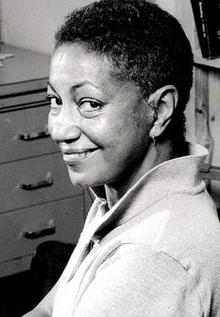
Unsourced — Primary work/page citation not yet verified in the QuotesCosmos archive. Per our Unnamed Sources & Verification Policy, quotes without confirmed primary editions are explicitly marked Unsourced while under editorial review.
Adrienne Rich on Charles Bernstein 3 quotes
“In the America where I'm writing now, suffering is diagnosed relentlessly as personal, individual, maybe familial, and at most to be "shared" with a group specific to the suffering, in the hope of "recovery." We lack a vocabulary for thinking about pain as communal and public, or as deriving from "skewed social relations" (Charles Bernstein).”

Unsourced — Primary work/page citation not yet verified in the QuotesCosmos archive. Per our Unnamed Sources & Verification Policy, quotes without confirmed primary editions are explicitly marked Unsourced while under editorial review.
Adrienne Rich on Simone de Beauvoir 3 quotes
“(about Lorraine Hansberry) In 1957, she had begun the draft of an essay on Simone de Beauvoir's The Second Sex in which Hansberry said, "The Second Sex may well be the most important work of this century." She assessed the reception of the book in America, the gossip surrounding de Beauvoir's personal life which substituted for serious debate on her ideas.”
Unsourced — Primary work/page citation not yet verified in the QuotesCosmos archive. Per our Unnamed Sources & Verification Policy, quotes without confirmed primary editions are explicitly marked Unsourced while under editorial review.
Quotes About Adrienne Rich
Gain deeper perspective through quotes about Adrienne Rich from others.
Paula Gunn Allen Interview on Adrienne Rich
“Adrienne Rich has also had a real influence on me and more recently Audre Lorde.”
Unsourced — Primary work/page citation not yet verified in the QuotesCosmos archive. Per our Unnamed Sources & Verification Policy, quotes without confirmed primary editions are explicitly marked Unsourced while under editorial review.
Paula Gunn Allen on Adrienne Rich
“Native American literature should be important to Americans not as a curio, an artifact of the American past that has little pertinence to an American present or future, but rather as a major tradition that informs American writers ranging from Cotton Mather and Nathaniel Hawthorne through Walt Whitman, William Carlos Williams, and William Faulkner to Adrienne Rich, Toni Cade Bambara, and Judy Grahn.”

Unsourced — Primary work/page citation not yet verified in the QuotesCosmos archive. Per our Unnamed Sources & Verification Policy, quotes without confirmed primary editions are explicitly marked Unsourced while under editorial review.
Joyce Antler on Adrienne Rich
“As Di Vilde Chayes began its meetings in February, Adrienne Rich outlined her goals for the group: "Dear Schvesters: Thinking about what a Jewish Lesbian group/cell/collective/study group/action group/network or combination of these, might be.... I want to be part ... of a Jewish/lesbian/feminist group which can develop an analysis of anti-Semitism and Jewish identity for ourselves and for the feminist movement and which will also relentlessly keep this in with what we already understand of racism, class injustice woman-hating, homophobia. Rich felt that she had a lot of work to do "simply to feel and understand" both her "existence and oppression as a Jew." When Evelyn Torton Beck invited her to contribute to Nice Jewish Girls, she at first declined, but after thinking over the issues for a year, Rich wrote "Split at the Root" for the anthology. The essay spoke of the profound difficulties of focusing on different oppressions at the same time. "Sometimes I feel I have seen too long from too many disconnected angles," Rich wrote memorably in the now-classic essay, "white, Jewish, anti-Semite, racist, anti-racist, once-married lesbian, middle-class, feminist, exmatriate Southerner, split at the root; that I will never bring them whole."... Although Judaism was "yet another strand of patriarchy," she always added mentally, "if Jews had to wear yellow stars again, I too would wear one"...Di Vilde Chayes' formation offered "another beginning," analogous to the founding moments of radical feminism. "In some ways this feels to me like the early 1970s when we were rushing about searching for the lost, out-of-print, hard-to-come-by information we needed," she wrote to her Di Vilde Chayes sisters, "the books gathering dust in libraries, the history we didn't know. We exchange bibliographies, follow off leads in other bibliographies. We start trying to name what is happening, We make lists... of Jewish women fiction writers in America and are shocked at how few we find. We start... reversing stereotypes, claiming our strengths. At the same time, within the very movement where this is happening, we have to confront unexamined bigotry, old Leftist attitudes, etc." Given the historical exigencies of the times and the coming together of Di Vilde Chayes, along with work done by other Nice Jewish Girls contributors, Rich felt that her own perspectives were "changing, opening out.” “I am glad that each of you exists," she told the Schwesters.”
Unsourced — Primary work/page citation not yet verified in the QuotesCosmos archive. Per our Unnamed Sources & Verification Policy, quotes without confirmed primary editions are explicitly marked Unsourced while under editorial review.
Bettina Aptheker on Adrienne Rich
“I am indebted to Adrienne Rich whose thinking on so many issues influenced my own, and who read this manuscript in full, offering detailed notes. Her support, and incisive criticisms and suggestions were of great importance to me emotionally and intellectually.”

Unsourced — Primary work/page citation not yet verified in the QuotesCosmos archive. Per our Unnamed Sources & Verification Policy, quotes without confirmed primary editions are explicitly marked Unsourced while under editorial review.
Ana Castillo "A Countryless Woman" on Adrienne Rich
“I cannot say I am a citizen of the world as Virginia Woolf, speaking as an Anglo woman born to economic means, declared herself; nor can I make the same claim to U.S. citizenship as Adrienne Rich does despite her universal feeling for humanity. As a mestiza born to the lower strata, I am treated at best, as a second class citizen, at worst, as a non-entity. I am commonly perceived as a foreigner everywhere I go, including in the United States and in Mexico. This international perception is based on my color and features. I am neither black nor white. I am not light skinned and cannot be mistaken for "white"; because my hair is so straight I cannot be mistaken for "black." And by U.S..standards and according to some North American Native Americans, I cannot make official claims to being india.”
Unsourced — Primary work/page citation not yet verified in the QuotesCosmos archive. Per our Unnamed Sources & Verification Policy, quotes without confirmed primary editions are explicitly marked Unsourced while under editorial review.


About Adrienne Rich
Adrienne Rich (16 May 1929 - 27 March 2012) was an American feminist, poet, teacher, and writer.