Adrienne Rich on June Jordan
← Back to Adrienne Rich Profile
“I also want to read, and make, poems that remind me "why it must come," why what June Jordan calls the logic of "the infinite connectedness of human life" demands equality in community. This poetry is worth our most sacred and profane passion, because it embodies our desire, what we might create, in the difficult world around the poem.”
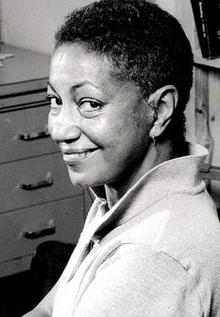
“June Jordan’s poetry embraces a half-century in which she dwelt as poet, intellectual, and activist: also as teacher, observer, and recorder. In a sense unusual among twentieth-century poets of the United States, she believed in and lived the urgency of the word — along with action — to resist abuses of power and violations of dignity in — and beyond — her country.”
“She believed, and nourished the belief, that genuine, up-from-the-bottom revolution must include art, laughter, sensual pleasure, and the widest possible human referentiality. She wrote from her experience in a woman's body and a dark skin, though never solely "as" or "for." Sharply critical of nationalism, separatism, chauvinism of all kinds as tendencies toward narrowness and isolation, she was too aware of democracy's failures to embrace false integrations. Her poetic sensibility was kindred to Blake's scrutiny of innocence and experience; to Whitman's vision of sexual and social breadth; to Gwendolyn Brooks's and Romare Bearden's portrayals of ordinary black people's lives; to James Baldwin's expression of the bitter contradictions within the republic...She knew many poetries, ancient and modern; her sonnets, for example, are both silken and surprising. But in her preface to the collection Passion, she matched herself consciously most incisive essays from the last two decades with the tradition of "New World poetry," non-European, deriving in North America from Whitman, and including "Pablo Neruda, Agostinho Neto, Gabriela Mistral, Langston Hughes, Margaret Walker and Edward Brathwaite."”