Link Copied!
Ernst von Glasersfeld Quotes (1917-2010)
Philosopher, King
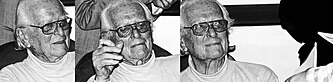

About Ernst von Glasersfeld
Ernst von Glasersfeld (March 8, 1917 – November 12, 2010) was an Austrian-born American philosopher, and Professor of Psychology at the University of Georgia.
Best Ernst von Glasersfeld Quotes
Shortest
Earliest
Explore our curated collection of the most famous and impactful Ernst von Glasersfeld quotes.
“The history of scientific ideas shows all too blatantly that there has been no overall linear progression.”

“From an explorer who is condemned to seek 'structural properties' of an inaccessible reality, the experiencing organism now turns-into a builder of cognitive structures intended to solve such problems as the organism perceives.”
“.. in spite of the fact that it often feels as though the meaning of words and sentences were conveyed to us by the sounds of speech or the signs on a printed page, It is easy to show that meanings do not travel through space and must under all circumstances be constructed in the head of the language users.”
“For me, as I later came to say, cybernetics is the art of creating equilibrium in a world of possibilities and constraints. This is not just a romantic description, it portrays the new way of thinking quite accurately. Cybernetics differs from the traditional scientific procedure, because it does not try to explain phenomena by searching for their causes, but rather by specifying the constraints that determine the direction of their development.”
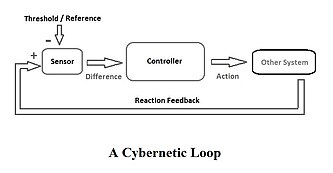
“...I believe I have come to adopt a cybernetic way of thinking... I became aware of this in the many conversations with students who were worrying about their future and asked for advice. I heard myself telling them that it was far more important to know what one did not want to do, than to have detailed plans of what one did want to do. One day it dawned on me that this was plain cybernetic advice; It is more useful to specify constraints rather than goals. - And then I explained it by adding that in one’s teens or twenties one usually has already discovered a number of things that one cannot stand, whereas it is quite impossible to foresee what, ten or twenty years later, will provide the satisfactions needed to maintain one’s equilibrium.”

“Once knowing is no longer understood as the search for an iconic representation of ontological reality but, instead, as a search for fitting ways of behaving and thinking, the traditional problem disappears. Knowledge can now be seen as something which the organism builds up in the attempt to order the as such amorphous flow of experience by establishing repeatable experiences and relatively reliable relations between them. The possibilities of constructing such an order are determined and perpetually constrained by the preceding steps in the construction. That means that the “real” world manifests itself exclusively there where our constructions break down. But since we can describe and explain these breakdowns only in the very concepts that we have used to build the failing structures, this process can never yield a picture of a world that we could hold responsible for their failure.”
“As a metaphor - and I stress that it is intended as a metaphor - the concept of an invariant that arises out of mutually or cyclically balancing changes may help us to approach the concept of self. In cybernetics this metaphor is implemented in the ‘closed loop’, the circular arrangement of feedback mechanisms that maintain a given value within certain limits. They work toward an invariant, but the invariant is achieved not by a steady resistance, the way a rock stands unmoved in the wind, but by compensation over time. Whenever we happen to look in a feedback loop, we find the present act pitted against the immediate past, but already on the way to being compensated itself by the immediate future. The invariant the system achieves can, therefore, never be found or frozen in a single element because, by its very nature, it consists in one or more relationships - and relationships are not in things but between them.
If the self, as I suggest, is a relational entity, it cannot have a locus in the world of experiential objects. It does not reside in the heart, as Aristotle thought, nor in the brain, as we tend to think today. It resides in no place at all, but merely manifests itself in the continuity of our acts of differentiating and relating and in the intuitive certainty we have that our experience is truly ours.”
If the self, as I suggest, is a relational entity, it cannot have a locus in the world of experiential objects. It does not reside in the heart, as Aristotle thought, nor in the brain, as we tend to think today. It resides in no place at all, but merely manifests itself in the continuity of our acts of differentiating and relating and in the intuitive certainty we have that our experience is truly ours.”
Ernst von Glasersfeld Quotes by Topic
Find exactly what you are looking for by browsing this categorized list of Ernst von Glasersfeld quotes by topic.
Ernst von Glasersfeld on Knowledge
Ernst von Glasersfeld on Cybernetics
“For me, as I later came to say, cybernetics is the art of creating equilibrium in a world of possibilities and constraints. This is not just a romantic description, it portrays the new way of thinking quite accurately. Cybernetics differs from the traditional scientific procedure, because it does not try to explain phenomena by searching for their causes, but rather by specifying the constraints that determine the direction of their development.”
Ernst von Glasersfeld on Ontology
“Once knowing is no longer understood as the search for an iconic representation of ontological reality but, instead, as a search for fitting ways of behaving and thinking, the traditional problem disappears. Knowledge can now be seen as something which the organism builds up in the attempt to order the as such amorphous flow of experience by establishing repeatable experiences and relatively reliable relations between them. The possibilities of constructing such an order are determined and perpetually constrained by the preceding steps in the construction. That means that the “real” world manifests itself exclusively there where our constructions break down. But since we can describe and explain these breakdowns only in the very concepts that we have used to build the failing structures, this process can never yield a picture of a world that we could hold responsible for their failure.”

Quotes About Ernst von Glasersfeld
Gain deeper perspective through quotes about Ernst von Glasersfeld from others.
Stuart A. Umpleby on Ernst von Glasersfeld

Luciano L'Abate on Ernst von Glasersfeld
“Ernst von Glasersfeld, who founded radical constructivism (RC) in the 1970s, is clearly on Kuhn's side”
About Ernst von Glasersfeld
Ernst von Glasersfeld (March 8, 1917 – November 12, 2010) was an Austrian-born American philosopher, and Professor of Psychology at the University of Georgia.
QuotesCosmos Cross-Civilizational Archive
Explore Related Wisdom Pillars, Worldviews & Canonical Works
Discover how humanity's greatest philosophers, sacred scriptures, and literary masterpieces address the core questions of existence.
30 Wisdom Pillars
22 Worldviews & Traditions
Canonical Books & Scriptures