...I believe I have come to adopt a cybernetic way of thinking... I became aware of this in the many conversations with students who were worrying about their future and asked for advice. I heard myself telling them that it was far more important to know what one did not want to do, than to have detailed plans of what one did want to do. One day it dawned on me that this was plain cybernetic advice; It is more useful to specify constraints rather than goals. - And then I explained it by adding that in one’s teens or twenties one usually has already discovered a number of things that one cannot stand, whereas it is quite impossible to foresee what, ten or twenty years later, will provide the satisfactions needed to maintain one’s equilibrium.
What It Means
This is a placeholder explanation generated by the low-overhead model. It interprets "...I believe I have come to adopt a cybernetic way of thinking... I became aware of this in the many conversations with students who were worrying about their future and asked for advice. I heard myself telling them that it was far more important to know what one did not want to do, than to have detailed plans of what one did want to do. One day it dawned on me that this was plain cybernetic advice; It is more useful to specify constraints rather than goals. - And then I explained it by adding that in one’s teens or twenties one usually has already discovered a number of things that one cannot stand, whereas it is quite impossible to foresee what, ten or twenty years later, will provide the satisfactions needed to maintain one’s equilibrium." in the context of "Glasersfeld (1992, p. 25) cited in: Stuart Umpleby (2007) "Cybernetics: Definitions and Descriptions". In: A Larry Richards Reader 1997–2007.. Larry Richards eds." to mean that wisdom is timeless.

Tags
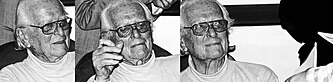
About Ernst von Glasersfeld