Link Copied!
Akbar Quotes (1542-1605)
Emperor
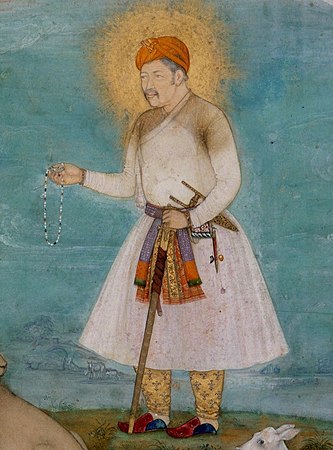
About Akbar
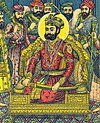
Abu'l-Fath Jalal ud-din Muhammad Akbar, popularly known as Akbar I (IPA: əkbər, literally "the great"; 15 October 1542– 27 October 1605), and later Akbar the Great (Urdu: Akbar-e-Azam; literally "Great the Great"), was the third Mughal emperor, who reigned from 1556 to 1605. Akbar succeeded his father, Humayun, under a regent, Bairam Khan, who helped the young emperor expand and consolidate Mughal domains in India.
Best Akbar Quotes
Shortest
Earliest
Explore our curated collection of the most famous and impactful Akbar quotes.
“With Islamic zeal, Akbar at first persecuted the Hindus.”
“The king, in his wisdom, understood the spirit of the age, and shaped his plans accordingly.”

“Akbar’s court was essentially foreign, and even in his later years the Indian element, whether Hindu or Moslem, constituted only a small proportion of the whole.”
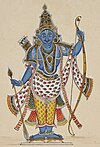
“Akbar's liberalism can be adjudged from another fact, namely that he issued gold and silver coins bearing the figures of Rama and Sita and inscribed with the legend Rama Siya.”
“The compassionate heart of his majesty finds no pleasure in cruelties or in causing sorrow to others; he is ever sparing of the lives of his subjects, wishing to bestow happiness upon all.”


“[Brahmans] surpass other learned men in their treatises on morals....His Majesty, on hearing… how much the people of the country prized their institutions, commenced to look upon them with affection.”
“The first revolutionary step of Akbar was the abolition of the Jiziyah, the hated discriminatory tax paid by Hindu Zimmis. The Hindus, as Zimmis, had become second class citizens in their own homeland and were suffered to live under certain disabilities.”
“Akbar – The great Mogul Emperor of India, the famous patron of religions, arts, and sciences, the most liberal of all the Mussulman sovereigns. There has never been a more tolerant or enlightened ruler than the Emperor Akbar, either in India or in any other Mahometan country.”
“Islam, like the other two religions of the Judaic family, is exclusive-minded and intolerant by comparison with the religions and philosophies of Indian origin. Yet the influence of India on Akbar went so deep that he was characteristically Indian in (his) large-hearted catholicity.”
“Professor Mubarak Ali, a respected historian living in Lahore, asserts that Akbar has been systematically eliminated from most textbooks in Pakistan in order to "divert attention away from his 'misplaced' policies". Where they exist, discussions of Akbar are short and superficial...”
“Akbar had prohibited enslavement and sale of women and children of peasants who had defaulted in payment of revenue. He knew, as Abul Fazl says, that many evil hearted and vicious men either because of ill-founded suspicion or sheer greed, used to proceed to villages and mahals and sack them.”
“This hall was, by order of the Emperor Jehanguire, the son of Acbar, highly decorated with painting and gilding; but in the lapse of time it was found to be gone greatly to decay; and the Emperor Aurungzebe, either from superstition or avarice, ordered it to be entirely defaced, and the walls whitened.”

“[The people also got busy collecting] "all kinds of exploded errors, and brought them to his Majesty, as if they were so many presents... Every doctrine and command of Islam as the prophetship, the harmony of Islam with reason... the details of the day of resurrection and judgement, all were doubted and ridiculed."”

“Akbar was the first emperor to abolish Jizyah with one stroke of pen, along with all its associations and implications, including the distinction of Muslim and Dhimmî into the bargain. His son and grandson followed his example in regard to Jizyah, generally speaking, but reimposed upon the Hindus all the other restrictions and disabilities suffered by them before.”
“To most Hindus Akbar is one of the greatest of the Muslim emperors of India and Aurangzeb one of the worst; to many Muslims the opposite is the case. To an outsider there can be little doubt that Akbar's way was the right one. . . . Akbar disrupted the Muslim community by recognizing that India is not an Islamic country: Aurangzeb disrupted India by behaving as though it were.”

“Like a good Turk he had no effeminate distaste for human blood; when, at the age of fourteen, he was invited to win the title of Ghazi—Slayer of the Infidel—by killing a Hindu prisoner, he cut off the man’s head at once with one stroke of his scimitar. These were the barbarous beginnings of a man destined to become one of the wisest, most humane and most cultured of all the kings known to history.”
“"At the religious discussion meetings held by Akbar, 'at which every one... might say or ask what he liked,' the emperor examined people about the creation of the Quran, elicited their belief, or otherwise, in revelation, and raised doubts in them regarding all things connected with the Prophet and the imams. He distinctly denied the existence of Jins, of angels, and of all other beings of the invisible world, as well as the miracles of the Prophet."”
“[Akbar is reported to have said:] “My dear child… with all of God’s creatures, I am at peace; why should I permit myself, under any consideration, to be the cause of molestation or aggression to any one? Besides, are not five parts in six of mankind either Hindus or aliens to the faith; and were I to be governed by motives of the kind suggested in your inquiry, what alternative can I have but to put them all to death? I have thought it therefore my wisest plan to let these men alone.””

“Although the Mughal emperor Akbar attempted to prohibit the practice of enslaving conquered Hindus, his efforts were only temporarily successful.43 According to one early seventeenth-century account, 'Abd Allah Khan Firuz Jang, an Uzbek noble at the Mughal court during the 1620s and 1630s, was appointed to the position of governor of the regions of Kalpi and Kher and, in the process of subjugating the local rebels, "beheaded the leaders and enslaved their women, daughters and children, who were more than 2 lacks [200,000] in number".”
“The same spirit of intolerance was shown by the Jesuit fathers in the Moghul court. The Emperor Akbar took great interest in religious discussions and summoned to the court scholarly Jesuit missionaries from Goa. They were received with great courtesy, but the free discussions in the Ibadat Khana (House of Worship), where the debates on religion took place, displeased the Jesuit fathers greatly. Their intolerance of other religions and their arrogant attitude towards the exponents of other faiths were unwelcome also to the Emperor. So the missionaries had to leave the capital greatly disappointed.”

“It is significant and ironic that the most tolerant of all the Muslim rulers in the history of India was also the one who moved farthest away from orthodox Islam and, in the end, rejected it for an eclectic religion of his own devising... Akbar's driving principle was universal toleration, and all the Hindus, Christians, Jains, and Parsees enjoyed full liberty of conscience and of public worship. He married Hindu princesses, abolished pilgrim dues, and employed Hindus in high office. The Hindu princesses were even allowed to practice their own religious rites inside the palace. "No pressure was put on the princes of Amber, Marwar, or Bikaner to adopt Islam, and they were freely entrusted with the highest military commands and the most responsible administrative offices. That was an entirely new departure, due to Akbar himself."”
“Both law and taxation were severe, but far less than before. From one-sixth to one-third of the gross produce of the soil was taken from the peasants, amounting to some $100,000,000 a year in land tax. The Emperor was legislator, executive and judge; as supreme court he spent many hours in giving audience to important litigants. His law forbade child marriage and compulsory suttee, sanctioned the remarriage of widows, abolished the slavery of captives and the slaughter of animals for sacrifice, gave freedom to all religions, opened career to every talent of whatever creed or race, and removed the head-tax that the Afghan rulers had placed upon all Hindus unconverted to Islam.91 At the beginning of his reign the law included such punishments as mutilation; at the end it was probably the most enlightened code of any sixteenth-century government. Every state begins with violence, and (if it becomes secure) mellows into liberty.”

“It is highly doubtful if the Mughal period deserves the credit it has been given as a period of religious tolerance. Akbar is now known only for his policy of sulh-i-kul, at least among the learned Hindus. It is no more remembered that to start with he was also a pious Muslim who had viewed as jihãd his sack of Chittor. Nor is it understood by the learned Hindus that his policy of sulh-i-kul was motivated mainly by his bid to free himself from the stranglehold of the orthodox ‘Ulamã, and that any benefit which Hindus derived from it was no more than a by-product. Akbar never failed to demand daughters of the Rajput kings for his harem. Moreover, as our citations show, he was not able to control the religious zeal of his functionaries at the lower levels so far as Hindu temples were concerned. ... The reversal of Akbar’s policy thus started by his two immediate successors reached its apotheosis in the reign of Aurangzeb, the paragon of Islamic piety in the minds of India’s Muslims. What is more significant, Akbar has never been forgiven by those who have regarded themselves as custodians of Islam, right upto our own times; Maulana Abul Kalam Azad is a typical example. In any case one swallow has never made a summer.”

“While Catholics were murdering Protestants in France, and Protestants, under Elizabeth, were murdering Catholics in England, and the Inquisition was killing and robbing Jews in Spain, and Bruno was being burned at the stake in Italy, Akbar invited the representatives of all the religions in his empire to a conference, pledged them to peace, issued edicts of toleration for every cult and creed, and, as evidence of his own neutrality, married wives from the Brahman, Buddhist, and Mohammedan faiths.
His greatest pleasure, after the fires of youth had cooled, was in the free discussion of religious beliefs. … The King took no stock in revelations, and would accept nothing that could not justify itself with science and philosophy. It was not unusual for him to gather friends and prelates of various sects together, and discuss religion with them from Thursday evening to Friday noon. When the Moslem mullahs and the Christian priests quarreled he reproved them both, saying that God should be worshiped through the intellect, and not by a blind adherence to supposed revelations. "Each person," he said, in the spirit — and perhaps through the influence — of the Upanishads and Kabir, "according to his condition gives the Supreme Being a name; but in reality to name the Unknowable is vain."”
His greatest pleasure, after the fires of youth had cooled, was in the free discussion of religious beliefs. … The King took no stock in revelations, and would accept nothing that could not justify itself with science and philosophy. It was not unusual for him to gather friends and prelates of various sects together, and discuss religion with them from Thursday evening to Friday noon. When the Moslem mullahs and the Christian priests quarreled he reproved them both, saying that God should be worshiped through the intellect, and not by a blind adherence to supposed revelations. "Each person," he said, in the spirit — and perhaps through the influence — of the Upanishads and Kabir, "according to his condition gives the Supreme Being a name; but in reality to name the Unknowable is vain."”
Akbar Quotes by Topic
Find exactly what you are looking for by browsing this categorized list of Akbar quotes by topic.
Akbar on Varanasi
“The people of Benares had closed their gates, so orders were given for plundering the city.”

Akbar on Pakistan
“While the landlords and capitalists allowed the clergy to make Pakistan a religious state, the clergy allowed the landlords guaranteed property rights and the capitalists unbridled control over the economy. Theocracy and landlordism/capitalism are the two pillars of Pakistan and Bangladesh.”

Akbar on Alhambra
“There is no pain in life, they say in Granada, so cruel as to be blind in Alhambra. When the Arabs of the desert conquered Spain, they said that they had reached heaven. From the ramparts of the Alhambra, sitting on a spur of the Sierra Nevada, look out and you see a paradise created by nature; look in and you see a paradise created by man.”

Akbar on 2024 Indian general election
“Are we (Muslims) infiltrators and people with many children?... Do you know how many siblings Atal Bihari Vajpayee had... Muslims are the people having many children and Vajpayee and his siblings were 7 in number... Yogi Adityanath and his siblings are 7 in number... Amit Shah and his siblings are also 7 in number. Narendra Modi and his siblings are 6 in number... We are those who have given the Taj Mahal, Qutab Minar, Red Fort, Jama Masjid and Char Minar to this nation. We have decorated this nation. We are not infiltrators. We belong to this nation. This nation is ours and will be ours.”
Akbar on Odisha
“From the time that India was conquered, none of the princes had raised his standard over Orissa. The rulers of that country had always been powerful, and the Rajah who was now ruling them was especially so. From the time when the Afghans had stretched their hand out over Bengal they had continually planted in the gardens of their as- pirations the wishing tree of the conquest of Orissa, but it never bore fruit. For on the borders thereof there were dangerous passes and lofty mountains, and heights and declivities innumerable, and difficult forests so that grasping hands of princes could not reach it. It is difficult for armies to tread on that soil.”

Akbar on History of Odisha
“From the time that India was conquered, none of the princes had raised his standard over Orissa. The rulers of that country had always been powerful, and the Rajah who was now ruling them was especially so. From the time when the Afghans had stretched their hand out over Bengal they had continually planted in the gardens of their as- pirations the wishing tree of the conquest of Orissa, but it never bore fruit. For on the borders thereof there were dangerous passes and lofty mountains, and heights and declivities innumerable, and difficult forests so that grasping hands of princes could not reach it. It is difficult for armies to tread on that soil.”

What Akbar Said About Others
Discover personal opinions Akbar shared regarding contemporaries.
Akbar on M. J. Akbar 3 quotes
“Jihad is the signature tune of Islamic history. If today’s Muslim rulers are reluctant to sound that note, it is often because they are concerned about the consequences of failure.”

Akbar on Hemu
“Akbar was now informed that Haji Khan, a ghulam of Sher Khan Afghan [Sher Shah], a brave and able general, was setting up pretensions to rule in Alwar and that Himu’s father and wife, and all his property and wealth, were in that country. So the Emperor sent Nasiru-l Mulk [Pir Muhammad Sarwani] with a select force to attack him. Haji Khan, in dread of the Imperial army, fled before it arrived. Alwar and all the territory of Mewat thus came into the Imperial power. The fugitives proceeded to Dewati-majari, a strong place, which was Himu’s family home. Much resistance and fighting followed. Himu’s father was taken alive, and brought before Nasiru-l Mulk, who tried to convert him to the faith; but the old man said, ‘For eighty years I have worshipped God in the way of my own religion; how can I now forsake my faith? Shall I, through fear of death, embrace your religion without understanding it?’ Maulana Pir Muhammad treated his question as unheard, but gave him an answer with the tongue of the sword. He then returned with much spoil and fifty elephants to the Emperor.”
Quotes About Akbar
Gain deeper perspective through quotes about Akbar from others.
Tabqãt-i-Akharî by Nizamuddin Ahmad. Jalãlu’d-Dîn Muhammad Akbar Pãdshãh Ghãzî on Akbar
““On the 1st Rajab 990 [AD 1582] he (Husain Qulî Khãn) encamped by a field of maize near NagarkoT. The fortress (hissãr) of Bhîm, which is an idol temple of Mahãmãî, and in which none but her servants dwelt, was taken by the valour of the assailants at the first assault. A party of Rajpûts, who had resolved to die, fought most desperately till they were all cut down. A number of Brãhmans who for many years had served the temple, never gave one thought to flight, and were killed. Nearly 200 black cows belonging to Hindûs had, during the struggle, crowded together for shelter in the temple. Some savage Turks, while the arrows and bullets were falling like rain, killed those cows. They then took off their boots and filled them with the blood and cast it upon the roof and walls of the temple.”173”
Jalãlu’d-Dîn Muhammad Akbar Pãdshãh Ghãzî on Akbar
“When Mewar was invaded [AD 1600] many temples were demolished by the invading Mughal army [led by Prince Salîm].”
About Akbar
Abu'l-Fath Jalal ud-din Muhammad Akbar, popularly known as Akbar I (IPA: əkbər, literally "the great"; 15 October 1542– 27 October 1605), and later Akbar the Great (Urdu: Akbar-e-Azam; literally "Great the Great"), was the third Mughal emperor, who reigned from 1556 to 1605. Akbar succeeded his father, Humayun, under a regent, Bairam Khan, who helped the young emperor expand and consolidate Mughal domains in India.