Jalãlu’d-Dîn Muhammad Akbar Pãdshãh Ghãzî (AD 1556-1605) Mewar (Rajasthan) . Zubdatu’t-Tawãrîkh, Shaykh Nãru’l-Haqq al-Mashriqî al-Dihlivî al-Bukhãrî, Tãrîkh-i-Haqqî (of which Zubdatu’t-Tawãrîkh is an extension) cited by Sharma Sri Ram. 1988. The Religious Policy of the Mughal Emperors. 3rd ed. New Delhi: Munshiram Manoharlal.,, p. 62.
“
When Mewar was invaded [AD 1600] many temples were demolished by the invading Mughal army [led by Prince Salîm].
— Jalãlu’d-Dîn Muhammad Akbar Pãdshãh Ghãzî
What It Means
This is a placeholder explanation generated by the low-overhead model. It interprets "When Mewar was invaded [AD 1600] many temples were demolished by the invading Mughal army [led by Prince Salîm]." in the context of "Jalãlu’d-Dîn Muhammad Akbar Pãdshãh Ghãzî (AD 1556-1605) Mewar (Rajasthan) . Zubdatu’t-Tawãrîkh, Shaykh Nãru’l-Haqq al-Mashriqî al-Dihlivî al-Bukhãrî, Tãrîkh-i-Haqqî (of which Zubdatu’t-Tawãrîkh is an extension) cited by Sharma Sri Ram. 1988. The Religious Policy of the Mughal Emperors. 3rd ed. New Delhi: Munshiram Manoharlal.,, p. 62." to mean that wisdom is timeless.
Source: Wikiquote: "Akbar" (Quotes, Quotes about Akbar's military campaigns)
The 'What it means' explanation text was generated by Google Gemini Flash (accessed January 18, 2026). https://gemini.google.com/app
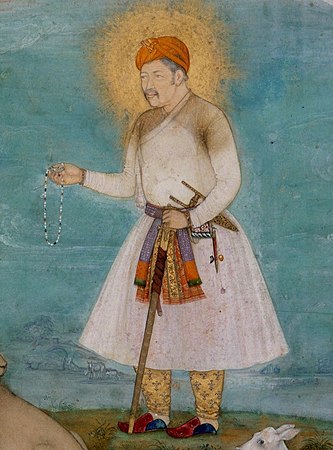
About Akbar
Abu'l-Fath Jalal ud-din Muhammad Akbar, popularly known as Akbar I (IPA: əkbər, literally "the great"; 15 October 1542– 27 October 1605), and later Akbar the Great (Urdu: Akbar-e-Azam; literally "Great the Great"), was the third Mughal emperor, who reigned from 1556 to 1605. Akbar succeeded his father, Humayun, under a regent, Bairam Khan, who helped the young emperor expand and consolidate Mughal domains in India.
View all quotes →