Link Copied!
T. S. Eliot Quotes (1888-1965)
Poet






























About T. S. Eliot
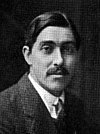
Thomas Stearns Eliot (26 September 1888 – 4 January 1965) was an American-born English poet, dramatist and literary critic. Noted for spiritual and religious themes in many of his poems, he converted from Unitarianism to Anglicanism in 1927.
Best T. S. Eliot Quotes
Shortest
Earliest
Explore our curated collection of the most famous and impactful T. S. Eliot quotes.


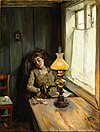
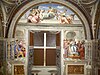
“In the room the women come and go
Talking of Michelangelo.”
Talking of Michelangelo.”
“Here is Belladonna, the Lady of the Rocks,
The lady of situations.”
The lady of situations.”

“O O O O that Shakespeherian Rag—
It's so elegant
So intelligent”
It's so elegant
So intelligent”
“It is not enthusiasm, but dogma, that differentiates a Christian from a pagan society.”

“It is certain that a book is not harmless merely because no one is consciously offended by it.”
“Atheism should always be encouraged (i.e. rationalistic not emotional atheism) for the sake of the Faith.”

“I have given you the power of choice, and you only alternate
Between futile speculation and unconsidered action.”
Between futile speculation and unconsidered action.”
“What have we to do but stand with empty hands and palms turned upwards in an age which advances progressively backwards?”
“And we all say: OH!
Well I never!
Was there ever
A Cat so clever
As Magical Mr. Mistoffelees!”
Well I never!
Was there ever
A Cat so clever
As Magical Mr. Mistoffelees!”
“My general point of view may be described as classicist in literature, royalist in politics, and Anglo-Catholic in religion.”

“Because I cannot hope to turn again
Consequently I rejoice, having to construct something
Upon which to rejoice”
Consequently I rejoice, having to construct something
Upon which to rejoice”
“He's the bafflement of Scotland Yard, the Flying Squad's despair:
For when they reach the scene of crime — Macavity's not there!”
For when they reach the scene of crime — Macavity's not there!”

“The broad-backed hippopotamus
Rests on his belly in the mud;
Although he seems so firm to us
He is merely flesh and blood.”
Rests on his belly in the mud;
Although he seems so firm to us
He is merely flesh and blood.”

“This is the land which ye
Shall divide by lot. And neither division nor unity
Matters. This is the land. We have our inheritance.”
Shall divide by lot. And neither division nor unity
Matters. This is the land. We have our inheritance.”
“Grishkin is nice: her
Russian eye is underlined for emphasis;
Uncorseted, her friendly bust
Gives promise of pneumatic bliss.”
Russian eye is underlined for emphasis;
Uncorseted, her friendly bust
Gives promise of pneumatic bliss.”
“Wavering between the profit and the loss
In this brief transit where the dreams cross
The dreamcrossed twilight between birth and dying”
In this brief transit where the dreams cross
The dreamcrossed twilight between birth and dying”
“It is a test (a positive test, I do not assert that it is always valid negatively), that genuine poetry can communicate before it is understood.”

“Between the idea
And the reality
Between the motion
And the act
Falls the Shadow
For Thine is the Kingdom.”
And the reality
Between the motion
And the act
Falls the Shadow
For Thine is the Kingdom.”
“I am moved by fancies that are curled
Around these images, and cling:
The notion of some infinitely gentle
Infinitely suffering thing.”
Around these images, and cling:
The notion of some infinitely gentle
Infinitely suffering thing.”

“A good half of the effort of understanding what the Indian philosophers were after and their subtleties make most of the great European philosophers look like school boys...”

“Between the conception
And the creation
Between the emotion
And the response
Falls the Shadow
Life is very long.”
And the creation
Between the emotion
And the response
Falls the Shadow
Life is very long.”
“These fragments I have shored against my ruins
Why then Ile fit you. Hieronymo's mad againe.
Datta. Dayadhvam. Damyata.
Shantih shantih shantih”
Why then Ile fit you. Hieronymo's mad againe.
Datta. Dayadhvam. Damyata.
Shantih shantih shantih”
“The 'greatness' of literature cannot be determined solely by literary standards; though we must remember that whether it is literature or not can be determined only by literary standards.”
“In this decayed hole among the mountainsIn the faint moonlight, the grass is singingOver the tumbled graves, about the chapelThere is the empty chapel, only the wind's home.”
“No one can become really educated without having pursued some study in which he took no interest—for it is a part of education to interest ourselves in subjects for which we have no aptitude.”

“It is not the "greatness," the intensity, of the emotions, the components, but the intensity of the artistic process, the pressure, so to speak, under which the fusion takes place, that counts.”
“No verse is free for the man who wants to do a good job.…Poetry…remains one person talking to another....no poet can write a poem of amplitude unless he is the master of the prosaic.”
“Mr. Aldous Huxley, who is perhaps one of those people who have to perpetrate thirty bad novels before producing a good one, has a certain natural — but little developed — aptitude for seriousness.”
“What happens is a continual surrender of himself as he is at the moment to something which is more valuable. The progress of an artist is a continual self-sacrifice, a continual extinction of personality.”


“These modern productions are all very well,
But there's nothing to equal, from what I hear tell,
That moment of mystery
When I made history
As Firefrorefiddle, the Fiend of the Fell.”
But there's nothing to equal, from what I hear tell,
That moment of mystery
When I made history
As Firefrorefiddle, the Fiend of the Fell.”
“Long ago I studied the ancient Indian languages, and while I was chiefly interested at that time in philosophy, I read a little poetry too; and I know that my own poetry shows the influence of Indian thought and sensibility.”

“They constantly try to escape
From the darkness outside and within
By dreaming of systems so perfect that no one will need to be good.
But the man that is shall shadow
The man that pretends to be.”
From the darkness outside and within
By dreaming of systems so perfect that no one will need to be good.
But the man that is shall shadow
The man that pretends to be.”

“I am glad you have a Cat, but I do not believe it is So remarkable a cat as My Cat. My Cat is a Lilliecat Hubvously. What a lilliecat it is. There never was such a Lilliecat. Its Name is JELLYORUM and its one Idea is to be Usefull!!”
“We may say that religion, as distinguished from modern paganism, implies a life in conformity with nature. It may be observed that the natural life and the supernatural life have a conformity to each other which neither has with the mechanistic life.”

“Macavity, Macavity, there's no one like Macavity,
For he's a fiend in feline shape, a monster of depravity.
You may meet him in a by-street, you may see him in the square —
But when a crime's discovered, then Macavity's not there!”
For he's a fiend in feline shape, a monster of depravity.
You may meet him in a by-street, you may see him in the square —
But when a crime's discovered, then Macavity's not there!”

“They say that all the Cats whose wicked deeds are widely known
(I might mention Mungojerrie, I might mention Griddlebone)
Are nothing more than agents for the Cat who all the time
Just controls their operations: the Napoleon of Crime!”
(I might mention Mungojerrie, I might mention Griddlebone)
Are nothing more than agents for the Cat who all the time
Just controls their operations: the Napoleon of Crime!”
“And now you live dispersed on ribbon roads,
And no man knows or cares who is his neighbor
Unless his neighbor makes too much disturbance,
But all dash to and fro in motor cars,
Familiar with the roads and settled nowhere.”
And no man knows or cares who is his neighbor
Unless his neighbor makes too much disturbance,
But all dash to and fro in motor cars,
Familiar with the roads and settled nowhere.”

“Because I do not hope to know
The infirm glory of the positive hour
Because I do not think
Because I know I shall not know
The one veritable transitory power
Because I cannot drink
There, where trees flower, and springs flow, for there is nothing again”
The infirm glory of the positive hour
Because I do not think
Because I know I shall not know
The one veritable transitory power
Because I cannot drink
There, where trees flower, and springs flow, for there is nothing again”

“Those who have crossed
With direct eyes, to death's other Kingdom
Remember us — if at all — not as lost
Violent souls, but only
As the hollow men
The stuffed men.”
With direct eyes, to death's other Kingdom
Remember us — if at all — not as lost
Violent souls, but only
As the hollow men
The stuffed men.”
“Whoever has approved this idea of order, of the form of European, of English literature, will not find it preposterous that the past should be altered by the present as much as the present is directed by the past. And the poet who is aware of this will be aware of great difficulties and responsibilities.”

“[T]he tendency of unlimited industrialism is to create bodies of men and women—of all classes—detached from tradition, alienated from religion, and susceptible to mass suggestion: in other words, a mob. And a mob will be no less a mob if it is well fed, well clothed, well housed, and well disciplined.”

“The majority of mankind is lazy-minded, incurious, absorbed in vanities, and tepid in emotion, and is therefore incapable of either much doubt or much faith; and when the ordinary man calls himself a sceptic or an unbeliever, that is ordinarily a simple pose, cloaking a disinclination to think anything out to a conclusion.”
“No poet, no artist of any art, has his complete meaning alone. His significance, his appreciation is the appreciation of his relation to the dead poets and artists. You cannot value him alone; you must set him, for contrast and comparison, among the dead. I mean this as a principle of æsthetic, not merely historical, criticism.”
“And I have known the eyes already, known them all —
The eyes that fix you in a formulated phrase,
And when I am formulated, sprawling on a pin,
When I am pinned and wriggling on the wall,
Then how should I begin
To spit out all the butt-ends of my days and ways?
And how should I presume?”
The eyes that fix you in a formulated phrase,
And when I am formulated, sprawling on a pin,
When I am pinned and wriggling on the wall,
Then how should I begin
To spit out all the butt-ends of my days and ways?
And how should I presume?”

“You now have learned enough to see
That Cats are much like you and me
And other people whom we find
Possessed of various types of mind.
For some are sane and some are mad
And some are good and some are bad
And some are better, some are worse —
But all may be described in verse.”
That Cats are much like you and me
And other people whom we find
Possessed of various types of mind.
For some are sane and some are mad
And some are good and some are bad
And some are better, some are worse —
But all may be described in verse.”
“It is impossible to say just what I mean!
But as if a magic lantern threw the nerves in patterns on a screen:
Would it have been worth while If one, settling a
Pillow or throwing off a shawl,
And turning toward the window, should say:
"That is not it at all,
That is not what I meant, at all."”
But as if a magic lantern threw the nerves in patterns on a screen:
Would it have been worth while If one, settling a
Pillow or throwing off a shawl,
And turning toward the window, should say:
"That is not it at all,
That is not what I meant, at all."”
“Because I do not hope to turn again
Because I do not hope
Because I do not hope to turn
Desiring this man's gift and that man's scope
I no longer strive to strive towards such things
(Why should the agèd eagle stretch its wings?)
Why should I mourn
The vanished power of the usual reign?”
Because I do not hope
Because I do not hope to turn
Desiring this man's gift and that man's scope
I no longer strive to strive towards such things
(Why should the agèd eagle stretch its wings?)
Why should I mourn
The vanished power of the usual reign?”
“It is self-evident that St. Louis affected me more deeply than any other environment has ever done. I feel that there is something in having passed one's childhood beside the big river, which is incommunicable to those people who have not. I consider myself fortunate to have been born here, rather than in Boston, or New York, or London.”
“Because these wings are no longer wings to fly
But merely vans to beat the air
The air which is now thoroughly small and dry
Smaller and dryer than the will
Teach us to care and not to care
Teach us to sit still.
But merely vans to beat the air
The air which is now thoroughly small and dry
Smaller and dryer than the will
Teach us to care and not to care
Teach us to sit still.
Pray for us sinners now and at the hour of our death
Pray for us now and at the hour of our death.”

“If we take the widest and wisest view of a Cause, there is no such thing as a Lost Cause, because there is no such thing as a Gained Cause. We fight for lost causes because we know that our defeat may be the preface to our successors' victory, though that victory itself will be temporary; we fight rather to keep something alive than in the expectation that it will triumph.”

“Eyes I dare not meet in dreams
In death's dream kingdom´
These do not appear:
There, the eyes are
Sunlight on a broken column
There, is a tree swinging
And voices are
In the wind's singing
More distant and more solemn
Than a fading star.”
In death's dream kingdom´
These do not appear:
There, the eyes are
Sunlight on a broken column
There, is a tree swinging
And voices are
In the wind's singing
More distant and more solemn
Than a fading star.”
“What is that sound high in the air
Murmur of maternal lamentation
Who are those hooded hordes swarming
Over endless plains, stumbling in cracked earth
Ringed by the flat horizon only
What is the city over the mountains
Cracks and reforms and bursts in the violet air
Falling towers
Jerusalem Athens Alexandria
Vienna London
Unreal”
Murmur of maternal lamentation
Who are those hooded hordes swarming
Over endless plains, stumbling in cracked earth
Ringed by the flat horizon only
What is the city over the mountains
Cracks and reforms and bursts in the violet air
Falling towers
Jerusalem Athens Alexandria
Vienna London
Unreal”

“No! I am not Prince Hamlet, nor was meant to be;
Am an attendant lord, one that will do
To swell a progress, start a scene or two,
Advise the prince; no doubt, an easy tool,
Deferential, glad to be of use,
Politic, cautious, and meticulous;
Full of high sentence, but a bit obtuse;
At times, indeed, almost ridiculous —
Almost, at times, the Fool.”
Am an attendant lord, one that will do
To swell a progress, start a scene or two,
Advise the prince; no doubt, an easy tool,
Deferential, glad to be of use,
Politic, cautious, and meticulous;
Full of high sentence, but a bit obtuse;
At times, indeed, almost ridiculous —
Almost, at times, the Fool.”
“But it seems that something has happened that has never happened before: though we know not just when, or why, or how, or where.
Men have left GOD not for other gods, they say, but for no God; and this has never happened before
That men both deny gods and worship gods, professing first Reason,
And then Money, and Power, and what they call Life, or Race, or Dialectic.”
Men have left GOD not for other gods, they say, but for no God; and this has never happened before
That men both deny gods and worship gods, professing first Reason,
And then Money, and Power, and what they call Life, or Race, or Dialectic.”
“For most people, the actual constitution of society, or that which their more generous passions wish to bring about, is right, and Christianity must be adapted to it. But the Church cannot be, in any political sense, either conservative, or liberal, or revolutionary. Conservatism is too often conservation of the wrong things; liberalism a relaxation of discipline; revolution a denial of the permanent things.”
“The bad poet is usually unconscious where he ought to be conscious, and conscious where he ought to be unconscious. Both errors tend to make him "personal." Poetry is not a turning loose of emotion, but an escape from emotion; it is not the expression of personality, but an escape from personality. But, of course, only those who have personality and emotions know what it means to want to escape from these things.”
“For the great mass of humanity whose attention is occupied mostly by their direct relation to the soil, or the sea, or the machine, and to a small number of persons, pleasures, and duties,[…] as their capacity for thinking about the objects of faith is small, their Christianity may be almost wholly realised in behaviour: both in their customary and periodic religious observances, and in a traditional code of behaviour towards their neighbours.”

“There will be time, there will be time
To prepare a face to meet the faces that you meet;
There will be time to murder and create,
And time for all the works and days of hands,
That lift and drop a question on your plate;
Time for you and time for me,
And time yet for a hundred indecisions,
And for a hundred visions and revisions,
Before the taking of a toast and tea.”
“Out of the meaningless practical shapes of all that is living or lifeless
Joined with the artist's eye, new life, new form, new colour.
Out of the sea of sound the life of music,
Out of the slimy mud of words, out of the sleet and hail of verbal imprecisions,
Approximate thoughts and feelings, words that have taken the place of thoughts and feelings,
There spring the perfect order of speech, and the beauty of incantation.”

“The Spirit descends in different ways, and I cannot foresee any future society in which we could classify Christians and non-Christians simply by their professions of belief, or even, by any rigid code, by their behaviour. In the present ubiquity of ignorance, one cannot but suspect that many who call themselves Christians do not understand what the word means, and that some who would vigorously repudiate Christianity are more Christian than many who maintain it.”
“Do I dare
Disturb the universe?
In a minute there is time
For decisions and revisions which a minute will reverse.
For I have known them all already, known them all: —
Have known the evenings, mornings, afternoons,
I have measured out my life with coffee spoons;
I know the voices dying with a dying fall
Beneath the music from a farther room.
So how should I presume?”
“And I have known the arms already, known them all —
Arms that are braceleted and white and bare
[But in the lamplight, downed with light brown hair!]
It is perfume from a dress
That makes me so digress?
Arms that lie along a table, or wrap about a shawl.
And should I then presume?
And how should I begin?
I should have been a pair of ragged claws
Scuttling across the floors of silent seas.”
“Any human scheme for society is realised only when the great mass of humanity has become adapted to it; but this adaptation becomes also, insensibly, an adaptation of the scheme itself to the mass on which it operates: the overwhelming pressure of mediocrity, sluggish and indomitable as a glacier, will mitigate the most violent, and depress the most exalted revolution, and what is realised is so unlike the end that enthusiasm conceived, that foresight would weaken the effort.”
“Then it seemed as if men must proceed from light to light, in the light of the Word,
Through the Passion and Sacrifice saved in spite of their negative being;
Bestial as always before, carnal, self seeking as always before, selfish and purblind as ever before,
Yet always struggling, always reaffirming,always resuming their march on the way that was lit by the light;
Often halting, loitering, straying, delaying, returning, yet following no other way.”

“The tiger springs in the new year. Us he devours. Think at last
We have not reached conclusion, when I
Stiffen in a rented house. Think at last
I have not made this show purposelessly
And it is not by any concitation
Of the backward devils.
I would meet you upon this honestly.
I that was near your heart was removed therefrom
To lose beauty in terror, terror in inquisition.
I have lost my passion: why should I need to keep it
Since what is kept must be adulterated?”
“We dwell with satisfaction upon the poet's difference from his predecessors, especially his immediate predecessors; we endeavour to find something that can be isolated in order to be enjoyed. Whereas if we approach a poet without this prejudice we shall often find that not only the best, but the most individual parts of his work may be those in which the dead poets, his ancestors, assert their immortality most vigorously. And I do not mean the impressionable period of adolescence, but the period of full maturity.”

“As political philosophy derives its sanction from ethics, and ethics from the truth of religion, it is only by returning to the eternal source of truth that we can hope for any social organisation which will not, to its ultimate destruction, ignore some essential aspect of reality. The term 'democracy', as I have said again and again, does not contain enough positive content to stand alone against the forces you dislike—it can easily be transformed by them. If you will not have God (and He is a jealous God) you should pay your respects to Hitler or Stalin.”

“We are being made aware that the organisation of society on the principle of private profit, as well as public destruction, is leading both to the deformation of humanity by unregulated industrialism, and to the exhaustion of natural resources, and that a good deal of our material progress is a progress for which succeeding generations may pay dearly. I need only mention, as an instance now very much before the public eye, the results of 'soil-erosion'—the exploitation of the earth, on a vast scale for two generations, for commercial profit: immediate benefits leading to dearth and desert.”

“If the lost word is lost, if the spent word is spent
If the unheard, unspoken
Word is unspoken, unheard;
Still is the unspoken word, the Word unheard,
The Word without a word, the Word within
The world and for the world;
And the light shone in darkness and
Against the Word the unstilled world still whirled
About the centre of the silent Word.
If the unheard, unspoken
Word is unspoken, unheard;
Still is the unspoken word, the Word unheard,
The Word without a word, the Word within
The world and for the world;
And the light shone in darkness and
Against the Word the unstilled world still whirled
About the centre of the silent Word.
O my people, what have I done unto thee.
Where shall the word be found, where will the word
Resound? Not here, there is not enough silence”
“Yet if the only form of tradition, of handing down, consisted in following the ways of the immediate generation before us in a blind or timid adherence to its successes, "tradition" should positively be discouraged. We have seen many such simple currents soon lost in the sand; and novelty is better than repetition. Tradition is a matter of much wider significance. It cannot be inherited, and if you want it you must obtain it by great labour. It involves, in the first place, the historical sense, which we may call nearly indispensable to anyone who would continue to be a poet beyond his twenty-fifth year...”
“Fortunate the man who, at the right moment meets the right friend; fortunate also the man who at the right moment meets the right enemy. I do not approve the extermination of the enemy; the policy of exterminating or, as it is barbarously said, liquidating enemies, is one of the most alarming developments of modern war and peace, from the point of view of those who desire the survival of culture. One needs the enemy... A country within which the divisions have gone too far is a danger to itself: a country which is too well united - whether by nature or by device, by honest purpose or by fraud and oppression - is a menace to others.”
“What happens when a new work of art is created, is something that happens simultaneously to all the works of art which preceded it. The existing monuments form an ideal order among themselves, which is modified by the introduction of the new (the really new) work of art among them. The existing order is complete before the new work arrives; for order to persist after the supervention of novelty, the whole existing order must be, if ever so slightly, altered; and so the relations, proportions, values of each work of art toward the whole are readjusted; and this is conformity between the old and the new.”
“Lady of silences
Calm and distressed
Torn and most whole
Rose of memory
Rose of forgetfulness
Exhausted and life-giving
Worried reposeful
The single Rose
Is now the Garden
Where all loves end
Terminate torment
Of love unsatisfied
The greater torment
Of love satisfied
End of the endless
Journey to no end
Conclusion of all that
Is inconclusible
Speech without word and
Word of no speech
Grace to the Mother
For the Garden
Where all love ends.”

“And the lost heart stiffens and rejoices
In the lost lilac and the lost sea voices
And the weak spirit quickens to rebel
For the bent golden-rod and the lost sea smell
Quickens to recover
The cry of quail and the whirling plover
And the blind eye creates
The empty forms between the ivory gates
And smell renews the salt savour of the sandy earth
This is the time of tension between dying and birth
The place of solitude where three dreams cross
Between blue rocks
But when the voices shaken from the yew-tree drift away
Let the other yew be shaken and reply.”
“The lot of man is ceaseless labor,
Or ceaseless idleness, which is still harder,
Or irregular labour, which is not pleasant.
I have trodden the winepress alone, and I know
That it is hard to be really useful, resigning
The things that men count for happiness, seeking
The good deeds that lead to obscurity, accepting
With equal face those that bring ignominy,
The applause of all or the love of none.
All men are ready to invest their money
But most expect dividends.
I say to you: Make perfect your will.
I say: take no thought of the harvest,
But only of proper sowing.”
“I grow old ... I grow old ...
I shall wear the bottoms of my trousers rolled.
Shall I part my hair behind? Do I dare to eat a peach?
I shall wear white flannel trousers, and walk upon the beach.
I have heard the mermaids singing, each to each.
I do not think that they will sing to me.
I have seen them riding seaward on the waves
Combing the white hair of the waves blown back
When the wind blows the water white and black.
We have lingered in the chambers of the sea
By sea-girls wreathed with seaweed red and brown
Till human voices wake us, and we drown.”

“When a term has become as universally sanctified as 'democracy' now is, I begin to wonder whether it means anything, in meaning too many things […]. Some persons have gone so far as to affirm, as something self-evident, that democracy is the only regime compatible with Christianity; on the other hand, the word is not abandoned by sympathisers with the government of Germany. If anybody ever attacked democracy, I might discover what the word means. Certainly there is a sense in which Britain and America are more democratic than Germany; but on the other hand, defenders of the totalitarian system can make out a plausible case for maintaining that what we have is not democracy, but financial oligarchy.”

“The historical sense involves a perception, not only of the pastness of the past, but of its presence; the historical sense compels a man to write not merely with his own generation in his bones, but with a feeling that the whole of the literature of Europe from Homer and within it the whole of the literature of his own country has a simultaneous existence and composes a simultaneous order. This historical sense, which is a sense of the timeless as well as of the temporal and of the timeless and of the temporal together, is what makes a writer traditional. And it is at the same time what makes a writer most acutely conscious of his place in time, of his contemporaneity.”
“After such knowledge, what forgiveness? Think now
History has many cunning passages, contrived corridors
And issues, deceives with whispering ambitions,
Guides us by vanities. Think now
She gives when our attention is distracted
And what she gives, gives with such supple confusions
That the giving famishes the craving. Gives too late
What's not believed in, or if still believed,
In memory only, reconsidered passion. Gives too soon
Into weak hands, what's thought can be dispensed with
Till the refusal propagates a fear. Think
Neither fear nor courage saves us. Unnatural vices
Are fathered by our heroism. Virtues
Are forced upon us by our impudent crimes.
These tears are shaken from the wrath-bearing tree.”
“In a negative liberal society you have no agreement as to there being any body of knowledge which any educated person should have acquired at any particular stage: the idea of wisdom disappears, and you get sporadic and unrelated experimentation. A nation's system of education is much more important than its system of government; only a proper system of education can unify the active and the contemplative life, action and speculation, politics and the arts. But 'education', said Coleridge, 'is to be reformed, and defined as synonymous with instruction'. This revolution has been effected; to the populace education means instruction. The next step to be taken by the clericalism of secularism, is the inculcation of the political principles approved by the party in power.”
“O perpetual revolution of configured stars,
O perpetual recurrence of determined seasons,
O world of spring and autumn, birth and dying!
The endless cycle of idea and action,
Endless invention, endless experiment,
Brings knowledge of motion, but not of stillness;
Knowledge of speech, but not of silence;
Knowledge of words, and ignorance of The Word.
All our knowledge brings us nearer to our ignorance,
All our ignorance brings us nearer to death,
But nearness to death no nearer to God.
Where is the Life we have lost in living?
Where is the wisdom we have lost in knowledge?
Where is the knowledge we have lost in information?
The cycles of Heaven in twenty centuries
Brings us farther from God and nearer to the Dust.”

“[T]he German national religion […] expounded by Professor Wilhelm Hauer […] is deistic, claiming to 'worship a more than human God'. He believes it to be 'an eruption from the biological and spiritual depths of the German nation', and unless one is prepared to deny that the German nation has such depths, I do not see that the statement can be ridiculed. He believes that 'each new age must mold its own religious forms'—alas, many persons in Anglo-Saxon countries hold the same belief. He believes […] also in something very popular in this country, the religion of the blue sky, the grass and flowers.[…] The German National Religion, as Hauer expounds it, turns out to be something with which we are already familiar. So, if the German Religion is also your religion, the sooner you realise the fact the better.”

“That Liberalism may be a tendency towards something very different from itself, is a possibility in its nature. For it is something which tends to release energy rather than accumulate it, to relax, rather than to fortify. It is a movement not so much defined by its end, as by its starting point; away from, rather than towards, something definite. Our point of departure is more real to us than our destination; and the destination is likely to present a very different picture when arrived at, from the vaguer image formed in imagination. By destroying traditional social habits of the people, by dissolving their natural collective consciousness into individual constituents, by licensing the opinions of the most foolish, by substituting instruction for education, by encouraging cleverness rather than wisdom, the upstart rather than the qualified, by fostering a notion of getting on to which the alternative is a hopeless apathy, Liberalism can prepare the way for that which is its own negation: the artificial, mechanised or brutalised control which is a desperate remedy for its chaos.”
“This is the dead land
This is cactus land
Here the stone images
Are raised, here they receive
The supplication of a dead man's hand
Under the twinkle of a fading star.
[...]
The eyes are not here
There are no eyes here
In this valley of dying stars
In this hollow valley
This broken jaw of our lost kingdoms
In this last of meeting places
We grope together
And avoid speech
Gathered on this beach of the tumid river
Sightless, unless
The eyes reappear
As the perpetual star
Multifoliate rose
Of death's twilight kingdom
The hope only
Of empty men.”
T. S. Eliot Quotes by Topic
Find exactly what you are looking for by browsing this categorized list of T. S. Eliot quotes by topic.
T. S. Eliot on Time 8 quotes
“A people without history Is not redeemed from time, for history is a pattern Of timeless moments.”

T. S. Eliot on Moment 6 quotes
View all 6 quotes on Moment →T. S. Eliot on Poetry about love 5 quotes
“Who then devised the torment? Love. Love is the unfamiliar Name Behind the hands that wove The intolerable shirt of flame Which human power cannot remove. We only live, only suspire Consumed by either fire or fire.”
T. S. Eliot on Love 5 quotes
“Who then devised the torment? Love. Love is the unfamiliar Name Behind the hands that wove The intolerable shirt of flame Which human power cannot remove. We only live, only suspire Consumed by either fire or fire. (IV)”
T. S. Eliot on Hope 3 quotes
“The only hope, or else despair Lies in the choice of pyre or pyre — To be redeemed from fire by fire.”
What T. S. Eliot Said About Others
Discover personal opinions T. S. Eliot shared regarding contemporaries.
T. S. Eliot on Virgil 4 quotes
“Virgil, among classical Latin poets or prose writers, is uniquely near to Christianity.”

T. S. Eliot on Women 3 quotes
“In the room the women come and go Talking of Michelangelo.”

T. S. Eliot on Simone Weil 3 quotes
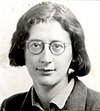
“What she cared about was human souls. Her study of human rights and human obligations exposes the falsity of some of the verbiage still current which was used during the war to serve as a moral stimulant.”
T. S. Eliot on H. G. Wells 3 quotes
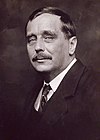
“Since the beginning of this war two men, whom we had thought of as slowly and unwillingly retiring from public life, have emerged into a glare of prominence. I mean Mr. Churchill and Mr. Wells. They must be nearly contemporary; they were both men of celebrity, I remember, when I was a freshman.”
T. S. Eliot on William Butler Yeats 2 quotes
“Born into a world in which the doctrine of 'Art for Art's sake' was generally accepted, and living on into one in which art has been asked to be instrumental to social purposes, he held firmly to the right view which is between these, though not in any way a compromise between them, and showed that an artist, by serving his art with entire integrity, is at the same time rendering the greatest service he can to his own nation and to the world.”

Quotes About T. S. Eliot
Gain deeper perspective through quotes about T. S. Eliot from others.
Richard Aldington on T. S. Eliot
“"Order"—that is what makes Mr Eliot's critical work so precious to us today; he has imposed an order on our chaos, our intellectual anarchy; he throws us a plank as we drown in a sea of platitudes and foaming stupidities. His criticism is sane without being dull or imitative; original without eccentricities; profound without obscurity; cultured without affectation; vigorous without being superficial.”

W. H. Auden on T. S. Eliot

Robert Frost on T. S. Eliot
“We are both poets and we both like to play. That's the similarity. The difference is this: I like to play euchre. He likes to play Eucharist.”

Nadine Gordimer "Fear Eats the Soul" on T. S. Eliot
“If time is on a plane of existence great writers sometimes penetrate, doesn't T. S. Eliot wander ahead over Ground Zero when he writes, way back in 1922, 'And I will show you something different from either/Your shadow at morning striding behind you/or your shadow at evening rising to meet you; I will show you fear in a handful of dust.'”





About T. S. Eliot
Thomas Stearns Eliot (26 September 1888 – 4 January 1965) was an American-born English poet, dramatist and literary critic. Noted for spiritual and religious themes in many of his poems, he converted from Unitarianism to Anglicanism in 1927.