Link Copied!
Josef Albers Quotes (1888-1976)
Artist, Mathematician
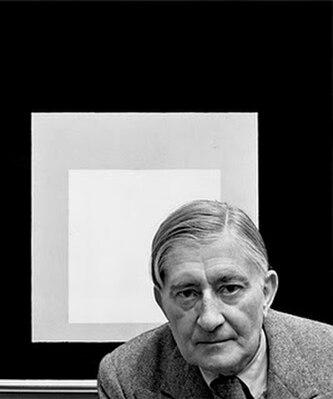
About Josef Albers
Josef Albers (March 19, 1888 – March 26, 1976) was a German artist, mathematician and art teacher at Bauhaus , whose work - in Europe and later in the United States - formed the basis of an influential and far-reaching art education program of the 20th century. He became a leading figure of Black Mountain College in the U.S.
Best Josef Albers Quotes
Shortest
Earliest
Explore our curated collection of the most famous and impactful Josef Albers quotes.

“I want color and form to have contradictorily functions.”
“A painter works to formulate with or in colors.. .My paintings follow the second option.”
“In order to use color effectively it is necessary to recognize that color deceives continually.”
“The concern of the artist is with the discrepancy between physical fact and psychological effect.”
“Every perception of colour is an illusion.. ..we do not see colours as they really are. In our perception they alter one another.”

“In visual perception a color is almost never seen as it really is — as it physically is. This fact makes color the most relative medium in art.”
“For me, abstraction is real, probably more real than nature. I'll go further and say that abstraction is nearer my heart. I prefer to see with closed eyes.”


“I would say, 'My things have the look of icons.' Unconsciously they look at you not as my face is now – you see me in profile – icons are only this way. And so are my paintings.”
“Amateurism is an emptiness and I accept it because it has no preconceived ideas or rules to be applied. This is for me [as art teacher] a most welcome situation and I like to keep my students amateurs and dilettantes.”
“I have taught – until 10 years ago – for nearly 40 years, that is almost half of my life. And when I think that over – now afterwards -, I come to a surprising conclusion, namely that I did not teach arts as such, but philosophy and psychology of art.”
“I did not teach painting but seeing. I concentrated on the basic courses for beginners. I taught drawing (purposely without nudes), color (without any painting as such) and design (as 'structural organization'). And so the graduate students came 'down' to the basic courses for beginners.”
“I say all the time, if I sell that to you, you pay me for 3 colors. And I sell you 4, I betray you. Not to cheat you, but to pet you. You see I betray you in a positive way. I make you see more than there is. And that's in all my art that way. Absolutely something else. And that's what my book is about. You never see what you see. I lead you to see something else. And therefore I direct you. That's help.”
“In 1923, when I had been a student at the 'Bauhaus' in Weimar.. ..Gropius [the director of Bauhaus] asked me to teach the basic course 'Werklehhre'. He wanted me to introduce newcomers to the principles of handicrafts. He knew that I came from that background and had appropriate practice and knowledge.”
“I think it's true, as many say, I have dealt for many years with the problems that Op art so-called, is dealing with. For many years I have studied the logic and magic of color. And so I know what's involved when it comes to the interaction of colors, more than many who refuse to study it. But I found a way to study it, I think, that's all. And besides I refuse to be the father of a new bandwagon.”
“Art is not to be looked at. Art is looking at us. What is art to others is not necessarily art to me. Nor for the same reason and vice versa. What was art to me or was not some time ago might have lost that value or gained it in the meantime and maybe again though art is not an object but experience. To be able to perceive it we need to be receptive. Therefore art is there where art meets us now. The content of art is visual formulation of our relation to life. The measure of art, the ratio of effort to effect, the aim of art revelation and evocation of vision.”
“I have received a question I have expected, 'Don't you deal with accidents?' Yes, I deal with accidents, just as Arp admits it all the time. And I admit it, too. But I like to have them under my command and not sign them because they are accidents. If it remains only accident then sign it 'accident' or 'fate' or 'the Lord', whatever you prefer. It's not you because you have not visioned it. You see visual formulation deals with vision, visual information and visual reaction. So I speak differently from all those who deliver themselves to uncontrolled accidents.”
“That question is so big that there is no end [Albers refers here to the relationship between colors and the source of light]. You see, they have just you cannot participate with it if you have not lubricated your eyes very thoroughly to see the little changes produced in our eye that has another action than any optical apparatus like photography. We must know that we have two ways of seeing. For instance, when we are indoors another part of the retina is engaged compared with when we are outdoors. If we are in warm light or cool light, in higher light or lower light.”

“Duplicity in events: What happens here as new, happens somewhere else just the same way. That's so exciting. That is one of the secrets of life. Why did I sometimes build a lamp in the Bauhaus and somebody comes from Holland and says, 'Oh, somebody in Holland makes just the same lamp.' Such duplicity shows that the time is ripe for a problem and thus it is in the air, and will be solved here – and there. With this we are finding the 'creative process', for which somebody is coming to ask me about. I would say, 'I paint because I have no time not to paint.' That's my creative process.”
“I have not built any theory. I have only tried to build up sensitive eyes, as my book says. And I have tried to achieve that by aiming at very distinct color relationships again – like how do they influence each other? Change each other in light and in intensity, in transparency, opacity? How do they change each other in all different directions? That we make all the students aware, through experience, that color is the most relative medium in art, and that we never really see what we see. All neighboring means which occur every minute different, not only in changing light but also by our changing moods. And in the end, the study of color again is a study of ourselves.”

“I discovered soon that teaching has the handicap of retrospection. And that I don't believe in. So I started [at the Bauhaus in Dessau] instead a method of handling material with the material itself. So that was my main change. Whereas Itten before [Itten left the Bauhaus in 1923 and Albers followed him as art-teacher] had only spoken about the appearance, 'matiere' - (the French word) and I said I would turn from 'matiere' - the outside - to the inside, to the capacity of the material, before the appearance. And that changed the attitude basically I think.”
“And I learned very early [Josef Albers was then ten years old] how to make imitation of wood grain. This is something I have in common with Georges Braque. Braque also learned very early from his father how to imitate marble or wood grain. So I could easily make the appearance of oak or walnut on pine. That is very easy; a very simple technique. And I learned how to imitate marble. I never made such a good joke as Braque did. When he was in the Mediterranean he fooled his friends. He painted a rowboat that had wood on one side and marble on the other side. You see, when he'd row out of the city it looked as if he were in a boat of a different material than when he came back, you see, one side was imitation wood and the other side was imitation marble.”

“I helped my father who was a house painter and decorative painter. He made stage sets, he made glass paintings, he made everything. I was in the workshop and watched him. So as a child so-called art was not my view. That was, in my opinion, my father's job. But I liked to watch him; he comes, as my mother also, from a very craftsman's background. My father's parents were carpenters. They were also builders partly. They were painters. And several of them were very, active in the theater and all such nonsense, you know. On my mother's side there was much more heavy craft. They were blacksmiths. They made a specialty horse shoes and nails for them.. .So, as a child, my main fun was to watch others working. I loved to walk to the neighboring carpenter's place and up to the neighboring shoemaker in my home town.”
Josef Albers Quotes by Topic
Find exactly what you are looking for by browsing this categorized list of Josef Albers quotes by topic.
Josef Albers on Abstract art 2 quotes
“For me, abstraction is real, probably more real than nature. I'll go further and say that abstraction is nearer my heart. I prefer to see with closed eyes.”

Josef Albers on Visual art education
“I discovered soon that teaching has the handicap of retrospection. And that I don't believe in. So I started instead a method of handling material with the material itself. So that was my main change. Whereas Itten before (Itten left the Bauhaus in 1923 and Albers followed him as art teacher, ed.) had only spoken about the appearance, "matiere" - (the French word) and I said I would turn from "matiere" - the outside - to the inside, to the capacity of the material, before the appearance. And that changed the attitude basically I think.”
Josef Albers on Abstract expressionism
“When we are honest – that's my saying – if we are honest then we will reveal ourselves. But we do not have to make an effort to be individualistic, different from others. You see that is the nonsense of the last 15, 20 years Josef Albers refers here rather critically to American Abstract Expressionism]. What is wrong there is that everyone wants to be different from the already different ones. And then they ended up all alike. And we are tired of that. And the youngsters feel that now. And they don't continue, you see. They see this will not last. These exaggerated performers always speak in the highest dramatic voice. And in order to achieve it get always drunk before you come to action. Sick. It's over. So I'm quite critical against many of my colleagues. It is not their self-expression. What makes me to be more than my neighbor only when I think I have to say something more than he can. That is self-disclosure!”
What Josef Albers Said About Others
Discover personal opinions Josef Albers shared regarding contemporaries.
Josef Albers on Walter Gropius
“This is what has Gropius the director made the Bauhaus famous. Not its lamps or its furniture. They are all out of fashion already. But the way of approaching formal problems or material as such, that has made it famous. And the emphasis on material, especially its capacity is my contribution. That was never cleared between us teachers: Kandinsky did what he thought should be done. Klee developed an absolutely different method. Schlemmer developed absolutely something else.”
Josef Albers on Paul Cézanne
“When I want to speak about why I am doing the same thing now, which is squares, for – how long? – 19 years. Because there is no final solution in any visual formulation. Although this may be just a belief on my part, I have some assurances that that is not the most stupid thing to do, through Cezanne whom I consider as one of the greatest painters. From Cézanne we have, so the historians tell us – 250 paintings of 'Mont St. Victoire'. But we know that Cézanne has left in the fields often more than he took home because he was disappointed with his work. So we may conclude he did many more than 250 of the same problem.”

Quotes About Josef Albers
Gain deeper perspective through quotes about Josef Albers from others.
Franz Kline on Josef Albers
“But I've noticed something with other artists who do use the whole range of forms of colours and black - in Albers, for instance, who experiments with yellow, red, blue, the whole scale. Of course I love his colour paintings, but when I see a black-and-white such as 'The Homage to a Black and White Square' [Josef Albers painted large series with this title], I like that best, you know. I think it has something to do with deciding just exactly what you really like best. There is always that wonderful element of doubt.”
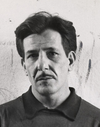
Robert Rauschenberg on Josef Albers 4 quotes
“[Josef] Albers was a beautiful teacher [at the Black Mountain college ] and an impossible person. He wasn't easy to talk to, and I found his criticism so excruciating and so devastating that I never asked for it. Years later, though, I'm still learning what he taught me, because what he taught me had to do with the entire visual world. He didn't teach you how to 'do painting'. The focus was always on your personal sense of looking.. .I consider Albers the most important teacher I've ever had, and I'm sure that he considers me one of his poorest students.”
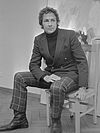
Nicholas Fox Weber on Josef Albers
“When asked later in life about his working methods for the ['Homage to the 'Square' paintings, Albers would often explain that he always began with the center square because his father, who, among other things, painted houses, had instructed him as a young man that when you paint a door you start in the middle and work outwards. [Albers:] 'That way you catch the drips, and don’t get your cuffs dirty'.”
William White on Josef Albers
“The German artist [Albers was from German origine] whose lifelong exploration of shape and color theories influenced a generation of artists and challenged audiences worldwide in addition of being one of the leading artists of the 20th century.”
About Josef Albers
Josef Albers (March 19, 1888 – March 26, 1976) was a German artist, mathematician and art teacher at Bauhaus , whose work - in Europe and later in the United States - formed the basis of an influential and far-reaching art education program of the 20th century. He became a leading figure of Black Mountain College in the U.S.