p. 459
“
In 1923, when I had been a student at the 'Bauhaus' in Weimar.. ..Gropius [the director of Bauhaus] asked me to teach the basic course 'Werklehhre'. He wanted me to introduce newcomers to the principles of handicrafts. He knew that I came from that background and had appropriate practice and knowledge.
— Josef Albers
What It Means
This is a placeholder explanation generated by the low-overhead model. It interprets "In 1923, when I had been a student at the 'Bauhaus' in Weimar.. ..Gropius [the director of Bauhaus] asked me to teach the basic course 'Werklehhre'. He wanted me to introduce newcomers to the principles of handicrafts. He knew that I came from that background and had appropriate practice and knowledge." in the context of "p. 459" to mean that wisdom is timeless.
Source: Wikiquote: "Josef Albers" (Quotes, 'A conversation with Josef Albers' (1970): Quotes from: A conversation with Josef Albers John H. Holloway and John A. Weil, in Leonardo, Vol. 3, No. 4, Oct. 1970, MIT Press)
The 'What it means' explanation text was generated by Google Gemini Flash (accessed January 18, 2026). https://gemini.google.com/app
Tags
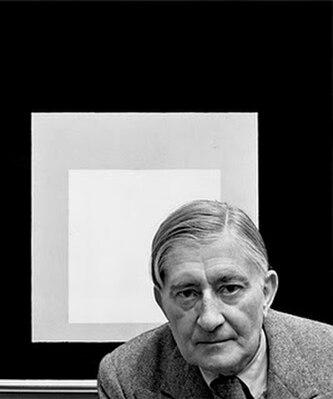
About Josef Albers
Josef Albers (March 19, 1888 – March 26, 1976) was a German artist, mathematician and art teacher at Bauhaus , whose work - in Europe and later in the United States - formed the basis of an influential and far-reaching art education program of the 20th century. He became a leading figure of Black Mountain College in the U.S.
View all quotes →