When asked later in life about his working methods for the ['Homage to the 'Square' paintings, Albers would often explain that he always began with the center square because his father, who, among other things, painted houses, had instructed him as a young man that when you paint a door you start in the middle and work outwards. [Albers:] 'That way you catch the drips, and don’t get your cuffs dirty'.
What It Means
This is a placeholder explanation generated by the low-overhead model. It interprets "When asked later in life about his working methods for the ['Homage to the 'Square' paintings, Albers would often explain that he always began with the center square because his father, who, among other things, painted houses, had instructed him as a young man that when you paint a door you start in the middle and work outwards. [Albers:] 'That way you catch the drips, and don’t get your cuffs dirty'." in the context of "Nicholas Fox Weber, 1988, in 'The Artist as Alchemist,' in Josef Albers: A Retrospective; Harry N. Abrams, Inc. and Solomon R. Guggenheim Museum, New York 1988, p. 15" to mean that wisdom is timeless.
Tags
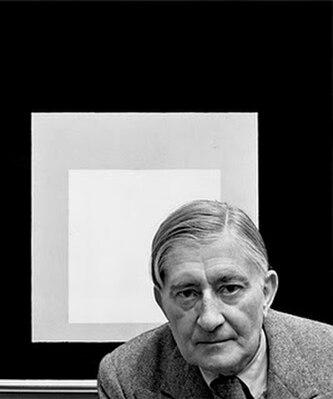
About Josef Albers