John Maynard Keynes, Reply to a criticism during the Great Depression of having changed his position on monetary policy, as quoted in "The Keynes Centenary" by Paul Samuelson, in The Economist Vol. 287 (1983), p. 19; later in The Collected Scientific Papers of Paul Samuelson, Volume 5 (1986), p. 275; also in "Understanding Political Development: an Analytic Study" (1987) by Myron Weiner, Samuel P. Huntington and Gabriel Abraham Almond, p. xxiv; this has also been paraphrased as "When the facts change, I change my mind. What do you do, sir?"

When my information changes, I alter my conclusions. What do you do, sir?

— John Maynard Keynes on Consistency

What It Means

This is a placeholder explanation generated by the low-overhead model. It interprets "When my information changes, I alter my conclusions. What do you do, sir?" in the context of "John Maynard Keynes, Reply to a criticism during the Great Depression of having changed his position on monetary policy, as quoted in "The Keynes Centenary" by Paul Samuelson, in The Economist Vol. 287 (1983), p. 19; later in The Collected Scientific Papers of Paul Samuelson, Volume 5 (1986), p. 275; also in "Understanding Political Development: an Analytic Study" (1987) by Myron Weiner, Samuel P. Huntington and Gabriel Abraham Almond, p. xxiv; this has also been paraphrased as "When the facts change, I change my mind. What do you do, sir?"" to mean that wisdom is timeless.
Source: Wikiquote: "Consistency" (Quotes) The 'What it means' explanation text was generated by Google Gemini Flash (accessed January 18, 2026). https://gemini.google.com/app
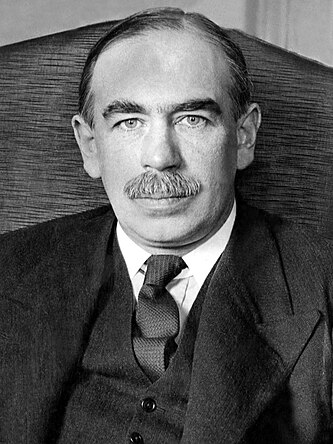
John Maynard Keynes

About John Maynard Keynes

John Maynard Keynes, 1st Baron Keynes of Tilton (5 June 1883 – 21 April 1946) was a British economist whose ideas, known as Keynesian economics, had a major impact on modern economic and political theory and on many governments' fiscal policies.