Whilst... the enlargement of the functions of government, involved in the task of adjusting to one another the propensity to consume and the inducement to invest, would seem to the nineteenth-century publicist or to a contemporary American financier to be a terrific encroachment on individualism, I defend it, on the contrary, both as the only practicable means of avoiding the destruction of existing economic forms in their entirety and as the condition of the successful functioning of individual initiative.
What It Means
This is a placeholder explanation generated by the low-overhead model. It interprets "Whilst... the enlargement of the functions of government, involved in the task of adjusting to one another the propensity to consume and the inducement to invest, would seem to the nineteenth-century publicist or to a contemporary American financier to be a terrific encroachment on individualism, I defend it, on the contrary, both as the only practicable means of avoiding the destruction of existing economic forms in their entirety and as the condition of the successful functioning of individual initiative." in the context of "John Maynard Keynes, The General Theory of Employment, Interest and Money (1936) Ch. 24, "Concluding Notes" p. 380." to mean that wisdom is timeless.

Tags
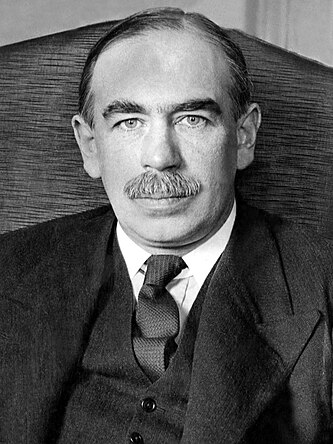
About John Maynard Keynes