John Maynard Keynes, The Economic Consequences of the Peace, Chap. VI: “Europe After The Treaty,” New York: NY, Harcourt, Brace and Howe, 1920, p. 235
“
Lenin is said to have declared that the best way to destroy the Capitalist System was to debauch the currency. By a continuing process of inflation, governments can confiscate, secretly and unobserved, an important part of the wealth of their citizens. By this method they not only confiscate, but they confiscate arbitrarily; and, while the process impoverishes many, it actually enriches some.
— John Maynard Keynes on Vladimir Lenin
What It Means
This is a placeholder explanation generated by the low-overhead model. It interprets "Lenin is said to have declared that the best way to destroy the Capitalist System was to debauch the currency. By a continuing process of inflation, governments can confiscate, secretly and unobserved, an important part of the wealth of their citizens. By this method they not only confiscate, but they confiscate arbitrarily; and, while the process impoverishes many, it actually enriches some." in the context of "John Maynard Keynes, The Economic Consequences of the Peace, Chap. VI: “Europe After The Treaty,” New York: NY, Harcourt, Brace and Howe, 1920, p. 235" to mean that wisdom is timeless.

Source: Wikiquote: "Vladimir Lenin" (Quotes about Lenin: Alphabetized by author or source )
The 'What it means' explanation text was generated by Google Gemini Flash (accessed January 18, 2026). https://gemini.google.com/app
Tags
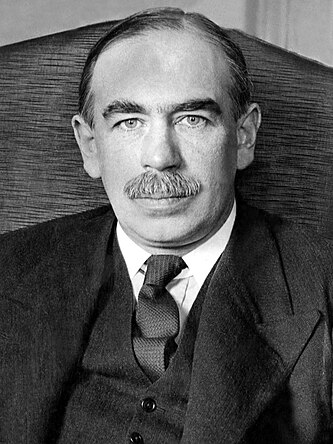
About John Maynard Keynes
John Maynard Keynes, 1st Baron Keynes of Tilton (5 June 1883 – 21 April 1946) was a British economist whose ideas, known as Keynesian economics, had a major impact on modern economic and political theory and on many governments' fiscal policies.
About John Maynard Keynes
John Maynard Keynes, 1st Baron Keynes of Tilton (5 June 1883 – 21 April 1946) was a British economist whose ideas, known as Keynesian economics, had a major impact on modern economic and political theory and on many governments' fiscal policies.
View all quotes →