Link Copied!
John Maynard Keynes Quotes (1883-1946)












-100px.jpg)






About John Maynard Keynes
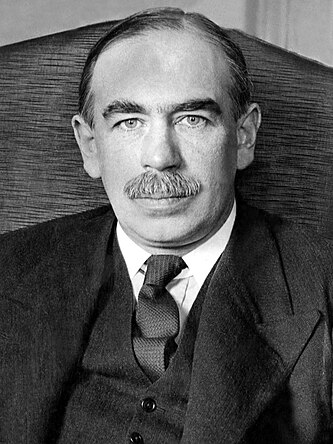
John Maynard Keynes, 1st Baron Keynes of Tilton (5 June 1883 – 21 April 1946) was a British economist whose ideas, known as Keynesian economics, had a major impact on modern economic and political theory and on many governments' fiscal policies.
Best John Maynard Keynes Quotes
Shortest
Earliest
Explore our curated collection of the most famous and impactful John Maynard Keynes quotes.
“There were endless possibilities, not out of reach.”

“Logic, like lyrical poetry, is no employment for the middle-aged.”
“I work for a Government I despise for ends I think criminal.”

“The forces of the nineteenth century have run their course and are exhausted.”
“Successful investing is anticipating the anticipations of others.”
“Markets can remain irrational longer than you can remain solvent.”

“When my information changes, I alter my conclusions. What do you do, sir?”

“Most men love money and security more, and creation and construction less, as they get older.”

“Many of the greatest economic evils of our time are the fruits of risk, uncertainty, and ignorance.”

“There is no harm in being sometimes wrong — especially if one is promptly found out.”
“The avoidance of taxes is the only intellectual pursuit that still carries any reward.”

“Nothing can be settled in isolation. Every use of our resources is at the expense of an alternative use.”
“The duty of "saving" became nine-tenths of virtue and the growth of the cake the object of true religion.”

“If we aim deliberately at the impoverishment of Central Europe, vengeance, I dare predict, will not limp.”
“Words ought to be a little wild, for they are the assault of thoughts on the unthinking.”
“The power to become habituated to his surroundings is a marked characteristic of mankind.”
“Education is the inculcation of the incomprehensible into the ignorant by the incompetent.”
“Perhaps it is historically true that no order of society ever perishes save by its own hand.”
“A study of the history of opinion is a necessary preliminary to the emancipation of the mind.”

“He had one illusion — France; and one disillusion — mankind, including Frenchmen, and his colleagues not least.”
“His peculiar gift was the power of holding continuously in his mind a purely mental problem until he had seen it through.”
“The appropriate time for the ultimate release of the deposits will have arrived at the onset of the first post-war slump.”
“Marshall, remembering his mixed parentage, used to say 'Francis is a charming fellow, but you must be careful with Ysidro!'"”
“The time has... come when each country needs a considered national policy about what size of Population... is most expedient.”
“I do not know which makes a man more conservative — to know nothing but the present, or nothing but the past.”

“If one is born a political animal, it is most uncomfortable not to belong to a political party; cold and lonely and futile it is.”
“If economists could manage to get themselves thought of as humble, competent people on a level with dentists, that would be splendid.”
“We and France have only sacrificed our honour and our engagements to a civilised and faithful nation, and fraternised with what is vile.”
“There was an attraction at first that Mr Baldwin should not be clever. But when he forever sentimentalises about his own stupidity, the charm is broken.”
“The important thing for Government is not to do things which individuals are doing already... but to do those things which at present are not done at all.”
“If Mr. Lloyd George had no good qualities, no charms, no fascinations, he would not be dangerous. If he were not a syren, we need not fear the whirlpools.”
“By what modus operandi does credit restriction attain this result? In no other way than by the deliberate intensification of unemployment.”

“All the political parties alike have their origins in past ideas and not in new ideas — and none more conspicuously so than the Marxists.”

“Adam Smith and Malthus and Ricardo! There is something about these three figures to evoke more than ordinary sentiments from us their children in the spirit.”
“Shaw and Stalin are still satisfied with Marx’s picture of the capitalist world… They look backwards to what capitalism was, not forward to what it is becoming.”


“On the negative test, I incline to believe that the Liberal Party is still the best instrument of future progress—if only it had strong leadership and the right programme.”

“Being an optimist, I am still hopeful that it may end in the division of Spain geographically into two states. But, above all, I want the war to come to an end and not to extend.”
“The disruptive powers of excessive national fecundity may have played a greater part in bursting the bonds of convention than either the power of ideas or the errors of autocracy.”
“The outstanding faults of the economic society in which we live are its failure to provide for full employment and its arbitrary and inequitable distribution of wealth and incomes.”
“There is... no so-called important political question so really unimportant, so irrelevant to the re-organization of the economic life of Great Britain, as the Nationalisation of the Railways.”


“The immense accumulations of fixed capital which, to the great benefit of mankind, were built up during the half century before the war, could never have come about in a Society where wealth was divided equitably.”
“It is not true that individuals possess a prescriptive "natural liberty" in their economic activities. There is no "compact" conferring perpetual rights on those who Have or on those who Acquire.”
“The division of the spoils between the victors will also provide employment for a powerful office, whose doorsteps the greedy adventurers and jealous concession hunters of twenty or thirty nations will crowd and defile.”
“Economists must leave to Adam Smith alone the glory of the Quarto, must pluck the day, fling pamphlets into the wind, write always sub specie temporis, and achieve immortality by accident, if at all.”
“This state of affairs is not an inevitable consequence of a decreased capacity to produce wealth. I see no reason why, with good management, real wages need be reduced on the average. It is the consequence of a misguided monetary policy.”

“For my part I think that capitalism, wisely managed, can probably be made more efficient for attaining economic ends than any alternative system yet in sight, but that in itself it is in many ways extremely objectionable.”
“The mechanism of reaching equilibrium by means of a rising cost of living, which is vainly pursued by a rising level of wages, will be described in the next chapter. But it is admitted on all hands that this is the worst possible solution.”
“It seems to me that today's news about Germany cannot be taken too seriously. The hideous dilemma is presented – allowing them to call our bluff, and re-arm as and when they choose, with what results one can imagine, or the horror of a preventive war.”
“Marxian Socialism must always remain a portent to the historians of Opinion — how a doctrine so illogical and so dull can have exercised so powerful and enduring an influence over the minds of men, and, through them, the events of history.”

“For each individual it is a great advantage to retain the rights over the fruits of his labour even though he must put off the enjoyment of them. His personal wealth is thus increased. For that is what wealth is,—command of the right to postponed consumption.”

“It is extraordinarily difficult to secure the right outcome for this resultant of many separate policies. It depends on weighing one advantage against another. There is hardly a conceivable decision within the range of the supply services which does not affect it.”
“The great events of history are often due to secular changes in the growth of population and other fundamental economic causes, which, escaping by their gradual character the notice of contemporary observers, are attributed to the follies of statesmen or the fanaticism of atheists.”
“The general character of our solution must be, therefore, that it withdraws from expenditure a proportion of the increased earnings. This is the only way, apart from shortages of goods or higher prices, by which we can secure a balance between money to be spent and goods to be bought.”
“The day is not far off when the economic problem will take the back seat where it belongs, and the arena of the heart and the head will be occupied or reoccupied, by our real problems — the problems of life and of human relations, of creation and behaviour and religion.”
“How can I accept a doctrine which sets up as its bible, above and beyond criticism, an obsolete economic textbook which I know to be not only scientifically erroneous but without interest or application for the modern world?”

“Our sole and overriding purpose should be to make quite sure of countering the Fascist powers at long last. It is precisely because I believe the position to be critical and dangerous that I believe strategic retreats to be necessary and the gradual consolidation of forces absolutely essential.”
“They offer me neither food nor drink — intellectual nor spiritual consolation... [Conservatism] leads nowhere; it satisfies no ideal; it conforms to no intellectual standard, it is not safe, or calculated to preserve from the spoilers that degree of civilisation which we have already attained.”
“So the political animal who cannot bring himself to utter the contemptible words, "I am no party man," would almost rather belong to any party than to none. If he cannot find a home by the principle of attraction, he must find one by the principle of repulsion... rather than stay out in the cold.”
“Capitalism... is absolutely irreligious, without internal union, without much public spirit, often... a mere congeries of possessors and pursuers. Such a system has to be immensely, not merely moderately, successful to survive.”
“The difficulty lies, not in the new ideas, but in escaping from the old ones, which ramify, for those brought up as most of us have been, into every corner of our minds.
• Paraphrased variant: The difficulty lies not so much in developing new ideas as in escaping from old ones.”
• Paraphrased variant: The difficulty lies not so much in developing new ideas as in escaping from old ones.”
“Marxian Socialism must always remain a portent to the historians of Opinion—how a doctrine so illogical and so dull can have exercised so powerful and enduring an influence over the minds of men, and, through them, the events of history.”
“Marxists are ready to sacrifice the political liberties of individuals in order to change the existing economic order. So are Fascists and Nazis. That is why I said that those who had toyed with Marxist ideas could not have a clear conscience in defending the political liberties of individuals from reactionary attacks.”
“Newton was not the first of the age of reason. He was the last of the magicians, the last of the Babylonians and Sumerians, the last great mind that looked out on the visible and intellectual world with the same eyes as those who began to build our intellectual inheritance rather less than 10 000 years ago.”
“It is a grand book worthy of one’s hopes of you. A most powerful piece of well organized analysis with high aesthetic qualities, though written more perhaps than you see yourself for the cognoscenti in the temple and not for those at the gate. Anyhow I prefer it for intellectual enjoyment to any recent attempts in this vein.”
“It is not a correct deduction from the Principles of Economics that enlightened self-interest always operates in the public interest. Nor is it true that self-interest generally is enlightened; more often individuals acting separately to promote their own ends are too ignorant or too weak to attain even these.”
“Leninism is a combination of two things which Europeans have kept for some centuries in different compartments of the soul — religion and business. We are shocked because the religion is new, and contemptuous because the business, being subordinated to the religion instead of the other way round, is highly inefficient.”
“Capitalism, wisely managed, can probably be made more efficient for attaining economic ends than any alternative system yet in sight, but... in itself it is in many ways extremely objectionable. Our problem is to work out a social organisation which shall be as efficient as possible without offending our notions of a satisfactory way of life.”
“Capitalism is “the astonishing belief that the nastiest motives of the nastiest men somehow or other work for the best results in the best of all possible worlds.”
• Recent variant: Capitalism is the astounding belief that the most wickedest of men will do the most wickedest of things for the greatest good of everyone.”
• Recent variant: Capitalism is the astounding belief that the most wickedest of men will do the most wickedest of things for the greatest good of everyone.”
“In economics you cannot convict your opponent of error; you can only convince him of it. And, even if you are right, you cannot convince him, if there is a defect in your own powers of persuasion and exposition or if his head is already so filled with contrary notions that he cannot catch the clues to your thought which you are trying to throw to him.”

“It is not easy for a free community to organise for war. We are not accustomed to listen to experts or prophets. Our strength lies in an ability to improvise. Yet an open mind to untried ideas is also necessary. No-one can say when the end will come. In the war services it is recognised that the best security for an early conclusion is a plan for long endurance.”
“In order to calculate the size of the cake which will be left for civilian consumption, we have to estimate (1) the maximum current output that we are capable of organising from our resources of men and plant and materials, (2) how fast we can safely draw on our foreign reserves by importing more than we export, (3) how much of all this will be used up by our war effort.”
“The decadent international but individualistic capitalism in the hands of which we found ourselves after the war is not a success. It is not intelligent. It is not beautiful. It is not just. It is not virtuous. And it doesn't deliver the goods. In short we dislike it, and we are beginning to despise it. But when we wonder what to put in its place, we are extremely perplexed.”
“We must aim at separating those services which are technically social from those which are technically individual. The most important Agenda of the State relate not to those activities which private individuals are already fulfilling, but to those functions which fall outside the sphere of the individual, to those decisions which are made by no one if the State does not make them.”
“Inflation is unjust and Deflation is inexpedient. Of the two perhaps Deflation is, if we rule out exaggerated inflations such as that of Germany, the worse; because it is worse, in an impoverished world, to provoke unemployment than to disappoint the rentier. But it is not necessary that we should weigh one evil against the other. It is easier to agree that both are evils to be shunned.”

“On the economic side I cannot perceive that Russian Communism has made any contribution to our economic problems of intellectual interest or scientific value. I do not think that it contains, or is likely to contain, any piece of useful economic technique which we could not apply, if we chose, with equal or greater success in a society which retained all the marks... of British bourgeois ideals.”
“But when we come to consider the problem of party positively—by what attracts... the aspect is dismal in every party alike, whether we put our hopes in measures or in men. ...The historic party questions of the nineteenth century are as dead as last week's mutton; and whilst the questions of the future are looming up, they have not yet become party questions, and they cut across the old party lines.”
“That she [France] has anything to fear from Germany in the future which we can foresee, except what she may herself provoke, is a delusion. When Germany has recovered her strength and pride, as in due time she will, many years must pass before she again casts her eyes Westwards. Germany's future now lies to the East, and it is in that direction her hopes and ambitions, when they revive, will certainly turn.”

“The future life of Europe was not their concern; its means of livelihood was not their anxiety. Their preoccupations, good and bad alike, related to frontiers and nationalities, to the balance of power, to imperial aggrandizements, to the future enfeeblement of a strong and dangerous enemy, to revenge, and to the shifting by the victors of their unbearable financial burdens on to the shoulders of the defeated.”

“Comfort and habits let us be ready to forgo, but I am not ready for a creed which does not care how much it destroys the liberty and security of daily life, which uses deliberately the weapons of persecution, destruction and international strife. How can I admire a policy which finds a characteristic expression in spending millions to suborn spies in every family and group at home, and to stir up trouble abroad?”
“It is because particular individuals, fortunate in situation or in abilities, are able to take advantage of uncertainty and ignorance, and also because for the same reason big business is often a lottery, that great inequalities of wealth come about; and these same factors are also the cause of the Unemployment of Labour, or the disappointment of reasonable business expectations, and of the impairment of efficiency and production.”

“The intelligentsia of the Left were the loudest in demanding that the Nazi aggression should be resisted at all costs; when it comes to a showdown, scarce four weeks have passed before they remember that they are pacifists and write defeatist letters to your columns, leaving the defence of Freedom to Colonel Blimp and the Old School Tie, for whom three cheers.”
“Are the solutions offered us always to be too late? Shall we in Great Britain invite three-quarters of the world, including the whole of our Empire, to join with us in evolving a new currency system which shall be stable in terms of commodities? Or would the gold standard countries be interested to learn the terms, which must needs be strict, on which we should be prepared to re-enter the system of a drastically reformed gold standard?”

“Communism draws its strength from deeper, more serious sources. Offered to us as a means of improving the economic situation, it is an insult to our intelligence. But offered as a means of making the economic situation worse, that is its subtle, its almost irresistible, attraction. Communism is not a reaction against the failure of the nineteenth century to organize optimal economic output. It is a reaction against its comparative success.”

“The best way to cure this mortal disease of individualism must be to provide that there shall never exist any confident expectation either that prices generally are going to fall or that they are going to rise; and also that there shall be no serious risk that a movement, if it does occur, will be a big one. If, unexpectedly and accidentally, a moderate movement were to occur, wealth, though it might be redistributed, would not be diminished thereby.”
“The book, as it stands, seems to me to be one of the most frightful muddles I have ever read, with scarcely a sound proposition in it beginning with page 45 [Hayek provided historical background up to page 45; after that came his theoretical model], and yet it remains a book of some interest, which is likely to leave its mark on the mind of the reader. It is an extraordinary example of how, starting with a mistake, a remorseless logician can end up in bedlam.”
“Money is only important for what it will procure. Thus a change in the monetary unit, which is uniform in its operation and affects all transactions equally, has no consequences. If, by a change in the established standard of value, a man received and owned twice as much money as he did before in payment for all rights and for all efforts, and if he also paid out twice as much money for all acquisitions and for all satisfactions, he would be wholly unaffected.”

“How can I accept a doctrine which sets up as its bible, above and beyond criticism, an obsolete economic textbook which I know to be not only scientifically erroneous but without interest or application for the modern world? How can I adopt a creed which, preferring the mud to the fish, exalts the boorish proletariat above the bourgeois and the intelligentsia who, with whatever faults, are the quality in life and surely carry the seeds of all human advancement?”
“To see the British Prime Minister watching the company, with six or seven senses not available to ordinary men, judging character, motive, and subconscious impulse, perceiving what each was thinking and even what each was going to say next, and compounding with telepathic instinct the argument or appeal best suited to the vanity, weakness, or self-interest of his immediate auditor, was to realize that the poor President would be playing blind man's bluff in that party.”

“Please don't imagine that I have weakened on the wisdom of frontier revision. Indeed the latest concessions are such as to make one feel even more than before that in the long run frontier revision is a cleaner and safer remedy. I was simply trying to be emphatic about what you say yourself – that it is plain as pikestaff that at this juncture one must back up the Czechs, and particularly not suggest to Hitler that he can get what to him seems more.”

“Courage will be forthcoming if tile leaders of opinion in all parties will summon out of tile fatigue and confusion of war enough lucidity of mind to understand for themselves and to explain to tile public what is required; and then propose a plan conceived in a spirit of social justice, a plan which uses a time of general sacrifice, not as an excuse for postponing desirable reforms, but as an opportunity for moving further than we have moved hitherto towards reducing in equalities.”
“The supporters of Monetary Reform, of which I... am a more convinced adherent than before, as the most important and significant measure Great Britain can take to increase economic welfare, must expound their arguments more fully... before they can overwhelm the forces of old custom and general ignorance... [F]luctuations of trade and employment... the greatest and the most remediable of the economic diseases of modern society... are mainly diseases of our credit and banking system...”
“How could I bring myself to be a Conservative? They offer me neither food nor drink—neither intellectual nor spiritual consolation. I should not be amused or excited or edified. That which is common to the atmosphere, the mentality, the view of life... promotes neither my self-interest nor the public good. It leads nowhere; it satisfies no ideal; it conforms to no intellectual standard; it is not even safe, or calculated to preserve from spoilers that degree of civilisation which we have already attained.”
“The nature of unemployment today is totally different from what it was a year ago. It is no longer caused by a deficiency of demand. There is no longer a potential surplus supply of the things we want. The transition to full employment is hindered by two obstacles. The first is due to the difficulty of shifting labour to the points where it is wanted. The second— and, for the time being, the chief—-obstacle is caused by the difficulties, other than the shortage of labour, in the way of existing demand becoming effective.”
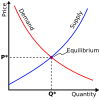
“The phrase laissez-faire is not to be found in the works of Adam Smith, of Ricardo, or of Malthus. Even the idea is not present in a dogmatic form in any of these authors. Adam Smith, of course, was a Free Trader and an opponent of many eighteenth-century restrictions on trade. But his attitude towards the Navigation Acts and the usury laws shows that he was not dogmatic. Even his famous passage about 'the invisible hand' reflects the philosophy which we associate with Paley rather than the economic dogma of laissez-faire.”
“The tendency of money to depreciate has been at times a weighty counterpoise against the cumulative results of compound interest and the inheritance of fortunes. It has been a loosening influence against the rigid distribution of old-won wealth and the separation of ownership from activity. By this means each generation can disinherit in part its predecessors' heirs; and the project of founding a perpetual fortune must be disappointed in this way, unless the community with conscious deliberation provides against it in some other way, more equitable and more expedient.”
“For many ages to come the old Adam will be so strong in us that everybody will need to do some work if he is to be contented. We shall do more things for ourselves than is usual with the rich to-day, only too glad to have small duties and tasks and routines. But beyond this, we shall endeavour to spread the bread thin on the butter-to make what work there is still to be done to be as widely shared as possible. Three-hour shifts or a fifteen-hour week may put off the problem for a great while. For three hours a day is quite enough to satisfy the old Adam in most of us!”
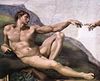
“The general theory of economic equilibrium was strengthened and made effective as an organon of thought by two powerful subsidiary conceptions — the Margin and Substitution. The notion of the Margin was extended beyond utility to describe the equilibrium point in given conditions of any economic factor which can be regarded as capable of small variations about a given value,or in its functional relation to a given value.”
“I see us free, therefore, to return to some of the most sure and certain principles of religion and traditional virtue – that avarice is a vice, that the exaction of usury is a misdemeanour, and the love of money is detestable, that those walk most truly in the paths of virtue and sane wisdom who take least thought for the morrow. We shall once more value ends above means and prefer the good to the useful. We shall honour those who can teach us how to pluck the hour and the day virtuously and well, the delightful people who are capable of taking direct enjoyment in things, the lilies of the field who toil not, neither do they spin.”
“The real struggle today, just as in the second quarter of the nineteenth century, is between a view of the world termed liberalism or radicalism, for which the primary object of government and of foreign policy is peace, freedom of trade and intercourse, and economic wealth and that other view, militarist or rather diplomatic, which thinks in terms of power, prestige, national or personal glory, the imposition of a culture and hereditary or racial prejudice. To the good English radical, the latter is so unreal, so crazy in its combination of futility and evil, that he is often in danger of forgetting or disbelieving its actual existence.”
“There is a time for helpless acquiescence and a time for action. But to-day is it not the duty of the United States and of the British Empire and the other 23 nations to warn Japan that they will sever all trade relations with her unless she mends her ways, with an undertaking of mutual assistance against any reprisals on her part? There are at least nine chances in 10 that such a threat would be effective; and its success would have great value for the future as well as for the present. If the United States were to decline our proposal, we could not help it. But we cannot escape blame unless we take some initiative towards positive action.”

“During the lengthy process of production the business world is incurring outgoings in terms of money-paying out in money for wages and other expenses of production-in the expectation of recouping this outlay by disposing of the product for money at a later date. That is to say, the business world as a whole must always be in a position where it stands to gain by a rise of price and to lose by a fall of price. Whether it likes it or not, the technique of production under a regime of money-contract forces the business world always to carry a big speculative position; and if it is reluctant to carry this position, the productive process must be slackened.”
“The ignorance of even the best-informed investor about the more remote future is much greater than his knowledge, and he cannot but be influenced to a degree which would seem wildly disproportionate to anyone who really knew the future, and be forced to seek a clue mainly here to trends further ahead. But if this is true of the best-informed, the vast majority of those who are concerned with the buying and selling of securities know almost nothing whatever about what they are doing. They do not possess even the rudiments of what is required for a valid judgement, and are the prey of hopes and fears easily aroused by transient events and as easily dispelled.”
“I sympathize, therefore, with those who would minimise, rather than with those who would maximise, economic entanglement between nations. Ideas, knowledge, art, hospitality, travel – these are the things which should of their nature be international. But let goods be homespun whenever it is reasonably and conveniently possible; and, above all, let finance be primarily national. ... For these strong reasons, therefore, I am inclined to the belief that...a greater measure of national self-sufficiency than existed in 1914 may tend to serve the cause of peace, rather than otherwise.”
“For the Trade Unions such a scheme as this offers great and evident advantages compared with progressive inflation or with a wages tax. In spite of the demands of war, the workers would have secured the enjoyment, sooner or later, of a consumption fully commensurate with their increased effort; whilst family allowances and the cheap ration would actually improve, even during the war, the economic position of the poorer families. We should have succeeded in making the war an opportunity for a positive social improvement. How great a benefit in comparison with a futile attempt to evade a reasonable share of the burden of a just war, ending in a progressive inflation!”
“We have suffered one of the worst pieces of trickery in history. Honourable international policy has suffered a terrific reverse by the unscrupulous intrigues, quite unsupported by public opinion, of our own pro-Nazis. ... It is not certain that the present settlement may not be a good thing in the long run. Viewed quite drily, there is a great deal to be said for it. Hitler's next move is not very obvious or easy. ... The settlement itself cannot be rightly denounced as indefensible and monstrous. What is certain is something rather different – namely that the sympathies and methods which have brought it about cannot be safely allowed to continue in charge.”
“This is a nightmare, which will pass away with the morning. For the resources of nature and men's devices are just as fertile and productive as they were. The rate of our progress towards solving the material problems of life is not less rapid. We are as capable as before of affording for everyone a high standard of life … and will soon learn to afford a standard higher still. We were not previously deceived. But to-day we have involved ourselves in a colossal muddle, having blundered in the control of a delicate machine, the working of which we do not understand. The result is that our possibilities of wealth may run to waste for a time — perhaps for a long time.”

“I have now reached a stage in the argument where I have to choose between being too definite or being too vague. If I set forth a concrete proposal in all its particulars, I expose myself to a hundred criticisms on points not essential to the principle of the plan. If I go further in the use of figures for illustration, I am involved more and more in guess-work; and I run the risk of getting the reader bogged in details which may be inaccurate and could certainly be amended without injury to the main fabric. Yet if I restrict myself to generalities, I do not give the reader enough to bite on; and am in fact shirking the issue, since the size, the order of magnitude, of the factors involved is not an irrelevant detail.”
“Those who advocate the return to a gold standard do not always appreciate along what different lines our actual practice has been drifting. If we restore the gold standard, are we to return also to the pre-war conceptions of bank-rate, allowing the tides of gold to play what tricks they like with the internal price-level, and abandoning the attempt to moderate the disastrous influence of the credit-cycle on the stability of prices and employment? Or are we to continue and develop the experimental innovations of our present policy, ignoring the "bank ration" and, if necessary, allowing unmoved a piling up of gold reserves far beyond our requirements or their depletion far below them?
In truth, the gold standard is already a barbarous relic.”
In truth, the gold standard is already a barbarous relic.”
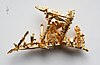
“In writing thus I do not necessarily disparage the practices of that generation. In the unconscious recesses of its being Society knew what it was about. The cake was really very small in proportion to the appetites of consumption, and no one, if it were shared all round, would be much the better off by the cutting of it. Society was working not for the small pleasures of today but for the future security and improvement of the race,—in fact for "progress." If only the cake were not cut but was allowed to grow in the geometrical proportion predicted by Malthus of population, but not less true of compound interest, perhaps a day might come when there would be at last be enough to go round, and when posterity could enter into the enjoyment of our labors.”

“Economics is a science of thinking in terms of models joined to the art of choosing models which are relevant to the contemporary world. It is compelled to be this, because, unlike the typical natural science, the material to which it is applied is, in too many respects, not homogeneous through time. The object of a model is to segregate the semi-permanent or relatively constant factors from those which are transitory or fluctuating so as to develop a logical way of thinking about the latter, and of understanding the time sequences to which they give rise in particular cases.
Good economists are scarce because the gift for using "vigilant observation" to choose good models, although it does not require a highly specialised intellectual technique, appears to be a very rare one.”
Good economists are scarce because the gift for using "vigilant observation" to choose good models, although it does not require a highly specialised intellectual technique, appears to be a very rare one.”

“I seek only to point out that the principle of accumulation based on inequality was a vital part of the pre-war order of Society and of progress as we then understood it, and to emphasize that this principle depended on unstable psychological conditions, which it may be impossible to recreate. It was not natural for a population, of whom so few enjoyed the comforts of life, to accumulate so hugely. The war has disclosed the possibility of consumption to all and the vanity of abstinence to many. Thus the bluff is discovered; the labouring classes may be no longer willing to forgo so largely, and the capitalist classes, no longer confident of the future, may seek to enjoy more fully their liberties of consumption so long as they last, and thus precipitate the hour of their confiscation.”

“I am interested to hear that some of their chief difficulties were with definitions. I am not at all surprised, though it is extraordinarily tiresome and boring that it should be so. In my book I have deemed it necessary to go into these matters at disproportionate length, whilst feeling that this was in a sense a great pity and might divert the readers' minds from the real issues. It is, I think, a further illustration of the appalling state of scholasticism into which the minds of so many economists have got which allow them to take leave of their intuitions altogether. Yet in writing economics one is not writing either a mathematical proof or a legal document. One is trying to arouse and appeal to the reader's intuitions; and, if he has worked himself into a state when he has none, one is helpless!”
“Why should coal miners suffer a lower standard of life than other classes of labour? They may be lazy, good-for-nothing fellows who do not work so hard or so long as they should. But is there any evidence that they are more lazy or more good-for-nothing than other people?
On grounds of social justice, no case can be made out for reducing. the wages of the miners. They are the victims of the economic Juggernaut. They represent in the flesh the "fundamental adjustments" engineered by the Treasury and the Bank of England to satisfy the impatience of the City fathers to bridge the "moderate gap" between $4.40 and $4.86. They (and others to follow) are the "moderate sacrifice" still necessary to ensure the stability of the gold standard. The plight of the coal miners is the first, but not—unless we are very lucky—the last, of the Economic Consequences of Mr. Churchill.”
On grounds of social justice, no case can be made out for reducing. the wages of the miners. They are the victims of the economic Juggernaut. They represent in the flesh the "fundamental adjustments" engineered by the Treasury and the Bank of England to satisfy the impatience of the City fathers to bridge the "moderate gap" between $4.40 and $4.86. They (and others to follow) are the "moderate sacrifice" still necessary to ensure the stability of the gold standard. The plight of the coal miners is the first, but not—unless we are very lucky—the last, of the Economic Consequences of Mr. Churchill.”
“He was the nicest, and the only talented person I saw in all Berlin, except perhaps old Fuerstenberg … and Kurt Singer. And he was a Jew; and so was Fuerstenberg. And my dear Melchior is a Jew too. Yet if I lived there, I felt I might turn anti-Semite. For the poor Prussian is too slow and heavy on his legs for the other kind of Jews, the ones who are not imps but serving devils, with small horns, pitch forks, and oily tails. It is not agreeable to see civilization so under the ugly thumbs of its impure Jews who have all the money and the power and brains. I vote rather for the plump hausfraus and thick fingered Wandering Birds. But I am not sure that I wouldn’t even rather be mixed up with Lloyd George than with the German political Jews.”
“Ought I, then, to join the Labour Party? ...To begin with, it is a class party, and the class is not my class. If I am going to pursue sectional interests at all, I shall pursue my own. When it comes to the class struggle, my local and personal patriotisms... are attached to my own surroundings. I can be influenced by what seems to me to be Justice and good sense; but the Class war will find me on the side of the educated bourgeoisie.
But, above all, I do not believe that the intellectual elements in the Labour Party will ever exercise adequate control; too much will always be decided by those who do not know at all what they are talking about; and if—which is not unlikely—the control of the party is seized by an autocratic inner ring, this control will be exercised in the interests of the extreme Left Wing—the section of the Labour Party which I shall designate the Party of Catastrophe.”
But, above all, I do not believe that the intellectual elements in the Labour Party will ever exercise adequate control; too much will always be decided by those who do not know at all what they are talking about; and if—which is not unlikely—the control of the party is seized by an autocratic inner ring, this control will be exercised in the interests of the extreme Left Wing—the section of the Labour Party which I shall designate the Party of Catastrophe.”
“The power of taxation by currency depreciation is one which has been inherent in the State since Rome discovered it. The creation of legal-tender has been and is a Government’s ultimate reserve; and no State or Government is likely to decree its own bankruptcy or its own downfall, so long as this instrument still lies at hand unused.
Besides this, […] the benefits of a depreciating currency are not restricted to the Government. Farmers and debtors and all persons liable to pay fixed money dues share in the advantage. As now in the persons of business men, so also in former ages these classes constituted the active and constructive elements in the economic scheme. Those secular changes, therefore, which in the past have depreciated money, assisted the new men and emancipated them from the dead hand; they benefited new wealth at the expense of old, and armed enterprise against accumulation.”
Besides this, […] the benefits of a depreciating currency are not restricted to the Government. Farmers and debtors and all persons liable to pay fixed money dues share in the advantage. As now in the persons of business men, so also in former ages these classes constituted the active and constructive elements in the economic scheme. Those secular changes, therefore, which in the past have depreciated money, assisted the new men and emancipated them from the dead hand; they benefited new wealth at the expense of old, and armed enterprise against accumulation.”
“The ideas of economists and political philosophers, both when they are right and when they are wrong, are more powerful than is commonly understood. Indeed the world is ruled by little else. Practical men, who believe themselves to be quite exempt from any intellectual influence, are usually the slaves of some defunct economist. Madmen in authority, who hear voices in the air, are distilling their frenzy from some academic scribbler of a few years back. I am sure that the power of vested interests is vastly exaggerated compared with the gradual encroachment of ideas. Not, indeed, immediately, but after a certain interval; for in the field of economic and political philosophy there are not many who are influenced by new theories after they are twenty-five or thirty years of age, so that the ideas which civil servants and politicians and even agitators apply to current events are not likely to be the newest. But, soon or late, it is ideas, not vested interests, which are dangerous for good or evil.”
“Free trade is profoundly based on the assumption of equilibrium conditions and in particular that wages always fall to their strict economic level. If they do not, and if for several reasons we do not desire them to, then it is only by means of a tariff that the ideal distribution of resources between different uses, which free trade aims at, can be achieved; and there is an unanswerable theoretical case for a countervailing import duty (and also for an export bounty) equivalent to the difference between the actual wage and the economic wage. ... I am no longer a free trader – and I believe that practically no-one else is – in the old sense of the term to the extent of believing in a very high degree of national specialisation and in abandoning any industry which is unable for the time being to hold its own. Where wages are immobile, this would be an extraordinarily dangerous doctrine to follow.”
“When the accumulation of wealth is no longer of high social importance, there will be great changes in the code of morals. We shall be able to rid ourselves of many of the pseudo-moral principles which have hag-ridden us for two hundred years, by which we have exalted some of the most distasteful of human qualities into the position of the highest virtues. We shall be able to afford to dare to assess the money-motive at its true value. The love of money as a possession — as distinguished from the love of money as a means to the enjoyments and realities of life — will be recognised for what it is, a somewhat disgusting morbidity, one of those semi-criminal, semi-pathological propensities which one hands over with a shudder to the specialists in mental disease … But beware! The time for all this is not yet. For at least another hundred years we must pretend to ourselves and to everyone that fair is foul and foul is fair; for foul is useful and fair is not. Avarice and usury and precaution must be our gods for a little longer still. For only they can lead us out of the tunnel of economic necessity into daylight.”
“I have sought with some touches of detail to bring out the solidarity and historical continuity of the High Intelligentsia of England, who have built up the foundations of our thought in the two and a half centuries, since Locke, in his Essay Concerning Human Understanding, wrote the first modern English book. I relate below the amazing progeny of Sir George Villiers. But the lineage of the High Intelligentsia is hardly less interbred and spiritually inter-mixed. Let the Villiers Connection fascinate the monarch or the mob and rule, or seem to rule, passing events. There is also a pride of sentiment to claim spiritual kinship with the Locke Connection and that long English line, intellectually and humanly linked with one another, to which the names in my second section belong. If not the wisest, yet the most truthful of men. If not the most personable, yet the queerest and sweetest. If not the most practical, yet of the purest public conscience. If not of high artistic genius, yet the most solid and sincere accomplishment within many of the fields which are ranged by the human mind.”
“The study of economics does not seem to require any specialized gifts of an unusually high order. Is it not, intellectually regarded, a very easy subject compared with the higher branches of philosophy and pure science? Yet good, or even competent, economists are the rarest of birds. An easy subject, at which very few excel! The paradox finds its explanation, perhaps, in that the master-economist must possess a rare combination of gifts. He must reach a high standard in several different directions and must combine talents not often found together. He must be mathematician, historian, statesman, philosopher – in some degree. He must understand symbols and speak in words. He must contemplate the particular in terms of the general, and touch abstract and concrete in the same flight of thought. He must study the present in the light of the past for the purposes of the future. No part of man's nature or his institutions must lie entirely outside his regard. He must be purposeful and disinterested in a simultaneous mood; as aloof and incorruptible as an artist, yet sometimes as near the earth as a politician. Much, but not all, of this many-sidedness Marshall possessed. But chiefly his mixed training and divided nature furnished him with the most essential and fundamental of the economist's necessary gifts – he was conspicuously historian and mathematician, a dealer in the particular and the general, the temporal and the eternal, at the same time.”

“Lenin is said to have declared that the best way to destroy the capitalist system was to debauch the currency. By a continuing process of inflation, governments can confiscate, secretly and unobserved, an important part of the wealth of their citizens. By this method they not only confiscate, but they confiscate arbitrarily; and, while the process impoverishes many, it actually enriches some. The sight of this arbitrary rearrangement of riches strikes not only at security, but at confidence in the equity of the existing distribution of wealth. Those to whom the system brings windfalls, beyond their deserts and even beyond their expectations or desires, become 'profiteers,' who are the object of the hatred of the bourgeoisie, whom the inflationism has impoverished, not less than of the proletariat. As the inflation proceeds and the real value of the currency fluctuates wildly from month to month, all permanent relations between debtors and creditors, which form the ultimate foundation of capitalism, become so utterly disordered as to be almost meaningless; and the process of wealth-getting degenerates into a gamble and a lottery.
Lenin was certainly right. There is no subtler, no surer means of overturning the existing basis of society than to debauch the currency. The process engages all the hidden forces of economic law on the side of destruction, and does it in a manner which not one man in a million is able to diagnose.”
Lenin was certainly right. There is no subtler, no surer means of overturning the existing basis of society than to debauch the currency. The process engages all the hidden forces of economic law on the side of destruction, and does it in a manner which not one man in a million is able to diagnose.”

“The boys, who cannot grow up to adult human nature, are beating the prophets of the ancient race — Marx, Freud, Einstein — who have been tearing at our social, personal and intellectual roots, tearing with an objectivity which to the healthy animal seems morbid, depriving everything, as it seems, of the warmth of natural feeling. What traditional retort have the schoolboys but a kick in the pants? ...
To our generation Einstein has been made to become a double symbol — a symbol of the mind travelling in the cold regions of space, and a symbol of the brave and generous outcast, pure in heart and cheerful of spirit. Himself a schoolboy, too, but the other kind — with ruffled hair, soft hands and a violin. See him as he squats on Cromer beach doing sums, Charlie Chaplin with the brow of Shakespeare...
So it is not an accident that the Nazi lads vent a particular fury against him. He does truly stand for what they most dislike, the opposite of the blond beast — intellectualist, individualist, supernationalist, pacifist, inky, plump... How should they know the glory of the free-ranging intellect and soft objective sympathy to whom money and violence, drink and blood and pomp, mean absolutely nothing? Yet Albert and the blond beast make up the world between them. If either cast the other out, life is diminished in its force. When the barbarians destroy the ancient race as witches, when they refuse to scale heaven on broomsticks, they may be dooming themselves to sink back into the clods which bore them.”
To our generation Einstein has been made to become a double symbol — a symbol of the mind travelling in the cold regions of space, and a symbol of the brave and generous outcast, pure in heart and cheerful of spirit. Himself a schoolboy, too, but the other kind — with ruffled hair, soft hands and a violin. See him as he squats on Cromer beach doing sums, Charlie Chaplin with the brow of Shakespeare...
So it is not an accident that the Nazi lads vent a particular fury against him. He does truly stand for what they most dislike, the opposite of the blond beast — intellectualist, individualist, supernationalist, pacifist, inky, plump... How should they know the glory of the free-ranging intellect and soft objective sympathy to whom money and violence, drink and blood and pomp, mean absolutely nothing? Yet Albert and the blond beast make up the world between them. If either cast the other out, life is diminished in its force. When the barbarians destroy the ancient race as witches, when they refuse to scale heaven on broomsticks, they may be dooming themselves to sink back into the clods which bore them.”
“There is a respectable and influential body of opinion which, repudiating with vehemence the adoption of either expedient, fulminates alike against Devaluations and Levies, on the ground that they infringe the untouchable sacredness of contract; or rather of vested interest, for an alteration of the legal tender and the imposition of a tax on property are neither of them in the least illegal or even contrary to precedent. Yet such persons, by overlooking one of the greatest of all social principles, namely the fundamental distinction between the right of the individual to repudiate contract and the right of the State to control vested interest, are the worst enemies of what they seek to preserve. For nothing can preserve the integrity of contract between individuals, except a discretionary authority in the State to revise what has become intolerable. The powers of uninterrupted usury are too great. If the accretions of vested interest were to grow without mitigation for many generations, half the population would be no better than slaves to the other half. Nor can the fact that in time of war it is easier for the State to borrow than to tax, be allowed permanently to enslave the tax-payer to the bond-holder. Those who insist that in these matters the State is in exactly the same position as the individual, will, if they have their way, render the continuance of an individualistic society, which depends for its existence on moderation.
These conclusions might be deemed obvious if experience did not show that many conservative bankers regard it as more consonant with their cloth, and also as economising thought, to shift public discussion of financial topics off the logical on to an alleged "moral" plane, which means a realm of thought where vested interest can be triumphant over the common good without further debate. But it makes them unworthy guides in a perilous age of transition. The State must never neglect the importance of so acting in ordinary matters to promote certainty and security in business. But it makes them untrustworthy guides in a perilous age of transition. The State is a sovereign body of which the purpose is to promote the greatest good of the whole. When, therefore, we enter the realm of State action, '''''everything'' is to be considered and weighed on its merits. Changes in Death Duties, Income Tax, Land Tenure, Licensing, Game Laws, Church Establishment, Feudal Rights, Slavery, and so on through all ages, have received the same denunciations from the absolutists of contract, who are the real parents of Revolution.'''”
These conclusions might be deemed obvious if experience did not show that many conservative bankers regard it as more consonant with their cloth, and also as economising thought, to shift public discussion of financial topics off the logical on to an alleged "moral" plane, which means a realm of thought where vested interest can be triumphant over the common good without further debate. But it makes them unworthy guides in a perilous age of transition. The State must never neglect the importance of so acting in ordinary matters to promote certainty and security in business. But it makes them untrustworthy guides in a perilous age of transition. The State is a sovereign body of which the purpose is to promote the greatest good of the whole. When, therefore, we enter the realm of State action, '''''everything'' is to be considered and weighed on its merits. Changes in Death Duties, Income Tax, Land Tenure, Licensing, Game Laws, Church Establishment, Feudal Rights, Slavery, and so on through all ages, have received the same denunciations from the absolutists of contract, who are the real parents of Revolution.'''”

John Maynard Keynes Quotes by Topic
Find exactly what you are looking for by browsing this categorized list of John Maynard Keynes quotes by topic.
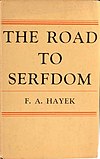
John Maynard Keynes on The Road to Serfdom 3 quotes
“In my opinion it is a grand book … Morally and philosophically I find myself in agreement with virtually the whole of it: and not only in agreement with it, but in deeply moved agreement.”
John Maynard Keynes on Investment 2 quotes
“The social object of skilled investment should be to defeat the dark forces of time and ignorance which envelope our future.”
John Maynard Keynes on Utility 2 quotes
“Thus public works even of doubtful utility may pay for themselves over and over again at a time of severe unemployment, if only from the diminished cost of relief expenditure.”
John Maynard Keynes on Laissez-faire 2 quotes
“Nevertheless the theory of output as a whole, which is what the following book purports to provide, is much more easily adapted to the conditions of a totalitarian state, than is the theory of the production and distribution of a given output produced under conditions of free competition and a large measure of laissez-faire.”

John Maynard Keynes on Prices and Production 2 quotes
“The book, as it stands, seems to me to be one of the most frightful muddles I have ever read, with scarcely a sound proposition in it beginning with page 45, and yet it remains a book of some interest, which is likely to leave its mark on the mind of the reader. It is an extraordinary example of how, starting with a mistake, a remorseless logician can end up in bedlam.”
What John Maynard Keynes Said About Others
Discover personal opinions John Maynard Keynes shared regarding contemporaries.
John Maynard Keynes on David Lloyd George 3 quotes
“How can I convey to the reader who does not know him any just impression of this extraordinary figure of our time, this syren, this goat-footed bard, this half-human visitor to our age from the hag-ridden magic and enchanted woods of Celtic antiquity?”

John Maynard Keynes on Isaac Newton 3 quotes
“In vulgar modern terms Newton was profoundly neurotic of a not unfamiliar type, but... a most extreme example. His deepest instincts were occult, esoteric, semantic — with profound shrinking from the world, a paralyzing fear of exposing his thoughts, his beliefs, his discoveries, in all nakedness to the inspection and criticism of the world. ...Until the second phase of his life, he was a wrapt, consecrated solitary, pursuing his studies by intense introspection.”

John Maynard Keynes on Frank P. Ramsey 3 quotes
“The death... is a heavy loss—though his primary interests were in Philosophy and Mathematical Logic—to the pure theory of economics. ...If he had followed the easier path of mere inclination, I am not sure that he would not have exchanged the tormenting exercises of the foundations of thought, where the mind tries to catch its own tail, for the delightful paths of our own most agreeable branch of the moral sciences, in which theory and fact, intuitive imagination and practical judgement, are blended in a manner comfortable to the human intellect.”

John Maynard Keynes on Oswald Mosley 2 quotes
“It was a very able document and illuminating.”

John Maynard Keynes on George Bernard Shaw 2 quotes
“What a debt every intelligent being owes to Bernard Shaw!”

Quotes About John Maynard Keynes
Gain deeper perspective through quotes about John Maynard Keynes from others.
King on John Maynard Keynes
“His [Keynes's] own leisure was admirably as it was variously employed: in inspecting his pigs; in attending a sale of pictures; in perusing (unlike some bibliophiles) a minor Elizabethan poet, his latest acquisition; in listening to a piano recital, recumbent in a box of the theatre he had built; in gossip and good talk and a glass of wine. ‘My only regret’, he said at the close of a College feast, ‘is that I have not drunk more champagne in my life.’ And so it was that he knew what leisure could give and desired that all should share the gift.”
Roger E. Backhouse on John Maynard Keynes
“Following the financial crisis of September 2008 when the American investment bank Lehman Brothers collapsed, threatening to engulf the entire banking system, the British economist John Maynard Keynes returned to center stage. In the popular press and in the writings of many economists, Keynes featured prominently as governments around the world urgently sought ways to avoid economic collapse.”
Joan Bakewell on John Maynard Keynes
“Keynes was a man of prodigious intellectual gifts, who straddled the worlds of banking, politics, the City, journalism and the arts, playing a significant role in all of them. But that doesn't express the nub of his attitude to the world and to human behaviour. What I admire is his belief in the moral responsibility of society towards its members, an attitude he brought to bear on his economic theories.”
Correlli Barnett on John Maynard Keynes
“In 1920, regrets and apprehensions about the treaty's alleged severity found expression in a book which was to exercise an immense and far-reaching influence; indeed eventually largely to determine the British governing classes' view of the treaty, and of the treatment of Germany under its provisions. The book, The Economic Consequences of the Peace, was written by J. M. Keynes, an economist of genius, but also very much a precious intellectual typical of the period...a nonconformist by upbringing, a conscientious objector during the war, a liberal, a man of spinsterish personality... The Economic Consequences of the Peace was, except when dealing specifically with economics, simply a moral tract, hot with emotion, which took no account of strategy or the balance of power. Its central argument that the Versailles Treaty was a Carthaginian peace was itself sentimental nonsense, for, in the first place, the treaty was, as the French feared at the time, not Carthaginian enough adequately to reduce German power; secondly, it was extremely lenient in comparison with the peace terms which Germany herself, when she was expecting to win the war, had had in mind to impose on the Allies; and thirdly it was hardly more than a tap on the wrist compared with the peace Germany did in fact impose on Russia at Brest-Litovsk in March 1918... However, it was in the very shortcomings of Keynes's book – its sentimentality, its moral indignation, its sense of guilt, its lack of strategic comprehension – that lay its particular appeal and guaranteed its immense, far-reaching and catastrophic success... For by the early 1930s the Keynesian view of the Versailles Treaty had become to seem the only one an educated, intelligent, liberal-minded man could possibly hold.”
Bruce Bartlett on John Maynard Keynes
“After careful research along these lines, I came to the annoying conclusion that Keynes had been 100 percent right in the 1930s. Previously, I had thought the opposite. But facts were facts and there was no denying my conclusion. It didn’t affect the argument in my book, which was only about the rise and fall of ideas. The fact that Keynesian ideas were correct as well as popular simply made my thesis stronger.”
















Misattributed Quotes
Quotes mistakenly credited to John Maynard Keynes
About John Maynard Keynes
John Maynard Keynes, 1st Baron Keynes of Tilton (5 June 1883 – 21 April 1946) was a British economist whose ideas, known as Keynesian economics, had a major impact on modern economic and political theory and on many governments' fiscal policies.