Link Copied!
Jimmy Carter Quotes (1924-2024)
President, Politician


























-100px.png)
About Jimmy Carter
James Earl Carter, Jr. (October 1, 1924 – December 29, 2024) was an American politician and member of the Democratic Party who served as the 39th president of the United States from 1977 to 1981. In 1982 he established the Carter Center, as a base for promoting human rights, democracy, finding peaceful solutions to international conflicts, and advancing economic and social development, for which he was awarded the Nobel Peace Prize in 2002. He was a key figure in the Habitat for Humanity project, and has been noted for his criticism of Israel's role in the Israeli–Palestinian conflict.
Best Jimmy Carter Quotes
Shortest
Earliest
Explore our curated collection of the most famous and impactful Jimmy Carter quotes.
Former U.S. President Jimmy Carter asserted that mass surveillance by the U.S. government in 2013 rendered the nation without a "functioning democracy."
“America does not at the moment have a functioning democracy.”
- Jimmy Carter, Post-Presidency

“I have been in love with the Palestinian people for many years...”
- Jimmy Carter, Post-Presidency

Reflecting on his post-presidency, Jimmy Carter admitted, as reported in both *The Independent* and *The Washington Times*, his greater aptitude for life after the White House.
“I can't deny I'm a better ex-president than I was a president.”
- Jimmy Carter, Post-Presidency


“We are completely in bed with the Israelis to the detriment of the wellbeing of the Palestinians.”
- Jimmy Carter, Post-Presidency

Speaking in 2009, former President Jimmy Carter controversially attributed some opposition to Barack Obama's presidency to underlying racial prejudice in America.
“There is an inherent feeling among many in this country that an African-American should not be president.”
- Jimmy Carter, Post-Presidency
From his 2005 book examining America's moral landscape, former President Jimmy Carter affirms his faith and commitment to military service.
“I never felt that my dedication to military service was a violation of my faith in Jesus Christ, the Prince of Peace.”
- Jimmy Carter, Post-Presidency

“I don't think that Israel has any legal or moral justification for their massive bombing of the entire nation of Lebanon.”
- Jimmy Carter, Post-Presidency

“I obviously hoped that everything that I found would make a difference, … It ended up being way behind my wildest dreams.”
- Jimmy Carter, Post-Presidency
Speaking on the 30th anniversary of the Universal Declaration of Human Rights, Jimmy Carter articulated the central role of human rights in defining both American identity and foreign policy.
“Human rights is the soul of our foreign policy, because human rights is the very soul of our sense of nationhood.”
- Jimmy Carter, Presidency

“A strong nation, like a strong person, can afford to be gentle, firm, thoughtful, and restrained. It can afford to extend a helping hand to others.”
- Jimmy Carter, Presidency
“It would be a fruitless search to look through the Scriptures and find one single instance where Jesus did not treat women either equal or superior to men.”
- Jimmy Carter, Post-Presidency
Speaking to the House of Lords, Jimmy Carter predicted Hillary Clinton's likely Democratic nomination while acknowledging Bernie Sanders' surprising appeal to young voters during the 2016 election cycle.
“It's very likely Hillary Clinton will still prevail in the Democratic Party. Bernie Sanders, though, has had a remarkable showing, particularly among young people.”
- Jimmy Carter, Post-Presidency
“Any system of economics is bankrupt if it sees either value or virtue in unemployment. We simply cannot check inflation by keeping people out of work..”
- Jimmy Carter, Pre-Presidency, First Presidential Nomination Acceptance Speech

Addressing a Kentucky town meeting after his "Crisis of Confidence" speech, Carter acknowledged the public perception of a national "malaise," despite not using the word directly.
“I thought a lot about our Nation and what I should do as President. And Sunday night before last, I made a speech about two problems of our country — energy and malaise.”
- Jimmy Carter, Presidency
“Rosalynn was my equal partner in everything I ever accomplished.
As long as Rosalynn was in the world, I always knew somebody loved and supported me.”
As long as Rosalynn was in the world, I always knew somebody loved and supported me.”
- Jimmy Carter, Post-Presidency
Jimmy Carter's 2005 book, *Our Endangered Values*, reveals his enduring Cold War anxieties despite the end of the Soviet Union and his personal support system.
“With massive arsenals still on hair-trigger alert, a global holocaust is just as possible now, through mistakes or misjudgments, as it was during the depths of the Cold War.”
- Jimmy Carter, Post-Presidency
“With the possible exception of my two predecessors, I know better than anyone how complicated and intransigent are some of the foreign policy questions that confront a President.”
- Jimmy Carter, Presidency
“Iraq is an unjust war. I thought then, and I think now, that the invasion of Iraq was unnecessary and unjust. And I think the premises on which it was launched were false.”
- Jimmy Carter, Post-Presidency

“History teaches, perhaps, very few clear lessons. But surely one such lesson learned by the world at great cost is that aggression, unopposed, becomes a contagious disease.”
- Jimmy Carter, Presidency
From his book analyzing America's moral crisis, Jimmy Carter underscores the collective power of everyday virtues like caring and love to overcome societal challenges.
“When combined, the small individual contributors of caring, friendship, forgiveness, and love, each of us different from our next-door neighbors, can form a phalanx, an army, with great capability.”
- Jimmy Carter, Post-Presidency
Former President Jimmy Carter, in a 2015 interview with Oprah Winfrey, asserted that the United States had transitioned from a democracy to an oligarchy.
“We've become now an oligarchy instead of a democracy. And I think that's been the worst damage to the basic moral and ethical standards of the American political system that I've ever seen in my life.”
- Jimmy Carter, Post-Presidency
Jimmy Carter, in his 2005 book examining American values, highlights a seeming paradox in the nation's ethical stances on life.
“There is a strong religious commitment to the sanctity of human life, but, paradoxically, some of the most fervent protectors of microscopic stem cells are the most ardent proponents of the death penalty.”
- Jimmy Carter, Post-Presidency
“Penalties against drug use should not be more damaging to an individual than the use of the drug itself. Nowhere is this more clear than in the laws against the possession of marijuana in private for personal use.”
- Jimmy Carter, Presidency
“I guess my biggest failure was not getting reelected. [The loss taught me] not to ever let American hostages be held for 444 days in a foreign country without extracting them. I did the best I could, but I failed.”
- Jimmy Carter, Post-Presidency
“For myself and for our Nation, I want to thank my predecessor for all he has done to heal our land.
In this outward and physical ceremony we attest once again to the inner and spiritual strength of our Nation.”
In this outward and physical ceremony we attest once again to the inner and spiritual strength of our Nation.”
- Jimmy Carter, Presidency
Jimmy Carter, upon accepting the Nobel Peace Prize in 2002, delivered a powerful condemnation of war, arguing that violence can never be truly justified.
“Ladies and gentlemen: War may sometimes be a necessary evil. But no matter how necessary, it is always an evil, never a good. We will not learn how to live together in peace by killing each other's children.”
- Jimmy Carter, Post-Presidency

Jimmy Carter, writing in his 2005 book *Our Endangered Values*, emphasizes the separation of church and state and the distinct demands of political office.
“The government and the church are two different realms of service, and those in political office have to face a subtle but important difference between the implementation of the high ideals of religious faith and public duty.”
- Jimmy Carter, Post-Presidency

“My name is Jimmy Carter, and I’m running for President.
It’s been a long time since I said those words the first time, and now I’ve come here after seeing our great country to accept your nomination.”
It’s been a long time since I said those words the first time, and now I’ve come here after seeing our great country to accept your nomination.”
- Jimmy Carter, Pre-Presidency, First Presidential Nomination Acceptance Speech
“The destruction was mutual. We went to Vietnam without any desire to capture territory or impose American will on other people. I don't feel that we ought to apologize or castigate ourselves or to assume the status of culpability.”
- Jimmy Carter, Presidency
“We face this choice from a position of strength as the strongest nation on earth, economically, militarily and politically. Our alliances are firm and reliable. Our military forces are strong and ready. Our economic power is unmatched.”
- Jimmy Carter, Presidency
“I appreciate the chance to come. You've probably noticed that I was a little late in arriving. I met Alex Haley outside, and I made the mistake of saying, "Alex, how's your family?" Unfortunately, he told me. And it took a while to get in.”
- Jimmy Carter, Presidency
At a 1980 fundraiser, Jimmy Carter criticized the Republican party's short-sightedness and unwillingness to invest in those less fortunate, a sentiment often distilled into a more concise, misattributed phrase.
“A party with a narrow vision, a party that is afraid of the future, a party whose leaders are inclined to shoot from the hip, a party that has never been willing to put its investment in human beings who are below them in economic and social status.”
- Jimmy Carter, Presidency

In his 2005 book, *Our Endangered Values*, Jimmy Carter grapples with the complex moral justifications for war despite his deep commitment to peace and diplomacy.
“For me personally and for most other Americans, this commitment to peace and diplomacy does not imply a blind or total pacifism. There are times when war is justified, and for many centuries the moral criteria for violence have been carefully delineated.”
- Jimmy Carter, Post-Presidency
Accepting the Nobel Peace Prize in 2002, Jimmy Carter passionately advocated for global unity and humanitarian action, emphasizing humanity's capacity to overcome division.
“The bond of our common humanity is stronger than the divisiveness of our fears and prejudices. God gives us the capacity for choice. We can choose to alleviate suffering. We can choose to work together for peace. We can make these changes — and we must.”
- Jimmy Carter, Post-Presidency
Jimmy Carter, reflecting on controversial Supreme Court decisions in his 2005 book, *Our Endangered Values*, reveals his personal conflict between faith and legal obligation.
“For instance, I have never believed that Jesus Christ would approve either abortions or the death penalty, but I obeyed such Supreme Court decisions to the best of my ability, at the same time attempting to minimize what I considered to be their adverse impact.”
- Jimmy Carter, Post-Presidency
Jimmy Carter, accepting the Nobel Peace Prize in 2002, articulated his vision of a world striving for peace, freedom, and human rights, despite personal solace found in his wife Rosalynn's unwavering support.
“I am not here as a public official, but as a citizen of a troubled world who finds hope in a growing consensus that the generally accepted goals of society are peace, freedom, human rights, environmental quality, the alleviation of suffering, and the rule of law.”
- Jimmy Carter, Post-Presidency
Published in his 2005 book *Our Endangered Values*, Jimmy Carter highlights the extreme vulnerability of prisoners of war, facing both captivity and potential battlefield brutality.
“It is apparent that prisoners of war are among the most vulnerable of people. Not only are they completely under the control of their captors, but in a time of conflict, the hatred and brutality of the battlefield are very likely to be mirrored within military prison walls.”
- Jimmy Carter, Post-Presidency
“I have become convinced that the most serious and unaddressed worldwide challenge is the deprivation and abuse of women and girls, largely caused by a false interpretation of carefully selected religious texts and a growing tolerance of violence and warfare.”
- Jimmy Carter, Post-Presidency
“At the end of a long campaign, I believe I know the people of our state as well as anyone. Based on this knowledge of Georgians North and South, Rural and Urban, liberal and conservative, I say to you quite frankly that the time for racial discrimination is over.”
- Jimmy Carter, Pre-Presidency)
“We have already found a high degree of personal liberty, and we are now struggling to enhance equality of opportunity. Our commitment to human rights must be absolute, our laws fair, our natural beauty preserved; the powerful must not persecute the weak, and human dignity must be enhanced.”
- Jimmy Carter, Presidency

Accepting the Nobel Peace Prize in 2002, Jimmy Carter eulogizes assassinated peacemakers Anwar Sadat and Yitzhak Rabin, highlighting the inherent risks in pursuing global peace.
“Most Nobel Laureates have carried out our work in safety, but there are others who have acted with great personal courage. None has provided more vivid reminders of the dangers of peacemaking than two of my friends, Anwar Sadat and Yitzhak Rabin, who gave their lives for the cause of peace in the Middle East.”
- Jimmy Carter, Post-Presidency
“I see an America on the move again, united, a diverse and vital and tolerant nation, entering our third century with pride and confidence, an America that lives up to the majesty of our Constitution and the simple decency of our people.
This is the America we want. This is the America that we will have.”
This is the America we want. This is the America that we will have.”
- Jimmy Carter, Pre-Presidency, First Presidential Nomination Acceptance Speech

Speaking to the Foreign Policy Association in 1976, an address often paraphrased, this statement critiques the hypocrisy of simultaneously advocating peace and fueling global conflict through arms sales.
“Sometimes we try to justify this unsavory business on the cynical ground that by rationing out the means of violence we can somehow control the world’s violence. The fact is that we cannot have it both ways. Can we be both the world’s leading champion of peace and the world’s leading supplier of the weapons of war?”
- Jimmy Carter, Pre-Presidency)
Speaking at the 2004 DNC, Jimmy Carter passionately argued that America's global leadership hinged on its unity, integrity, and commitment to truth, defining its very soul.
“Ultimately, the basic issue is whether America will provide global leadership that springs from the unity and the integrity of the American people, or whether extremist doctrines, the manipulation of the truth, will define America's role in the world. At stake is nothing less than our nation's soul.”
- Jimmy Carter, Post-Presidency
Jimmy Carter reflects on unwavering support and a God-centered definition of success beyond worldly measures in his 2005 book, *Our Endangered Values*.
“I believe that anyone can be successful in life, regardless of natural talent or the environment within which we live. This is not based on measuring success by human competitiveness for wealth, possessions, influence, and fame, but adhering to God's standards of truth, justice, humility, service, compassion, forgiveness, and love.”
- Jimmy Carter, Post-Presidency
Delivered in his 2002 Nobel Peace Prize lecture, Jimmy Carter highlights the widening global wealth gap as the most pressing issue facing humanity.
“The most serious and universal problem is the growing chasm between the richest and poorest people on earth. Citizens of the ten wealthiest countries are now seventy-five times richer than those who live in the ten poorest ones, and the separation is increasing every year, not only between nations but also within them.”
- Jimmy Carter, Post-Presidency
In his 2005 book, *Our Endangered Values*, Jimmy Carter critiques America's declining global image regarding human rights, contrasting it with his wife's unwavering personal support.
“Formerly admired almost universally as the preeminent champion of human rights, the United States now has become one of the foremost targets of respected international organizations concerned about these basic principles of democratic life. Some of our actions are similar to those of abusive regimes that we have historically condemned.”
- Jimmy Carter, Post-Presidency
“I don't think the U.N. has any jurisdiction. And particularly when this question is raised by Cuba, a government that has no respect for individual freedom or individual liberty and permits no vote of any kind in their own country, to accuse us of trying to subjugate the people of Puerto Rico, to me, is absolutely and patently ridiculous.”
- Jimmy Carter, Presidency

“Ours was the first society openly to define itself in terms of both spirituality and of human liberty. It is that unique self-definition which has given us an exceptional appeal, but it also imposes on us a special obligation, to take on those moral duties which, when assumed, seem invariably to be in our own best interests.”
- Jimmy Carter, Presidency

“We must also make government more efficient, because we don't have the money to waste on inefficiency, on duplication, or to give handouts to those who can take care of themselves. Waste robs us all. It prevents the realization of our hopes and dreams. An efficient government means spending money only where it will actually benefit our people.”
- Jimmy Carter, Presidency
In his 2005 book, Jimmy Carter highlights Richard Cheney's pre-9/11 strategy, suggesting Iraq was targeted to benefit Israel and establish a US stronghold in the Middle East.
“Eight years before he became vice president, Richard Cheney spelled out this premise in his "Defense Strategy for the 1990s." Either before or soon after 9/11, he and his close associates chose Iraq as the first major target, apparently to remove a threat to Israel and to have Iraq serve as our permanent military, economic, and political base in the Middle East.”
- Jimmy Carter, Post-Presidency
“Acknowledging the physical realities of our planet does not mean a dismal future of endless sacrifice. In fact, acknowledging these realities is the first step in dealing with them. We can meet the resource problems of the world — water, food, minerals, farmlands, forests, overpopulation, pollution — if we tackle them with courage and foresight.”
- Jimmy Carter, Presidency
Jimmy Carter's 1976 statement, expressing support for open housing while opposing forced integration, sparked controversy and required a public apology during his presidential campaign.
“I have nothing against a community that is made up of people who are Polish, or who are Czechoslovakians, or who are French Canadians or who are blacks trying to maintain the ethnic purity of their neighborhoods. This is a natural inclination. … Government should not break up a neighborhood on a numerical basis. As soon as the Government does, the white folks flee.”
- Jimmy Carter, Pre-Presidency)
Speaking at a White House event in 1978, President Carter asserted that human rights were central, not secondary, to U.S. foreign policy objectives.
“I want to stress again that human rights are not peripheral to the foreign policy of the United States. Our pursuit of human rights is part of a broad effort to use our great power and our tremendous influence in the service of creating a better world, a world in which human beings can live in peace, in freedom, and with their basic needs adequately met.”
- Jimmy Carter, Presidency
“I think my own statement, and the statement of all the leaders of our country, that whatever Puerto Rico'
- Jimmy Carter, Presidency
Speaking during the 2004 Democratic National Convention, Jimmy Carter offered a message of hope and resilience for the United States amidst global uncertainty and division.
“I am not discouraged. I really am not. I do not despair for our country. I never do. I believe tonight, as I always have, that the essential decency and compassion and common sense of the American people will prevail. And so I say to you and to others around the world, whether they wish us well or ill: Do not underestimate us Americans.”
- Jimmy Carter, Post-Presidency

Speaking to the House of Lords during the 2016 election, Jimmy Carter controversially stated he preferred Trump over Cruz, believing Trump's lack of firm convictions made him more pliable.
“I think I would choose Trump, which may surprise some of you, but the reason is Trump has proven already that he's completely malleable. I don't think he has any fixed opinions that he would really go to the White House and fight for. Ted Cruz is not malleable. He has far right-wing policies, in my opinion, that would be pursued aggressively if and when he would become president.”
- Jimmy Carter, Post-Presidency
Jimmy Carter reflects on his diverse experiences – from military service to political leadership – and the challenges of consensus-building in his 2005 book, *Our Endangered Values*.
“I have experienced the intensity of patriotism as a submarine officer, the ambitions of a competitive businessman, and the intensity of political debate. I have been sorely tempted to launch a military attack on foreigners, and have felt the frustration of having to negotiate with allies or even former enemies to reach a consensus instead of taking more decisive unilateral action.”
- Jimmy Carter, Post-Presidency
“Along with other industrial democracies who are our friends, we lead the way in technological innovation. Our combined economies are more than three times as productive as those Of the Soviet Union and all its allies. Our political institutions are based on human freedom. Our open system encourages individual initiative and creativity, and that in turn strengthens our entire society.”
- Jimmy Carter, Presidency
“I am now more convinced than ever that the United States — better than any other nation — can meet successfully whatever the future might bring.
These last four years have made me more certain than ever of the inner strength of our country — the unchanging value of our principles and ideals, the stability of our political system, the ingenuity and the decency of our people.”
These last four years have made me more certain than ever of the inner strength of our country — the unchanging value of our principles and ideals, the stability of our political system, the ingenuity and the decency of our people.”
- Jimmy Carter, Presidency
Installed by Jimmy Carter, this prescient dedication speech envisions the future of solar energy in America, a path later disrupted by subsequent administrations.
“In the year 2000 this solar water heater behind me, which is being dedicated today, will still be here supplying cheap, efficient energy…. A generation from now, this solar heater can either be a curiosity, a museum piece, an example of a road not taken or it can be just a small part of one of the greatest and most exciting adventures ever undertaken by the American people.”
- Jimmy Carter, Presidency

Jimmy Carter, in his 2005 book *Our Endangered Values*, criticizes America's departure from Geneva Convention principles during the "war against terrorism."
“The authenticity and universal applicability of these guarantees were never questioned by a democratic power — until recently, and by America! Instead of honoring the historic restraints, our political leaders decided to violate them, using the excuse that we are at war against terrorism. It is obvious that the Geneva Conventions were designed specifically to protect prisoners of war, not prisoners of peace.”
- Jimmy Carter, Post-Presidency
In *Our Endangered Values*, Jimmy Carter critiques interpretations of religious texts used to justify the death penalty, contrasting them with Christian principles.
“Some devout Christians are among the most fervent advocates of the death penalty, contradicting Jesus Christ and justifying their belief on an erroneous interpretation of Hebrew Scriptures. "An eye for an eye, and a tooth for a tooth," their most likely response, overlooks the fact that this was promulgated by Moses as a limitation- a prohibition against taking both eyes or all of an offender's teeth in retribution.”
- Jimmy Carter, Post-Presidency
“We live in a time of transition, an uneasy era which is likely to endure for the rest of this century. During the period we may be tempted to abandon some of the time-honored principles and commitments which have been proven during the difficult times of past generations. We must never yield to this temptation. Our American values are not luxuries, but necessities— not the salt in our bread, but the bread itself.”
- Jimmy Carter, Presidency

“In an all-out nuclear war, more destructive power than in all of World War II would be unleashed every second during the long afternoon it would take for all the missiles and bombs to fall. A World War II every second—more people killed in the first few hours than in all the wars of history put together. The survivors, if any, would live in despair amid the poisoned ruins of a civilization that had committed suicide.”
- Jimmy Carter, Presidency
“Our values and our democratic way of life have a magnetic appeal for people all over the world which a materialistic and a totalitarian philosophy can never hope to challenge or to rival. For all these reasons we have a capacity for leadership in the world that surpasses that of any other nation. That leadership imposes many responsibilities on, us, on me, as President, and on you other leaders who shape opinion and the character of our country.”
- Jimmy Carter, Presidency

“The existing and long-standing use of the word 'evolution' in our state's textbooks has not adversely affected Georgians' belief in the omnipotence of God as creator of the universe, There can be no incompatibility between Christian faith and proven facts concerning geology, biology, and astronomy. There is no need to teach that stars can fall out of the sky and land on a flat Earth in order to defend our religious faith.”
- Jimmy Carter, Post-Presidency

“One of the basic principles that I described is to have a uniform payment by the Federal Government for welfare recipients around the country, varying in amount only enough to accommodate changes in the cost of living from one community to another. Another problem with the present system is that the multiplicity of programs not only is confusing to administrators and to those who receive the benefits but also result in almost unconstrained fraud and honest mistakes.”
- Jimmy Carter, Presidency
Jimmy Carter, in his 2005 book *Our Endangered Values*, condemns torture as a tool of fear and a violation of fundamental human rights, even for enemy combatants.
“Aside from the humanitarian aspects, it is well known that, under excruciating torture, a prisoner will admit almost any suggested crime. Such confessions are, of course, not admissible in trials in civilized nations. The primary goal of torture or the threat of torture is not to obtain convictions for crimes, but to engender and maintain fear. Some of our leaders have found that it is easy to forgo human rights for those who are considered to be subhuman, or "enemy combatants."”
- Jimmy Carter, Post-Presidency
Following the January 6th Capitol attack, former President Jimmy Carter called the event a "national tragedy," urging unity and a peaceful transfer of power, drawing on his experience observing global elections.
“Rosalynn and I are troubled by the violence at the U.S. Capitol today. This is a national tragedy and is not who we are as a nation. Having observed elections in troubled democracies worldwide, I know that we the people can unite to walk back from this precipice to peacefully uphold the laws of our nation, and we must. We join our fellow citizens in praying for a peaceful resolution so our nation can heal and complete the transfer of power as we have for more than two centuries.”
- Jimmy Carter, Post-Presidency
“Within our system of government every American has a right and duty to help shape the future course of the United States.
Thoughtful criticism and close scrutiny of all government officials by the press and the public are an important part of our democratic society. Now as in our past, only the understanding and involvement of the people through full and open debate can help to avoid serious mistakes and assure the continued dignity and safety of the nation.”
Thoughtful criticism and close scrutiny of all government officials by the press and the public are an important part of our democratic society. Now as in our past, only the understanding and involvement of the people through full and open debate can help to avoid serious mistakes and assure the continued dignity and safety of the nation.”
- Jimmy Carter, Presidency
“My own ultimate goal is to eliminate the use or threat of nuclear weapons altogether. And I personally have been pleased in the last few months, at least since the summer, at the constructive attitude of the Soviet Union. We have to be very careful on technicalities and on major strategic elements of the negotiations to protect our own interests. We've got to be sure that we do have an equal or dominant position on all aspects of strategic deterrent. And I believe that we have that posture now, and I want to be sure to maintain it.”
- Jimmy Carter, Presidency
“The United Nations is a global forum dedicated to the peace and well-being of every individual--no matter how weak, no matter how poor. But we have allowed its human rights machinery to be ignored and sometimes politicized. There is much that can be done to strengthen it. The Human Rights Commission should be prepared to meet more often. And all nations should be prepared to offer its fullest cooperation to the Human Rights Commission, to welcome its investigations, to work with its officials, and to act on its reports.”
- Jimmy Carter, Presidency
“Well, as I spelled out in my last fireside chat to the American people, there are three basic elements that I would require: One is fairness in dealing with consumers; the second one is meeting the goals of both conservation and production in the energy area; and, third, an energy proposal that won't bankrupt this Nation nor seriously disturb the future budgets of our country. That's a fairly broad base, and I think it's an adequate parameter within which the conferees can work. But if any of those principles are violated, I would not sign the bill.”
- Jimmy Carter, Presidency

“Except during my childhood, when I was probably influenced by Michelangelo's Sistine Chapel depiction of God with a flowing white beard, I have never tried to project the Creator in any kind of human likeness. The vociferous debates about whether God is male or female seem ridiculous to me. I think of God as an omnipotent and omniscient presence, a spirit that permeates the universe, the essence of truth, nature, being, and life. To me, these are profound and indescribable concepts that seem to be trivialized when expressed in words.”
- Jimmy Carter, Post-Presidency

Jimmy Carter, in his 2005 book *Our Endangered Values*, explores the moral attributes of a superpower, extending beyond military strength to include virtues like truth and justice.
“It is good to know that our nation's defenses against a conventional attack are impregnable, and an imperative that America remain vigilant against threats from terrorists. But as is the case with a human being, admirable characteristics of a nation are not defined by size and physical prowess. What are some of the other attributes of a superpower? Once again, they might very well mirror those of a person. These would include a demonstrable commitment to truth, justice, peace, freedom, humility, human rights, generosity, and the upholding of other moral values.”
- Jimmy Carter, Post-Presidency
“Since I was 18 years old, I have taught the Bible. For the last fifteen or twenty years, I have taught every Sunday when I was home or near my own house, so that would be 35 or 40 times per year. Half of those Sundays, the text comes from the Hebrew Bible. I have had a deep personal interest in the Holy Land and in the teachings of the Hebrew people. God has a special position for the Jewish people, the Hebrews, or whatever. I know the difference between ancient Israel and Judaea, and I know the history. I don’t have any problem with the Jewish people.”
- Jimmy Carter, Post-Presidency
“We have the heaviest concentration of lawyers on Earth —one for every five-hundred Americans; three times as many as are in England, four times as many as are in West Germany, twenty-one times as many as there are in Japan. We have more litigation, but I am not sure that we have more justice. No resources of talent and training in our own society, even including the medical care, is more wastefully or unfairly distributed than legal skills. Ninety percent of our lawyers serve 10 percent of our people. We are over-lawyered and under-represented.”
- Jimmy Carter, Presidency

“The last annual convention I attended, I went as a guest. And I heard, as the main speaker of the final banquet evening, Eleanor Holmes Norton give a moving speech about the ties that bind families together and how the deprivations of poverty and the lack of an ability of primarily black males to be proud of themselves justifiably was a disruptive influence on the family structure. It was a moving speech. And now, Eleanor Holmes Norton is in Washington, here with me, trying to bring together the thrust of the Federal Government to ensure equal opportunity in employment. And she'll be part of your program this year.”
- Jimmy Carter, Presidency
Speaking at the 2004 Democratic National Convention, Jimmy Carter critiqued the state of American global leadership, emphasizing truth and trust as essential foundations for national strength.
“Today, our dominant international challenge is to restore the greatness of America, based on telling the truth, a commitment to peace, and respect for civil liberties at home and basic human rights around the world. Truth is the foundation of our global leadership, but our credibility has been shattered and we are left increasingly isolated and vulnerable in a hostile world.
Without truth, without trust, America cannot flourish. Trust is at the very heart of our democracy, the sacred covenant between a president and the people.
When that trust is violated, the bonds that hold our republic together begin to weaken.”
- Jimmy Carter, Post-Presidency

“There are many other major goals that I tried to express as a commitment to the American people during the long campaign. They all touch your lives in one way or the other. I don't claim to know all the answers. I need you to help me with your support when you agree, with your advice when we're evolving policy, and with your criticism when you think I've made a mistake. I need all three. And I pledge to you a continuing, unswerving, never-diminishing commitment on my part, as your President, to the goals that you and I know are crucial to a better life for all Americans, including of course the majority of Americans who happen to be women.”
- Jimmy Carter, Presidency
“We believe in the right of every country to be free from interference in its own internal affairs by another country. And we believe that world peace can come — which we both devoutly hope to see — through mutual respect, even among those who have some differences between us.
Our goals are also the same, to have a just system of economics and politics, to let the people of the world share in growth, in peace, in personal freedom, and in the benefits to be derived from the proper utilization of natural resources. We believe in enhancing human rights. We believe that we should enhance, as independent nations, the freedom of our own people.”
Our goals are also the same, to have a just system of economics and politics, to let the people of the world share in growth, in peace, in personal freedom, and in the benefits to be derived from the proper utilization of natural resources. We believe in enhancing human rights. We believe that we should enhance, as independent nations, the freedom of our own people.”
- Jimmy Carter, Presidency
“But the search for peace also means the search for justice. One of the greatest challenges before us as a nation, and therefore one of our greatest opportunities, is to participate in molding a global economic system which will bring greater prosperity to all the people of all countries. I come from a part of the United States which is largely agrarian and which for many years did not have the advantages of adequate transportation or capital or management skills or education which were available in the industrial States of our country. So, I can sympathize with the leaders of the developing nations, and I want them to know that we will do our part.”
- Jimmy Carter, Presidency
Speaking at the 2004 DNC, former President Jimmy Carter urged Americans to uphold human rights, avoid panic, and reject polarization in the face of extremism.
“In repudiating extremism, we need to recommit ourselves to a few common-sense principles that should transcend partisan differences. First, we cannot enhance our own security if we place in jeopardy what is most precious to us, namely the centrality of human rights in our daily lives and in global affairs.
Second, we cannot maintain our historic self-confidence as a people if we generate public panic.
Third, we cannot do our duty as citizens and patriots if we pursue an agenda that polarizes and divides our country.
Next, we cannot be true to ourselves if we mistreat others.
And finally, in the world at large, we cannot lead if our leaders mislead.”
- Jimmy Carter, Post-Presidency
“And we need to create an agency for consumer protection. Now in Government, many of the regulatory agencies that were designed originally to protect consumers have been seduced, and now they protect the industry that's supposed to be regulated. This needs to be changed. This bill would consolidate consumer advocacy programs that are now scattered ineffectively throughout the maze of Federal agencies. It would just give consumers a voice in Government offices where, too often, the only voices heard have been those of lobbyists for the wealthy and powerful. Now, there are enormous pressures to kill this legislation creating this new consumer agency. I want to make sure that they don't get away with it.”
- Jimmy Carter, Presidency
“Tonight I want to have an unpleasant talk with you about a problem that is unprecedented in our history. With the exception of preventing war, this is the greatest challenge that our country will face during our lifetime. The energy crisis has not yet overwhelmed us, but it will if we do not act quickly. It's a problem that we will not be able to solve in the next few years, and it's likely to get progressively worse through the rest of this century. We must not be selfish or timid if we hope to have a decent world for our children and our grandchildren. We simply must balance our demand for energy with our rapidly shrinking resources. By acting now we can control our future instead of letting the future control us.”
- Jimmy Carter, Presidency

Jimmy Carter, in a 2015 interview, argues that the Citizens United ruling has transformed the US into an oligarchy fueled by unlimited political bribery.
“It violates the essence of what made America a great country in its political system. Now it’s just an oligarchy with unlimited political bribery being the essence of getting the nominations for president or being elected president. And the same thing applies to governors, and U.S. Senators and congress members. So, now we’ve just seen a subversion of our political system as a payoff to major contributors, who want and expect, and sometimes get, favors for themselves after the election is over. ... At the present time the incumbents, Democrats and Republicans, look upon this unlimited money as a great benefit to themselves. Somebody that is already in Congress has a great deal more to sell, to an avid contributor.”
- Jimmy Carter, Post-Presidency
“Well, I think that we or the Soviets ought to play a constructive role. And I think both of us will. We have been the nation then and, I think, now that is uniquely trusted by all the parties involved to act fairly and consistently concerning the Middle East questions. I don't believe that the Soviets occupy that position. And I don't have any doubt that if the nations surrounding Israel can work out an individual peace settlement with Israel leading to peace treaties, that the Soviets will play a constructive role, certainly at that point. It would be contrary to their own interest to be identified as an obstacle to peace. I don't think they are trying to be an obstacle to peace. Their perspective is just different from ours.”
- Jimmy Carter, Presidency

“The world has not prepared for the future. During the 1950s, people used twice as much oil as during the 1940's. During the 1960s, we used twice as much as during the 1950s. And in each of those decades, more oil was consumed than in all of man's previous history combined. World consumption of oil is still going up. If it were possible to keep it rising during the 1970s and 1980s by 5 percent a year, as it has in the past, we could use up all the proven reserves of oil in the entire world by the end of the next decade. I know that many of you have suspected that some supplies of oil and gas are being withheld from the market. You may be right, but suspicions about the oil companies cannot change the fact that we are running out of petroleum.”
- Jimmy Carter, Presidency

“You might say minimum wage is ancient history, but he says the minimum wage has caused more misery and more unemployment than anything since the Great Depression. Democrats have always been interested in people that were temporarily out of work and need a way, during those trying times, to feed their families, to keep their children in school. Unemployment compensation was devised by Democrats. Recently, my opponent said that unemployment compensation was just a prepaid vacation for freeloaders. This general sense, that started in the 1930's or before and has come all the way up to this time, to modern days, separates one party from another. I've had major responsibilities on my shoulders as a President to honor your expectations to keep our Nation as you want it.”
- Jimmy Carter, Presidency
“There is a new mood in America. We have been shaken by a tragic war abroad and by scandals and broken promises at home. Our people are searching for new voices and new ideas and new leaders.
Although government has its limits and cannot solve all our problems, we Americans reject the view that we must be reconciled to failures and mediocrity, or to an inferior quality of life. For I believe that we can come through this time of trouble stronger than ever. Like troops who have been in combat, we have been tempered in the fire; we have been disciplined, and we have been educated.
Guided by lasting and simple moral values, we have emerged idealists without illusions, realists who still know the old dreams of justice and liberty, of country and of community.”
Although government has its limits and cannot solve all our problems, we Americans reject the view that we must be reconciled to failures and mediocrity, or to an inferior quality of life. For I believe that we can come through this time of trouble stronger than ever. Like troops who have been in combat, we have been tempered in the fire; we have been disciplined, and we have been educated.
Guided by lasting and simple moral values, we have emerged idealists without illusions, realists who still know the old dreams of justice and liberty, of country and of community.”
- Jimmy Carter, Pre-Presidency, First Presidential Nomination Acceptance Speech
“I want to mention now a subject that's important to me and to you. I've worked with many of your members trying to overcome the very great difficulties of simply getting free American people registered to vote. We need to open up our electoral system to greater participation. Many working people don't vote because they don't have the time to go through lengthy and needless registration procedures. Vice President Mondale and I have worked out legislation that would let people register at the polls on the day of a Federal election. There are some powerful, special interests, including the Republican Party, who are trying to kill the electoral reform bill because they don't want working people to register and to vote. I need you to help me get this bill passed through Congress.”
- Jimmy Carter, Presidency
“We've now finished a year as the administration in the White House and have learned a lot. I think I have a much better and easier and understanding relationship with the Congress, with my Cabinet-which I consider to be superb-and we've defined issues very carefully. We're trying to carry out our campaign commitments. There's a growing understanding among the American people of what we are trying to do. We're addressing some difficult questions that have been long unaddressed, or at least unsolved. We don't have any magic answers, but I think there's a growing comprehension around the world that we reestablished a true and accurate sense in foreign policy of what the American people stand for and what we want to have as a characteristic of our own Nation and our own Government.”
- Jimmy Carter, Presidency

“Nuclear weapons are an expression of one side of our human character. But there is another side. The same rocket technology that delivers nuclear warheads has also taken us peacefully into space. From that perspective, we see our Earth as it really is — a small and fragile and beautiful blue globe, the only home we have. We see no barriers of race or religion or country. We see the essential unity of our species and our planet; and with faith and common sense, that bright vision will ultimately prevail.
Another major challenge, therefore, is to protect the quality of this world within which we live. The shadows that fail across the future are cast not only by the kinds of weapons we have built, but by the kind of world we will either nourish or neglect.”
Another major challenge, therefore, is to protect the quality of this world within which we live. The shadows that fail across the future are cast not only by the kinds of weapons we have built, but by the kind of world we will either nourish or neglect.”
- Jimmy Carter, Presidency
“Our nation should always derive its character directly from the people and let this be the strength and the image to be presented to the world — the character of the American people.
To our friends and allies I say that what unites us through our common dedication to democracy is much more important than that which occasionally divides us on economics or politics. To the nations that seek to lift themselves from poverty I say that America shares your aspirations and extends its hand to you. To those nation-states that wish to compete with us I say that we neither fear competition nor see it as an obstacle to wider cooperation. To all people I say that after two hundred years America still remains confident and youthful in its commitment to freedom and equality, and we always will be.”
To our friends and allies I say that what unites us through our common dedication to democracy is much more important than that which occasionally divides us on economics or politics. To the nations that seek to lift themselves from poverty I say that America shares your aspirations and extends its hand to you. To those nation-states that wish to compete with us I say that we neither fear competition nor see it as an obstacle to wider cooperation. To all people I say that after two hundred years America still remains confident and youthful in its commitment to freedom and equality, and we always will be.”
- Jimmy Carter, Pre-Presidency, First Presidential Nomination Acceptance Speech
“Tonight, I'd like to mention two subjects that are important among all those others. One is the economy as it relates to agriculture. Yours is a great agricultural State. It provides one of the ties between me and you. The economy of our country is based upon agricultural production. We're the greatest nation on Earth in the production of food and feed and fiber. Your State is preeminent. But we have some problems in agriculture that we're also trying to address. Agriculture and the people who participate in this effort are not well understood. It would be a serious mistake to think that we have no inherent problems. We can't take for granted bountiful crops. We can't take for granted economic health. We can't take for granted food supplies. We are now forming efforts to bring about our hopes.”
- Jimmy Carter, Presidency

Jimmy Carter grapples with the complexities of physics and cosmology in this excerpt from his 2005 book *Our Endangered Values*, questioning if existence is purely accidental.
“A Contemplation of What Has Been Created, and Why ''I tried to fathom nature's laws
From twirling models and schoolroom sketches
Of molecules and parts of atoms,
And nearly believed- but then came quarks,
Bosons, leptons, antiparticles,
Opposite turning mirror images,
Some that perforate the earth,
Never swerving from their certain paths.
I've listened to conflicting views
About the grand and lesser worlds:
A big bang where it all began;
Of curved, ever-expanding space;
Perhaps tremendous whirling yo-yos
That will someday reach the end
Of cosmic gravity and then
Fly back to where they can restart
Or cataclysmically blow apart-
And then, and then the next event.
And is that all an accident?”
- Jimmy Carter, Post-Presidency

“Ours is the most wasteful nation on Earth. We waste more energy than we import. With about the same standard of living, we use twice as much energy per person as do other countries like Germany, Japan, and Sweden. One choice, of course, is to continue doing what we've been doing before. We can drift along for a few more years. Our consumption of oil would keep going up every year. Our cars would continue to be too large and inefficient. Three-quarters of them would carry only one person--the driver--while our public transportation system continues to decline. We can delay insulating our homes, and they will continue to lose about 50 percent of their heat in waste. We can continue using scarce oil and natural gas to generate electricity and continue wasting two-thirds of their fuel value in the process.”
- Jimmy Carter, Presidency
“We are moving to get rid of some of the more than 1,100 advisory commissions in the Federal Government. We are instituting zero-based budgeting, and we are supporting sunset legislation to help us get rid of programs that have outlived their usefulness. The more money that we can save that's now being wasted, the more money we'll have without increasing taxes to meet the needs of our people. We've also begun a complete reorganization of the executive branch, and we are starting at home in the Executive Office of the President. Now, I believe that we can be fiscally responsible and still satisfy the needs of our people. And I believe that we cannot satisfy our needs unless we are competent and efficient. We can cut both unemployment and inflation. And I believe that our policies will help us reach both goals.”
- Jimmy Carter, Presidency
“Democracy’s great recent successes — in India, Portugal, Spain, Greece — show that our confidence in this system is not misplaced. Being confident of our own future, we are now free of that inordinate fear of communism which once led us to embrace any dictator who joined us in that fear. I’m glad that that’s being changed.
For too many years, we’ve been willing to adopt the flawed and erroneous principles and tactics of our adversaries, sometimes abandoning our own values for theirs. We’ve fought fire with fire, never thinking that fire is better quenched with water. This approach failed, with Vietnam the best example of its intellectual and moral poverty. But through failure we have now found our way back to our own principles and values, and we have regained our lost confidence.”
For too many years, we’ve been willing to adopt the flawed and erroneous principles and tactics of our adversaries, sometimes abandoning our own values for theirs. We’ve fought fire with fire, never thinking that fire is better quenched with water. This approach failed, with Vietnam the best example of its intellectual and moral poverty. But through failure we have now found our way back to our own principles and values, and we have regained our lost confidence.”
- Jimmy Carter, Presidency

“When I think of Iowa, I think of people, mostly. I think about Marie Jahn, Soapy Owens, Harry Baxter, Floyd Gillotti, and literally dozens of other people who had confidence in me months and months before I was able to convince the rest of the world that I was a political figure who needed watching. Two years ago, I came to speak to the annual Jefferson-Jackson Day Dinner in Iowa at Ames. I was not the only main speaker on the program. But when the evening was over, we had won what proved to be a great national victory. I have to admit that most of my votes came from people who were sitting in the balcony in the $5 seats. And even now a lot of them are wondering whether or not they got their money's worth. But it formed a tie or a cement between myself and your State and your people that will last until the last day I live.”
- Jimmy Carter, Presidency

“Well, we and Egypt and Israel have all taken the position, publicly, and the same position privately among ourselves, that a separate peace agreement between Egypt and Israel to the exclusion of the other parties is not desirable. This is predicated upon the very viable hope that a comprehensive settlement can be reached among all the parties involved. If at some later date it becomes obvious that Jordan does not want peace or that Syria does not want peace or that Lebanon does not want peace in a settlement with Israel, then an alternative might have to be pursued. But we've certainly not reached that point yet. I think that the other Arab leaders do want peace with Israel. And I am certainly not even considering, and neither is Sadat nor Begin, any assumption that the possibilities for peace have narrowed down to just two nations.”
- Jimmy Carter, Presidency
“It's no accident that I've chosen the UAW convention to make this speech and to make this appearance. Your union was born in struggle, and you've won many victories. But you've never retreated into complacency or narrow selfishness. The UAW is still fighting, because this union has always understood that it cannot stand alone. And above every other trade union I know in the world, you've always seen that your membership and your leadership were part of a larger society and a larger world. Very few institutions anywhere have been so fortunate as to have the kind of superb leadership that has always been a mark of the UAW. For 31 years, this union has been led by men whose vision and sense of responsibility extended far beyond the walls of Solidarity House--men who have demanded decency and a better life not just for the UAW membership but for all the people.”
- Jimmy Carter, Presidency
Accepting the Nobel Peace Prize in 2002, Jimmy Carter lamented the world's increased danger despite advancements in communication, advocating for peace through global cooperation.
“Ladies and gentlemen: Twelve years ago, President Mikhail Gorbachev received your recognition for his preeminent role in ending the Cold War that had lasted fifty years. But instead of entering a millennium of peace, the world is now, in many ways, a more dangerous place. The greater ease of travel and communication has not been matched by equal understanding and mutual respect. There is a plethora of civil wars, unrestrained by rules of the Geneva Convention, within which an overwhelming portion of the casualties are unarmed civilians who have no ability to defend themselves. And recent appalling acts of terrorism have reminded us that no nations, even superpowers, are invulnerable. It is clear that global challenges must be met with an emphasis on peace, in harmony with others, with strong alliances and international consensus.”
- Jimmy Carter, Post-Presidency
“We have a very deep concern about the destruction of the neighborhood fiber and strength. You mentioned banking. In this bill that I signed last week, which is now being put into effect by Housing and Urban Development, there is a tight constraint that will prevent the red-lining practices that have been implemented before. This was an amendment placed on the bill by Senator Proxmire. And I believe that that, combined with a voluntary effort to bring in the State and local governments, the Federal Government, and the private business leaders in a community, is the best way to stop a neighborhood deterioration. Here in Detroit, for instance, there's a superb example of that, where the downtown area is being rebuilt with local, State, and Federal funds, yes, but also with the support of neighborhood groups and also the support of the local banking and other leaders.”
- Jimmy Carter, Presidency

“The battle for human rights — at home and abroad — is far from over. We should never be surprised nor discouraged because the impact of our efforts has had, and will always have, varied results. Rather, we should take pride that the ideals which gave birth to our nation still inspire the hopes of oppressed people around the world. We have no cause for self-righteousness or complacency. But we have every reason to persevere, both within our own country and beyond our borders.
If we are to serve as a beacon for human rights, we must continue to perfect here at home the rights and values which we espouse around the world: A decent education for our children, adequate medical care for all Americans, an end to discrimination against minorities and women, a job for all those able to work, and freedom from injustice and religious intolerance.”
If we are to serve as a beacon for human rights, we must continue to perfect here at home the rights and values which we espouse around the world: A decent education for our children, adequate medical care for all Americans, an end to discrimination against minorities and women, a job for all those able to work, and freedom from injustice and religious intolerance.”
- Jimmy Carter, Presidency
“National weakness — real or perceived — can tempt aggression and thus cause war. That's why the United States cannot neglect its military strength. We must and we will remain strong. But with equal determination, the United States and all countries must find ways to control and reduce the horrifying danger that is posed by the world's enormous stockpiles of nuclear arms.
This has been a concern of every American president since the moment we first saw what these weapons could do. Our leaders will require our understanding and our support as they grapple with this difficult but crucial challenge. There is no disagreement on the goals or the basic approach to controlling this enormous destructive force. The answer lies not just in the attitudes or actions of world leaders, but in the concern and demands of all of us as we continue our struggle to preserve the peace.”
This has been a concern of every American president since the moment we first saw what these weapons could do. Our leaders will require our understanding and our support as they grapple with this difficult but crucial challenge. There is no disagreement on the goals or the basic approach to controlling this enormous destructive force. The answer lies not just in the attitudes or actions of world leaders, but in the concern and demands of all of us as we continue our struggle to preserve the peace.”
- Jimmy Carter, Presidency
“I wanted to mention tonight especially those two among many subjects that fall on my shoulders--agriculture and energy. The tests of political strength are severe; the responsibilities are great; the complexities are very difficult; the questions are hard to answer. But what gives me a sense of assurance and confidence is the degree with which I am close to you. When I base my opinion and my decision and my efforts on what I know you feel and what I know that you want, to that degree I feel that I represent you and our Nation well. I have a feeling that we are making good progress in correcting some of the deep concerns that we felt a year, 2 years, 3 years ago. The spirit of our country had been damaged severely by the Vietnam war. It had been damaged severely by the Watergate revelations, by the CIA investigations. There was a sense of concern about what our Nation stood for.”
- Jimmy Carter, Presidency
“Our fifth major concern is the health of our people. On the airplane coming here from Washington early this morning, I had a chance to talk at length with Congressman Jim Corman about the future of our national health program. Good health for every American is one of my primary concerns, and I know it's one of yours. Again, it's a complicated question. If it weren't complicated, the problem would have been solved many years ago. We must deal with the cause of illness. This means promoting a cleaner environment and safer and healthier workplaces. And we will be submitting these proposals in about a week. It means helping our children avoid preventable diseases--as was the case when I was a child and, perhaps, when many of you were young-some 5 1/2 million children will be immunized over the next 30 months.”
- Jimmy Carter, Presidency

“We cast this message into the cosmos. It is likely to survive a billion years into our future, when our civilization is profoundly altered and the surface of the Earth may be vastly changed. Of the 200 billion stars in the Milky Way galaxy, some — perhaps many – may have inhabited planets and spacefaring civilizations. If one such civilization intercepts Voyager and can understand these recorded contents, here is our message:
This is a present from a small, distant world, a token of our sounds, our science, our images, our music, our thoughts and our feelings. We are attempting to survive our time so we may live into yours. We hope someday, having solved the problems we face, to join a community of galactic civilizations. This record represents our hope and our determination, and our good will in a vast and awesome universe.”
This is a present from a small, distant world, a token of our sounds, our science, our images, our music, our thoughts and our feelings. We are attempting to survive our time so we may live into yours. We hope someday, having solved the problems we face, to join a community of galactic civilizations. This record represents our hope and our determination, and our good will in a vast and awesome universe.”
- Jimmy Carter, Presidency

“I think the American public is in favor of a comprehensive energy package being passed. But they are not in favor of some of the specifics that need to go in the package to make it effective. And I think the Congress has shown a great deal of both hard work, dedication, and courage in bringing us as far as they are. I hope that we'll have the complete work by the committees and a chance to vote on the energy package before Christmas. It all depends on unpredictable kinds of agreements between the House and Senate conferees. The other thing is social security. We faced when I came into office, as was the case in energy, a longstanding problem that nobody had been willing to address. It's not an attractive thing to do to provide adequate taxes to bring the social security reserve funds back into a sound position. The integrity of the social security system is of intense importance to most Americans.”
- Jimmy Carter, Presidency

“This year we are faced with a deficit that's about $15 or $20 billion higher than it would have been because we're trying to give a tax break, tax reduction, to the American people. In every instance, you have to make a judgment on that. One of the reasons that we are giving the tax reduction is because the taxes are too high; another one is that it would result in a stimulated economy, a million more people at work and paying taxes rather than on the Federal dole. And so you have to make a judgment. We have expectations, with some fairly accurate projections, that the budget deficit next year, fiscal year 1980, will be considerably below 1979. And if the economy continues to progress, then I have good hopes that in 1981 we will reach my goal. Obviously, I don't have complete control over the economy. But I've not given up in trying to carry out the principles that Adam Smith espoused in your quote.”
- Jimmy Carter, Presidency
“The energy crisis is the greatest domestic challenge that our country will face in our lifetime. I still find it almost incredible that our country has no coherent plan for dealing with it until this year. We have now proposed such a plan to the Congress and also proposed a new department to deal with the energy question. This plan is based on three inescapable realities. There's no way to get around them. The first is that we are simply running out of oil. The second is that oil will, nevertheless, have to remain our primary source of energy for many years and must not be wasted. And the third principle is that unless we begin soon to prepare for the transition to other sources of energy, the consequences on our society and our way of life will be very severe. We could face massive unemployment, crippling inflation, social and political instability, and threats to our freedom of action in international affairs.”
- Jimmy Carter, Presidency
“I guess I always had wanted ultimately to be Chief of Naval Operations. But when I went back home to where I had lived, and when I aaw what my father's life had meant in the view of those who knew him best, his service on the school board, his work for the new hospital, his dealing with the education of farmers, his life in the church, and his life in politics- he had just been elected to the legislature and had served one year when he died- I could feel a pull on me that was almost irresistible to go back and renew my ties to my birthplace.
I felt I had to make the choice. Did I want to be Chief of Naval Operations, and devote my whole life to that narrowly-defined career, which was a good one, or did I want to go back and build a more diverse life with a lot of friends, and have permanent stability in a community, an integral part in the life of a whole group of people? And I chose the latter. Regrets? None at all.”
I felt I had to make the choice. Did I want to be Chief of Naval Operations, and devote my whole life to that narrowly-defined career, which was a good one, or did I want to go back and build a more diverse life with a lot of friends, and have permanent stability in a community, an integral part in the life of a whole group of people? And I chose the latter. Regrets? None at all.”
- Jimmy Carter, Pre-Presidency)

“We've let those standards of prevention emphasis deteriorate over the last few decades. Recently, Joe Califano, who is the new head of the Health, Education, and Welfare Department, was talking about this. And we decided to increase the emphasis placed on the health care for children. In the past, the Federal Government has paid 50 percent of the cost of identifying young children who need health care, and we had very slight response. So, we decided in this next budget to increase that to 75 percent, hoping that in this way, within the school environment, within the outpatient clinics, within the county health centers, that we could identify children who perhaps have not had the good fortune that many of your children and my child has had, and might have potential problems observed and corrected before they reach their formative years of life.”
- Jimmy Carter, Presidency

In his book "Our Endangered Values," Jimmy Carter highlights the diverse religious backgrounds of participants in his Sunday school lessons, emphasizing inclusivity and mutual learning.
“Of the several hundred visitors who attend my Sunday lessons each week, only about 15 percent happen to be Baptists. When I take a few minutes to let my class identify themselves, there are usually about a half dozen "mainline" Protestant denominations represented, often accompanied by Roman Catholics, Amish, Mennonites, Mormons, Quakers, and Seventh-day Adventists. Our church welcomes Jews, Muslims, and other non-Christian worshipers, and we encourage everyone to take part in the discussions. They are quite interesting and helpful to me, and over the years I have acquired an insight into the beliefs and interests of many other religious people.”
- Jimmy Carter, Post-Presidency
“We're also hopeful that in the future we can have success in our effort to identify abuses and to correct the abuses and to set a new standard in the preservation of human rights throughout the world. I don't intend to yield on this position, because I think it represents what our Nation is and what the world ought to be. Your forceful voices in constantly espousing the cause of human rights would help me a great deal and help the Members of Congress and help other leaders of our Nation to establish a corps of moral commitment that can restore the legitimate pride in our country, to the extent that is has been diminished, and reestablish the United States of America as the rallying point for human rights around the world. We've not enjoyed that position in recent years. But I'm determined that once again, we'll be a beacon light for those who believe in human rights all over the globe. And you can help me with it if you will.”
- Jimmy Carter, Presidency
“We must look back into history to understand our energy problem. Twice in the last several hundred years, there has been a transition in the way people use energy. The first was about 200 years ago, when we changed away from wood--which had provided about 90 percent of all fuel--to coal, which was much more efficient. This change became the basis of the Industrial Revolution. The second change took place in this century, with the growing use of oil and natural gas. They were more convenient and cheaper than coal, and the supply seemed to be almost without limit. They made possible the age of automobile and airplane travel. Nearly everyone who is alive today grew up during this period, and we have never known anything different. Because we are now running out of gas and oil, we must prepare quickly for a third change--to strict conservation and to the renewed use of coal and to permanent renewable energy sources like solar power.”
- Jimmy Carter, Presidency
“A great deal of thought has gone into the design of this hospital to try to predict what the future might bold in energy conservation, health care, and in the use of brief periods of stay within a hospital environment for those who are quite ill. Another new or innovative change that has been made in the design is that there is a special place in every instance for the parent of a child to stay here with that child while the severe illness has not been corrected. So, adjacent to each child's bed there is a place for the parent to stay. This hospital, I believe, is associated with George Washington University and its medical center. And it's close enough so that Federal officials, as well, can both teach, try new ideas, and learn. We, I think, can receive rich benefits from this center. And I believe that we can set a standard for the whole country.”
- Jimmy Carter, Presidency
“I normalized diplomatic relations with China in 1979. Since 1979, do you know how many times China has been at war with anybody? None. And we have stayed at war. (Carter said the United States is) the most warlike nation in the history of the world... How many miles of high-speed railroad do we have in this country?... We have wasted, I think, $3 trillion (military spending) ... China has not wasted a single penny on war, and that's why they're ahead of us. In almost every way... And I think the difference is if you take $3 trillion and put it in American infrastructure, you'd probably have $2 trillion left over. We'd have high-speed railroad. We'd have bridges that aren't collapsing. We'd have roads that are maintained properly. Our education system would be as good as that of, say, South Korea or Hong Kong.... I wasn't comparing my country adversely to China... I was just pointing that out because I happened to get a phone call last night.”
- Jimmy Carter, Post-Presidency

“Another thing that happens in the welfare system is that those who are working and receiving benefits, if their income should increase, either to more hours per week, or to a higher wage scale, is quite often counterproductive, and it doesn't take a working person, adult, long to figure out that an increased effort pays no dividends.'''' For instance, for a family head who again is earning the minimum wage, if they got an increase in income of $100, they would lose--this is kind of an average for the whole Nation--they would lose $66.67 in AFDC payments! The earned income tax credit--they would lose $10; food stamps--they would lose $9.90; housing assistance, where that is paid, lose $8.25. So, they would lose, out of the $100 increase in check, salary, $94.82, which means that they would have a net reward of only $5 out of an increase in earnings of $100. So, you can see there's very little incentive to work your way off welfare.'''”
- Jimmy Carter, Presidency
“We're concerned about young people's health. We propose an $18.9 million program to immunize 5 1/2 million poor children from preventable diseases over the next 30 months, and we'll raise the number of poor children screened for medical purposes from less than 2 million last year to 9.8 million before I go out of office. I said during the campaign that the tax system was a disgrace, that it was most unfair to people with low and average incomes. We've been working now for 6 months on a tax proposal that will be simpler and fairer and will reduce the burden on the average American. But in the meantime, we have already gotten Congress to agree--the bill has been signed, it's been passed into law--to reduce taxes $4 billion with the primary emphasis on the low- and middle-income families, which means that a family that makes about $10,000 a year on a permanent basis would have a 30-percent reduction in their income tax payments. That's already been done.”
- Jimmy Carter, Presidency
Addressing the 2004 Democratic National Convention, Jimmy Carter drew upon his naval service to contrast past presidential leadership with the then-current administration's approach to war.
“As many of you may know, my first chosen career was in the United States Navy, where I served as a submarine officer. At that time, my shipmates and I were ready for combat and prepared to give our lives to defend our nation and its principles. At the same time, we always prayed that our readiness would preserve the peace. I served under two presidents, Harry Truman and Dwight Eisenhower, men who represented different political parties, both of whom had faced their active military responsibilities with honor.
They knew the horrors of war. And later as commanders in chief, they exercised restraint and judgment, and they had a clear sense of mission.
We had a confidence that our leaders, both military and civilian, would not put our soldiers and sailors in harm's way by initiating wars of choice unless America's vital interests were in danger.
We also were sure that these presidents would not mislead us when issues involved our national security.”
- Jimmy Carter, Post-Presidency
“There's another item I'd like to mention tonight, and that's the subject of energy. I presented to the Congress and to the American people last April, for the first time in the history of our Nation, a comprehensive energy policy. We had a severe blow in 1973 when the prices of oil were quadrupled almost overnight. And when an oil embargo was slapped on our country, that economically almost brought us to our knees. Other nations suffered the same challenge. They have reacted well. The consumption of oil in Germany, compared to 1973, is down. The consumption of oil in Sweden is down, France down, Italy down, Japan down. The consumption of oil in the United States since 1973 is up 87 percent. This year we are importing $45 billion worth of oil from overseas, half of the oil we use. And that's almost exactly the amount that we waste, that we don't have to waste. Notice that this is twice as much oil imported as all the agricultural products that we export. Something must be done.”
- Jimmy Carter, Presidency
“Well, as you know, there are now no legal prohibitions at the Federal Government level from proceeding with the Seabrook plant. The Nuclear Regulatory Commission has not yet given a license. But the Environmental Protection Agency has ruled that the cooling system, as proposed, was adequate. I do think that a State, or the people within a State, should have the right to determine the degree of shifting to nuclear power as a source for energy. As you know, some States have had referenda on this subject. This is a prerogative that the State legislature and the Governor and, in some instances, through referenda, can be accomplished. But the Federal Government does not have and would not want to have the right to prohibit the construction of a nuclear powerplant in a State if the Federal laws were met. But I do think that in New Hampshire or Vermont or other States, that the legislature certainly should have a right to set the standards by which those plants should be built.”
- Jimmy Carter, Presidency

“I think it's very significant to point out that several Presidents and several different Congresses, that many private contributors have been involved in the evolution of this tremendous new health care center. I'm proud of it. It has been a subject of some criticism because of its cost. But I think we have to remember that this is the center of our government, and that what does occur here in 1977 and in the year 2000 can very well set a standard of care and love for children that will permeate the consciousness of doctors and nurses and parents, teachers and social workers throughout our country and, perhaps, even throughout the world. I grew up in a home in a rural area of Georgia, but my mother was a registered nurse. And I and the other children in that country community had good health care, not just from her but because there was a heavy emphasis on the prevention of disease, on inoculations, and on a constant relationship with a large number of medical doctors who lived there then.”
- Jimmy Carter, Presidency
“We are now facing a major decision by the Congress and by the Nation on energy legislation. And one of the toughest battles that I have to fight is to protect the consumers and to make sure that the Congress doesn't give the oil companies all the financial breaks as we put into effect an energy package. I might say that I have had superb support from the Vice President, from the Members of Congress from your own State in the House and Senate, and I'm going to go by Sunday afternoon and pick up the finest American that I have ever known--Senator Hubert Humphrey--and he's going to go back to Washington with me. The Michigan delegation came with me. They are helping me, too, with this very difficult energy legislation. But it could mean, if we make a serious mistake, a devastating blow to the people who are not sometimes adequately represented by the lobbyists in Washington. And I hope that you all will look on me as your prime lobbyist in Washington for those who don't have strong representation at times.”
- Jimmy Carter, Presidency
“Today we are asking our political system to do things of which the founding fathers never dreamed. The government they designed for a few hundred thousand people now serves a nation of almost 230 million people. Their small coastal republic now spans beyond a continent, and we now have the responsibility to help lead much of the world through difficult times to a secure and prosperous future.
Today, as people have become ever more doubtful of the ability of the government to deal with our problems, we are increasingly drawn to single-issue groups and special interest organizations to ensure that whatever else happens our own personal views and our own private interests are protected.
This is a disturbing factor in American political life. It tends to distort our purposes because the national interest is not always the sum of all our single or special interests. We are all Americans together — and we must not forget that the common good is our common interest and our individual responsibility.”
Today, as people have become ever more doubtful of the ability of the government to deal with our problems, we are increasingly drawn to single-issue groups and special interest organizations to ensure that whatever else happens our own personal views and our own private interests are protected.
This is a disturbing factor in American political life. It tends to distort our purposes because the national interest is not always the sum of all our single or special interests. We are all Americans together — and we must not forget that the common good is our common interest and our individual responsibility.”
- Jimmy Carter, Presidency
“One thing that hasn't been mentioned yet is the welfare reform proposal that we've put to the Congress. This program is designed to give our people better jobs and income. That's the name of it--Better Jobs and Income Program. And we have in there a heavy allotment of funds and programs for daycare, for child care, that would specifically relate to women who want to work. And we also have included in the program 1.4 million jobs, Mr. Webb, for the heads of families. That is above and beyond anything that I've described here to you so far. We recognize that almost every person who is on welfare that's able to work would rather work if they are given an opportunity. And that will be the thrust of the welfare reform proposal that Congress will be working on and, hopefully, will pass next year. They already have the legislation on their desk. They have already' started hearings on the subject. So, to put people back to work that are able and want to work will be a major new thrust of the welfare proposals that Congress has now.”
- Jimmy Carter, Presidency

“Above all, the search for peace requires a much more deliberate effort to contain the global arms race. Let me speak in this context, first, of the U.S.-Soviet Union relationship, and then of the wider need to contain the proliferation of arms throughout the global community. I intend to pursue the strategic arms limitation talks between the United States and the Soviet Union with determination and with energy. Our Secretary of State will visit Moscow in just a few days. SALT is extraordinarily complicated. But the basic fact is that while negotiations remain deadlocked, the arms race goes on; the security of both countries and the entire world is threatened. My preference would be for strict controls or even a freeze on new types and new generations of weaponry and with a deep reduction in the strategic arms of both sides. Such a major step towards not only arms limitation but arms reduction would be welcomed by mankind as a giant step towards peace.”
- Jimmy Carter, Presidency
“There's no doubt in my mind that with a restoration of the work ethic in our country and with a close relationship with those who need additional employees, in prisons, as teachers' aides or helpers for extensive service workers, those who work in Federal parks, in private industry, among the aged, in recreation centers, that jobs cry out to be filled that are noncompetitive with present employees, and we are determined that these should be administered as much as possible in the community where the jobs take place. We believe that these principles and goals can be met. There will be a heavy emphasis on jobs, on simplicity of administration, on financial incentives to work, on adequate assistance for those who cannot work, on equitable benefits for all needy families, and close cooperation between private groups and officials at all levels of government. It's obvious that the more jobs that are made available by private industry and public regular employment and in public service jobs and training jobs, then the less cash supplement will be required.”
- Jimmy Carter, Presidency
“The achievement of all our goals depends on the first one that I mentioned-a strong and a growing economy. At the beginning of this administration, less than 4 months ago, our economy was still floundering from the worst recession in 40 years. The well-being of our people was squeezed between the twin pressures of high unemployment and inflation. That picture has already improved because we have restored the confidence of consumers and business. Last month, the number of Americans with jobs in the private sector of our economy went over 90 million for the first time in our country's history. Eight hundred thousand people have gone off the unemployment rolls since December. Half a million found jobs in April alone. Private surveys have shown that business investment plans for 1977 are up significantly, more than 15 percent, compared to 1976. Unemployment now stands at the lowest level in 29 months--down a full 1 percent since last November. But of course, you know and I know that a 7-percent unemployment rate is still completely unacceptable. We still have a long way to go.”
- Jimmy Carter, Presidency
“I want to congratulate those who have come before me who had the foresight to understand the need for this facility. And I think that every family who does live in that dilapidated apartment dwelling can breathe a little easier knowing that if their children are sick that poverty or despair will not prevent their child from getting just as good medical treatment as the little daughter of the President of the United States. That's what's good about a system of government such as ours. We've got a long way to go in the field of health care, but this is a major step forward. And I'm very proud of what has been done and look forward with a great deal of determination to earn, as President, working with all of you, the medal that has been struck and presented to me and Rosalynn. It will go in the White House museum or in the Archives. And I hope it will be a reminder in generations to come of the concern that many of you have had long before I was elected President at these tiny but precious emblems of concern in the greatest country on Earth--the children that we care so much about.”
- Jimmy Carter, Presidency
“The bill of rights for handicapped was spelled out in Title V of the Rehabilitation Act of 1973, and we are going to enforce the regulations that are specified in that bill. We're going to enforce the regulations that tear down the barriers of architecture, and we are going to enforce the regulations that tear down the barriers of transportation...When Federal funds come to the Health, Education, and Welfare Department, and later on without delay they will apply to all programs of a similar nature, they will provide that a handicapped child for the first time in the 200-year existence of our country has the right to go to free public schools, and that that child has a right to go to free public schools in a regular classroom with other students. It's almost inconceivable, and it's a reflection on all of us in leadership positions that these basic rights have been delayed so long. These are times for thanksgiving, but for a sustained demand and a time to assess other opportunities in the future.”
- Jimmy Carter, Presidency
“As Father Hernady said, I have visited his neighborhood, and, as some of you may remember, I got in trouble during the campaign talking about ethnic purity or ethnic heritage. I think it's very important for us Americans who are black or Spanish-speaking or Hungarian or Polish or Irish to have a continuing pride in our background, in our history, in our characteristics as human beings, and also in the preservation of the quality of our neighborhoods. I'm proud of where I live, the little town of Plains, Georgia. And I know that all of you, to the extent that one is proud of a family or community or a home, the quality of that family or community or home will be maintained. When pride leaves, then the neighborhood deteriorates. And I think one of the greatest contributions to our country, in my lifetime at least, has been the pride of black people in their own heritage and a refusal to accept the proposition that was put forward by many that there was an inferiority in being a minority. There's just as much pride and strength in a minority group of any kind as there can be in a majority group.”
- Jimmy Carter, Presidency

“One of the major contributing factors to the dramatic reduction in crime that does permit the children to walk to school and does permit people to go out on the front porch at night without being fearful is the close relationship between people who live in a neighborhood and the police officers who serve there. I rode in from the airport today with the mayor of Detroit, Coleman Young, and I asked him, "How in the world have you and the police officers had such an unprecedented reduction in the crime rate?" And he said that one of the major reasons is that the police officers now are closely related to the community in which they serve. And they become friends of the people who live there, and eventually that friendship is reciprocated. Quite often in a community that is very poor, that is going downhill, the people distrust the police officers and look on them almost as enemies instead of friends. I think that that permanent, friendly, mutually supportive relationship with the police officials among the neighbors who live in that community is a very vital part that can prevent a deterioration.”
- Jimmy Carter, Presidency

“In closing let me say this: We can do these things if we remember that nothing good comes quickly or easily. Every one of these programs that I've outlined to you this morning has been too long ignored. When I became President, I could see very clearly, as can you, that 4, 8, 12, 20 years ago, these difficult problems should have been addressed. We must make hard choices about how to use our resources, and we must realize that only a lean and efficient government can translate good intentions into actions that will improve the lives of our people. That's the kind of government I'm determined to have. And I'm going to stick to that determination in spite of whatever criticism may come. And I need you to be partners with me in the next 4 years. Just remain standing. And I want to say one other thing. I've just got one final comment to make. In his final report to this convention, President Leonard Woodcock wrote: "In the United States, we are moving from a period of depression, despair and despondency into a time of renewed hope." If we work together in our free Nation, that hope will never fade.”
- Jimmy Carter, Presidency
“For too long, handicapped people have been deprived of a right to an education. For too long, handicapped people have been excluded from the possibility of jobs and employment where they could support themselves. For too long, handicapped people have been kept out of buildings, have been kept off of streets and sidewalks, have been excluded from private and public transportation, and have been deprived of a simple right in many instances just to communicate with one another. When I was inaugurated Governor of Georgia in January of 1971, I made a speech. And I said, in that southern State the time for racial discrimination is over. And I say to you tonight the time for discrimination against the handicapped in the United States is over. [Applause] Thank you very much. It would be a mistake for the rest of America to think that the benefits are only going to the handicapped, because when you get freedom, we share that freedom, and when the handicapped get benefits of education and a job and a purposeful life, we all share in the benefits of that education, that job, and a purposeful life.”
- Jimmy Carter, Presidency

“We were successful yesterday in reaching an agreement with the Soviet Union and Great Britain to go to the detailed negotiations of an agreement on the comprehensive test ban. Our own desire is that we prohibit the testing of nuclear explosives completely, and we are making some progress in that direction. So far, the Soviets still would like to reserve the right to conduct some peaceful nuclear explosives. But we've opened up new concepts of actual reductions in atomic weapons for the first time since they've been invented, to restrain military development in the Indian Ocean, to work with the Soviets on comprehensive SALT discussions, a prohibition against the destruction of observation satellites, prior notification of firing of test missiles, and so forth. So we've a lot of things going on with the Soviet Union, which I think, potentially, are going to be very constructive. We have found them in their private attitudes toward us to be very forthcoming and cooperative. And these are difficult matters which have been ignored or postponed for decades, and we're trying to address them as forthrightly as possible.”
- Jimmy Carter, Presidency
“And the last thing I want to say is this. Senator Humphrey, Vice President Mondale, many of the members of the Cabinet, the Members of the Congress are working closely with me in the hopes that not too far in the future we might arrive at a settlement in the Middle East that will guarantee a permanent status of a free, strong, secure, and peaceful Israel. These are some of the purposes of our party, in the White House and in the Capitol, and they are purposes of yours. None of them are easy. Many of the problems that we are now addressing have been postponed for year after year, decade after decade, some even for generations. But I believe that the best way that we can prevent a further deterioration in the circumstances that do concern us is to address them forcefully and with courage and with mutual support. We need your help, not just to raise funds for our party but also to make sure that the purposes of our Nation are realized and that we who serve in public office as Democrats and as Americans can deserve your trust and that together we might continue to be proud of our country, the greatest nation on Earth.”
- Jimmy Carter, Presidency
“Well, one of the major Considerations in evolving the tax reform package is obviously to provide adequate incentive for business expansion. And I believe that when the tax reform package is made public, that there will be a sigh of relief and also a removal of the inevitable uncertainty about what the terms of the tax proposal might encompass. Also, of course, through long weeks of House and Senate hearings, any possible improvements on the tax reform package would be explored. We have met with many leaders--I have personally--representing small businesses, large businesses, the professions, labor, consumers, tax experts, in trying to evolve a good package. And I think it will be good. We hope that there will be equity. We hope that there will be a reduction in tax rates. We hope that there will be simplicity, and we hope that we can provide an adequate assurance of improved venture capital in the future. And we hope that there will be substantial tax reductions. Those are about five factors that I hope will be in the tax reform package and which I can predict to you with great assurance will be in the tax package.”
- Jimmy Carter, Presidency

“On the domestic scene, there are just two or three other items. I'd like to mention to you. One, of course, is the passage of the equal rights amendment. I and my wife and my daughter-in-law and others have tried as best we could to join with you in the furtherance of this noble and very necessary change in the United States Constitution. You might be interested in knowing that the first time I met Ambassador Dobrynin from the Soviet Union he brought up the subject of human rights. And I said, "Well, my position is strong. It's not going to change." He said, "Well, let me point out that the United States is not without fault itself." I said, "I know that, but what do you mean?" He said, "Well, you still haven't ratified the equal rights amendment." And I said, "I tell you what. I'll try to help you with human rights in the Soviet Union; you help me get the equal rights amendment passed in the United States." But to be serious about it, our failure to pass the equal rights amendment hurts us as we try to set a standard of commitment to human rights throughout the world. I hope we can correct that defect by next year at the latest.”
- Jimmy Carter, Presidency
“So, we are making some progress. And one of the things that we've done, too, is to direct by executive order that the rate of purchases of Government supplies from black enterprises must be doubled in the next year. Parren Mitchell and the Black Caucus members were gracious enough to help us prepare a recent brief in the Department of Justice. We confirmed strongly the principle of affirmative action, and we made it clear that race can be and ought to be an integral part in alleviating discrimination that has existed far too long. Where do we go from here? The progress has in the past been a source of pride to all of you assembled in this room, long before I became involved in our own Federal Government. But the extrapolation of what you have already accomplished to the future is a goal of yours and also a commitment of mine. Many of you suffered anguish of heart, and sometimes physically, in the years gone by, to achieve civil rights in our own country. And now, we're involved together on a concept of enhancing human rights, here and around the world. And the example you've set is now an inspiration to many throughout the globe.”
- Jimmy Carter, Presidency
“We can only improve this world if we are realistic about its complexities. The disagreements that we face are deeply rooted, and they often raise difficult philosophical as well as territorial issues. They will not be solved easily. They will not be solved quickly. The arms race is now embedded in the very fabric of international affairs and can only be contained with the greatest difficulty. Poverty and inequality are of such monumental scope that it will take decades of deliberate and determined effort even to improve the situation substantially. I stress these dangers and these difficulties because I want all of us to dedicate ourselves to a prolonged and persistent effort designed first to maintain peace and to reduce the arms race; second, to build a better and a more cooperative international economic system; and third, to work with potential adversaries as well as our close friends to advance the cause of human rights. In seeking these goals, I realize that the United States cannot solve the problems of the world. We can sometimes help others resolve their differences, but we cannot do so by imposing our own particular solutions.”
- Jimmy Carter, Presidency
“I'm trying to fulfill all my promises. And I think I was quite reticent in making those promises, certainly compared to some of my opponents. But we've put forward already to the Congress proposals that carry out the major promises that I made--reorganization, energy, welfare reform, and so forth. We've also been successful, I think-when an analysis is made of what the Congress achieved this year, I think there's going to be a very pleasant reaction from the American people when they see the progress that we've accomplished. So, I don't think I made too many promises, and I think I'm doing an adequate job in trying to fulfill those promises. There is a very heavy agenda for the Congress. And it's much easier for the administration to evolve a proposal or to present legislation to the Congress than it is for Congress actually to pass it. And so the Congress will inherently follow behind any administration in dealing with very controversial issues that have no easy solution. So, I think so far our relationship with the Congress has been good. The effort to carry out my promises has been adequate. I don't think I made too many promises to the American people.”
- Jimmy Carter, Presidency

“I'll never forget what Florida did for me in 1976. As I told a small group a few minutes ago, we came to your State, our neighbors, when I didn't have any friends in this country, very few people knew who I was or had ever heard of me. And we went from one courthouse to another and one small radio station to another, one of your homes to another, met with just a few friends, visited in your churches, in your Lion's Clubs, in your schools, talked to you, and learned and listened. I went in one direction; my wife went in another. And that was the basis for my success later on in 1976. The contest here in your primary, I think, was the turning point in the entire election. It focused attention not only on you Floridians and your judgment but also on the fact that my campaign did have some strength. It made a great impact on the rest of the Nation. 1976 in the primary was a very gratifying gift that Florida people made to me. Later it was generally assumed that Florida, because of some of your past voting mistakes, might go Republican in November. But when the returns came in, the Florida electors went to Jimmy Carter and to Fritz Mondale. That was in '76 in November.”
- Jimmy Carter, Presidency

Jimmy Carter, addressing the 2004 Democratic National Convention, criticizes the Bush administration's post-9/11 foreign policy, lamenting the squandering of international goodwill through unilateral action.
“After 9/11, America stood proud -- wounded, but determined and united. A cowardly attack on innocent civilians brought us an unprecedented level of cooperation and understanding around the world. But in just 34 months, we have watched with deep concern as all this good will has been squandered by a virtually unbroken series of mistakes and miscalculations. Unilateral acts and demands have isolated the United States from the very nations we need to join us in combating terrorism.
Let us not forget that the Soviets lost the Cold War because the American people combined the exercise of power with adherence to basic principles, based on sustained bipartisan support.
We understood the positive link between the defense of our own freedom and the promotion of human rights.
But recent policies have cost our nation its reputation as the world's most admired champion of freedom and justice.
What a difference these few months of extremism have made.
The United States has alienated its allies, dismayed its friends, and inadvertently gratified its enemies by proclaiming a confused and disturbing strategy of preemptive war.”
- Jimmy Carter, Post-Presidency

“I think it's good to point out tonight, too, that we have evolved a good working relationship with the Congress. For 8 years we had government by partisanship. Now we have government by partnership. And we've had good success. I'm new in Washington, as you know. I've never served there before in my life until last January 20. But in this brief period of time, there has been a remarkable demonstration of compatibility and mutual purpose between the White House and Capitol Hill. When I was preparing to be inaugurated, I had meetings with different Members of Congress, and there were five basic questions that I wanted to present to them as goals I hoped to achieve sometime in the future. One was for both Houses to pass strict ethics legislation to make sure that conflicts of interest that had embarrassed our Nation in the past were over. And they have both already done that. I wanted to see a strong economic stimulus package passed, and without delay the Congress has acted again. I wanted to be given authority to reorganize the executive branch of Government and to be given immediate direction to proceed without delay. And the Congress, of course, has acted on that as well.”
- Jimmy Carter, Presidency
“Our fourth major goal, I want to mention briefly, is our welfare system and our tax system. In both of these cases, tinkering is not going to be enough. They must be thoroughly redesigned. Our present welfare system robs the taxpayers who support it, discourages the people who administer it, and sometimes degrades the people who really do need help. It's an extraordinarily complex and difficult problem, even more so than I had expected. Two weeks ago I outlined the principles that must underlie the reform of the system, and we will have legislative proposals ready by the end of this summer. We've already begun to move in this direction by simplifying the food stamp program--eliminating the purchase requirement and reforming the eligibility rules. As for our tax system, it, too, must be reformed through and through. Our tax system was once relatively simple, fair, and progressive. It isn't any more, because it's been changed so much over the years--often for the benefit of those who are rich enough to hire their own lobbyists in Washington. The process of redesign is well underway, and we intend to submit legislation to the Congress for a fair and simple income tax system this year.”
- Jimmy Carter, Presidency

“The sixth major need is for an open and efficient Government. Now I've done the best I could to open up the Presidency. I've talked publicly about foreign policy matters that were formerly considered too secret and too complicated for the ears of the American people. I've had frequent press conferences, and I've had direct encounters with people who don't normally get to work--get to talk to a President. When I leave here this morning, I'll go to one of the Los Angeles television stations and for an hour and a half, I will receive calls from people throughout this part of California asking me questions, unscreened, on any subject they choose. I feel that it's important for the American people to know what's going on. But I also feel it's important for a President to learn from the people of this country. And I want you to know what the options are and what the problems are and what the possibilities are in complicated matters like the control of the nuclear weapons, the resolution of problems in southern Africa, the Middle East, and also in domestic questions which I've discussed with you today. I want you to be a partner with me in making our Government be effective and efficient.”
- Jimmy Carter, Presidency
“I'd like to go over in a few minutes some of the problems with the present system, but I would like to point out that the most important unanimous conclusion is that the present welfare program should be scrapped entirely and a totally new system should be implemented. This conclusion in no way is meant to disparage the great value of the separate and the individual programs enacted by the Congress over the last 15 years. These include, as you know, a food stamp program for low-income persons, those who work and those who cannot work; the supplemental security income floor for our aged and disabled; work incentives for welfare families with children; increased housing assistance; tax credits; unemployment insurance extensions; enlarged jobs programs; and the indexing of social security payments to counter the biggest threat or enemy of the poor, and that is inflation. This conclusion that we've drawn today is to say that these many separate programs, taken together, still do not constitute a rational and coherent system that is adequate and fair for all the poor. They are still overly wasteful, capricious, and subject to almost inevitable fraud. They violate many desirable and necessary principles.”
- Jimmy Carter, Presidency
“I've just talked to the Secretary of Labor about progress on the settlement of the coal strike. They are making good progress. No final agreement has been reached. I've been in coal mines in Pennsylvania and other places to see the miners at work. I know that they are hard-working and patriotic Americans. They and the industry leaders both recognize that there is a tremendous responsibility on their shoulders, because the future of the unions, the future of an effective collective bargaining process, the future of the coal industry, and the we]fare of our Nation depends upon the success of these negotiations. They've been bargaining now, steadily, since they began at the White House a day and a half ago. They continued in their discussions until 2 o'clock this morning, and then after that, management with the Secretary of Labor from 2:30 until 5 in the morning. And I've asked them to stay at the bargaining table until a final agreement is reached. I have confidence that they will be successful, because they and I want to avoid the necessity for me, as President, to take more serious action if the bargaining process is not effective. The whole Nation is looking to them with hope and with confidence.”
- Jimmy Carter, Presidency

“The revelations about October's balance-of-trade deficit were quite disturbing. We analyzed this and found that the same monthly rate of deficit that had existed ever since last May or June, about $2.4 billion per month, is exactly the average of September and October. So, we apparently have a fairly stable pattern per month of a $2.4 billion deficit, primarily caused by two factors: One is our extraordinary importation of foreign oil. We import $3.7 billion worth of oil every month. This means that we have, if we didn't import the oil, about a $15 billion trade surplus per year. And we have got to cut down on the excessive importing of oil from overseas before we can hope to get our trade balanced. The other reason for an adverse balance is that our own economy has improved in the last few years--few months, much more than has the rest of the world. Because of our improvement in the economy, we are much more able to buy and much more willing to buy goods from overseas than those nations are able to buy from us because their economies have not been restored as much as ours. We have one major element that can be introduced to cut down on our trade deficits-and that's obvious--and that is to reduce oil imports.”
- Jimmy Carter, Presidency
“In the first place, I have not decided on any specifics of a tax reform package at all. I've certainly not decided on eliminating credits for interest paid on homes or property taxes paid for homes. During the political campaign, I promised that there would not be a reduction in the stimulus for American families to own their own homes, and if there should be any change it would be compatible with that commitment of mine. Now, I have some doubt about whether this same level of interest rate deduction should be applicable to a $500,000 home or a second or third or fourth home for very wealthy families, as contrasted with the average American working family who's trying to pay for one home in which they live. Also, you have to remember that if the credit is on a percentage basis, then a family that has a $15,000 income, if given a certain amount of credit for interest, only gets, say, 20 percent of that interest payment credited on their tax. But if you're in the 70-percent bracket, you get 70 percent of any interest that you pay on your home. So, equalizing those homeownership credit incentives is part of the package. But it will not hurt the average family in trying to purchase or pay for their own dwelling place.”
- Jimmy Carter, Presidency
“Last night I was in Clinton, Massachusetts, at a Town Hall meeting where people of that small town decide their political and economic future. Tonight I speak to a similar meeting where people representing nations all over the world come here to decide their political and economic future. I am proud to be with you tonight in this house where the shared hopes of the world can find a voice. I have come here to express my own support and the continuing support of my country for the ideals of the United Nations. We are proud that for the 32 years since its creation, the United Nations has met on American soil. And we share with you the commitments of freedom, self-government, human dignity, mutual toleration, and the peaceful resolution of disputes--which the founding principles of the United Nations and also Secretary General Kurt Waldheim so well represent. No one nation by itself can build a world which reflects all these fine values. But the United States, my own country, has a reservoir of strength--economic strength, which we are willing to share; military strength, which we hope never to use again; and the strength of ideals, which are determined fully to maintain the backbone of our own foreign policy.”
- Jimmy Carter, Presidency

“Obviously, we've got a long way to go in law enforcement. I think, to a substantial degree, the Law Enforcement Assistance Administration funds have been wasted in years gone by. We are trying to bring a more narrow focusing on them to prevent crime and to get out of the waste of buying very expensive and fancy machines and so forth and actually concentrate in the areas where the crime rate is highest. I think I've seen statistics lately from the FBI and others that show that there's a general reduction in the crime rate. I think there's a better tone in the country, a little bit more trust in the Government. This was certainly subverted by the evidence in New York earlier this month. But I think, in general, throughout the country there's more of a respect being built up for public officials--not because of anything I've done, but just because we've recovered partially from the embarrassment of Watergate and the CIA and the Vietnam war and so forth. But I think we ought not to give up on our urban cities and our downtown deteriorating neighborhoods. And my whole administration is focusing on this, and I feel hopeful about it.”
- Jimmy Carter, Presidency

“I want to be sure that our cities are strong, that the housing programs, transportation programs, control of crime, job opportunities are centered for a change in the areas that have been deteriorating in the past but which will come to life in the future. And those members of my Cabinet who are directly responsible for these major programs are here tonight to reaffirm our joint commitment to the great cities of our country, the greatest of which we are in tonight. I think you know that when a problem arrives on the President's desk in the Oval Office or on Capitol Hill, that it's one that can't be solved by individuals or within a family or by mayors or county officials or by Governors or State legislatures. They are the most difficult of all, the ones that have far-reaching national and international significance and the one where controversy abounds. But I don't have any fear that our democratic process can work. And as I expressed to the graduating class at Notre Dame a few Sundays ago--and, I hope, to the world--I believe that we've demonstrated already that our Nation is vital, that we've made serious mistakes in the past, that we've taken bold action to correct those mistakes and prevent their recurrence, and that we have faith in our system of government.”
- Jimmy Carter, Presidency
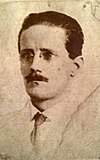
Nobel laureate Jimmy Carter, responding to *Christianity Today*, attributes escalating global religious conflicts to a rising tide of fundamentalism across diverse faiths.
“There is a remarkable trend toward fundamentalism in all religions — including the different denominations of Christianity as well as Hinduism, Judaism, and Islam. Increasingly, true believers are inclined to begin a process of deciding: "Since I am aligned with God, I am superior and my beliefs should prevail, and anyone who disagrees with me is inherently wrong," and the next step is "inherently inferior." The ultimate step is "subhuman," and then their lives are not significant. That tendency has created, throughout the world, intense religious conflicts. Those Christians who resist the inclination toward fundamentalism and who truly follow the nature, actions, and words of Jesus Christ should encompass people who are different from us with our care, generosity, forgiveness, compassion, and unselfish love.
It is not easy to do this. It is a natural human inclination to encapsulate ourselves in a superior fashion with people who are just like us — and to assume that we are fulfilling the mandate of our lives if we just confine our love to our own family or to people who are similar and compatible. Breaking through this barrier and reaching out to others is what personifies a Christian and what emulates the perfect example that Christ set for us.”
- Jimmy Carter, Post-Presidency

“And on crime, I think the major cause of crime in those downtown areas is unemployment, and we're trying to focus on this question. We've got now about 1.1 million jobs allotted during the summertime for young people, much more than ever has been before. We are putting into realization at this moment 20,000 public service jobs per week, even a greater rate than Franklin Roosevelt put people in the CCC camps when you had the Army to de. it and when the Nation was devastated by depression. We are now approving 1,000 public works projects every week, with at least 10 percent of that allocation money being guaranteed to minority business people. And in addition to that, we have taken the CETA jobs, the comprehensive education and training jobs, and have multiplied them by more than a hundred percent, more than 200 percent. We hope to increase those by 400,000 jobs between now and a year from now. None of these programs have yet been felt. Last week was the first week we ever were able to get a public works project approved. This week the Congress has completed passing additional legislation on youth employment, above and beyond what I've just described to you. And I think by the time we feel the beneficial effect of all these programs, we'll be able to observe some improvements.”
- Jimmy Carter, Presidency

“I know how much I love my own children. Just a few minutes ago, Amy and I were out in the front yard of the White House designing a treehouse that's going to be built for Amy, and it is one of those many instances that I have to be close to her. And I know that when she does get ill in the future, I want her to have good health care. But I'm just as interested in a child who lives in the oldest and most dilapidated apartment house in the District of Columbia. And I'm also interested in the children that live in Atlanta, Georgia, Detroit, or who live in other parts of our country. So, I'm here to represent the Government, which quite often makes mistakes, but which I hope always retains a heart, attuned to loving care for those who are able to care for themselves, yes, but for primarily those whose care would be neglected if those who do occupy major political positions in the Congress and in the White House didn't care for everyone. This is a good day for us. And I hope that everyone who serves in this hospital or who comes here for treatment or whose family uses this facility will be blessed by it and will be inspired with a sense of compassion and understanding and brotherhood and love, to keep illness away from our children and to correct those who are afflicted with disease.”
- Jimmy Carter, Presidency
“Again, I want to stress two points about our economic policies because it's important for you and all Americans to understand. One point is that we aim to balance the budget in 1981 in a strong and healthy economy, with the revenues that come into the Government when people are employed and our industrial capacity is being used. It's not legitimate spending on human needs that causes Federal deficits. It's principally the inadequate revenues that come in from a sluggish economy that create those deficits. Understanding that is a very good move in the right direction. Cutting back programs that really help people is not the way to balance the budget. But even with adequate revenues, we'll still have to make some hard choices about how we spend the taxpayers' money. We can't afford to do everything. The other important point I want to make about the economy is that I'm inalterably opposed to fighting inflation by keeping unemployment high and factories idle. This has been done too much in the past. That approach has been proved in the last 8 years to be economically ineffective and morally bankrupt. If the economy should falter during the years ahead, I will not hesitate to propose the economic and budgetary measures needed to get the economy going again. And you can depend on that.”
- Jimmy Carter, Presidency
“Our plan will call for strict conservation measures if we fall behind. I can't tell you that these measures will be easy, nor will they be popular. But I think most of you realize that a policy which does not ask for changes or sacrifices would not be an effective policy at this late date. This plan is essential to protect our jobs, our environment, our standard of living, and our future. Whether this plan truly makes a difference will not be decided now here in Washington but in every town and every factory, in every home and on every highway and every farm. I believe that this can be a positive challenge. There is something especially American in the kinds of changes that we have to make. We've always been proud, through our history, of being efficient people. We've always been proud of our ingenuity, our skill at answering questions. Now we need efficiency and ingenuity more than ever. We've always been proud of our leadership in the world. And now we have a chance again to give the world a positive example. We've always been proud of our vision of the future. We've always wanted to give our children and our grandchildren a world richer in possibilities than we have had ourselves. They are the ones that we must provide for now. They are the ones who will suffer most if we don't act.”
- Jimmy Carter, Presidency
“I think, first of all, that the Helsinki agreement has played a useful role. We've never acknowledged, as you know, the absorption by the Soviet Union of the groups to whom you refer. My wife's brother—his wife is an Estonian; she was born and raised there. And we've had a chance in the last few months at Belgrade to specify particular violations of human rights which were in conflict with the Helsinki agreement. As you know, the Soviets wanted to minimize the so-called third basket and not discuss human rights, but talk about military and political interrelationships. I think we're making some progress. In my private discussions with foreign leaders-and I set a record last year by meeting with 68 heads of state—hardly ever do we have a 10- or 15-minute or, certainly, not a 3-hour discussion that the subject of human rights doesn't arise. In most instances, they raise it. My guess is that 2 years ago, the subject of human rights would be a rarity among heads of state. But now, even the most abusive governments, there is a concern—"what does the rest of the world think about me, what will happen if I persecute this group or bring a legal charge against this person?" I think we are making success in a very slow, tedious way.”
- Jimmy Carter, Presidency
Delivering his Nobel Peace Prize lecture in 2002, Jimmy Carter acknowledged America's singular global power while urging restraint and adherence to democratic ideals in its use.
“The world has changed greatly since I left the White House. Now there is only one superpower, with unprecedented military and economic strength. The coming budget for American armaments will be greater than those of the next fifteen nations combined, and there are troops from the United States in many countries throughout the world. Our gross national economy exceeds that of the three countries that follow us, and our nation's voice most often prevails as decisions are made concerning trade, humanitarian assistance, and the allocation of global wealth. This dominant status is unlikely to change in our lifetimes. Great American power and responsibility are not unprecedented, and have been used with restraint and great benefit in the past. We have not assumed that super strength guarantees super wisdom, and we have consistently reached out to the international community to ensure that our own power and influence are tempered by the best common judgment.
Within our country, ultimate decisions are made through democratic means, which tend to moderate radical or ill-advised proposals. Constrained and inspired by historic constitutional principles, our nation has endeavored for more than two hundred years to follow the now almost universal ideals of freedom, human rights, and justice for all.”
- Jimmy Carter, Post-Presidency
“It is now 8 weeks since I became President. I have brought to office a firm commitment to a more open foreign policy. And I believe that the American people expect me to speak frankly about the policies that we intend to pursue, and it is in that spirit that I speak to you tonight about our own hopes for the future. I see a hopeful world, a world dominated by increasing demands for basic freedoms, for fundamental rights, for higher standards of human existence. We are eager to take part in the shaping of that world. But in seeking such a better world, we are not blind to the reality of disagreement, nor to the persisting dangers that confront us all. Every headline reminds us of bitter divisions, of national hostilities, of territorial conflicts, of ideological competition. In the Middle East, peace is a quarter of a century overdue. A gathering racial conflict threatens southern Africa; new tensions are rising in the Horn of Africa. Disputes in the eastern Mediterranean remain to be resolved. Perhaps even more ominous is the staggering arms race. The Soviet Union and the United States have accumulated thousands of nuclear weapons. Our two nations now have five times more missile warheads today than we had just 8 years ago. But we are not five times more secure. On the contrary, the arms race has only increased the risk of conflict.”
- Jimmy Carter, Presidency

“In the last few days we have seen, I believe, an historic breakthrough in the search for a permanent, lasting peace in the Middle East because of the true leadership qualities that have been exhibited by the courage of President Sadat and the gracious reception of him in Israel by Prime Minister Begin. This has been, already, a tremendous accomplishment. I think the importance of it is that there has been an initiation of direct, person-to-person negotiations between Israel and the major power in the Mideast among the Arab nations who are Israel's neighbors. Lebanon, Syria, Jordan have a total population of about 12 million; Egypt has a population of 36 million and has by far the greatest military force. And the fact that this strongest Arab country and the nation of Israel are now conducting direct negotiations is a major accomplishment in itself. Two of Israel's most cherished desires have already been met. One is this face-to-face negotiation possibility, and the other one is a recognition by a major Arab leader that Israel has a right to exist. In fact, President Sadat said, "We welcome you in our midst." The United States has been very pleased to see this reduction in distrust and a reduction in fear and a reduction in suspicion between the Arabs and the Israelis. We have played a close consultative role with both of these leaders.”
- Jimmy Carter, Presidency

“Do you think we are making some progress now? Do you think we have a long way to go? Do you think we are going to get there? Right on. I'm very proud to be here tonight in what I think is an historic occasion that will perhaps go down in the history of our country as a turning point in the minds and hearts of the American people in their long overdue concern about a large group of Americans, about 36 million, who in the past have too often been ignored. This is the first White House Conference on the Handicapped. I know that this is a tremendous assembly of leaders who have fought a long and sometimes discouraging battle to arrive here in Washington tonight. But this is not the first meeting. There have been dozens and dozens of meetings, attended by thousands of people in the 50 States of our country, and you have already brought to the consciousness of local and State officials an awareness of potential change 'for the better and many improvements that have already been made. Labor, industry can work together with government to make sure that, jointly, our efforts are successful. There is hardly a national leader on Earth in all the 150 nations that span the globe, who are not now thinking about two words: human rights. And now we in our own country are applying those two words to the handicapped people of our country. It's long overdue.”
- Jimmy Carter, Presidency
“Just this past week, I publicly endorsed a concept, for the first time, of human rights for the District of Columbia. Thank you; you're welcome. The endorsement by the President, of course, is not the final step. The Congress must act, and the people have to ratify a change in the United States Constitution. As I say, we still have a long way to go. We join together in matters that affect all human beings--a search for peace in the world, a reduction in armaments, a channeling of scarce financial and human resources to give people a better life, a life with education possible, better health care, more human freedom, the rule by the black majorities in the African nations. And there has been a change among the developing nations of the world in their attitude toward us. And I would say that the crucial factors that have been involved are represented very well by the three men who stand behind me--Parren Mitchell, Alex Haley, and Andrew Young--and many others in this audience who have come before them and who have marched with them and will join with us in the future in a spirit of brotherhood to make sure that the great achievements that we've seen in our own country can be enhanced and that they can be made available to the needy and downtrodden people throughout the world.”
- Jimmy Carter, Presidency
“We can correct the problems that relate to social security. We can have an effective and fair welfare system. We can have a fair tax structure. We're working to bring down the unemployment rate. And it's already fallen precipitously, which is a good accomplishment and, I think, an equally good omen for the future. At the same time, we're trying to stop nuclear proliferation around the world. I think 8 months ago there was a general feeling among the leaders of nations on this Earth that it was too late, that the genie that could kill all mankind had escaped, that there was no way to put it back in the bottle. But we've worked very closely with our friends and allies in Canada, Australia, Britain, and other countries to make sure that the peaceful use of atomic power can continue to generate electricity and give us power, but that the waste products that can be changed into explosives would be carefully controlled. And I believe we now have a good prospect for success. We are trying to cut down on the indiscriminate sale of conventional weapons around the world, particularly to those countries that can't afford them. And we are trying to get other nations to join in a voluntary reduction in their demands for weapons. We are trying to alleviate tensions that have divided other countries one from another, without intruding into the internal affairs of those countries.”
- Jimmy Carter, Presidency
“The equally dangerous threat of inflation is building. Consumer prices reflecting the drought and last winter's cold weather have been going up at an annual rate of about 10 percent in the last 3 months, and the basic inflation rate, under everything else, has been running 6 or 6 1/2 percent. These inflation figures are too high for comfort. And as you know, also, inflation falls most heavily on people with modest means and people who've worked all their lives for a little security and who then find that security threatened. Inflation robs us of our confidence in the future. However, it's interesting to point out, at the recent London summit conference, the single issue of most concern to the seven heads of state assembled there was unemployment among young people. In the ideological struggle with the Eastern Socialist and Communist countries, this is our one major vulnerability. We have got to provide in our country an economic system that's healthy enough and an education system that's competent enough so that when our young people reach the age of 18 or 19 years old, they can find a way to use the talent and ability and opportunities that God gave them and not enter adult life discouraged and excluded from society. This ought to be number one in all our efforts in the future. Experience has shown us and all economists that we must attack inflation and unemployment together.”
- Jimmy Carter, Presidency
“We look on this as a very constructive step. The road toward peace has already led through Jerusalem, will now go to Cairo and ultimately, we believe, to a comprehensive consultation at Geneva. It's not an easy thing to bring about a comprehensive peace settlement. Immediate expectations have sometimes been exaggerated. The definition of real peace--I think we've made good progress on that already. The resolution of the Palestinian question still has not been decided. And the solution to the problem concerning borders and national security has also not been decided. We have played, I think, a proper role. I have tried to convince, in the past, Prime Minister Begin of the good intentions of President Sadat and vice versa. When there has been no progress being made, the United States has taken the initiative. Now that progress is being made, a proper role for the United States is to support that progress and to give the credit to the strong leadership that's already been exhibited by Prime Minister Begin and President Sadat and to let our Nation be used, as called upon, to expedite the peace process. I believe that this is a move that the whole world looks upon with great appreciation. And again, I want to express my congratulations and my appreciation to these two strong leaders for the tremendous progress already made and for their commitment to future progress.”
- Jimmy Carter, Presidency

“Today, I want to talk to you briefly about some domestic problems which prey on my mind and rest on my shoulders as your President. The domestic problems which we do face as Americans are difficult, indeed, but we have the courage and the ingenuity and the greatness of spirit to meet these challenges. I believe that we can build an America in which our day-to-day practices live up to our democratic ideals, in which the family life, mine and yours, is strong and stable, in which the neighborhoods of our cities are vital and safe, in which work is available and is justly rewarded, in which opportunity is not limited by color or sex or religion or economic or educational background, in which there is schooling and employment for the young and dignity and security for the old. We must work together to control inflation and to get our economy moving again. We must come to terms with the growing shortage of energy which, if ignored, will gravely damage the very fabric of our society. We must safeguard the integrity of our social security system. We must totally reform our tax and our welfare systems. We must ensure the health of the American people. And we must develop a government which is open enough to earn the trust and support of the people in addressing these and other crucial issues, and efficient enough and competent enough to ensure that our efforts will bear fruit.”
- Jimmy Carter, Presidency
“Yes. But I think it's accurate to point out that the major impediment-one of the major impediments to increased drilling on the Atlantic seaboard has been the oil companies themselves. They don't like the legitimate constraints that are placed on them by the Department of Interior and the Federal energy agency and others. As Governor of Georgia, though, I worked with the Governors of our two neighboring States to the north---North and South Carolina--to provide, along with the oil companies, I might say, some assessment of what we ought to do. And we identified five places along the coast where we would like to see oil brought ashore, five places near this seacoast where we would like to see oil refineries built. And I would hope that all the States north of us on the eastern seaboard would do the same. This new drill rig, one of the most modern in the world, I think, has greatly enhanced safety devices and oil spill control devices that were not extant when the Santa Barbara spills took place and were not applicable or installed in the North Sea spill. So, I don't think that we need fear, to the extent we did in the past, environmental consequences of offshore oil exploration and production. So, to answer your question in a nutshell, I do favor a rapid increase in oil exploration and production on the eastern seaboard, and I hope that they find oil near the Georgia coast, first of all.”
- Jimmy Carter, Presidency
“One thing that I want to talk about tonight is that we share, the Black Caucus, all of its supporters, and I, a common, ultimate dream for America. It's going to be a long time coming because this dream is so great. We want a time to come when all Americans will be well off enough to afford the same tailor that Ron Dellums has. Now, to be serious for a few minutes, I'd like to say that I've had a very interesting relationship with the Black Caucus in this first part of my administration. Sometimes we've been in complete harmony. Sometimes I haven't exactly satisfied Parren Mitchell and the other members of the Black Caucus. I can tell the difference when I get my mail. In the low times, the mail that comes from Parren Mitchell to the White House is just addressed to "Occupant." But I have to say that in many ways the partnership that I have formed with the Black Caucus has been good for me, good for my administration, good for the entire Government, and good for our country. We've got a long way to go. And expectations are high, and they ought to be high. But because of that, quite often achievements that a year ago or 5 years ago would have been greeted with a great sense of jubilation and a sigh of relief-that an enormous achievement had been accepted by the American people with only a response, "It should have been more."”
- Jimmy Carter, Presidency

“The world itself is now dominated by a new spirit. Peoples more numerous and more politically aware are craving and now demanding their place in the sun – not just for the benefit of their own physical condition, but for basic human rights.
The passion for freedom is on the rise. Tapping this new spirit, there can be no nobler nor more ambitious task for America to undertake on this day of a new beginning than to help shape a just and peaceful world that is truly humane.
We are a strong nation, and we will maintain strength so sufficient that it need not be proven in combat – a quiet strength based not merely on the size of an arsenal, but on the nobility of ideas.
We will be ever vigilant and never vulnerable, and we will fight our wars against poverty, ignorance, and injustice – for those are the enemies against which our forces can be honorably marshaled.
We are a purely idealistic Nation, but let no one confuse our idealism with weakness.
Because we are free we can never be indifferent to the fate of freedom elsewhere. Our moral sense dictates a clearcut preference for these societies which share with us an abiding respect for individual human rights. We do not seek to intimidate, but it is clear that a world which others can dominate with impunity would be inhospitable to decency and a threat to the well-being of all people.”
The passion for freedom is on the rise. Tapping this new spirit, there can be no nobler nor more ambitious task for America to undertake on this day of a new beginning than to help shape a just and peaceful world that is truly humane.
We are a strong nation, and we will maintain strength so sufficient that it need not be proven in combat – a quiet strength based not merely on the size of an arsenal, but on the nobility of ideas.
We will be ever vigilant and never vulnerable, and we will fight our wars against poverty, ignorance, and injustice – for those are the enemies against which our forces can be honorably marshaled.
We are a purely idealistic Nation, but let no one confuse our idealism with weakness.
Because we are free we can never be indifferent to the fate of freedom elsewhere. Our moral sense dictates a clearcut preference for these societies which share with us an abiding respect for individual human rights. We do not seek to intimidate, but it is clear that a world which others can dominate with impunity would be inhospitable to decency and a threat to the well-being of all people.”
- Jimmy Carter, Presidency
“I've never endorsed the PLO. Our Government has had no communication, at all, directly with the PLO. The only communication has been when representatives of the PLO have been to Arab leaders immediately prior to a Cy Vance visit with them or their visit to our country and have delivered messages to us indirectly. Our agreement with the Israeli Government several years ago, before I became President, was that we would not communicate with the PLO as long as they did not refute their commitment to destroy the nation of Israel and did not accept the right of Israel to exist. Our public position is the same as our private position. There is no difference between them. We have said that if the PLO would accept publicly the right of Israel to exist and exist in peace, as described under United Nations Resolution 242, that we would meet with them and discuss the future of the Palestinians in the Middle East. We have never called on the PLO to be part of the future negotiations. We have said that the Palestinian people should be represented in the future negotiations. That is one of the three major elements of any agreement that might lead to lasting peace--one is the territorial boundaries; the other one is the Arab countries accepting Israel, to live in peace as neighbors; and the third one is some resolution of the Palestinian question.”
- Jimmy Carter, Presidency
“I have just been talking about forces of potential destruction that mankind has developed, and how we might control them. It is equally important that we remember the beneficial forces that we have evolved over the ages, and how to hold fast to them.
One of those constructive forces is enhancement of individual human freedoms through the strengthening of democracy, and the fight against deprivation, torture, terrorism and the persecution of people throughout the world. The struggle for human rights overrides all differences of color, nation or language.
Those who hunger for freedom, who thirst for human dignity, and who suffer for the sake of justice — they are the patriots of this cause.
I believe with all my heart that America must always stand for these basic human rights — at home and abroad. That is both our history and our destiny.
America did not invent human rights. In a very real sense, it is the other way round. Human rights invented America.
Ours was the first nation in the history of the world to be founded explicitly on such an idea. Our social and political progress has been based on one fundamental principle — the value and importance of the individual. The fundamental force that unites us is not kinship or place of origin or religious preference. The love of liberty is a common blood that flows in our American veins.”
One of those constructive forces is enhancement of individual human freedoms through the strengthening of democracy, and the fight against deprivation, torture, terrorism and the persecution of people throughout the world. The struggle for human rights overrides all differences of color, nation or language.
Those who hunger for freedom, who thirst for human dignity, and who suffer for the sake of justice — they are the patriots of this cause.
I believe with all my heart that America must always stand for these basic human rights — at home and abroad. That is both our history and our destiny.
America did not invent human rights. In a very real sense, it is the other way round. Human rights invented America.
Ours was the first nation in the history of the world to be founded explicitly on such an idea. Our social and political progress has been based on one fundamental principle — the value and importance of the individual. The fundamental force that unites us is not kinship or place of origin or religious preference. The love of liberty is a common blood that flows in our American veins.”
- Jimmy Carter, Presidency
“I think now there's a new spirit in our Nation. I believe with our stand on human rights, our efforts to bring peace, to reduce the nuclear threat, to alleviate the hatreds in the Middle East, to bring majority rule and peace to southern Africa, that there is a sense of purpose again. And in my own way as a human being with limits that you and I both recognize, but occupying the most important office perhaps in the whole world, I want to be sure that the American flag is once more lifted high and when anyone on Earth sees it, they think about freedom, they think about the worth of an individual human being, they think about hope, they think about a sense of compassion and love, they think about high ideals, they think about openness of government, they think about democratic principles, they think about compassion and concern, and they think about the worth of our people who live in harmony from so many different places on Earth. These are the hopes that I have as President. I thank you for your involvement in the democratic processes, your support of our party, your friendship toward me. I thank you for the fine congressional delegation that you've sent to Washington who represent you and our Nation so well. And I know that I can speak for them as I repeat a phrase that I used thousands of times in my long campaign: All I want and all they want is a government as good as the people of our country. Thank you very much.”
- Jimmy Carter, Presidency
“Well, as you know, we are not introducing new weapons into the Middle East. F-15's are already being delivered into the Middle East. Also, I have pledged myself to cut down on the volume of weapons each succeeding year as long as I'm in office, barring some unpredictable, worldwide military outbreak. This year there will be less weapons sales than last year, and this will include, of course, the Middle East. I think it's very good for nations to turn to us for their security needs, instead of having to turn to the Soviet Union as they have in the past. I'm talking specifically about Egypt. And you have to remember that Saudi Arabia has never had any active aggression against Israel. Saudi Arabia is our ally and friend. Egypt is our ally and friend. Israel is our ally and friend. To maintain security in that region is important. Egypt has other threats against its security. The Soviets are shipping massive quantities of weapons into the Middle Eastern area now, into the Red Sea area—Ethiopia, into Syria, Iraq, Libya-and we cannot abandon our own friends. So, I don't think that it's wrong at all to ensure stability or the right to defend themselves in a region with arms sales. We are continuing multinational negotiations with other sellers of weapons to get them to join with us in a constant step-by-step, year-by-year reduction in total arms sales. If they do, I think the world will be much more peaceful in the future.”
- Jimmy Carter, Presidency
“We should, however, also pursue a broad, permanent multilateral agreement on this issue. We will also seek to establish Soviet willingness to reach agreement with us on mutual military restraint in the Indian Ocean, as well as on such matters as arms exports to the troubled areas of the world. In proposing such accommodations I remain fully aware that American-Soviet relations will continue to be highly competitive--but I believe that our competition must be balanced by cooperation in preserving peace, and thus our mutual survival. I will seek such cooperation with the Soviet Union--earnestly, constantly, and sincerely. However, the effort to contain the arms race is not a matter just for the United States and Soviet Union alone. There must be a wider effort to reduce the flow of weapons to all the troubled spots of this globe. Accordingly, we will try to reach broader agreements among producer and consumer nations to limit the export of conventional arms, and we, ourselves, will take the initiative on our own because the United States has become one of the major arms suppliers of the world. We are deeply committed to halting the proliferation of nuclear weapons. And we will undertake a new effort to reach multilateral agreements designed to provide legitimate supplies of nuclear fuels for the production of energy, while controlling the poisonous and dangerous atomic wastes. Working with other nations represented here, we hope to advance the cause of peace.”
- Jimmy Carter, Presidency
“We obviously didn't cause the problem; it's an inherited problem that's been built up for long years. I think in the past there's been too much of an emphasis on major Federal programs when billions of dollars have been spent on helping people that didn't need the help very badly. I'm from the Sun Belt States. I think there's been too much of a channeling of Federal moneys into Sun Belt areas. I think between the downtown ghetto areas on crime control, housing development, and so forth, the funds have quite often been channeled off into the suburbs because of more highly educated people, better organized people, more able to speak loudly and who understood the complexities of Federal programs. We're trying to change that and focus the attention of the Government, whatever it is, on the downtown, urban, deteriorating neighborhoods. Another thing that we're trying to do is to concentrate on the rehabilitation of homes. I've seen this happen in Baltimore. I've seen it happen in Savannah, Georgia, and other places around the country, where with a small effort on the part of a chamber of commerce or the local officials, the banks, working with the Federal Government--that instead of seeing a neighborhood deteriorate, that existing structures can be rebuilt or renovated to make very attractive homes near the core area for executive and professional work without abandoning the central cities and moving out into the suburbs. We're trying to do that, too, with our general HUD programs.”
- Jimmy Carter, Presidency
“Among my first proposals as President was one to stimulate the overall economy and especially to provide jobs for teenagers in the inner cities. We've now established a program to provide 1.1 million jobs, summer jobs, for youth more than ever in history. We proposed, in addition, a youth employment program with 1.5 million jobs for unemployed youth. We've doubled the size of the Peace Corps, the Job Corps, and we've more than doubled the public service jobs for the unemployed--from 310,000 to 725,000, nearly half of these for the long-term unemployed. Soon, before August 5, we'll be sending to the Congress our proposal for basic welfare reform. Jobs will be the thrust behind this reform program for those who are able to work and self-respect and adequate living conditions for those who are not able to work. Our goal is for all those who want to work to be able to find work so that they can be independent and so they can be proud and they can be self-sufficient. And I'd like to point out that an emphasis on jobs and work for those who are able is not discriminatory, it's not moving backwards, and it's not a deprivation of basic rights. What we want is for people who are able not to be permanently dependent on government, but able to stand on their own feet, support their own family, and have a constructive attitude toward our society. In this welfare proposal, there will be an additional 1 million job opportunities. Our goal is to make sure that every single family has a member of it with a guaranteed job, by government if necessary, and this is a goal that we intend to reach.”
- Jimmy Carter, Presidency
“Now I want to discuss something that's important to you and me both--our social security system. This is a problem for all Western democracies. Social security, which is probably the greatest legacy left over for us from the New Deal, has served us now for 40 years. But since 1975, social security has been paying out more than it's been taking in. Unless we take action now, the Disability Insurance Fund's reserves will be gone in 2 years, and the retirement reserves will be gone 4 years from then. Some have proposed a simple solution for this: to tax the American worker to the hilt. Well, we are not going to do that. Too many people are already paying more payroll taxes than they do income taxes, and we are not going to go this route to save the social security system. And we are not going to let social security go broke. We're going to keep faith with the 33 million Americans who already enjoy social security benefits and with the 104 million of us, who are paying into the social security system with the expectation that we will receive benefits when we retire, or when we become disabled, or those that are necessary to take care of our families if something happens to us. Now, there's no easy answer, but the changes that I have already submitted to the Congress will make social security financially sound for the rest of the century and will correct most of the problems for the next 75 years--and without a higher tax rate than already scheduled by law for the average wage earner. I'm going to need your help in Congress to get this bill passed, and I hope you'll help me with it.”
- Jimmy Carter, Presidency
“I haven't given up on that hope yet. Of course, a lot of those agencies, as we all know well, are minor commissions and boards and so forth that have been established by statute and you know can be eliminated when the need for them is no longer there. But I have not been unpleasantly surprised, Billy. I had a good bit of experience, as you know, as Governor of Georgia and was familiar with at least a State bureaucracy. And I had heard such horrible stories about the Federal Government that I didn't expect to find a smooth-running, well organized mechanism here in place. So, I wasn't very greatly surprised. I have been pleasantly surprised at the quality of my Cabinet; that there is not a weak person on it, and not a single one that I would want to change if I had the whole choice to do over again. They've worked well together. We have, for the first time in years--I don't know how long--we've got a weekly Cabinet meeting. And any defects that are carrying over in the governmental structure are partially overcome by the close-knit working relationship between the White House staff and the members of the Cabinet. We have established now--almost completed the Department of Energy, which is to some degree a replacement for about 40 other Federal agencies. And our plan for reorganizing the entire structure of the Government is well in place. I've been through this before, for 4 years in Georgia, and I think there's a good parallel there to serve as a guide for me. So to answer your question, I'm not disappointed nor unpleasantly surprised. And what defects are here, we are overcoming them by close relationship among the officials involved.”
- Jimmy Carter, Presidency
“We've established, working with many other people, a basic commitment to human rights, and now I think our Nation stands as a beacon light so that we can be proud of ourselves, that we can restore the commitments that made our Nation great beginning 200 years ago, and we can also set an example for the world. It's not an easy thing. There's a lot of controversy around it. And I think that when you say the words "human rights," that is in itself an action. And if you see those who are suffering today in political prisons, those who have been kept from free travel, those who have suffered because their families are divided, the action that they took was a few words. But I think now there's a general feeling around the world that we each must make our own nations free of legitimate criticism from other countries and among our own citizens. This change is slow, but I think it exemplifies what the American people feel, and I believe it's an achievement of which we can be proud. We are discussing without cessation a reduction in strategic atomic weapons with the Soviet Union. We are negotiating today in Moscow to eliminate the testing of atomic explosives. We are trying to move toward demilitarization of the Indian Ocean and to lessen tensions which might lead to war. These kinds of efforts, I think, will be successful if I can accurately represent what you are and what you want our Nation to do and to be. Because if I speak after a policy is evolved in secrecy, I speak with a single voice. But if you participate in the debate and the discussion and then I evolve a policy based on what you want, I speak with the voice of 215 million Americans.”
- Jimmy Carter, Presidency
“You might say one person can't make much difference. I remember in 1960 if 28,000 people had changed their votes in Texas and a few thousand in Illinois, John Kennedy would never have been President. In 1968 if all of the people assembled here and a few like you around the country had had the confidence in the Democratic candidate to go out and work hard for him, Richard Nixon would never have served in the White House, and we would have had a great Democratic President, Hubert Humphrey, to carry on the principles that I've described to you. But when you think back on Roosevelt, Harry Truman, Johnson, Kennedy, those memories, for working people, for people who believe in a strong defense and for peace, for people who believe in a brighter future for our country, better education for our children, self-respect for the elderly, dignity for those who are black or who don't speak English well, but might speak Spanish, are very important. And our country has taken the leadership in recent years in trying to bring peace not only to our own Nation but to others. I've been proud to represent you in negotiating with President Sadat and Prime Minister Begin to bring peace to Israel. And I see this not just as an achievement for Israel, to make sure that they are secure and strong and democratic and free and at peace, but that investment there by the people of our Nation, with me as your leader, has given our own Nation more stability, more security, more chance for freedom and for peace, and has stabilized a very troubled area of the world. These kind of strategic common relationships that bind us together with foreign countries are important to us all.”
- Jimmy Carter, Presidency
“In a nation that was proud of hard work, strong families, close-knit communities, and our faith in God, too many of us now tend to worship self-indulgence and consumption. Human identity is no longer defined by what one does, but by what one owns. But we've discovered that owning things and consuming things does not satisfy our longing for meaning. We've learned that piling up material goods cannot fill the emptiness of lives which have no confidence or purpose.
The symptoms of this crisis of the American spirit are all around us. For the first time in the history of our country a majority of our people believe that the next 5 years will be worse than the past 5 years. Two-thirds of our people do not even vote. The productivity of American workers is actually dropping, and the willingness of Americans to save for the future has fallen below that of all other people in the Western world.
As you know, there is a growing disrespect for government and for churches and for schools, the news media, and other institutions. This is not a message of happiness or reassurance, but it is the truth and it is a warning.
These changes did not happen overnight. They've come upon us gradually over the last generation, years that were filled with shocks and tragedy.
We were sure that ours was a nation of the ballot, not the bullet, until the murders of John Kennedy and Robert Kennedy and Martin Luther King, Jr. We were taught that our armies were always invincible and our causes were always just, only to suffer the agony of Vietnam. We respected the Presidency as a place of honor until the shock of Watergate.”
The symptoms of this crisis of the American spirit are all around us. For the first time in the history of our country a majority of our people believe that the next 5 years will be worse than the past 5 years. Two-thirds of our people do not even vote. The productivity of American workers is actually dropping, and the willingness of Americans to save for the future has fallen below that of all other people in the Western world.
As you know, there is a growing disrespect for government and for churches and for schools, the news media, and other institutions. This is not a message of happiness or reassurance, but it is the truth and it is a warning.
These changes did not happen overnight. They've come upon us gradually over the last generation, years that were filled with shocks and tragedy.
We were sure that ours was a nation of the ballot, not the bullet, until the murders of John Kennedy and Robert Kennedy and Martin Luther King, Jr. We were taught that our armies were always invincible and our causes were always just, only to suffer the agony of Vietnam. We respected the Presidency as a place of honor until the shock of Watergate.”
- Jimmy Carter, Presidency
“I've never called for an independent Palestinian country. We have used the word "entity." And my own preference as expressed in that talk that I made in New Jersey, I think, and now, is that we think that if there is a Palestinian entity established on the West Bank, that it ought to be associated with Jordan, for instance. I think this was the case among many Israeli leaders as their preference in the past. So, we have been very cautious, very careful, very consistent in spelling out our posture on the Middle Eastern settlements...We are not just an idle bystander. We are not just an uninterested intermediary or mediator. Our country has a direct, substantial interest in a permanent peace in the Middle East. And I sincerely hope and I believe that the nations who live there also want to have a permanent settlement and a permanent peace in the Middle East. And the principles that I described in that speech, the principles that the Vice President described in a speech he made in California earlier this year, and the principles that we espouse in our public and private conversations with Arabs and Israelis and with Prime Minister Barre, yesterday, from France, and others who are interested, are exactly the same. We've never deviated. We have learned a lot. And as we've learned, we've added additional new items onto our basic proposal. But ultimately, the Middle Eastern settlement has got to be an agreement among the parties involved. Now, I hope that all the countries are eager to negotiate in good faith. I hope that none of them are putting up deliberate obstacles to prevent a Geneva conference from being convened. That's my hope and that's my present expectation.”
- Jimmy Carter, Presidency
“As you know, President Eisenhower also had a chief of staff, Sherman Adams, who ran things almost like a secondary President. But I've substituted for that an unprecedented use of the Vice President. He and I are close, personal friends. We have a harmonious partnership. I've grown to respect and like him more every day I've known him. And he has authority and responsibility in foreign and domestic affairs and also in helping to manage the White House staff that no Vice President has ever dreamed of having. And it takes a great deal of the burden off my shoulders. Formerly, Vice Presidents were over in the Executive Office Building across the street. I asked Fritz specifically to move over and occupy an office right down the hall from me. And so, in effect, he is the one who coordinates the staff work in the White House. He's thoroughly familiar with the Congress. He's been there for 12 years himself. He was on the Finance Committee and also the Budget Committee. So he's familiar with that. When I have budget hearings 2 1/2, 3 hours here in the afternoon--3 1/2 hours yesterday on defense--Fritz is there at my side. And I've incorporated him in this strategic military chain of command. No other Vice President has ever occupied those positions. And if something should happen to me, he would be thoroughly familiar with all the controversies, all of the foreign affairs considerations, all of the defense considerations, and be ready to act in a proper way. So, there are some different ways of management that I have brought into the White House that quite often have not been understood, but which I've very carefully evolved and of which I'm quite proud.”
- Jimmy Carter, Presidency
In his 2002 Nobel Peace Prize lecture, Jimmy Carter reflects on the shared principles of major religions and the dangers of dehumanization leading to violence and war.
“The unchanging principles of life predate modern times. I worship Jesus Christ, whom we Christians consider to be the Prince of Peace. As a Jew, he taught us to cross religious boundaries, in service and in love. He repeatedly reached out and embraced Roman conquerors, other Gentiles, and even the more despised Samaritans. Despite theological differences, all great religions share common commitments that define our ideal secular relationships. I am convinced that Christians, Muslims, Buddhists, Hindus, Jews, and others can embrace each other in a common effort to alleviate human suffering and to espouse peace.
But the present era is a challenging and disturbing time for those whose lives are shaped by religious faith based on kindness toward each other. We have been reminded that cruel and inhuman acts can be derived from distorted theological beliefs, as suicide bombers take the lives of innocent human beings, draped falsely in the cloak of God's will. With horrible brutality, neighbors have massacred neighbors in Europe, Asia, and Africa.
In order for us human beings to commit ourselves personally to the inhumanity of war, we find it necessary first to dehumanize our opponents, which is in itself a violation of the beliefs of all religions. Once we characterize our adversaries as beyond the scope of God's mercy and grace, their lives lose all value. We deny personal responsibility when we plant landmines and, days or years later, a stranger to us — often a child – is crippled or killed. From a great distance, we launch bombs or missiles with almost total impunity, and never want to know the number or identity of the victims.”
- Jimmy Carter, Post-Presidency
“I've given you some of the principles of the plan. I'm sure that each of you will find something you don't like about the specifics of our proposal. It will demand that we make sacrifices and changes in every life. To some degree, the sacrifices will be painful--but so is any meaningful sacrifice. It will lead to some higher costs and to some greater inconvenience for everyone. But the sacrifices can be gradual, realistic, and they are necessary. Above all, they will be fair. No one will gain an unfair advantage through this plan. No one will be asked to bear an unfair burden. We will monitor the accuracy of data from the oil and natural gas companies for the first time, so that we will always know their true production, supplies, reserves, and profits. Those citizens who insist on driving large, unnecessarily powerful cars must expect to pay more for that luxury. We can be sure that all the special interest groups in the country will attack the part of this plan that affects them directly. They will say that sacrifice is fine as long as other people do it, but that their sacrifice is unreasonable or unfair or harmful to the country. If they succeed with this approach, then the burden on the ordinary citizen, who is not organized into an interest group, would be crushing. There should be only one test for this program--whether it will help our country. Other generations of Americans have faced and mastered great challenges. I have faith that meeting this challenge will make our own lives even richer. If you will join me so that we can work together with patriotism and courage, we will again prove that our great Nation can lead the world into an age of peace, independence, and freedom.”
- Jimmy Carter, Presidency
“We've made a major expansion in what is called countercyclical revenue sharing to focus into the most deprived urban ghetto, unemployed areas, to be administered by Patricia Harris. And I've already signed into law a $4 billion public works bill. Under a new urban program that we are proposing, the Secretary of HUD, Patricia Harris, will have the authority to target large amounts of this money, in her judgment, on areas that are the most needy. For a long time in the past whenever a Federal program was approved by the Congress and the Republican Presidents, a large portion of that money went to areas where the need was least, in the suburban areas for housing and jobs went to areas with already low unemployment. We have reversed that now, and we're going to send the Federal money where it's needed most. Another of my first tasks has been to reorganize the Federal Government and to handle discrimination complaints faster and more effectively than we have in the past. The Equal Employment Opportunity Commission now has a backlog of 130,000 cases. Many of these cases aren't considered for 3 years. There are seven different Federal agencies that are supposed to be taking care of these needs, these discriminatory practices. That's not been done yet. Because these cases have dragged on so long, quite often the witnesses have disappeared and the victims have given up. This is one of our top priorities--to reorganize the structure. It's not an easy or quick thing that can be done, and the person in charge of it is Eleanor Holmes Norton.”
- Jimmy Carter, Presidency

“Well, I think that President Sadat, in his private communications with me and even in his public statements, has said that he is trying as best he can to represent the Arab position concerning Israeli withdrawal from occupied territories and also the resolution of the Palestinian question. Obviously, the leaders in Syria, even Jordan, certainly the PLO, have not recognized that Egypt is speaking for them adequately. I think, though, that in his speech to the Knesset, in his followup speech to the People's Assembly in Egypt, President Sadat has evoked very clearly the basic Arab position that I have understood in my private conversations with President Asad from Syria and with the King of Jordan, Hussein. So, I believe that this is an exploratory effort that does accurately represent the basic differences between Israel and all their neighbors. And the fact that Jordan and Syria have not been willing to participate, I don't think has dampened President Sadat's commitment or enthusiasm at all. It is constructive, and I think what he discovers in his already completed discussions with Prime Minister Begin and those that might be taking place in Egypt in the middle of next month will certainly be conducive to pursuing the Arab cause. I think it's constructive, because for the first time, the Arab position on those controversial issues has been spelled out very clearly for worldwide understanding. And I think the differences that have been faced by us and others for long years are now much more clearly understood by the public. The differences are still sharp; the resolution of those differences is going to be very difficult. I think that to the best of his ability, President Sadat is speaking for the Arab world.”
- Jimmy Carter, Presidency
“As I look across this tremendous auditorium, with many different kinds of handicaps represented here, I know that many of them could have been prevented in your early life. And we are not just concerned about the correction of an existing handicap or an opportunity for those who are handicapped; we want to prevent the handicaps that might occur in the future. We've already proposed to the Congress a program for the screening, the health screening, of poor children, and within just a few years we will multiply five times the number of poor, young children who have a chance to see a doctor early in their life so their potential handicap or affliction might be prevented or corrected. We now have 35 percent of the young children in this country who are not even immunized or inoculated against preventable diseases. When I was 'a child many years ago, almost 100 percent of all American children were immunized. We have started a new program now under Joe Califano's leadership and have .asked the Congress for authority to increase greatly this immunization program so that within just a short time we intend to approach the 100 percent level again. There is a hope that there will never be any lack of memory for the struggle that has been effective in making this night and this conference possible. We want to be sure that we don't forget the handicapped among us who cannot hold a job, who cannot respond to a full education, but we want to make sure that even when they are dependent for constant help, that they have every chance to grow and to learn and to take advantage of whatever great or small talent or ability God might have given them. We can't forget them.”
- Jimmy Carter, Presidency
“Many of these proposals will be unpopular. Some will cause you to put up with inconveniences and to make sacrifices. The most important thing about these proposals is that the alternative may be a national catastrophe. Further delay can affect our strength and our power as a nation. Our decision about energy will test the character of the American people and the ability of the President and the Congress to govern this Nation. This difficult effort will be the "moral equivalent of war," except that we will be uniting our efforts to build and not to destroy. Now, I know that some of you may doubt that we face real energy shortages. The 1973 gas lines are gone, and with this springtime weather, our homes are warm again. But our energy problem is worse tonight than it was in 1973 or a few weeks ago in the dead of winter. It's worse because more waste has occurred and more time has passed by without our planning for the future. And it will get worse every day until we act. The oil and natural gas that we rely on for 75 percent of our energy are simply running out. In spite of increased effort, domestic production has been dropping steadily at about 6 percent a year. Imports have doubled in the last 5 years. Our Nation's economic and political independence is becoming increasingly vulnerable. Unless profound changes are made to lower oil consumption, we now believe that early in the 1980's the world will be demanding more oil than it can produce. The world now uses about 60 million barrels of oil a day, and demand increases each year about 5 percent. This means that just to stay even we need the production of a new Texas every year, an Alaskan North Slope every 9 months, or a new Saudi Arabia every 3 years. Obviously, this cannot continue.”
- Jimmy Carter, Presidency
“We must use our collective natural resources wisely and constructively. We've not always done so. Today our oceans are being plundered and defiled. With a renewed spirit of cooperation and hope, we join in the Conference of the Law of the Sea in order to correct past mistakes of generations gone by and to ensure that all nations can share the bounties of the eternal oceans in the future. We must also recognize that the world is facing serious shortages of energy. This is truly a global problem. For our part, we are determined to reduce waste and to work with others toward a fair and proper sharing of the benefits and costs of energy resources. The search for peace and justice also means respect for human dignity. All the signatories of the U.N. Charter have pledged themselves to observe and to respect basic human rights. Thus, no member of the United Nations can claim that mistreatment of its citizens is solely its own business. Equally, no member can avoid its responsibilities to review and to speak when torture or unwarranted deprivation occurs in any part of the world. The basic thrust of human affairs points toward a more universal demand for fundamental human rights. The United States has a historical birthright to be associated with this process. We in the United States accept this responsibility in the fullest and the most constructive sense. Ours is a commitment, and not just a political posture. I know perhaps as well as anyone that our own ideals in the area of human rights have not always been attained in the United States, but the American people have an abiding commitment to the full realization of these ideals. And we are determined, therefore, to deal with our deficiencies quickly and openly. We have nothing to conceal.”
- Jimmy Carter, Presidency
“We know the strength of America. We are strong. We can regain our unity. We can regain our confidence. We are the heirs of generations who survived threats much more powerful and awesome than those that challenge us now. Our fathers and mothers were strong men and women who shaped a new society during the Great Depression, who fought world wars, and who carved out a new charter of peace for the world.
We ourselves are the same Americans who just 10 years ago put a man on the Moon. We are the generation that dedicated our society to the pursuit of human rights and equality. And we are the generation that will win the war on the energy problem and in that process rebuild the unity and confidence of America.
We are at a turning point in our history. There are two paths to choose. One is a path I've warned about tonight, the path that leads to fragmentation and self- interest. Down that road lies a mistaken idea of freedom, the right to grasp for ourselves some advantage over others. That path would be one of constant conflict between narrow interests ending in chaos and immobility. It is a certain route to failure.
All the traditions of our past, all the lessons of our heritage, all the promises of our future point to another path, the path of common purpose and the restoration of American values. That path leads to true freedom for our Nation and ourselves. We can take the first steps down that path as we begin to solve our energy problem.
Energy will be the immediate test of our ability to unite this Nation, and it can also be the standard around which we rally. On the battlefield of energy we can win for our Nation a new confidence, and we can seize control again of our common destiny.”
We ourselves are the same Americans who just 10 years ago put a man on the Moon. We are the generation that dedicated our society to the pursuit of human rights and equality. And we are the generation that will win the war on the energy problem and in that process rebuild the unity and confidence of America.
We are at a turning point in our history. There are two paths to choose. One is a path I've warned about tonight, the path that leads to fragmentation and self- interest. Down that road lies a mistaken idea of freedom, the right to grasp for ourselves some advantage over others. That path would be one of constant conflict between narrow interests ending in chaos and immobility. It is a certain route to failure.
All the traditions of our past, all the lessons of our heritage, all the promises of our future point to another path, the path of common purpose and the restoration of American values. That path leads to true freedom for our Nation and ourselves. We can take the first steps down that path as we begin to solve our energy problem.
Energy will be the immediate test of our ability to unite this Nation, and it can also be the standard around which we rally. On the battlefield of energy we can win for our Nation a new confidence, and we can seize control again of our common destiny.”
- Jimmy Carter, Presidency

“The public is not paying attention. That's correct. And this has resulted in an enormous increase in the waste of fuel and also an increase in imports, which seriously unbalances our trade relationships with foreign countries. I just spent some time right before lunch going over the reasons for it. There may be some indication that stockpiling is taking place in anticipation of the wellhead tax being imposed and because of the uncertainty of future price increases by the OPEC nations. But that's a relatively minor factor, although it is a factor. I hope that the Congress will act expeditiously and not weaken the energy legislation, one of its primary purposes being to impose strict conservation measures. But I would say that at this point, the public has not responded well; that the absence of visibility to the impending oil shortage removes the incentive for the public to be concerned. And I'm afraid that a series of crises are going to be a prerequisite to a sincere desire on the part of the American people to quit wasting so much fuel. We've seen this now on two or three occasions already, as a precursor. One, obvious]y, was the natural gas shortage this past winter; another one was the embargo in 1973, the rapid escalation in prices, and now the very severe trade imbalance. I think these are just predictions of what is to come. I'm concerned that the public has not responded well. And I think voluntary compliance is probably not adequate at all. We will take what the Congress does this year and continue to build on it in subsequent years. I'm determined to have a complete and comprehensive energy package on the books before I go out of office. And what we don't get this year, we'll get in subsequent years.”
- Jimmy Carter, Presidency
“There are a few things that I want to mention to you. You've been very gracious and very generous to come out here today to meet with me. As we approach the last few days of the campaign there are some memories that ought to be impressed on our minds. I grew up not far from the Florida line on a farm. I was born in 1924. When the Great Depression came, I was a young, impressionable man, a boy. I remember what Franklin Roosevelt and the Democratic Party did to change my life and the life of my family. We didn't have running water in our house. We didn't have electricity. The Democrats thought that REA would be good for farmers; the Republicans were against it. They called it socialism for the Federal Government to help build dams and generate electricity for farmers. There were a lot of sweatshops in our country, and young people about Amy's age, 13 years old and younger, boys and girls, were working under uncontrollable and embarrassing conditions. Working families didn't have a right to earn a decent living to finance their homes. And the Democrats proposed a minimum wage, 25 cents an hour; the Republicans opposed it. The Democrats finally prevailed and gave working people of this Nation a better life. I graduated from high school in 1941, my first job at a minimum wage, 40 cents by then. That increase from 25 to 40 cents was a great thing in our lives. Democrats sponsored it; Republicans, they were against it. Democrats saw that older people were living in poor folks homes, we called them, without any self-dignity, without any security, having slaved away all their lives to make this a better country. So, the Democrats said, "We need something to give that security to older people," and put forward the idea of social security; Republicans were against it. Social security passed.”
- Jimmy Carter, Presidency
“Well, I believe that, obvious]y, the Cuban-Americans here have complete freedom. We are not committed to the destruction by military force of the present Cuban Government; our hope and aspiration is that maximum freedom for people who live in Cuba can be achieved. But I think at the time of the Bay of Pigs, our country gave up the thought that we might do it by military attack. We've proceeded very cautiously in our dealings with the Castro government. I've spelled out publicly on many occasions my own attitude toward this procedure. We have signed now with the Soviets-I mean with the Cubans--a fishers agreement and a maritime agreement. And we are continuing in practical application the anti-hijacking agreement which has not been renewed. We have also opened up the possibility, which will be realized very quickly, of diplomatic officials to be stationed in Washington and in Havana in the embassies of other nations. I don't see any possibility soon of normalizing relationships with Cuba. Castro's position has been that a prerequisite to this must be the removal of the trade embargo before negotiations can even commence. As I've said on numerous occasions, my concerns about Cuba are that they still have large numbers of political prisoners incarcerated that ought to be released. They have large numbers of troops in Angola and other places in Africa which ought to be returned. And they still maintain an attitude of unwarranted intrusion into the internal affairs of some of the other nations or places in the Western Hemisphere. So, I think all those factors tie together. But I assume from the tone of your question you were talking about a military overthrow of the Castro government. That is not part of our national purpose.”
- Jimmy Carter, Presidency
“We have established the following goals: I've been over these with the congressional leaders, with representatives of the Department of HEW, with Labor, my own economic advisers, OMB, Treasury, to make sure that they are feasible and also advisable. And they will be guidelines for us in the next 3 months as we put together the final legislative proposals. First of all, the new system will be at no higher initial cost than the present systems combined. Second, under this system every family with children and a member of the family able to work will have access to a job. Third, incentives will always encourage full-time and part-time private sector employment. Fourth, public training and employment programs should be provided when private employment is unavailable. Fifth, a family should have more income if it works than if it does not work. Sixth, incentives should be designed to keep families together. Now many of the incentives, deliberately or not, encourage families to be separated. Seventh, earned income tax credits should be continued to help the working poor. Eighth, a decent income should be provided also for those who cannot work or earn adequate incomes, with Federal benefits consolidated into a simple cash payment, varying in amount only to accommodate differences in the cost of living from one community to another. Ninth, the program should be simpler and easier to administer. Tenth, there should be incentives encouraging honesty and designed to eliminate fraud. What this means is that the accurate reporting of income and financial status will be naturally encouraged among those who receive benefits. Eleventh, the unpredictable and growing financial burden on local and State governments should be reduced as rapidly as Federal services or resources permit. And twelfth, local administration of public jobs programs should be emphasized.”
- Jimmy Carter, Presidency

“The Soviets have been involved in the peace negotiations ever since 1973. The entire Geneva conference concept was established through the United Nations with the United States and with the Soviet Union as cochairmen. So, this has been established now for at least 4 years. And this is a concept that has been adopted and approved by all the parties involved, including the United Nations overwhelmingly, perhaps even unanimously. In the past, I think it's accurate to say that the Soviets have not played a constructive role in many instances because they had espoused almost completely the more adamant Arab position. My own feeling is that in recent months, the Soviets have moved toward a much more balanced position as a prelude to the Geneva conference. We have tried to spell out very clearly-certainly since I've been in office and, I think, my predecessors as well--the United States position. We disagree in some of those issues with the Soviet Union. We've not concealed those differences. We disagree in some instances because of the procedural items that are being discussed. But there is no division between us and the Soviet Union now that didn't exist before, and I would say that their positions have been much more compatible recently. I wish that the Soviets had decided to go to Cairo. They've decided not to. But we'll make as much progress as we can, following the leadership of Sadat and Begin, to make real progress in Cairo with the Soviets not present. And my belief is that the desire of the whole world is so great for peace in the Middle East that the Soviets will follow along and take advantage of any constructive step toward peace. The fact that we do have differences of opinion is well known and I don't think is an obstacle to eventual peace in the Middle East. But we did not bring the Soviets in. They have been in since the very initiation of a Geneva conference.”
- Jimmy Carter, Presidency
“Well, I think it's hard to pick out the accomplishments. We were very pleased to get the economy moving in the right direction. We had an economic stimulus package that the Congress passed with dispatch. The unemployment rate has dropped about 1 percent. Employment has increased more this year, I think, than ever before in history--4 million people net gain in employment this year; 900,000 last month alone. Since June, the inflation rate has leveled off at 4 percent. I wish I could predict that it was going to stay that low; I don't think it will. But this shows a good response. We formed a new Department of Energy, which brings order out of chaos in one of the most serious challenges that might affect our Nation in the future. Formerly, we had 50 different agencies in the Federal Government that were dealing with energy. It was almost impossible to get the answer to a question or to register a complaint or to make a beneficial suggestion.The Congress, I think, has dealt fairly with my programs. We've got a long-range, very well-considered farm bill that will be in effect now for about $ years. We've met all the challenges, so far as I know, that I've put to the Congress. We've made good progress in getting back on the track the negotiations with the Soviet Union. We've protected .our own interest; we've shown them that we are firm and can't be pushed around. We've begun some major reorganization effort, projects. It will take us about 3 years to finish them all; some require a great deal of time. But the Congress has given me almost unlimited authority, subject to subsequent congressional veto, to take over the executive branch now and to bring it into a manageable state. We've cut back tremendously on Government regulations, paperwork, reports to be required. This past week, OSHA, for instance, eliminated 1,100 regulations that they had evolved over the last number of years.”
- Jimmy Carter, Presidency
“The Congress and your President has done a great deal already. The programs that are in place now to improve the economic conditions of our people who need it most are beginning to bear fruit. We are now completing a thousand public works contracts every week, and because of the good work of the Black Caucus members, of course joined by other Members of the Congress, the law requires that 10 percent of all those contracts for the first time in the country have to be given to minority businesses, and that's the way it ought to be. And the rate of new jobs that are going into our urban centers now are at 35,000 per week, which exceeds even what was done during the depths of the Depression with the New Deal, the WPA, the CCC-35,000 a week. It's still not enough, but it's a great step forward, and we're now channeling those jobs deliberately and with a great commitment as they have not been channeled in the past to the young people of our country and, particularly, to young people who happen to be black. And that's the way it ought to be, and it's going to be more in the future. We've had a billion dollars put in the youth employment programs. I asked for a billion and a half. We are now going back to the Congress for the other half billion dollars. We are evolving an urban policy. Within the next week or 10 days, there will be a final decision made on the form of the Humphrey-Hawkins bill, so that for the first time in the history of our country we'll have, as a national policy, full employment. When we presented our welfare reform package to the Congress, which will be passed next year, an integral part of it, which can be phased in early, would be an additional 1.4 million jobs, and, of course, these jobs will be channeled to families that have in the past been supported by welfare.”
- Jimmy Carter, Presidency
“Strengthened international machinery will help us to close the gap between promise and performance in protecting human rights. When gross or widespread violation takes place--contrary to international commitments-it is of concern to all. The solemn commitments of the United Nations Charter, of the United Nations Universal Declaration for Human Rights, of the Helsinki Accords, and of many other international instruments must be taken just as seriously as commercial or security agreements. This issue is important in itself. It should not block progress on other important matters affecting the security and well-being of our people and of world peace. It is obvious that the reduction of tension, the control of nuclear arms, the achievement of harmony in the troubled areas of the world, and the provision of food, good health, and education will independently contribute to advancing the human condition. In our relationships with other countries, these mutual concerns will be reflected in our political, our cultural, and our economic attitudes. These then are our basic priorities as we work with other members to strengthen and to improve the United Nations. First, we will strive for peace in the troubled areas of the world; second, we will aggressively seek to control the weaponry of war; third, we will promote a new system of international economic progress and cooperation; and fourth, we will be steadfast in our dedication to the dignity and well-being of people throughout the world. I believe that this is a foreign policy that is consistent with my own Nation's historic values and commitments. And I believe that it is a foreign policy that is consonant with the ideals of the United Nations.”
- Jimmy Carter, Presidency
“I recognize that when Lyndon Johnson was in the White House, he pushed hard and worked hard and 2 years later finally got some semblance of the Department of Transportation that he wanted--2 years. We asked the Congress 3 months ago to establish for our country a new Department of Energy. And they have already acted, and I believe that the conference committee will complete their work and I will sign this legislation into law very close to the Fourth of July. So, four of the five major issues that I asked for have already been completed-an absolutely unprecedented achievement on the part of the Congress. And the other one of the five was equally difficult. And that was to evolve a new energy policy for our country that would be adequate and fair with vision for the future and a realization that we need to conserve our precious possessions that provide us with jobs, heat, light, and a possibility for progress. And the Congress is making good progress, in spite of tremendous complexity and tremendous pressure from special interest groups, many of them quite benevolent. But it's going to take a lot of courage, and I have no doubt that the Congress can exemplify the requisite courage themselves. So, to sum up my own feeling toward the Congress, it's one of appreciation for their achievements and also appreciation for the partnership that we've formed. I want to work in the future with you and the Congress to continue to strip away the secrecy from government, to let the American people know what we do, to observe our achievements, yes, but also to observe our failures and our needs, our shortcomings and our mistakes. I believe that we'll make sounder judgments in domestic and foreign affairs if the American people's tremendous vitality, intelligence, sound judgment, and experience can be tapped in government. And I think all of us in Washington will perform better knowing that you know how we do perform.”
- Jimmy Carter, Presidency
“If we do not act, then by 1985 we will be using 33 percent more energy than we use today. We can't substantially increase our domestic production, so we would need to import twice as much oil as we do now. Supplies will be uncertain. The cost will keep going up. Six years ago, we paid $3.7 billion for imported oil. Last year we spent $36 billion for imported oil--nearly 10 times as much. And this year we may spend $45 billion. Unless we act, we will spend more than $550 billion for imported oil by 1985--more than $2,500 for every man, woman, and child in America. Along with that money that we transport overseas, we will continue losing American jobs and become increasingly vulnerable to supply interruptions. Now we have a choice. But if we wait, we will constantly live in fear of embargoes. We could endanger our freedom as a sovereign nation to act in foreign affairs. Within 10 years, we would not be able to import enough oil from any country, at any acceptable price. If we wait and do not act, then our factories will not be able to keep our people on the job with reduced supplies of fuel. Too few of our utility companies will have switched to coal, which is our most abundant energy source. We will not be ready to keep our transportation system running with smaller and more efficient cars and a better network of buses, trains, and public transportation. We will feel mounting pressure to plunder the environment. We will have to have a crash program to build more nuclear plants, strip mine and bum more coal, and drill more offshore wells than if we begin to conserve right now. Inflation will soar; production will go down; people will lose their jobs. Intense competition for oil will build up among nations and also among the different regions within our own country. This has already started. If we fail to act soon, we will face an economic, social, and political crisis that will threaten our free institutions. But we still have another choice. We can begin to prepare right now. We can decide to act while there is still time.”
- Jimmy Carter, Presidency
“I'm trying to approach the Government as a business manager and also as a small businessman who knows the defects in the Government. Our family has been brought very close together. We've had substantial success in the developing nations of the world in being reaccepted as a part of the world community who had some concern about them and who treated them with equality and mutual respect. I believe we've had a blessing in that we've not had a serious military threat. This, obviously, is something that I hope to maintain throughout my term in office. I hope that we've taken at least a small step forward in restoring the confidence of the American people in the integrity of the Government and the competence of Government. This is going to be a slow process. It's something that can't come in a year, or even 2 years, because with the horrible shocks of Vietnam and Watergate and the CIA revelations, the American people had lost confidence that there was something here in Washington that they could trust and admire. I think the most pleasant surprise to me has been the worldwide impact of our reemphasis on human rights. I really felt when I came into office that something needed to be done just to raise a banner for the American people to admire and of which they could be proud again. I think that the emphasis on human personal freedom and democratic principles is very important for us to espouse. And although a year ago, I think, very few national leaders anywhere in the world paid much attention to human rights, I don't believe there's a single one out of the roughly 150 that now doesn't consider, "Before we take action, what is the world going to think about me, the way I'm dealing with political prisoners or out-migration or the reunification of families or the persecution of human beings?" I think the human rights issue has been a great escalation. We've also made a major move toward nonproliferation of nuclear explosives. And again, I think a year ago there was great despair in the world about whether anybody could ever put the nuclear genie back in the bottle.”
- Jimmy Carter, Presidency
“It's not easy to remove the hold on our government processes that have been in existence for a long time by the oil and gas companies, but I'm determined to do it with your help. In many ways, the acceptance by the American people and the acceptance by the American Congress of a comprehensive energy policy is a test of our strength and a test of our national will. The rest of the nations of the world watch us very closely to see if we can sacrifice in a time of international need. The proposal that we've put forward is bitter medicine, but it's not nearly so bitter as the catastrophe that might befall us if we don't take rapid action. We have put forward a well-balanced program that will induce our own selves to conserve energy of all kinds. It will induce us, without hurting us deeply, to shift to other forms of energy, away from oil and natural gas. I'm determined that the consumers of our Nation will not be hurt and that the oil suppliers, the companies that produce oil and gas, will not be enriched in an unwarranted fashion. We have built into our proposal adequate incentives to encourage oil and gas exploration and production. Under our own program new oil discovered by American companies in the future will have the highest price on Earth. But still the oil companies want more. And unless we stand firm, they may get it. And if they do, it will come out of the pockets of those who need it, who need the money and who need adequate energy supplies most. As a farmer, I know that we, just a small part of the American population, use $6 billion worth of oil and gas every year. About 75 percent of all the energy we use is oil and natural gas. This means that we have got to have a supply in the future, because it takes natural gas and propane to dry our crops. It takes oil to drive our tractors and our trucks and our other machinery. We can't very easily shift to coal. So, as we conserve and shift to other supplies of energy, in the production of electric power, for instance, it makes that much more available to farmers in the future when energy supplies become even more scarce.”
- Jimmy Carter, Presidency
“Those of you who are deeply committed to peace, don't worry about that, about military strength. Our weapons, our military forces, men and women, will never be excelled by any other nation on Earth. We're in the cutting edge of progress. And our strategic nuclear weapons and our conventional weapons, our Navy, our men and women, are strong, and they're going to stay strong. But an airplane doesn't fly on just one wing. With that powerful military strength, you've got to have two more things. One is a commitment to arms control, because we don't want to have a nuclear arms race in this world. Every President since Harry Truman has insisted upon balanced, equivalently equal, controlled, observable arms control treaties. Recently, as you know, my opponent said, let's throw the arms control treaty in the trash, and let's start an arms race or threaten an arms race against the Soviet Union, to play a trump card against them. That's a radical departure from what all Presidents have done, Democratic and Republican, since the Second World War. It's important to us as a nation, it's important to our allies and friends, like Israel and the Middle East, to make sure that Iraq and other countries of a radical nature do not have military weapons that are nuclear explosives. We've had a very strong nonproliferation policy under Democrats and Republicans, but Governor Reagan says that nonproliferation is none of our business. The issues are clearly drawn, not only about the past and present but also about the future. We now have a sound energy policy to give us a basis on which to revitalize American industry, to have modern tools and modern plants for American workers, to put all our people to work; to have better health care for our citizens, more preventive health care, catastrophic health insurance, better care for pregnant women and little babies, better care for elderly citizens, more outpatient care rather than inpatient, the holding down of hospital costs. These changes in our health program can be implemented with a national health insurance plan. I'm for it, Democrats are for it; Governor Reagan's against it.”
- Jimmy Carter, Presidency
“There are some myths that are exploited on your television set several times a day, sometimes several times an hour. The first myth is that the oil and gas industry is controlled by free market forces. All of us believe in the free enterprise system, but there is no free enterprise system in the oil and gas market. The prices are not established by competition. The prices are established arbitrarily when the OPEC nation leaders meet in secret and say, next year this is what we will charge for oil. And, as you well know, immediately that oil price prevails in new oil discoveries in our country. We have a need, at least for our Government, to play a stronger role, as is played in other countries. But we ought to get away from the proposition or the thought that free market forces control oil or natural gas prices. Another myth is that there's an inherent conflict between conservation and production. This is not true. We are making good progress in exploration for oil. There's about an 8-month waiting period right now for new oil drilling rigs. If we triple the price of oil and natural gas, there could be no substantial increase in the rate of exploration. It would be just an enormous windfall of profits. The cheapest oil is what we save, and the cheapest natural gas is what we save. Quite often it costs nothing to save the equivalent of one barrel of oil per day. When we add expensive conservation measures, it costs maybe from zero to $3,500 to provide the saving of one barrel of oil per day. The oil that we are now going to bring down from Alaska costs about $20,000 in capital investment for one barrel of oil per day, used at its final place to heat a home. For the production of electricity, the capital investment required is much greater, maybe $50,000 to $100,000 for the equivalent of one barrel of oil used in your home in electricity. For nuclear powerplants, the investment is $200,000 to $300,000 per barrel of oil per day, when it's actually delivered to your home for use. So, to conserve a barrel of oil is much better than producing that barrel of oil in investment alone. And at the same time it reserves for future use these extremely scarce supplies.”
- Jimmy Carter, Presidency
“We cannot just rely on increased production. While finding more oil is important, we would have to discover a new- Alaskan oil field every year just to keep pace with the annual growth in world consumption. No matter how strong the financial incentives, that is simply not going to happen. We must save oil and gas for uses where there is no good substitute. One obvious example is moving vehicles. We must shift to other sources when possible, and we must develop new sources, such as solar energy. There are no workers in America whose future jobs depend more than yours on a good energy program based on strict conservation. Now, you know and I know that meeting our energy goals is not going to be easy. It will require sacrifice from everyone in the country. We cannot use the fuel crisis as an excuse for not cleaning up our air. I have proposed tough but fair air pollution standards. We've got to improve the efficiency of our cars, and that's why I proposed a gas-guzzler tax. Now you and I have honest differences of opinion over some aspects of my proposals. But I don't hesitate to call on you for help, because I know what you've done in the past. You've never lost sight of the broader interests of our Nation. Walter Reuther helped to make possible the Clean Air Act as it was originally passed. And your members are already building cars highly efficient, getting more than 30 miles per gallon. It's absolutely inevitable, no matter who's the President of the United States, that we will have to shift to more efficient automobiles with a clean exhaust. This past quarter, unfortunately, a larger percentage of Americans bought foreign-made cars than ever before. Now, I know that you agree that the solution is not to erect trade barriers to keep out foreign competition because it only leads to trade wars, to retaliation, and added inflation. The solution lies in using our great American ingenuity to design and produce the right cars for the future. I can think of no more disastrous assumption for the American automobile industry to make than that we cannot successfully compete with foreign companies that produce and sell such cars. We can compete, and we will compete successfully.”
- Jimmy Carter, Presidency
“Yes, I think that sugar prices ought to be supported. I think that a 13 1/2-cent sugar price is about the minimum that would be advisable, both for domestic producers and also for imported sugar. We have supported the new farm bill which provides price supports until the international sugar agreement can be implemented. I did this reluctantly, as you may know. We did not support the de la Garza amendment in its original form and-accepted it only if the conferees would agree that the price support mechanism would be terminated at the time an international sugar agreement was reached, if the international sugar agreement encompassed a price of about 13 1/2 cents. Tariffs are a terrible thing to impose, because many of .our friends in Latin America depend heavily upon sugar. One of the most democratic nations in the world derives almost its entire income from the export of sugar. And for us to put an obstacle to their shipment of sugar to our country would, I think, almost destroy their economy, their government, probably shift it toward a complete dependence on totalitarian assistance and would not be fair, as well. We've tried to avoid a protectionist policy since I've been in office. And I think the best way to do it is through international agreements that, in effect, set minimum and maximum prices for commodities whose prices, without constraint, fluctuate so wildly. We've seen this happen in the case of coffee. We've seen it happen in the case of sugar, where it went almost up to a dollar and then dropped down to about 8 cents. Well, we can accommodate that. It's devastating to a sugar farmer or to the sugar producers, but our national economy is so varied that we can accommodate it. But for a country where 85 percent of all their exports is sugar, this is devastating. So, I don't like tariffs as such. They would particularly be damaging to our closest friends and allies in this hemisphere. They also, I think, would cost the American taxpayer a great deal more. And I think that an international agreement on sugar of about 13 cents would be the preferable approach, and until that can be put into effect, I have reluctantly agreed to support the price support aspects of the new farm bill.”
- Jimmy Carter, Presidency

“I made the decision myself to contact the Soviets. We told them that we were aware of the problem, asked them for any information about the satellite, and told them unofficially that we would not try to capitalize on their misfortune in a propaganda way. We wanted to be sure that the adequate preparation was made for the reentry of the satellite into the atmosphere, and we notified some of our key allies around the world who would have the capability both to monitor the progress of the satellite and also to deal with radioactivity once it fell. I had a difficult decision to make in how much publicity to bring to this satellite, because it's almost impossible to let people know the facts without the threat being exaggerated, and we didn't want to create exaggerated fears. We monitored the satellite constantly. We shared with the Soviets estimates of when it would come down. the exact point of its penetration of the atmosphere was not known until just an hour or two before it crashed, because it was tumbling. And when a satellite of that kind enters the atmosphere, it can skip off and go several thousands of miles further than you have actually anticipated. We knew that it would fall somewhere between just north of Hawaii, northeast of Hawaii, or the eastern side of Africa. And it was making a great circle route up above the point where it finally fell. That was just about the northern point. The Soviets did tell us, in general, what kind of reactor it was. They told us that their best estimate was it would burn as it entered the atmosphere. So, I can't—without going back and checking the exact language of their report to us—I can't say whether they gave us all the facts. But I think it was handled properly; certainly, by us. I don't know who else the Soviets notified. When I found that it was going to hit Canada, early that morning—I come over here quite early in the morning—I called the Prime Minister of Canada and talked to him on the phone. And we were pretty lucky in telling him where it was going into the atmosphere. We had it on radar. But in retrospect, it may be that the Soviets could have given us more information. I think they probably gave us about what we would have given them in a similar circumstance.”
- Jimmy Carter, Presidency

“This is an enormous job. It's one that taxes any individual human being to encompass the challenges and solutions to problems. The ones that arrive at my desk are obviously the ones that can't be solved in a home or in a city hall or at a State Governor's office, and they come to me. But I've really enjoyed it. It's been a reassuring thing to have a superb Cabinet. There's not a single weak person on it. I've really been pleasantly surprised with them. And the Congress has given me strong and good support. The differences that have arisen between me and the Congress have been that the much more easy job of my preparing a proposal and drafting legislation, than the Congress debating it and passing it. There's an inherent delay in the congressional process which I think is very good and very healthy. And as you know, I've never served in Washington before at all. I've got a good, sound White House staff. I use my Cabinet more than previous Presidents have. We have a full-scale, at least 2-hour session here every Monday morning, with the full Cabinet sitting around this table. Most of the time, we have a 100-percent attendance. And it's a lively discussion, and the Secretary of Agriculture, the Secretary of Health, Education, and Welfare, the Secretary of HUD have a chance to listen to an explanation of what Cy Vance is doing, what Bob Strauss is doing, what the Secretary of Treasury is doing. So, there's a good interchange and good team spirit. I don't have the same need for a chief of staff or a strong, powerful, autocratic White House staff that President Nixon felt. There will never be an Ehrlichman or a Haldeman in my White House staff that gives orders and commands to the Cabinet members who are trying to run the major agencies of Government. This is not the way I ran the Governor's office. in Georgia. It's not the way I am going to run it here. And some of the local press have deplored the fact that I don't have a similar set-up as was the case when President Nixon was in office. It's just not my way of running things.”
- Jimmy Carter, Presidency
“I know, of course, being President, that government actions and legislation can be very important. That's why I've worked hard to put my campaign promises into law — and I have to admit, with just mixed success. But after listening to the American people I have been reminded again that all the legislation in the world can't fix what's wrong with America. So, I want to speak to you first tonight about a subject even more serious than energy or inflation. I want to talk to you right now about a fundamental threat to American democracy.
I do not mean our political and civil liberties. They will endure. And I do not refer to the outward strength of America, a nation that is at peace tonight everywhere in the world, with unmatched economic power and military might.
The threat is nearly invisible in ordinary ways. It is a crisis of confidence. It is a crisis that strikes at the very heart and soul and spirit of our national will. We can see this crisis in the growing doubt about the meaning of our own lives and in the loss of a unity of purpose for our Nation.
The erosion of our confidence in the future is threatening to destroy the social and the political fabric of America.
The confidence that we have always had as a people is not simply some romantic dream or a proverb in a dusty book that we read just on the Fourth of July.
It is the idea which founded our Nation and has guided our development as a people. Confidence in the future has supported everything else — public institutions and private enterprise, our own families, and the very Constitution of the United States. Confidence has defined our course and has served as a link between generations. We've always believed in something called progress. We've always had a faith that the days of our children would be better than our own.
Our people are losing that faith, not only in government itself but in the ability as citizens to serve as the ultimate rulers and shapers of our democracy. As a people we know our past and we are proud of it. Our progress has been part of the living history of America, even the world. We always believed that we were part of a great movement of humanity itself called democracy, involved in the search for freedom, and that belief has always strengthened us in our purpose. But just as we are losing our confidence in the future, we are also beginning to close the door on our past.”
I do not mean our political and civil liberties. They will endure. And I do not refer to the outward strength of America, a nation that is at peace tonight everywhere in the world, with unmatched economic power and military might.
The threat is nearly invisible in ordinary ways. It is a crisis of confidence. It is a crisis that strikes at the very heart and soul and spirit of our national will. We can see this crisis in the growing doubt about the meaning of our own lives and in the loss of a unity of purpose for our Nation.
The erosion of our confidence in the future is threatening to destroy the social and the political fabric of America.
The confidence that we have always had as a people is not simply some romantic dream or a proverb in a dusty book that we read just on the Fourth of July.
It is the idea which founded our Nation and has guided our development as a people. Confidence in the future has supported everything else — public institutions and private enterprise, our own families, and the very Constitution of the United States. Confidence has defined our course and has served as a link between generations. We've always believed in something called progress. We've always had a faith that the days of our children would be better than our own.
Our people are losing that faith, not only in government itself but in the ability as citizens to serve as the ultimate rulers and shapers of our democracy. As a people we know our past and we are proud of it. Our progress has been part of the living history of America, even the world. We always believed that we were part of a great movement of humanity itself called democracy, involved in the search for freedom, and that belief has always strengthened us in our purpose. But just as we are losing our confidence in the future, we are also beginning to close the door on our past.”
- Jimmy Carter, Presidency
“Well, we've tried to make this a joint, voluntary effort on the part of government, business, and labor, so that there could be a self-imposed restraint on escalating wages and prices. Here again, I'm not in favor of wage and price controls, either voluntary or mandatory, and the degree to which labor and business will cooperate is really up to them. I think the first step has already been taken, and that is to draft the proposal in writing and present it to the leaders in business and labor. The second step has been taken, that is, my public espousal of it in the State of the Union message. The third step is now under way, whereby, as decisions are made to increase prices and to demand wage increases, they measure the average increases of the last 2 years and try to make sure that the 1978 increases are at least less than they have had average in the last 2 years. In most cases, a patriotic motivation and one to assuage or to please the public will have at least as much or more effect than any jawboning or pressure from us. We'll offer the good service of the Council on Wage and Price Stability to assess the inflationary impact of proposals. We're not requiring, for instance-don't have any inclination nor authority to require—that labor unions propose in advance to us the demands that they'll make for fringe benefits, health programs, or for wages, but we just hope that it'll create a tone in the country of generally dampening the inflationary impact. We have now an underlying inflation rate of about 6 or 6 1/2 percent. So, that's as far as we are inclined to go. And I've met around this table with a fairly large number of the top business men and women in this country, and their response was favorable. I've had a luncheon last week with President Meany. He expressed some concern about the point that I just raised to you, that they can't submit ahead of time all of the labor union negotiating demands. We don't ask for that. But we hope that in Government, we can also set an example. But it's a strictly voluntary program that I think can work with the right sort of spirit and tone. If—the last thing I'll say about it is this—if we tried to be too intrusive in the private sector from the Government, I think there would be an adverse reaction, and the whole thing would fail. So, the degree of voluntary compliance in self-initiated compliance is the measure of whether it'll be successful. There's no way to answer your question specifically, because it's kind of an ephemeral thing, but I think it can be the source of tangible benefits.”
- Jimmy Carter, Presidency

“Also, we need tax reduction and tax reform. They go together. They add up to $25 billion in net cuts in the income taxes Americans have to pay, and they are also designed to create an additional 1 million new jobs. Seventeen billion dollars of this tax cut will be for working families in our country, personal income tax reductions, and the rest in corporate tax reductions. Corporations will also receive higher tax credits for investing in the sort of new plants, new equipment that will make New England and the rest of the Nation competitive with aggressive foreign exports. But we can't have these cuts in taxes unless we help pay for them by eliminating some of our unnecessary and unwarranted income tax subsidies. Two of these are the deferral subsidy and the DISC subsidies. Both have a particularly bad effect in New England, where competition from abroad has had such a terrible effect on businessmen and on workers alike. The deferral subsidy sets a situation in effect where multilateral corporations pay lower taxes on foreign profits than they pay on their U.S. profits. This amounts to subsidizing corporations to export jobs overseas. The so-called DISC subsidies are just as bad. They let U.S. corporations set up dummy corporations to handle foreign exports, so as to keep from paying U.S. taxes on half their profits. Both these giveaways go overwhelmingly to a few of the largest multinational corporations, and both mean that the average taxpayer has to pay the bill, more taxes, just to take up the slack caused by these subsidies. And both cost America, and particularly New England, jobs. Both loopholes should be closed. As for the famous three-martini lunch, I don't care how many martinis anyone has with lunch, but I am concerned about who picks up the check. I don't think a relatively small minority has some sort of divine right to have expensive meals, free theater tickets, country club dues, sporting events tickets paid for by heavier taxes on everybody else. If the Congress will help me by getting rid of these tax loopholes and by enacting the entire economic program, we can have a good start on correcting unemployment and inflation. The economy won't turn around overnight, of course, any more than an ocean liner can turn around on a dime. The job will require slow, careful planning, not dramatic master strokes. It will require small corrections, of course, that we adhere to very patiently. It will require careful planning, careful adjustment, careful tuning and cooperation. The machinery of the American economy is sound. We have a lot to be thankful for. It's worked well despite severe shocks, but it can work better, and that's our major goal in this country this year.”
- Jimmy Carter, Presidency

“Now, I've mentioned a lot of figures to you. I've talked a lot about programs that we've already passed, about a lot of money that's already been appropriated. And then you might say, "Well, he's talking about a lot of money and a lot of help. But I haven't seen that money in my Community yet." But the point I'm making to you is it takes time to change the trends of history and to reverse the bureaucratic mechanism to one of support and compassion and concern and enthusiasm from what was formerly reluctance or lack of enthusiasm. We have, obviously, a long way to go. So, when I talk about these figures, it's not with a sense of final accomplishments. It's with a sense of dedication to the future to perform as President of our great country in such a way as to make you proud and to let you feel that there is in the White House and there is in the Democratic Congress and there is within the Cabinet members of my administration a partner with the Urban League, eager to work in the private and governmental sectors toward common goals. I'm talking about real money, real programs to help real people in real need of help. And I'm not talking about just abstract figures--although a billion dollars is a lot of money--or meaningless statistics about percentages of reduction of unemployment. I'm talking about a flood of new programs that will be coming into your own community in the weeks and months ahead. I'm talking about my administration living up to its commitments to the poor and to the hungry and to the timid and to the weak and to the unemployed. I need your partnership and you need my partnership. And I believe that that partnership is available to us and it can have a profound impact so that you and I and my Cabinet and the Congress together can make this a better place in which to live, particularly those who haven't yet realized the guarantees expressed 200 years ago by our Founding Fathers, of life and liberty and the pursuit of happiness. We've made great strides in this country already. We still have a long way to go. And you've got my pledge to respond well to counsel, to advice, to caution, and to criticism. And I believe that this can be very constructive. And together we can put smiles on the faces instead of tears, and we can have a support of our system of government instead of a lashing out because deprived and unemployed people feel alienated from the structure of society that's been so good to all of us here. Those are my hopes and my dreams and my prayers. You're partners with me and Vernon and all of you. I'm proud of that partnership and what it can mean to us in this greatest of all nations on Earth.”
- Jimmy Carter, Presidency

“Our national energy plan is based on 10 fundamental principles. The first principle is that we can have an effective and comprehensive energy policy only if the Government takes responsibility for it and if the people understand the seriousness of the challenge and are willing to make sacrifices. The second principle is that healthy economic growth must continue. Only by saving energy can we maintain our standard of living and keep our people at work. An effective conservation program will create hundreds of thousands of new jobs. The third principle is that we must protect the environment. Our energy problems have the same cause as our environmental problems-wasteful use of resources. Conservation helps us solve both problems at once. The fourth principle is that we must reduce our vulnerability to potentially devastating embargoes. We can protect ourselves from uncertain supplies by reducing our demand for oil, by making the most of our abundant resources such as coal, and by developing a strategic petroleum reserve. The fifth principle is that we must be fair. Our solutions must ask equal sacrifices from every region, every class of people, and every interest group. Industry will have to do its part to conserve just as consumers will. The energy. producers deserve fair treatment, but we will not let the oil companies profiteer. The sixth principle, and the cornerstone of our policy, is to reduce demand through conservation. Our emphasis on conservation is a clear difference between this plan and others which merely encouraged crash production efforts. Conservation is the quickest, cheapest, most practical source of energy. Conservation is the only way that we can buy a barrel of oil for about $2. It costs about $13 to waste it. The seventh principle is that prices should generally reflect the true replacement cost of energy. We are only cheating ourselves if we make energy artificially cheap and use more than we can really afford. The eighth principle is that Government policies must be predictable and certain. Both consumers and producers need policies they can count on so they can plan ahead. This is one reason that I'm working with the Congress to create a new Department of Energy to replace more than 50 different agencies that now have some control over energy. The ninth principle is that we must conserve the fuels that are scarcest and make the most of those that are plentiful. We can't continue to use oil and gas for 75 percent of our consumption, as we do now, when they only make up 7 percent of our domestic reserves. We need to shift to plentiful coal, while taking care to protect the environment, and to apply stricter safety standards to nuclear energy. The tenth and last principle is that we must start now to develop the new, unconventional sources of energy that we will rely on in the next century. Now, these 10 principles have guided the development of the policy that I will describe to you and the Congress on Wednesday night.”
- Jimmy Carter, Presidency
Jimmy Carter Quotes by Topic
Find exactly what you are looking for by browsing this categorized list of Jimmy Carter quotes by topic.
Jimmy Carter on United States 3 quotes
Speaking with Oprah Winfrey in 2015, former President Jimmy Carter lamented America's shift toward oligarchy, decrying its impact on the nation's moral and ethical foundations.
“We've become now an oligarchy instead of a democracy. And I think that's been the worst damage to the basic moral and ethical standards of the American political system that I've ever seen in my life.”

Jimmy Carter on Israeli–Palestinian conflict 3 quotes
“Israel will never find peace until it is willing to withdraw from its neighbors’ land and to permit the Palestinians to exercise their basic human and political rights ... The current policies are leading toward an immoral outcome that is undermining Israel’s standing in the world and is not bringing security to the people of Israel.”
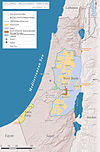
Jimmy Carter on Arab–Israeli conflict 2 quotes
“The pre-eminent obstacle to peace is Israel’s colonization of Palestine.”
Jimmy Carter on Human rights 2 quotes
“Human rights is the soul of our foreign policy, because human rights is the very soul of our sense of nationhood.”

Jimmy Carter on Oligarchy 2 quotes
In a 2015 interview, former President Jimmy Carter lamented America's shift from democracy to oligarchy, citing a decline in ethical standards within the political system.
“We've become now an oligarchy instead of a democracy. And I think that's been the worst damage to the basic moral and ethical standards of the American political system that I've ever seen in my life.”
- Jimmy Carter, Information Era
What Jimmy Carter Said About Others
Discover personal opinions Jimmy Carter shared regarding contemporaries.
Jimmy Carter on Mohammad Reza Pahlavi 2 quotes
“There is only one thing I can say about the Shah- he knows how to draw a crowd.”

Jimmy Carter on Donald Trump 2 quotes
Within a broader discussion potentially touching on various topics (A through Z), C highlights perceived media bias and excessive criticism directed towards President Trump, particularly concerning his mental state.
“I think the media have been harder on Trump than any other president certainly that I’ve known about, I think they feel free to claim that Trump is mentally deranged and everything else without hesitation.”

Jimmy Carter on Khaled Mashal
Jimmy Carter on Gerald Ford
“For myself, and for our nation, I want to thank my predecessor for all he has done to heal our land.”
Jimmy Carter on Rosalynn Carter
“Rosalynn was my equal partner in everything I ever accomplished.
As long as Rosalynn was in the world, I always knew somebody loved and supported me.”

Quotes About Jimmy Carter
Gain deeper perspective through quotes about Jimmy Carter from others.
Jonathan Alter on Jimmy Carter
“Jimmy Carter represents all that is good and decent in public life. And Marjorie Taylor Greene represents all that is sinister and despicable in public life.”
Mark Ames on Jimmy Carter
“Who ever decided that Americans were so bad off in the seventies anyway? From the right-wing revisionist propaganda that has become accepted as fact, you'd think that Americans under President Carter were suffering through something like the worst of the Weimar Republic combined with the Siege of Leningrad. The truth is that on a macroeconomic level, the difference between the Carter era and the Reagan era was minimal. For instance, economic growth during the Carter Administration averaged 2.8 percent annually, while under Reagan, from 1982 to 1989, growth averaged 3.2 percent. Was it really worth killing ourselves over that extra .4 percent of growth? For a lucky few, yes. On the other key economic gauge, unemployment, the Carter years were actually better than Reagan's, averaging 6.7 pervent annually during his "malaise-stricken" term as compared to an average 7.3 percent unemployment rate during the glorious eight-year reign of Ronald Reagan. Under Carter, people worked less, got far more benefits, and the country grew almost the same average annual rate as Reagan. On the other hand, according to the Statistical Abstract of the United States for 1996, under Reagan life got worse for those who had it worse: the number of people below the poverty line increased in almost every year from 1981 (31.8 million) to 1992 (39.3 million). And yet, we are told America was in decline until Reagan came to power and that the country was gripped by this ethereal malaise. Where was this malaise? Whose America was in decline? The problem with the 1970s wasn't that America was in decline, it was that the plutocracy felt itself declining. And in the plutocrats' eyes, their fortunes are synonymous with America's.”
Terry Anderson on Jimmy Carter
“He started the Carter Center and has been involved in more than 100 negotiations on elections or observing elections, and because of this there has been a huge American presence in the world. Because of this, he won the 2002 Nobel Peace Prize. No one has done as much in their post-presidential years.”
James Baldwin on Jimmy Carter
“The situations of the Wilmington 10, and the Charlotte 3, are very small symptoms of the monstrous and continuing wrong for which you, as the elected leader, are now responsible…I must add, in honor, that I write to you because I love our country: And you, in my lifetime, are the only president to whom I would have written.”

Dave Barry on Jimmy Carter
“Reagan finally won the nomination by promoting "Reaganomics", an economic program based on the theory that the government could lower taxes while increasing spending and at the same time actually reduce the federal budget by sacrificing a live chicken by the light of a full moon. Bush charged that this amounted to "voo-doo economics," which got him into hot water until he explained that what he meant to say was "doo-doo economics." Satisfied, Reagan made Bush his vice-presidential nominee. The turning point in the election campaign came during the October 8 debate between Reagan and Carter, when Reagan's handlers came up with a shrewd strategy: '''No matter what Carter said, Reagan would respond by shaking his head in a sorrowful manner and saying: "There you go again." This was brilliant, because (a) it required the candidate to remember only four words, and (b) he delivered them so believably that everything Carter said seemed like a lie. If Carter had stated that the Earth was round, Reagan would have shaken his head, saying, "There you go again," and millions of voters would have said: "Yeah! What does Carter think we are? ''Stupid?'''''”











Misattributed Quotes
Quotes mistakenly credited to Jimmy Carter
About Jimmy Carter
James Earl Carter, Jr. (October 1, 1924 – December 29, 2024) was an American politician and member of the Democratic Party who served as the 39th president of the United States from 1977 to 1981. In 1982 he established the Carter Center, as a base for promoting human rights, democracy, finding peaceful solutions to international conflicts, and advancing economic and social development, for which he was awarded the Nobel Peace Prize in 2002. He was a key figure in the Habitat for Humanity project, and has been noted for his criticism of Israel's role in the Israeli–Palestinian conflict.