Link Copied!
Herbert Marcuse Quotes (1898-1979)
Philosopher
















About Herbert Marcuse
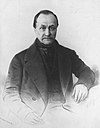
Herbert Marcuse (July 19, 1898 – July 29, 1979) was a prominent German-American philosopher and sociologist of the Frankfurt School.
Best Herbert Marcuse Quotes
Shortest
Earliest
Explore our curated collection of the most famous and impactful Herbert Marcuse quotes.
“Being is continuous becoming. P. 136”
Unsourced — Primary work/page citation not yet verified in the QuotesCosmos archive. Per our Unnamed Sources & Verification Policy, quotes without confirmed primary editions are explicitly marked Unsourced while under editorial review.
“This is the pure form of servitude: to exist as an instrument.”

Unsourced — Primary work/page citation not yet verified in the QuotesCosmos archive. Per our Unnamed Sources & Verification Policy, quotes without confirmed primary editions are explicitly marked Unsourced while under editorial review.
“the need for stupefying work where it is no longer a real necessity.”
Unsourced — Primary work/page citation not yet verified in the QuotesCosmos archive. Per our Unnamed Sources & Verification Policy, quotes without confirmed primary editions are explicitly marked Unsourced while under editorial review.
“The slaves of developed industrial civilization are sublimated slaves.”

Unsourced — Primary work/page citation not yet verified in the QuotesCosmos archive. Per our Unnamed Sources & Verification Policy, quotes without confirmed primary editions are explicitly marked Unsourced while under editorial review.
“The tangible source of exploitation disappears behind the façade of objective rationality.”
Unsourced — Primary work/page citation not yet verified in the QuotesCosmos archive. Per our Unnamed Sources & Verification Policy, quotes without confirmed primary editions are explicitly marked Unsourced while under editorial review.
“Domination has its own aesthetics, and democratic domination has its democratic aesthetics.”

Unsourced — Primary work/page citation not yet verified in the QuotesCosmos archive. Per our Unnamed Sources & Verification Policy, quotes without confirmed primary editions are explicitly marked Unsourced while under editorial review.
“The happy consciousness is shaky enough—a thin surface over fear, frustration, and disgust.”

Unsourced — Primary work/page citation not yet verified in the QuotesCosmos archive. Per our Unnamed Sources & Verification Policy, quotes without confirmed primary editions are explicitly marked Unsourced while under editorial review.
“The Superego, in censoring the unconscious and in implanting conscience, also censors the censor.”
Unsourced — Primary work/page citation not yet verified in the QuotesCosmos archive. Per our Unnamed Sources & Verification Policy, quotes without confirmed primary editions are explicitly marked Unsourced while under editorial review.
“Entertainment and learning are not opposites; entertainment may be the most effective mode of learning.”

Unsourced — Primary work/page citation not yet verified in the QuotesCosmos archive. Per our Unnamed Sources & Verification Policy, quotes without confirmed primary editions are explicitly marked Unsourced while under editorial review.
“When capitalism is negated, social processes no longer stand under the rule of blind natural laws. P. 318”

Unsourced — Primary work/page citation not yet verified in the QuotesCosmos archive. Per our Unnamed Sources & Verification Policy, quotes without confirmed primary editions are explicitly marked Unsourced while under editorial review.
“[Art] can speak its own language only as long as the images are alive which refuse and refute the established order.”

Unsourced — Primary work/page citation not yet verified in the QuotesCosmos archive. Per our Unnamed Sources & Verification Policy, quotes without confirmed primary editions are explicitly marked Unsourced while under editorial review.
“The liberating force of technology—the instrumentalization of things—turns into … the instrumentalization of man.”
Unsourced — Primary work/page citation not yet verified in the QuotesCosmos archive. Per our Unnamed Sources & Verification Policy, quotes without confirmed primary editions are explicitly marked Unsourced while under editorial review.
“The transition from philosophy to the domain of state and society had been an intrinsic part of Hegel’s system. P. 251”
Unsourced — Primary work/page citation not yet verified in the QuotesCosmos archive. Per our Unnamed Sources & Verification Policy, quotes without confirmed primary editions are explicitly marked Unsourced while under editorial review.
“Society … can afford to grant more than before because its interests have become the innermost drives of its citizens.”
Unsourced — Primary work/page citation not yet verified in the QuotesCosmos archive. Per our Unnamed Sources & Verification Policy, quotes without confirmed primary editions are explicitly marked Unsourced while under editorial review.
“The apparatus defeats its own purpose if its purpose is to create a humane existence on the basis of a humanized nature.”

Unsourced — Primary work/page citation not yet verified in the QuotesCosmos archive. Per our Unnamed Sources & Verification Policy, quotes without confirmed primary editions are explicitly marked Unsourced while under editorial review.
“The precarious ontological link between Logos and Eros is broken, and scientific rationality emerges as essentially neutral.”
Unsourced — Primary work/page citation not yet verified in the QuotesCosmos archive. Per our Unnamed Sources & Verification Policy, quotes without confirmed primary editions are explicitly marked Unsourced while under editorial review.
“The present stage redefines the possibilities of man and nature in accordance with the new means available for their realization.”
Unsourced — Primary work/page citation not yet verified in the QuotesCosmos archive. Per our Unnamed Sources & Verification Policy, quotes without confirmed primary editions are explicitly marked Unsourced while under editorial review.
“The avant-garde and the beatniks share in the function of entertaining without endangering the good conscience of the men of good will.”
Unsourced — Primary work/page citation not yet verified in the QuotesCosmos archive. Per our Unnamed Sources & Verification Policy, quotes without confirmed primary editions are explicitly marked Unsourced while under editorial review.
“It is the sphere farthest removed from the concreteness of society which may show most clearly the extent of the conquest of thought by society.”

Unsourced — Primary work/page citation not yet verified in the QuotesCosmos archive. Per our Unnamed Sources & Verification Policy, quotes without confirmed primary editions are explicitly marked Unsourced while under editorial review.
“Liberating tolerance, then, would mean intolerance against movements from the Right, and toleration of movements from the Left.”
Unsourced — Primary work/page citation not yet verified in the QuotesCosmos archive. Per our Unnamed Sources & Verification Policy, quotes without confirmed primary editions are explicitly marked Unsourced while under editorial review.
“The spontaneous reproduction of superimposed needs by the individual does not establish autonomy; it only testifies to the efficacy of the control.”
Unsourced — Primary work/page citation not yet verified in the QuotesCosmos archive. Per our Unnamed Sources & Verification Policy, quotes without confirmed primary editions are explicitly marked Unsourced while under editorial review.
“Non-operational ideas are non-behavioral and subversive. The movement of thought is stopped at barriers which appear as the limits of Reason itself.”
Unsourced — Primary work/page citation not yet verified in the QuotesCosmos archive. Per our Unnamed Sources & Verification Policy, quotes without confirmed primary editions are explicitly marked Unsourced while under editorial review.
“If man has learned to see and know what really is, he will act in accordance with truth, Epistemology is in itself ethics, and ethics is epistemology.”

Unsourced — Primary work/page citation not yet verified in the QuotesCosmos archive. Per our Unnamed Sources & Verification Policy, quotes without confirmed primary editions are explicitly marked Unsourced while under editorial review.
“Reason and Revolution, Hegel and the Rise of Social Theory, Herbert Marcuse, London Routledge & Kegan Paul LTD 2nd edition 1941, reprinted 1955”

Unsourced — Primary work/page citation not yet verified in the QuotesCosmos archive. Per our Unnamed Sources & Verification Policy, quotes without confirmed primary editions are explicitly marked Unsourced while under editorial review.
“The social and political theory responsible for the development of Fascist Germany was, then, related to Hegelianism in a completely negative way. P. 418”
Unsourced — Primary work/page citation not yet verified in the QuotesCosmos archive. Per our Unnamed Sources & Verification Policy, quotes without confirmed primary editions are explicitly marked Unsourced while under editorial review.
“In conditions of private property … “life-activity” stands in the service of property instead of property standing the service of free life-activity.”

Unsourced — Primary work/page citation not yet verified in the QuotesCosmos archive. Per our Unnamed Sources & Verification Policy, quotes without confirmed primary editions are explicitly marked Unsourced while under editorial review.
“We hope that the analysis offered here will demonstrate that Hegel’s basic concepts are hostile to the tendencies that have led into Fascist theory and practice. Preface”

Unsourced — Primary work/page citation not yet verified in the QuotesCosmos archive. Per our Unnamed Sources & Verification Policy, quotes without confirmed primary editions are explicitly marked Unsourced while under editorial review.
“Ideas, aspirations, and objectives that, by their content, transcend the established universe of discourse and action are either repelled or reduced to terms of this universe.”

Unsourced — Primary work/page citation not yet verified in the QuotesCosmos archive. Per our Unnamed Sources & Verification Policy, quotes without confirmed primary editions are explicitly marked Unsourced while under editorial review.
“The world of immediate experience—the world in which we find ourselves living—must be comprehended, transformed, even subverted in order to become that which it really is.”

Unsourced — Primary work/page citation not yet verified in the QuotesCosmos archive. Per our Unnamed Sources & Verification Policy, quotes without confirmed primary editions are explicitly marked Unsourced while under editorial review.
“The music of the soul is also the music of salesmanship. Exchange value, not truth value counts. On it centers the rationality of the status quo, and all alien rationality is bent to It.”

Unsourced — Primary work/page citation not yet verified in the QuotesCosmos archive. Per our Unnamed Sources & Verification Policy, quotes without confirmed primary editions are explicitly marked Unsourced while under editorial review.
“To live one's love and hatred, to live that which one is means defeat, resignation, and death. The crimes of society, the hell that man has made or man become unconquerable cosmic forces.”

Unsourced — Primary work/page citation not yet verified in the QuotesCosmos archive. Per our Unnamed Sources & Verification Policy, quotes without confirmed primary editions are explicitly marked Unsourced while under editorial review.
“The revolution, Stahl declared, is the ‘world-historic mark of our age.’ It would found ‘the entire State on the will of man instead of on the commandment and ordinance of God.’ p. 364”
Unsourced — Primary work/page citation not yet verified in the QuotesCosmos archive. Per our Unnamed Sources & Verification Policy, quotes without confirmed primary editions are explicitly marked Unsourced while under editorial review.
“Ever since the first World War, when the system of liberalism began to shape into the system of authoritarianism, a widespread opinion has blames Hegelianism for the ideological of the new system. P. 390”

Unsourced — Primary work/page citation not yet verified in the QuotesCosmos archive. Per our Unnamed Sources & Verification Policy, quotes without confirmed primary editions are explicitly marked Unsourced while under editorial review.
“The closed language does not demonstrate and explain—it communicates decision, dictum, command. Where it defines, the definition becomes “separation of good from evil;” it establishes unquestionable”
Unsourced — Primary work/page citation not yet verified in the QuotesCosmos archive. Per our Unnamed Sources & Verification Policy, quotes without confirmed primary editions are explicitly marked Unsourced while under editorial review.
“German idealism rescued philosophy from the attack of British empiricism, and the struggle between the two became not merely a clash of different philosophical school, but a struggle for philosophy as such. P. 16”
Unsourced — Primary work/page citation not yet verified in the QuotesCosmos archive. Per our Unnamed Sources & Verification Policy, quotes without confirmed primary editions are explicitly marked Unsourced while under editorial review.
“Loren von Stein thus turned the dialectic into an ensemble of objective laws calling for social reform as the adequate solution of all contradictions and neutralized the critical elements of the dialectic. P. 388”
Unsourced — Primary work/page citation not yet verified in the QuotesCosmos archive. Per our Unnamed Sources & Verification Policy, quotes without confirmed primary editions are explicitly marked Unsourced while under editorial review.
“Gentile himself call his doctrine ‘absolute formalism’: there is no; ’matter’ apart from the pure ‘form’ of acting. ‘The only matter there is in the spiritual act is the form itself, as activity.’ P. 407”

Unsourced — Primary work/page citation not yet verified in the QuotesCosmos archive. Per our Unnamed Sources & Verification Policy, quotes without confirmed primary editions are explicitly marked Unsourced while under editorial review.
“In its relation to the reality of daily life, the high culture of the past was many things—opposition and adornment, outcry and resignation. But it was also the appearance of the realm of freedom: the refusal to behave.”

Unsourced — Primary work/page citation not yet verified in the QuotesCosmos archive. Per our Unnamed Sources & Verification Policy, quotes without confirmed primary editions are explicitly marked Unsourced while under editorial review.
“All liberation depends on the consciousness of servitude, and the emergence of this consciousness is always hampered by the predominance of needs and satisfactions which, to a great extent, have become the individual's own.”
Unsourced — Primary work/page citation not yet verified in the QuotesCosmos archive. Per our Unnamed Sources & Verification Policy, quotes without confirmed primary editions are explicitly marked Unsourced while under editorial review.
“The Preface to the Phenomenology is one of the greatest philosophical undertakings of all times, constituting no less an attempts than to reinstate philosophy as the highest form of human knowledge, as ‘the Science.’ P. 97”
Unsourced — Primary work/page citation not yet verified in the QuotesCosmos archive. Per our Unnamed Sources & Verification Policy, quotes without confirmed primary editions are explicitly marked Unsourced while under editorial review.
“Hegel’s philosophy was an integral part of the culture which authoritarianism had to overcome. It is therefore no accident that the National Socialist assault on Hegel begins with the repudiation of his political theory. P. 411”
Unsourced — Primary work/page citation not yet verified in the QuotesCosmos archive. Per our Unnamed Sources & Verification Policy, quotes without confirmed primary editions are explicitly marked Unsourced while under editorial review.
“Man is a thinking being. His reason enables him to recognize his own potentialities and those of his world. He is thus not at the mercy of the facts that surround him, but is capable of subjecting them to a higher standard, that of reason. P. 6”
Unsourced — Primary work/page citation not yet verified in the QuotesCosmos archive. Per our Unnamed Sources & Verification Policy, quotes without confirmed primary editions are explicitly marked Unsourced while under editorial review.
“The judgment that human life is worth living, or rather can and ought to be made worth living, … underlies all intellectual effort; it is the a priori of social theory, and its rejection (which is perfectly logical) rejects theory itself.”

Unsourced — Primary work/page citation not yet verified in the QuotesCosmos archive. Per our Unnamed Sources & Verification Policy, quotes without confirmed primary editions are explicitly marked Unsourced while under editorial review.
“Such abstraction which refuses to accept the given universe of facts as the final context of validation, such “transcending” analysis of the facts in the light of their arrested and denied possibilities, pertains to the very structure of social theory.”
Unsourced — Primary work/page citation not yet verified in the QuotesCosmos archive. Per our Unnamed Sources & Verification Policy, quotes without confirmed primary editions are explicitly marked Unsourced while under editorial review.
“Nobody really thinks who does not abstract from that which is given, who does not relate the facts to the factors which have made them, who does not — in his mind — undo the facts. Abstractness is the very life of thought, the token of its authenticity.”
Unsourced — Primary work/page citation not yet verified in the QuotesCosmos archive. Per our Unnamed Sources & Verification Policy, quotes without confirmed primary editions are explicitly marked Unsourced while under editorial review.
“Bourgeois political economy … never gets to see man who is its real subject. It disregards the essence of man and his history and is thus in the profoundest sense not a ‘science of people’ but of non-people and of an inhuman world of objects and commodities.”
Unsourced — Primary work/page citation not yet verified in the QuotesCosmos archive. Per our Unnamed Sources & Verification Policy, quotes without confirmed primary editions are explicitly marked Unsourced while under editorial review.
“Marx explains the alienation of labor as exemplified in, first, the relation of the worker to the product of his labor and, second, the relation of the worker to his own activity. P. 276”
Unsourced — Primary work/page citation not yet verified in the QuotesCosmos archive. Per our Unnamed Sources & Verification Policy, quotes without confirmed primary editions are explicitly marked Unsourced while under editorial review.
“For thought and speech are of a thinking and speaking subject, and if the life of the latter depends on the performance of a superimposed function, it depends on fulfilling the requirements of this function — thus it depends on those who control these requirements.”
Unsourced — Primary work/page citation not yet verified in the QuotesCosmos archive. Per our Unnamed Sources & Verification Policy, quotes without confirmed primary editions are explicitly marked Unsourced while under editorial review.
“The radical empiricist onslaught … provides the methodological justification for the debunking of the mind by the intellectuals—a positivism which, in its denial of the transcending elements of Reason, forms the academic counterpart of the socially required behavior.”
Unsourced — Primary work/page citation not yet verified in the QuotesCosmos archive. Per our Unnamed Sources & Verification Policy, quotes without confirmed primary editions are explicitly marked Unsourced while under editorial review.
“The range of socially permissible and desirable satisfaction is greatly enlarged, but through this satisfaction, the Pleasure Principle is reduced—deprived of the claims which are irreconcilable with the established society. Pleasure, thus adjusted, generates submission.”

Unsourced — Primary work/page citation not yet verified in the QuotesCosmos archive. Per our Unnamed Sources & Verification Policy, quotes without confirmed primary editions are explicitly marked Unsourced while under editorial review.
“Under the rule of a repressive whole, liberty can be made into a powerful instrument of domination. The range of choice open to the individual is not the decisive factor in determining the degree of human freedom, but what can be chosen and what is chosen by the individual.”
Unsourced — Primary work/page citation not yet verified in the QuotesCosmos archive. Per our Unnamed Sources & Verification Policy, quotes without confirmed primary editions are explicitly marked Unsourced while under editorial review.
“This language controls by reducing the linguistic forms and symbols of reflection, abstraction, development, contradiction; by substituting images for concepts. It denies or absorbs the transcendent vocabulary; it does not search for but establishes and imposes truth and falsehood.”
Unsourced — Primary work/page citation not yet verified in the QuotesCosmos archive. Per our Unnamed Sources & Verification Policy, quotes without confirmed primary editions are explicitly marked Unsourced while under editorial review.
“The people are led to find in the productive apparatus the effective agent of thought and action to which their personal thought and action can and must be surrendered. And in this transfer, the apparatus also assumes the role of a moral agent. Conscience is absolved by reification.”
Unsourced — Primary work/page citation not yet verified in the QuotesCosmos archive. Per our Unnamed Sources & Verification Policy, quotes without confirmed primary editions are explicitly marked Unsourced while under editorial review.
“Reason … contradicts the established order of men and things on behalf of existing societal forces that reveal the irrational character of this order — for “rational” is a mode of thought and action which is geared to reduce ignorance, destruction, brutality, and oppression.”
Unsourced — Primary work/page citation not yet verified in the QuotesCosmos archive. Per our Unnamed Sources & Verification Policy, quotes without confirmed primary editions are explicitly marked Unsourced while under editorial review.
“The way in which a society organizes the life of its members … is one “project” of realization among others. But once the project has become operative in the basic institutions and relations, it tends to become exclusive and to determine the development of the society as a whole.”
Unsourced — Primary work/page citation not yet verified in the QuotesCosmos archive. Per our Unnamed Sources & Verification Policy, quotes without confirmed primary editions are explicitly marked Unsourced while under editorial review.
“No, you cannot expect people to understand the higher reaches of philosophy. Culture should be taken out of the hands of the dollar chasers. We need a national subsidy for literature. It is disgraceful that artists are treated like peddlers and that art works have to be sold like soap.”
Unsourced — Primary work/page citation not yet verified in the QuotesCosmos archive. Per our Unnamed Sources & Verification Policy, quotes without confirmed primary editions are explicitly marked Unsourced while under editorial review.
“Our mass media have little difficulty in selling particular interests as those of all sensible men. The political needs of society become individual needs and aspirations, their satisfaction promotes business and the commonweal, and the whole appeals to be the very embodiment of Reason.”
Unsourced — Primary work/page citation not yet verified in the QuotesCosmos archive. Per our Unnamed Sources & Verification Policy, quotes without confirmed primary editions are explicitly marked Unsourced while under editorial review.
“Hegel’s philosophy revolved about the universality of reason; it was a rational system with its every part (the subjective as well as the objective spheres) integrated into a comprehensive whole. Marx shows that capitalist society first put such a universality into practice. P. 286-287”
Unsourced — Primary work/page citation not yet verified in the QuotesCosmos archive. Per our Unnamed Sources & Verification Policy, quotes without confirmed primary editions are explicitly marked Unsourced while under editorial review.
“The historical world, in so far as it is built, organized, and shaped by the conscious activity of thinking subjects, is a realm of mind. But the mind is fully realized and exists in its true form only when it indulges in its proper activity, namely, in art, religion, and philosophy. P. 87”

Unsourced — Primary work/page citation not yet verified in the QuotesCosmos archive. Per our Unnamed Sources & Verification Policy, quotes without confirmed primary editions are explicitly marked Unsourced while under editorial review.
“The intellectual is called on the carpet. ... Don't you conceal something? You talk a language which is suspect. You don't talk like the rest of us, like the man in the street, but rather like a foreigner who does not belong here. We have to cut you down to size, expose your tricks, purge you.”

Unsourced — Primary work/page citation not yet verified in the QuotesCosmos archive. Per our Unnamed Sources & Verification Policy, quotes without confirmed primary editions are explicitly marked Unsourced while under editorial review.
“The ontological concept of truth is in the centre of a logic which may serve as a model of pre- technological rationality. It is the rationality of a two-dimensional universe of discourse which, contrasts with the of thought and behavior that develop in the execution of the technological project.”
Unsourced — Primary work/page citation not yet verified in the QuotesCosmos archive. Per our Unnamed Sources & Verification Policy, quotes without confirmed primary editions are explicitly marked Unsourced while under editorial review.
“To the degree to which they correspond to the given reality, thought and behavior express a false consciousness, responding to and contributing to the preservation of a false order of facts. And this false consciousness has become embodied in the prevailing technical apparatus which in turn reproduces it.”
Unsourced — Primary work/page citation not yet verified in the QuotesCosmos archive. Per our Unnamed Sources & Verification Policy, quotes without confirmed primary editions are explicitly marked Unsourced while under editorial review.
“The notion contradicts reality when the latter has become self-contradictory. Hegel says that a prevailing social form can be successfully attacked by thought only if this form has come into open contradiction with its own ‘truth,’ in other words, if it can no longer fulfill the demands of its own contents. P. 51”
Unsourced — Primary work/page citation not yet verified in the QuotesCosmos archive. Per our Unnamed Sources & Verification Policy, quotes without confirmed primary editions are explicitly marked Unsourced while under editorial review.
“By virtue of the way it has organized its technological base, contemporary industrial society tends to be totalitarian. For "totalitarian" is not only a terroristic political coordination of society, but also a non-terroristic economic-technical coordination which operates through the manipulation of needs by vested interests.”
Unsourced — Primary work/page citation not yet verified in the QuotesCosmos archive. Per our Unnamed Sources & Verification Policy, quotes without confirmed primary editions are explicitly marked Unsourced while under editorial review.
“Man alone has the power of self-realization, the power to be a self-determining subject in all processes of becoming, for he alone has an understanding of potentialities and a knowledge of ‘notions.’ His very existence is the process of actualizing his potentialities, of molding his life according to the notions of reason. P. 9”
Unsourced — Primary work/page citation not yet verified in the QuotesCosmos archive. Per our Unnamed Sources & Verification Policy, quotes without confirmed primary editions are explicitly marked Unsourced while under editorial review.
“Saint-Simon, like Hegel, begins with the assertion that the social order engendered by the French Revolution proved that mankind has reached the adult state. In contrast to Hegel, however, he described this stage primarily in terms of its economy; the industrial process was the sole integrating factor in the new social order. P. 330”
Unsourced — Primary work/page citation not yet verified in the QuotesCosmos archive. Per our Unnamed Sources & Verification Policy, quotes without confirmed primary editions are explicitly marked Unsourced while under editorial review.
“This organization of functional discourse is of vital importance; it serves as a vehicle of coordination and subordination. The unified, functional language is an irreconcilably anti-critical and anti-dialectical language. In it, operational and behavioral rationality absorbs the transcendent, negative, oppositional elements of Reason.”
Unsourced — Primary work/page citation not yet verified in the QuotesCosmos archive. Per our Unnamed Sources & Verification Policy, quotes without confirmed primary editions are explicitly marked Unsourced while under editorial review.
“The will is a unity of two different aspects or moments: first, the individual’s ability to abstract from every specific condition and, by negating it, to return to the absolute liberty of the pure ego; secondly, the individual’s act of freely adopting a concrete condition, freely affirming his existence as a particular, limited ego. P. 185”
Unsourced — Primary work/page citation not yet verified in the QuotesCosmos archive. Per our Unnamed Sources & Verification Policy, quotes without confirmed primary editions are explicitly marked Unsourced while under editorial review.
“The transition from Hegel to Marx is, in all respects, a transition to an essentially different order of truth, no to be interpreted in terms of philosophy. We shall see that all the philosophical concepts of Marxian theory are social and economic categories, whereas Hegel’s social and economic categories are all philosophical concepts. P. 258”
Unsourced — Primary work/page citation not yet verified in the QuotesCosmos archive. Per our Unnamed Sources & Verification Policy, quotes without confirmed primary editions are explicitly marked Unsourced while under editorial review.
“Kierkegaard’s individualistic interpretation of ‘the negation of philosophy’ inevitably developed a fierce opposition to Western rationalism. …. According to Kierkegaard, the individual is not the knowing but only the ‘ethically existing subjectivity.’ The sole reality that matters to him is his own ‘ethical existence’. P. 263-264”
Unsourced — Primary work/page citation not yet verified in the QuotesCosmos archive. Per our Unnamed Sources & Verification Policy, quotes without confirmed primary editions are explicitly marked Unsourced while under editorial review.
“Sociology does not ‘negate’ philosophy, in the sense of taking over the hidden content of philosophy and carrying it into social theory and practice, but sets itself up as a realm apart from philosophy, with a province and truth of its own. Comte is rightly held to be the inaugurator of this separation between philosophy and sociology. P. 375”
Unsourced — Primary work/page citation not yet verified in the QuotesCosmos archive. Per our Unnamed Sources & Verification Policy, quotes without confirmed primary editions are explicitly marked Unsourced while under editorial review.
“The concept of labor is not peripheral in Hegel’s system, but is the central notion through which he conceives the development of society. Driven by the insight that opened this dimension to him, Hegel describes the mode of integration prevailing in a commodity-producing society in terms that clearly fore-shadow Marx’s critical approach. P. 78”
Unsourced — Primary work/page citation not yet verified in the QuotesCosmos archive. Per our Unnamed Sources & Verification Policy, quotes without confirmed primary editions are explicitly marked Unsourced while under editorial review.
“This mutual dependencies no longer the dialectical relationship between master and servant, which has been broken in the struggle for mutual recognition, but rather a vicious circle which encloses both the master and the servant. Do the technicians rule, or is their rule that of the others, who rely on the technicians as their planners and executors?”

Unsourced — Primary work/page citation not yet verified in the QuotesCosmos archive. Per our Unnamed Sources & Verification Policy, quotes without confirmed primary editions are explicitly marked Unsourced while under editorial review.
“the society which projects and undertakes the technological transformation of nature alters the base of domination by gradually replacing personal dependence (of the slave on the master, the serf on the lord of the manor, the lord on the donor of the fief, etc.) with dependence on the “objective order of things” (on economic laws, the market etc.).”
Unsourced — Primary work/page citation not yet verified in the QuotesCosmos archive. Per our Unnamed Sources & Verification Policy, quotes without confirmed primary editions are explicitly marked Unsourced while under editorial review.
“‘Resignation’ is a keynote in Comte’s writings, deriving directly from assent to invariable social laws. ‘True resignation, that is, a disposition to endure necessary evils steadfastly and without any hope of compensation therefore, can result only from a profound feeling for the invariable laws that govern the variety of natural phenomena. P. 345”
Unsourced — Primary work/page citation not yet verified in the QuotesCosmos archive. Per our Unnamed Sources & Verification Policy, quotes without confirmed primary editions are explicitly marked Unsourced while under editorial review.
“Now precisely because Galilean science is, in the formation of its concepts, the technic of a specific Lebenswelt, it does not and cannot transcend this Lebenswelt. It remains essentially within the basic experiential framework and within the universe of ends set by this reality.”
Unsourced — Primary work/page citation not yet verified in the QuotesCosmos archive. Per our Unnamed Sources & Verification Policy, quotes without confirmed primary editions are explicitly marked Unsourced while under editorial review.
“When the whole is at stake, there is no crime except that of rejecting the whole, or not defending it. … Those who identify themselves with the whole, who are installed as the leaders and defenders of the whole can make mistakes, but they cannot do wrong—they are not guilty. They may become guilty again when this identification no longer holds, when they are gone.”
Unsourced — Primary work/page citation not yet verified in the QuotesCosmos archive. Per our Unnamed Sources & Verification Policy, quotes without confirmed primary editions are explicitly marked Unsourced while under editorial review.
“Paul Valéry insists on the inescapable commitment of the poetic language to the negation. The verses of this language “ne parlent jamais que de choses absentes.” They speak of that which, though absent, haunts the established universe of discourse and behavior as its most tabooed possibility—neither heaven nor hell, neither good nor evil but simply “le bonheur.””
Unsourced — Primary work/page citation not yet verified in the QuotesCosmos archive. Per our Unnamed Sources & Verification Policy, quotes without confirmed primary editions are explicitly marked Unsourced while under editorial review.
“Understanding finds nothing but itself when it seeks the essence behind the appearance of things. ‘It is manifest that behind the so-called curtain, which is to hide the inner world, there is nothing to be seen unless we ourselves go behind there, as much in order that we may thereby see, as that there may be something behind there which can be seen.’ P. 111”
Unsourced — Primary work/page citation not yet verified in the QuotesCosmos archive. Per our Unnamed Sources & Verification Policy, quotes without confirmed primary editions are explicitly marked Unsourced while under editorial review.
“The real field of knowledge is not the given fact about things as they are, but the critical evaluation of them as a prelude to passing beyond their given form. Knowledge deals with appearances in order to get beyond them. …. The concept of reality has thus turned into the concept of possibility. The real is not yet ‘actual,’ but is at first only the possibility of an actual. P. 145”

Unsourced — Primary work/page citation not yet verified in the QuotesCosmos archive. Per our Unnamed Sources & Verification Policy, quotes without confirmed primary editions are explicitly marked Unsourced while under editorial review.
“In the form of the oeuvre, the actual circumstances are placed in another dimension where the given reality shows itself as that which it is. Thus it tells the truth about itself; its language ceases to be that of deception, ignorance, and submission. Fiction calls the facts by their name and their reign collapses; fiction subverts everyday experience and shows it to be mutilated and false.”
Unsourced — Primary work/page citation not yet verified in the QuotesCosmos archive. Per our Unnamed Sources & Verification Policy, quotes without confirmed primary editions are explicitly marked Unsourced while under editorial review.
“Dialectical thought understands the critical tension between “is” and “ought” first as an ontological condition, pertaining to the structure of Being itself. However, the recognition of this state of Being — its theory — intends from the beginning a concrete practice. Seen in the light of a truth which appears in them falsified or denied, the given facts themselves appear false and negative.”
Unsourced — Primary work/page citation not yet verified in the QuotesCosmos archive. Per our Unnamed Sources & Verification Policy, quotes without confirmed primary editions are explicitly marked Unsourced while under editorial review.
“Freed from the sublimated form which was the very token of its irreconcilable dreams—a form which is the style, the language in which the story is told—sexuality turns into a vehicle for the bestsellers of oppression. … This society turns everything it touches into a potential source of progress and of exploitation, of drudgery and satisfaction, of freedom and of oppression. Sexuality is no exception.”

Unsourced — Primary work/page citation not yet verified in the QuotesCosmos archive. Per our Unnamed Sources & Verification Policy, quotes without confirmed primary editions are explicitly marked Unsourced while under editorial review.
“The capabilities (intellectual and material) of contemporary society are immeasurably greater than ever before—which means that the scope of society's domination over the individual is immeasurably greater than ever before. Our society distinguishes itself by conquering the centrifugal social forces with Technology rather than Terror, on the dual basis of an overwhelming efficiency and an increasing standard of living.”
Unsourced — Primary work/page citation not yet verified in the QuotesCosmos archive. Per our Unnamed Sources & Verification Policy, quotes without confirmed primary editions are explicitly marked Unsourced while under editorial review.
“At the classical origins of philosophic thought, the transcending concepts remained committed to the prevailing separation between intellectual and manual labor to the established society of enslavement. … Those who bore the brunt of the untrue reality and who, therefore, seemed to be most in need of attaining its subversion were not the concern of philosophy. It abstracted from them and continued to abstract from them.”

Unsourced — Primary work/page citation not yet verified in the QuotesCosmos archive. Per our Unnamed Sources & Verification Policy, quotes without confirmed primary editions are explicitly marked Unsourced while under editorial review.
“The concept of freedom, as the Philosophy of Right has shown, follows the pattern of free ownership. As a result, the history of the world that Hegel looks out upon exalts and enshrines the history of the middle-class, which based itself on this pattern. There is a stark truth in Hegel’s strangely certain announcement that history has reached its end. But it announces the funeral of a class, not of history. P. 227”

Unsourced — Primary work/page citation not yet verified in the QuotesCosmos archive. Per our Unnamed Sources & Verification Policy, quotes without confirmed primary editions are explicitly marked Unsourced while under editorial review.
“A whole dimension of human activity and passivity has been de-eroticized. The environment from which the individual could obtain pleasure—which he could cathect as gratifying almost as an extended zone of the body—has been rigidly reduced. Consequently, the “universe” of libidinous cathexis is likewise reduced. The effect is a localization and contraction of libido, the reduction of erotic to sexual experience and satisfaction.”
Unsourced — Primary work/page citation not yet verified in the QuotesCosmos archive. Per our Unnamed Sources & Verification Policy, quotes without confirmed primary editions are explicitly marked Unsourced while under editorial review.
“To those who hold abstractly to Hegel’s political philosophy, Hobhouse replies that the very fact of class society, the patent influence of class interests on the state, renders it impossible to designate the state as expressive of the real will of individuals as a whole. ‘Wherever a community is governed by one class or one race, the remaining class or race is permanently in the position of having to take what it can get.’ P. 396”

Unsourced — Primary work/page citation not yet verified in the QuotesCosmos archive. Per our Unnamed Sources & Verification Policy, quotes without confirmed primary editions are explicitly marked Unsourced while under editorial review.
“The philosopher … subjects experience to his critical judgment, and this contains a value judgment — namely, that freedom from toil is preferable to toil, and an intelligent life is preferable to a stupid life. It so happened that philosophy was born with these values. Scientific thought had to break this union of value judgment and analysis, for it became increasingly clear that the philosophic values did not guide the organisation of society.”

Unsourced — Primary work/page citation not yet verified in the QuotesCosmos archive. Per our Unnamed Sources & Verification Policy, quotes without confirmed primary editions are explicitly marked Unsourced while under editorial review.
“We have reached the point where the Objective Logic turns into the Subjective Logic, or, where subjectivity emerges as the true form of objectivity. We may sum up Hegel’s analysis in the following schema: The true form of reality requires freedom. Freedom requires self-consciousness and knowledge of the truth. Self-consciousness and knowledge of the truth are the essentials of the subject. The form of reality must be conceived as subject. P. 154-155”
Unsourced — Primary work/page citation not yet verified in the QuotesCosmos archive. Per our Unnamed Sources & Verification Policy, quotes without confirmed primary editions are explicitly marked Unsourced while under editorial review.
“The total victimization of the individual that takes place is encouraged for the specific benefit of the industrial and political bureaucracy. It therefore cannot be justified on the ground of the individual’s true interest. National Socialist ideology simply states that true human existence consists in unconditional sacrifice, that it is of the essence of the individual’s life to abbey and to serve-‘service which never comes to an end because service and life coincide.’ P. 416”

Unsourced — Primary work/page citation not yet verified in the QuotesCosmos archive. Per our Unnamed Sources & Verification Policy, quotes without confirmed primary editions are explicitly marked Unsourced while under editorial review.
“The fault with Hegel lies much deeper than in his glorification of the Prussian monarchy. He is guilty not so much of being servile as of betraying his highest philosophical ideas. His political doctrine surrenders society to nature, freedom to necessity, reason to caprice. And in so doing, it mirrors the destiny of the social order that falls, while in pursuit of its freedom, into a state of nature far below reason. P. 218”

Unsourced — Primary work/page citation not yet verified in the QuotesCosmos archive. Per our Unnamed Sources & Verification Policy, quotes without confirmed primary editions are explicitly marked Unsourced while under editorial review.
“Technical progress and more comfortable living permit the systematic inclusion of libidinal components into the realm of commodity production and exchange. But no matter how controlled the mobilization of instinctual energy may be (it sometimes amounts to a scientific management of libido), no matter how much it may serve as a prop for the status quo—it is also gratifying to the managed individuals, just as racing the outboard motor, pushing the power lawn mower, and speeding the automobile are fun.”
Unsourced — Primary work/page citation not yet verified in the QuotesCosmos archive. Per our Unnamed Sources & Verification Policy, quotes without confirmed primary editions are explicitly marked Unsourced while under editorial review.
“As the German idealists saw it, the French Revolution not only abolished feudal absolutism, replacing it with the economic and political system of the middle class, but it completed what the German Reformation had begun, emancipating the individual as a self-reliant master of his life. p. 3”
Unsourced — Primary work/page citation not yet verified in the QuotesCosmos archive. Per our Unnamed Sources & Verification Policy, quotes without confirmed primary editions are explicitly marked Unsourced while under editorial review.
“Institutionalized desublimation thus appears to be an aspect of the “conquest of transcendence” achieved by the one-dimensional society. Just as this society tends to reduce, and even absorb opposition (the qualitative difference!) in the realm of politics and higher culture, so it does in the instinctual sphere. The result is the atrophy of the mental organs for grasping the contradictions and the alternatives and, in the one remaining dimension of technological rationality, the Happy Consciousness comes to prevail.”
Unsourced — Primary work/page citation not yet verified in the QuotesCosmos archive. Per our Unnamed Sources & Verification Policy, quotes without confirmed primary editions are explicitly marked Unsourced while under editorial review.
“It is the most advanced industrial society which feels most directly threatened by the rebellion, because it is here that the social necessity of repression and alienation, of servitude and heteronomy is most transparently unnecessary, and unproductive in terms of human progress. Therefore the cruelty and violence mobilized in the struggle against the threat, therefore the monotonous regularity with which the people are made familiar with, and accustomed to inhuman attitudes and behavior-to wholesale killing as patriotic act.”
Unsourced — Primary work/page citation not yet verified in the QuotesCosmos archive. Per our Unnamed Sources & Verification Policy, quotes without confirmed primary editions are explicitly marked Unsourced while under editorial review.
“The soul contains few secrets and longings which cannot be sensibly discussed, analyzed, and polled. Solitude, the very condition which sustained the individual against and beyond his society, has become technically impossible. Logical and linguistic analysis demonstrate that the old metaphysical problems are illusory problems; the quest for the “meaning” of things can be reformulated as the quest for the meaning of words, and the established universe of discourse and behavior can provide perfectly adequate criteria for the answer.”
Unsourced — Primary work/page citation not yet verified in the QuotesCosmos archive. Per our Unnamed Sources & Verification Policy, quotes without confirmed primary editions are explicitly marked Unsourced while under editorial review.
“The Kantian philosophy left a gulf between thought and being, or between subject and object, which the Hegelian philosophy sought to bridge. The bridge was to be made by positing one universal structure of all being. Being was to be a process wherein a thing ‘comprehends’ or ‘grasps’ the various states of existence and draws them into the more or less enduring unity of its ‘self,’ thus actively constituting itself as ‘the same’ throughout all change. Everything, in other words, exists more or less as a ‘subject.’ P. 64”
Unsourced — Primary work/page citation not yet verified in the QuotesCosmos archive. Per our Unnamed Sources & Verification Policy, quotes without confirmed primary editions are explicitly marked Unsourced while under editorial review.
“The guiding question of Marx’s analysis was, How does capitalist society supply its members with the necessary use-values? And the answer disclosed a process of blind necessity, chance, anarchy and frustration. The introduction of the category of use-value was the introduction of a forgotten factor, forgotten, that is, by the classical political economy which was occupied only with the phenomenon of exchange value. In the Marxian theory, this factor becomes an instrument that cuts through the mystifying reification of the commodity world. P. 304”
Unsourced — Primary work/page citation not yet verified in the QuotesCosmos archive. Per our Unnamed Sources & Verification Policy, quotes without confirmed primary editions are explicitly marked Unsourced while under editorial review.
“Dialectical logic undoes the abstractions of formal logic and of transcendental philosophy, but it also denies the concreteness of immediate experience. To the extent to which this experience comes to rest with the things as they appear and happen to be, it is a limited and even false experience. It attains its truth if it has freed itself from the deceptive objectivity which conceals the factors behind the facts — that is, if it understands its world as a historical universe, in which the established facts are the work of the historical practice of man.”

Unsourced — Primary work/page citation not yet verified in the QuotesCosmos archive. Per our Unnamed Sources & Verification Policy, quotes without confirmed primary editions are explicitly marked Unsourced while under editorial review.
“The neo-conservative critics of leftist critics of mass culture ridicule the protest against Bach as background music in the kitchen, against Plato and Hegel, Shelley and Baudelaire, Marx and Freud in the drugstore. Instead, they insist on recognition of the fact that the classics have left the mausoleum and come to life again, that people are just so much more educated. True, but coming to life as classics, they come to life as other than themselves; they are deprived of their antagonistic force, of the estrangement which was the very dimension of their truth.”
Unsourced — Primary work/page citation not yet verified in the QuotesCosmos archive. Per our Unnamed Sources & Verification Policy, quotes without confirmed primary editions are explicitly marked Unsourced while under editorial review.
“Many, and I think the determining, constitutive facts remain outside the reach of the operational concept. And by virtue of this limitation—this methodological injunction against transitive concepts which might show the facts in their true light and call them by their true name—the descriptive analysis of the facts blocks the apprehension of facts and becomes an element of the ideology that sustains the facts. Proclaiming the existing social reality as its own norm, this sociology fortifies in the individuals the “faithless faith” in the reality whose victims they are.”

Unsourced — Primary work/page citation not yet verified in the QuotesCosmos archive. Per our Unnamed Sources & Verification Policy, quotes without confirmed primary editions are explicitly marked Unsourced while under editorial review.
“Positive philosophy made its counter-attack against critical rationalism on two fronts. Comte fought against the French form of negative philosophy, against the heritage of Descartes and the Enlightenment. In Germany, the struggle was directed against Hegel’s system. Schelling received an express commission from Frederick William IV ‘to destroy the dragon seed’ of Hegelianism, while Stahl, another anti-Hegelian, became the philosophical spokesman of the Prussian monarchy in 1840. P. 326”
Unsourced — Primary work/page citation not yet verified in the QuotesCosmos archive. Per our Unnamed Sources & Verification Policy, quotes without confirmed primary editions are explicitly marked Unsourced while under editorial review.
“Hegel’s theological discussion repeatedly asks what the true relation is between the individual man and a state that no longer satisfies his capacities but exists rather as an ‘estranged’ institution from which the active political interest of the citizens has disappeared. Hegel defined this state with almost the same categories as those of eighteenth century liberalism: the state rests on the consent of the individuals, it circumscribes their rights and duties and protects its members from those internal and external dangers that might threaten the perpetuation of the whole. P. 32”
Unsourced — Primary work/page citation not yet verified in the QuotesCosmos archive. Per our Unnamed Sources & Verification Policy, quotes without confirmed primary editions are explicitly marked Unsourced while under editorial review.
“The subversive character of truth inflicts upon thought an imperative quality. Logic centers on judgments which are, as demonstrative propositions, imperatives, — the predicative “is” implies an “ought.” … Verification of the proposition involves a process in fact as well as in thought: (S) must become that which it is. The categorical statement thus turns into a categorical imperative; it does not state a fact but the necessity to bring about a fact. For example, it could be read as follows: man is not (in fact) free, endowed with inalienable rights, etc., but he ought to be.”

Unsourced — Primary work/page citation not yet verified in the QuotesCosmos archive. Per our Unnamed Sources & Verification Policy, quotes without confirmed primary editions are explicitly marked Unsourced while under editorial review.
“If the individual were no longer compelled to prove himself on the market, as a free economic subject, the disappearance of this kind of freedom would be one of the greatest achievements of civilization. The technological processes of mechanization and standardization might release individual energy into a yet uncharted realm of freedom beyond necessity. The very structure of human existence would be altered; the individual would be liberated from the work world's imposing upon him alien needs and alien possibilities. The individual would be free to exert autonomy over a life that would be his own.”
Unsourced — Primary work/page citation not yet verified in the QuotesCosmos archive. Per our Unnamed Sources & Verification Policy, quotes without confirmed primary editions are explicitly marked Unsourced while under editorial review.
“In [Aristotle’s] formal logic, thought is organized in a manner very different from that of the Platonic dialogue. In this formal logic, thought is indifferent toward its objects. Whether they are mental or physical, whether they pertain to society or to nature, they become subject to the same general laws of organization, calculation, and conclusion — but they do so as fungible signs or symbols, in abstraction from their particular “substance.” This general quality (quantitative quality) is the precondition of law and order — in logic as well as in society — the price of universal control.”

Unsourced — Primary work/page citation not yet verified in the QuotesCosmos archive. Per our Unnamed Sources & Verification Policy, quotes without confirmed primary editions are explicitly marked Unsourced while under editorial review.
“Is this fight against history part of the fight against a dimension of the mind in which centrifugal faculties and forces might develop—faculties and forces that might hinder the total coordination of the individual with the society? Remembrance of the Fast may give rise to dangerous insights, and the established society seems to be apprehensive of the subversive contents of memory. Remembrance is a mode of dissociation from the given facts, a mode of “mediation” which breaks, for short moments, the omnipresent power of the given facts. Memory recalls the terror and the hope that passed. Both come to life again”
Unsourced — Primary work/page citation not yet verified in the QuotesCosmos archive. Per our Unnamed Sources & Verification Policy, quotes without confirmed primary editions are explicitly marked Unsourced while under editorial review.
“The free will, the actual motor of reason in society, necessarily creates wrong. The individual must clash with the social order that claims to represent his own will in its objective form. But the wrong and the ‘avenging justice’ that remedies it not only expresses a ‘higher logical necessity,’ but also prepare the transition to a higher social form of freedom, the transition from abstract right to morality. For, in committing a wrong, and in accepting punishment for his deed, the individual becomes conscious of the ‘infinite subjectivity’ of his freedom. He learns that he is free only as a private person. P. 198”
Unsourced — Primary work/page citation not yet verified in the QuotesCosmos archive. Per our Unnamed Sources & Verification Policy, quotes without confirmed primary editions are explicitly marked Unsourced while under editorial review.
“The distinction between true and false consciousness, real and immediate interest still is meaningful. But this distinction itself must be validated. Men must come to see it and to find their way from false to true consciousness, from their immediate to their real interest. They can do so only if they live in need of changing their way of life, of denying the positive, of refusing. It is precisely this need which the established society manages to repress to the degree to which it is capable of “delivering the goods” on an increasingly large scale, and using the scientific conquest of nature for the scientific conquest of man.”
Unsourced — Primary work/page citation not yet verified in the QuotesCosmos archive. Per our Unnamed Sources & Verification Policy, quotes without confirmed primary editions are explicitly marked Unsourced while under editorial review.
“Thought is led, by the situation of its objects, to measure their truth in terms of another logic, another universe of discourse. And this logic projects another mode of existence: the realization of the truth in the words and deeds of man. And inasmuch as this project involves man as societal animal,” the polis, the movement of thought has a political content. Thus, the Socratic discourse is political discourse inasmuch as it contradicts the established political institutions. The search for the correct definition, for the “concept” of virtue, justice, piety, and knowledge becomes a subversive undertaking, for the concept intends a new polis.”

Unsourced — Primary work/page citation not yet verified in the QuotesCosmos archive. Per our Unnamed Sources & Verification Policy, quotes without confirmed primary editions are explicitly marked Unsourced while under editorial review.
“An integral part of totalitarian control is the attack on critical and independent thought. The appeal to facts is substituted for the appeal to reason. No reason can sanction a regime that uses the greatest productive apparatus man has ever created in the interest of an increasing restriction on human satisfactions—no reason except the fact that the economic system can be retained in no other way. Just as the Fascist emphasis on action and change prevents the insight into necessity of rational courses of action and change, [Giovanni] Gentile’s deification of thinking prevents the liberation of thought from the shackles of ‘the given.’ P. 405”
Unsourced — Primary work/page citation not yet verified in the QuotesCosmos archive. Per our Unnamed Sources & Verification Policy, quotes without confirmed primary editions are explicitly marked Unsourced while under editorial review.
“Operational analysis … cannot raise the decisive question whether the consent itself was not the work of manipulation—a question for which the actual state of affairs provides ample justification. The analysis cannot raise it because it would transcend its terms toward transitive meaning—toward a concept of democracy which would reveal the democratic election as a rather limited democratic process. Precisely such a non-operational concept is the one rejected by the authors as “unrealistic” because it defines democracy on too articulate a level as the clear-cut control of representation by the electorate—popular control as popular sovereignty.”

Unsourced — Primary work/page citation not yet verified in the QuotesCosmos archive. Per our Unnamed Sources & Verification Policy, quotes without confirmed primary editions are explicitly marked Unsourced while under editorial review.
“We are again confronted with one of the most vexing aspects of advanced industrial civilization: the rational character of its irrationality. Its productivity and efficiency, its capacity to increase and spread comforts, … the extent to which this civilization transforms the object world into an extension of man's mind and body makes the very notion of alienation questionable. The people recognize themselves in their commodities; they find their soul in their automobile, hi-fi set, split-level home, kitchen equipment. The very mechanism which ties the individual to his society has changed, and social control is anchored in the new needs which it has produced.”
Unsourced — Primary work/page citation not yet verified in the QuotesCosmos archive. Per our Unnamed Sources & Verification Policy, quotes without confirmed primary editions are explicitly marked Unsourced while under editorial review.
“The absolute idea is the subject in its final form, thought. The otherness and negation is the object, being. The absolute idea now has to be interpreted as objective being. Hegel’s Logic thus ends where it began, with the category of being. This, however is a different being that can no longer be explained thought he concepts applied in the analysis that opened the Logic. For being now is understood in its notion that is, as a concrete totality wherein all particular forms subsist as the essential distinctions and relations of on comprehensive principle. Thus comprehended, being is nature, and dialectical thought passes on to the Philosophy of Nature. P. 165-166”
Unsourced — Primary work/page citation not yet verified in the QuotesCosmos archive. Per our Unnamed Sources & Verification Policy, quotes without confirmed primary editions are explicitly marked Unsourced while under editorial review.
“The methods of logical procedure are very different in ancient and modem logic, but behind all difference is the construction of a universally valid order of thought, neutral with respect to material content. Long before technological man and technological nature emerged as the objects of rational control and calculation, the mind was made susceptible to abstract generalization. Terms which could be organized into a coherent logical system, free from contradiction or with manageable contradiction, were separated from those which could not. Distinction was made between the universal, calculable, “objective” and the particular, incalculable, subjective dimension of thought.”
Unsourced — Primary work/page citation not yet verified in the QuotesCosmos archive. Per our Unnamed Sources & Verification Policy, quotes without confirmed primary editions are explicitly marked Unsourced while under editorial review.
“In which the technical apparatus of production and distribution (with an increasing sector of automation) functions, not as the sum-total of mere instruments which can be isolated from their social and political effects, but rather as a system which determines a priori the product of the apparatus as well as the operations of servicing and extending it. In this society, the productive apparatus tends to become totalitarian to the extent to which it determines not only the socially needed occupations, skills, and attitudes, but also individual needs and aspirations. It thus obliterates the Opposition between the private and public existence, between individual and social needs.”
Unsourced — Primary work/page citation not yet verified in the QuotesCosmos archive. Per our Unnamed Sources & Verification Policy, quotes without confirmed primary editions are explicitly marked Unsourced while under editorial review.
“We return to our analysis of qualities. Something preserves itself throughout this flux, something that passes into other things, but also stands against them as a being for itself. This something can exist only as the product of a process through which it integrates its otherness with its own proper being. Hegel says that its existence comes about through ‘the negation of the negation.’ The first negation is the otherness in which it turns, and the second is the incorporation of this other into its own self. Such a process presupposes that things possess a certain power over their movement, that they exist in a certain self-relation that enables them to ‘mediate’ their existential conditions. P. 132-133”
Unsourced — Primary work/page citation not yet verified in the QuotesCosmos archive. Per our Unnamed Sources & Verification Policy, quotes without confirmed primary editions are explicitly marked Unsourced while under editorial review.
“Either one defines “personality” and “individuality” in terms of their possibilities within the established form of civilization, in which case their realization is for the vast majority tantamount to successful adjustment. Or one defines them in terms of their transcending content, including their socially denied potentialities beyond (and beneath) their actual existence; in this case, their realization would imply transgression, beyond the established form of civilization, to radically new modes of “personality” and “individuality” incompatible with the prevailing ones. Today, this would mean “curing” the patient to become a rebel or (which is saying the same thing) a martyr.”

Unsourced — Primary work/page citation not yet verified in the QuotesCosmos archive. Per our Unnamed Sources & Verification Policy, quotes without confirmed primary editions are explicitly marked Unsourced while under editorial review.
“The operations of understanding thus divide the world into numberless polarities, and Hegel uses the expression ‘isolated reflection’ (isolierte Reflection) to characterize the manner in which understanding forms and connects its polar concepts. The rise and spread of this kind of thinking Hegel connects with the origin and prevalence of crucial relationships in human life. The antagonisms of ‘isolated reflections’ express real antagonisms. …. Isolation and opposition are not, however, the final state of affairs. The world must not remain a complex of fixed disparates. The unity that underlies the antagonisms must be grasped and realized by reason, which has the task of reconciling the opposites and ‘sublimating’ them in a true unity. P. 45”

Unsourced — Primary work/page citation not yet verified in the QuotesCosmos archive. Per our Unnamed Sources & Verification Policy, quotes without confirmed primary editions are explicitly marked Unsourced while under editorial review.
“An autonomous electorate, free because it is free from indoctrination and manipulation, would indeed be on a “level of articulate opinion and ideology” which is not likely to be found. Therefore, the concept has to be rejected as “unrealistic”—has to be if one accepts the factually prevailing level of opinion and ideology as prescribing the valid criteria for sociological analysis. And—if indoctrination and manipulation have reached the stage where the prevailing level of opinion has become a level of falsehood, where the actual state of affairs is no longer recognized as that which it is, then an analysis which is methodologically committed to reject transitive concepts commits itself to a false consciousness. Its very empiricism is ideological.”

Unsourced — Primary work/page citation not yet verified in the QuotesCosmos archive. Per our Unnamed Sources & Verification Policy, quotes without confirmed primary editions are explicitly marked Unsourced while under editorial review.
“Society is eliminating the prerogatives and privileges of feudal. aristocratic culture together with its content. The fact that the transcending truths of the fine arts, the aesthetics of life and thought, were accessible only to the few wealthy and educated was the fault of a repressive society. But this fault is not corrected by paperbacks, general education, long-playing records, and the abolition of formal dress in the theater and concert hall. The cultural privileges expressed the injustice of freedom, the contradiction between ideology and reality, the separation of intellectual from material productivity; but they also provided a protected realm in which the tabooed truths could survive in abstract integrity—remote from the society which suppressed them.”
Unsourced — Primary work/page citation not yet verified in the QuotesCosmos archive. Per our Unnamed Sources & Verification Policy, quotes without confirmed primary editions are explicitly marked Unsourced while under editorial review.
“The higher culture of the West—whose moral, aesthetic, and intellectual values industrial society still professes—was a pre-technological culture in a functional as well as chronological sense. Its validity was derived from the experience of a world which no longer exists and which cannot be recaptured because it is in a strict sense invalidated by technological society. Moreover, it remained to a large degree a feudal culture, even when the bourgeois period gave it some of its most lasting formulations. It was feudal not only because of its confinement to privileged minorities, not only because of its inherent romantic element (which will be discussed presently), but also because its authentic works expressed a conscious, methodical alienation from the entire sphere of business and industry, and from its calculable and profitable order.”

Unsourced — Primary work/page citation not yet verified in the QuotesCosmos archive. Per our Unnamed Sources & Verification Policy, quotes without confirmed primary editions are explicitly marked Unsourced while under editorial review.
“Functional communication is only the outer layer of the one- dimensional universe in which man is trained to target—to translate the negative into the positive so that he can continue to function, reduced but fit and reasonably well. The institutions of free speech and freedom of thought do not hamper the mental coordination with the established reality. What is taking place is a sweeping redefinition of thought itself, of its function and content. The coordination of the individual with his society reaches into those layers of the mind where the very concepts are elaborated which are designed to comprehend the established reality. These concepts are taken from the intellectual tradition and translated into operational terms—a translation which has the effect of reducing the tension between thought and reality by weakening the negative power of thought.”
Unsourced — Primary work/page citation not yet verified in the QuotesCosmos archive. Per our Unnamed Sources & Verification Policy, quotes without confirmed primary editions are explicitly marked Unsourced while under editorial review.
“Outside the academic establishment, the “far-reaching change in all our habits of thought” is more serious. It serves to coordinate ideas and goals with those exacted by the prevailing system, to enclose them in the system, and to repel those which are irreconcilable with the system. The reign of such a one-dimensional reality does not mean that materialism rules, and that the spiritual, metaphysical, and bohemian occupations are petering out. On the contrary, there is a great deal of “Worship together this week,” “Why not try God,” Zen, existentialism, and beat ways of life, etc. But such modes of protest and transcendence are no longer contradictory to the status quo and no longer negative. They are rather the ceremonial part of practical behaviorism, its harmless negation, and are quickly digested by the status quo as part of its healthy diet.”
Unsourced — Primary work/page citation not yet verified in the QuotesCosmos archive. Per our Unnamed Sources & Verification Policy, quotes without confirmed primary editions are explicitly marked Unsourced while under editorial review.
“In the human reality, all existence that spends itself in procuring the prerequisites of existence is thus an “untrue” and unfree existence. Obviously this reflects the not at all ontological condition of a society based on the proposition that freedom is incompatible with the activity of procuring the necessities of life, that this activity is the “natural” function of a specific class, and that cognition of the truth and true existence imply freedom from the entire dimension of such activity. … Society still is organized in such a way that procuring the necessities of life constitutes the full-time and life-long occupation of specific social classes, which are therefore unfree and prevented from a human existence. In this sense, the classical proposition according to which truth is incompatible with enslavement by socially necessary labor is still valid.”
Unsourced — Primary work/page citation not yet verified in the QuotesCosmos archive. Per our Unnamed Sources & Verification Policy, quotes without confirmed primary editions are explicitly marked Unsourced while under editorial review.
“Can the human appropriation of nature ever achieve the elimination of violence, cruelty, and brutality in the daily sacrifice of animal life for the physical reproduction of the human race? To treat nature "for its own sake" sounds good, but it is certainly not for the sake of the animal to be eaten, nor probably for the sake of the plant. The end of this war, the perfect peace in the animal world — this idea belongs to the Orphic myth, not to any conceivable historical reality. In the face of the suffering inflicted by man on man, it seems terribly "premature" to campaign for universal vegetarianism or synthetic foodstuffs; as the world is, priority must be on human solidarity among human beings. And yet, no free society is imaginable which does not, under its "regulative idea of reason," make the concerted effort to reduce consistently the suffering which man imposes on the animal world.”

Unsourced — Primary work/page citation not yet verified in the QuotesCosmos archive. Per our Unnamed Sources & Verification Policy, quotes without confirmed primary editions are explicitly marked Unsourced while under editorial review.
“In the Platonic dialectic, … the terms “Being” “Non-being” “Movement,” “the One and the Many” “Identity” and “Contradiction” are methodically kept open, ambiguous, not fully defined. They have an open horizon, an entire universe of meaning which is gradually structured in the process of communication itself, but which is never closed. The propositions are submitted, developed, and tested in a dialogue, in which the partner is led to question the normally unquestioned universe of experience and speech, and to enter a new dimension of discourse — otherwise he is free and the discourse is addressed to his freedom. He is supposed to go beyond that which is given to him — as the speaker, in his proposition, goes beyond the initial setting of the terms. These terms have many meanings because the conditions to which they refer have many sides, implications, and effects which cannot be insulated and stabilized.”
Unsourced — Primary work/page citation not yet verified in the QuotesCosmos archive. Per our Unnamed Sources & Verification Policy, quotes without confirmed primary editions are explicitly marked Unsourced while under editorial review.
“As the great words of freedom and fulfillment are pronounced by campaigning leaders and politicians, on the screens and radios and stages, they turn into meaningless sounds which obtain meaning only in the context of propaganda, business, discipline, and relaxation. This assimilation of the ideal with reality testifies to the extent to which the ideal has been surpassed. It is brought down from the sublimated realm of the soul or the spirit or the inner man, and translated into operational terms and problems. Here are the progressive elements of mass culture. The perversion is indicative of the fact that advanced industrial society is confronted with the possibility of a materialization of ideals. The capabilities of this society are progressively reducing the sublimated realm in which the condition of man was represented, idealized, and indicted. Higher culture becomes part of the material culture. In this transformation, it loses the greater part of its truth.”
Unsourced — Primary work/page citation not yet verified in the QuotesCosmos archive. Per our Unnamed Sources & Verification Policy, quotes without confirmed primary editions are explicitly marked Unsourced while under editorial review.
“If dialectical logic understands contradiction as “necessity” belonging to the very “nature of thought,” … it does so because contradiction belongs to the very nature of the object of thought, to reality, where Reason is still Unreason, and the irrational still the rational. Conversely, all established reality militates against the logic of contradictions — it favors the modes of thought which sustain the established forms of life and the modes of behavior which reproduce and improve them. The given reality has its own logic and its own truth; the effort to comprehend them as such and to transcend them presupposes a different logic, a contradicting truth. They belong to modes of thought which are non-operational in their very structure; they are alien to scientific as well as common-sense operationalism. … These modes of thought appear to be a relic of the past, like all non-scientific and non-empirical philosophy. They recede before a more effective theory and practice of Reason.”
Unsourced — Primary work/page citation not yet verified in the QuotesCosmos archive. Per our Unnamed Sources & Verification Policy, quotes without confirmed primary editions are explicitly marked Unsourced while under editorial review.
“The category “society” itself expressed the acute conflict between the social and political sphere—society as antagonistic to the state. Similarly, “individual,” “class,” “private,” “family” denoted spheres and forces not yet integrated with the established conditions—spheres of tension and contradiction. With the growing integration of industrial society, these categories are losing their critical connotation, and tend to become descriptive, deceptive, or operational terms. An attempt to recapture the critical intent of these categories, and to understand how the intent was cancelled by the social reality, appears from the outset to be regression from a theory joined with historical practice to abstract, speculative thought: from the critique of political economy to philosophy. This ideological character of the critique results from the fact that the analysis is forced to proceed from a position “outside” the positive as well as negative, the productive as well as destructive tendencies in society.”
Unsourced — Primary work/page citation not yet verified in the QuotesCosmos archive. Per our Unnamed Sources & Verification Policy, quotes without confirmed primary editions are explicitly marked Unsourced while under editorial review.
“While this bourgeois order found its rich—and even affirmative—representation in art and literature, … it remained an order which was over-shadowed, broken, refuted by another dimension which was irreconcilably antagonistic to the order of business, indicting it and denying it. And in the literature, this other dimension is represented not by the religious, spiritual, moral heroes (who often sustain the established order) but rather by such disruptive characters as the artist. the prostitute, the adulteress, the great criminal and outcast, the warrior, the rebel-poet, the devil, the fool—those who don't earn a living, at least not in an orderly and normal way. To be sure, these characters have not disappeared from the literature of advanced industrial society, but they … perform a function very different from and even contrary to that of their cultural predecessors. They are no longer images of another way of life but rather freaks or types of the same life, serving as an affirmation rather than negation of the established order.”
Unsourced — Primary work/page citation not yet verified in the QuotesCosmos archive. Per our Unnamed Sources & Verification Policy, quotes without confirmed primary editions are explicitly marked Unsourced while under editorial review.
“Man today can do more than the culture heros and half-gods; he has solved many insoluble problems. But he has also betrayed the hope and destroyed the truth which were preserved in the sublimations of higher culture. To be sure, the higher culture was always in contradiction with social reality, and only a privileged minority enjoyed its blessings and represented its ideals. The two antagonistic spheres of society have always coexisted; the higher culture has always been accommodating, while the reality was rarely disturbed by its ideals and its truth. Today's novel feature is the flattening out of the antagonism between culture and social reality through the obliteration of the oppositional, alien, and transcendent elements in the higher culture by virtue of which it constituted another dimension of reality. This liquidation of two-dimensional culture takes place not through the denial and rejection of the “cultural values,” but through their wholesale incorporation into the established order, through their reproduction and display on a massive scale.”
Unsourced — Primary work/page citation not yet verified in the QuotesCosmos archive. Per our Unnamed Sources & Verification Policy, quotes without confirmed primary editions are explicitly marked Unsourced while under editorial review.
“By virtue of the universal concept, thought attains mastery over the particular cases. However, the most formalized universe of logic still refers to the most general structure of the given, experienced world; the pure form is still that of the content which it formalizes. The idea of formal logic itself is a historical event in the development of the mental and physical instruments for universal control and calculability. In this undertaking man had to create theoretical harmony out of actual discord, to purge thought from contradictions, to hypostatize identifiable and fungible units in the complex process of society and nature. Under the rule of formal logic, the notion of the conflict between essence and appearance is expendable if not meaningless; the material content is neutralized; the principle of identity is separated from the principle of contradiction (contradictions are the fault of incorrect thinking); final causes are removed from the logical order. Well defined in their scope and function, concepts become instruments of prediction and control. Formal logic is thus the first step on the long road to scientific thought”
Unsourced — Primary work/page citation not yet verified in the QuotesCosmos archive. Per our Unnamed Sources & Verification Policy, quotes without confirmed primary editions are explicitly marked Unsourced while under editorial review.
“Repression invades the academic enterprise itself, even prior to all restrictions on academic freedom. The pre-empting of the mind vitiates impartiality and objectivity: unless the student learns to think in the opposite direction, he will be inclined to place the facts into the predominant framework of values. Scholarship, i.e., the acquisition and communication of knowledge, prohibits the purification and isolation of facts from the context of the whole truth. An essential part of the latter is recognition of the frightening extent to which history is made and recorded by and for the victors, that is, the extent to which history was the development of oppression. And this oppression is in the facts themselves which it establishes; thus they themselves carry a negative value as part and aspect of their facticity. To treat the great crusades against humanity (like that against the Albigensians) with the same impartiality as the desperate struggles for humanity means neutralizing their opposite historical function, reconciling the executioners with their victims, distorting the record. Such spurious neutrality serves to reproduce acceptance of the dominion of the victors in the consciousness of man.”

Unsourced — Primary work/page citation not yet verified in the QuotesCosmos archive. Per our Unnamed Sources & Verification Policy, quotes without confirmed primary editions are explicitly marked Unsourced while under editorial review.
“The scientific abstraction from concreteness, the quantification of qualities which yield exactness as well as universal validity, involve a specific concrete experience of the Lebenswelt—a specific mode of “seeing” the world. And this “seeing,” in spite of its “pure,” disinterested character, is seeing within a purposive, practical context. It is anticipating (Voraussehen) and projecting (Vorhaben). Galilean science is the science of methodical, systematic anticipation and projection. But—and this is decisive—of a specific anticipation and projection—namely, that which experiences, comprehends, and shapes the world) in terms of calculable, predictable relationships among exactly identifiable units. In this project, universal quantifiability is a prerequisite for the domination of nature. Individual, non-quantifiable qualities stand in the way of an organization of men and things in accordance with the measurable power to be extracted from them. But this is a specific, socio-historical project, and the consciousness which undertakes this project is the hidden subject of Galilean science.”

Unsourced — Primary work/page citation not yet verified in the QuotesCosmos archive. Per our Unnamed Sources & Verification Policy, quotes without confirmed primary editions are explicitly marked Unsourced while under editorial review.
“The contemporary mathematical and symbolic logic is certainly very different from its classical predecessor, but they share the radical opposition to dialectical logic. In terms of this opposition, the old and the new formal logic express the same mode of thought. it is purged from that “negative” which loomed so large at the origins of logic and of philosophic thought — the experience of the denying, deceptive, falsifying power of the established reality. And with the elimination of this experience, the conceptual effort to sustain the tension between “is” and “ought”, and to subvert the established universe of discourse in the name of its own truth is likewise eliminated from all thought which is to be objective, exact, and scientific. For the scientific subversion of the immediate experience which establishes the truth of science as against that of immediate experience does not develop the concepts which carry in themselves the protest and the refusal. The new scientific truth which they oppose to the accepted one does not contain in itself the judgment that condemns the established reality. … In contrast, dialectical thought is and remains unscientific to the extent to which it is such judgment.”
Unsourced — Primary work/page citation not yet verified in the QuotesCosmos archive. Per our Unnamed Sources & Verification Policy, quotes without confirmed primary editions are explicitly marked Unsourced while under editorial review.
“The supremacy of thought (consciousness) also pronounces the impotence of thought in an empirical world which philosophy transcends and corrects — in thought. The rationality in the name of which philosophy passed its judgments obtained that abstract and general purity” which made it immune against the world in which one had to live. With the exception of the materialistic “heretics,” philosophic thought was rarely afflicted by the afflictions of human existence. Paradoxically, it is precisely the critical intent in philosophic thought which leads to the idealistic purifications critical intent which aims at the empirical world as a whole, and not merely at certain modes of thinking or behaving within it. Defining its concepts in terms of potentialities which are of an essentially different order of thought and existence, the philosophic critique finds itself blocked by the reality from which it dissociates itself, and proceeds to construct a realm of Reason purged from empirical contingency. The two dimensions of thought — that of the essential and that of — the apparent truths — no longer interfere with each other, and their concrete dialectical relation becomes an abstract epistemological or ontological relation. The judgments passed on the given reality are replaced by propositions defining the general forms of thought, objects of thought, and relations between thought and its objects. The subject of thought becomes the pure and universal form of subjectivity, from which all particulars are removed.”
Unsourced — Primary work/page citation not yet verified in the QuotesCosmos archive. Per our Unnamed Sources & Verification Policy, quotes without confirmed primary editions are explicitly marked Unsourced while under editorial review.
“They [great works of literature] are invalidated not because of their literary obsolescence. Some of these images pertain to contemporary literature and survive in its most advanced creations. What has been invalidated is their subversive force, their destructive content—their truth. In this transformation, they find their home in everyday living. The alien and alienating oeuvres of intellectual culture become familiar goods and services. Is their massive reproduction and consumption only a change in quantity, namely, growing appreciation and understanding, democratization of culture? The truth of literature and art has always been granted (if it was granted at all) as one of a “higher” order, which should not and indeed did not disturb the order of business. What has changed in the contemporary period is the difference between the two orders and their truths. The absorbent power of society depletes the artistic dimension by assimilating its antagonistic contents. In the realm of culture, the new totalitarianism manifests itself precisely in a harmonizing pluralism, where the most contradictory works and truths peacefully coexist in indifference. Prior to the advent of this cultural reconciliation, literature and art were essentially alienation, sustaining and protecting the contradiction—the unhappy consciousness of the divided world, the defeated possibilities, the hopes unfulfilled, and the promises betrayed. They were a rational, cognitive force, revealing a dimension of man and nature which was repressed and repelled in reality.”

Unsourced — Primary work/page citation not yet verified in the QuotesCosmos archive. Per our Unnamed Sources & Verification Policy, quotes without confirmed primary editions are explicitly marked Unsourced while under editorial review.
“No matter how close and familiar the temple or cathedral were to the people who lived around them, they remained in terrifying or elevating contrast to the daily life of the slave, the peasant, and the artisan—and perhaps even to that of their masters. Whether ritualized or not, art contains the rationality of negation. In its advanced positions, it is the Great Refusal—the protest against that which is. The modes in which man and things are made to appear, to sing and sound and speak, are modes of refuting, breaking, and recreating their factual existence. But these modes of negation pay tribute to the antagonistic society to which they are linked. Separated from the sphere of labor where society reproduces itself and its misery, the world of art which they create remains, with all its truth, a privilege and an illusion. In this form it continues, in spite of all democratization and popularization, through the nineteenth and into the twentieth century. The “high culture” in which this alienation is celebrated has its own rites and its own style. The salon, the concert, opera. theater are designed to create and invoke another dimension of reality. Their attendance requires festive-like preparation; they cut off and transcend everyday experience. Now this essential gap between the arts and the order of the day, kept open in the artistic alienation, is progressively closed by the advancing technological society. And with its closing, the Great Refusal is in turn refused; the “other dimension” is absorbed into the prevailing state of affairs. The works of alienation are themselves incorporated into this society and circulate as part and parcel of the equipment which adorns and psychoanalyzes the prevailing state of affairs.”
Unsourced — Primary work/page citation not yet verified in the QuotesCosmos archive. Per our Unnamed Sources & Verification Policy, quotes without confirmed primary editions are explicitly marked Unsourced while under editorial review.
“Ascending modern rationalism, in its speculative as well as empirical form, shows a striking contrast between extreme critical radicalism in scientific and philosophic method on the one hand, and an uncritical quietism in the attitude toward established and functioning social institutions. Thus Descartes' ego cogitans was to leave the “great public bodies” untouched, and Hobbes held that “the present ought always to be preferred, maintained, and accounted best.” Kant agreed with Locke in justifying revolution if and when it has succeeded in organizing the whole and in preventing subversion. However, these accommodating concepts of Reason were always contradicted by the evident misery and injustice of the “great public bodies” and the effective, more or less conscious rebellion against them. Societal conditions existed which provoked and permitted real dissociation. from the established state of affairs; a private as well as political dimension was present in which dissociation could develop into effective opposition, testing its strength and the validity of its objectives. With the gradual closing of this dimension by the society, the self-limitation of thought assumes a larger significance. The interrelation between scientific-philosophical and societal processes, between theoretical and practical Reason, asserts itself "behind the back” of the scientists and philosophers. The society bars a whole type of oppositional operations and behavior; consequently, the concepts pertaining to them are rendered illusory or meaningless. Historical transcendence appears as metaphysical transcendence, not acceptable to science and scientific thought. The operational and behavioral point of view, practiced as a “habit of thought” at large, becomes the view of the established universe of discourse and action, needs and aspirations. The “cunning of Reason” works, as it so often did, in the interest of the powers that be. The insistence on operational and behavioral concepts turns against the efforts to free thought and behavior from the given reality and for the suppressed alternatives.”
Unsourced — Primary work/page citation not yet verified in the QuotesCosmos archive. Per our Unnamed Sources & Verification Policy, quotes without confirmed primary editions are explicitly marked Unsourced while under editorial review.
“Who is, in the classical conception, the subject that comprehends the ontological condition of truth and untruth? It is the master of pure contemplation (theoria), and the master of a practice guided by theoria, i.e., the philosopher-statesman. To be sure, the truth which he knows and expounds is potentially accessible to everyone. Led by the philosopher, the slave in Plato’s Meno is capable of grasping the truth of a geometrical axiom, i.e., a truth beyond change and corruption. But since truth is a state of Being as well as of thought, and since the latter is the expression and manifestation of the former, access to truth remains mere potentiality as long as it is not living in and with the truth. And this mode of existence is closed to the slave — and to anyone who has to spend his life procuring the necessities of life. Consequently, if men no longer had to spend their lives in the realm of necessity, truth and a true human existence would be in a strict and real sense universal. Philosophy envisages the equality of man but, at the same time, it submits to the factual denial of equality. For in the given reality, procurement of the necessities is the life-long job of the majority, and the necessities have to be procured and served so that truth (which is freedom from material necessities) can be. Here, the historical barrier arrests and distorts the quest for truth; the societal division of labor obtains the dignity of an ontological condition. If truth presupposes freedom from toil, and if this freedom is, in the social reality, the prerogative of a minority, then the reality allows such a truth only in approximation and for a privileged group. This state of affairs contradicts the universal character of truth, which defines and “prescribes” not only a theoretical goal, but the best life of man qua man, with respect to the essence of man. For philosophy, the contradiction is insoluble, or else it does not appear as a contradiction because it is the structure of the slave or serf society which this philosophy does not transcend. Thus it leaves history behind, unmastered, and elevates truth safely above the historical reality. There, truth is reserved intact, not as an achievement of heaven or in heaven, but as an achievement of thought — intact because its very notion expresses the insight that those who devote their lives to earning a living are incapable of living a human existence.”

Unsourced — Primary work/page citation not yet verified in the QuotesCosmos archive. Per our Unnamed Sources & Verification Policy, quotes without confirmed primary editions are explicitly marked Unsourced while under editorial review.
“The world of their [the bourgeois’] predecessors was a backward, pre-technological world, a world with the good conscience of inequality and toil, in which labor was still a fated misfortune; but a world in which man and nature were not yet organized as things and instrumentalities. With its code of forms and manners. with the style and vocabulary of its literature and philosophy. this past culture expressed the rhythm and content of a universe in which valleys and forests, villages and inns, nobles and villains, salons and courts were a part of the experienced reality. In the verse and prose of this pre-technological culture is the rhythm of those who wander or ride in carriages. who have the time and the pleasure to think, contemplate, feel and narrate. It is an outdated and surpassed culture, and only dreams and childlike regressions can recapture it. But this culture is, in some of its decisive elements. also a post-technological one. Its most advanced images and positions seem to survive their absorption into administered comforts and stimuli; they continue to haunt the consciousness with the possibility of their rebirth in the consummation of technical progress. They are the expression of that free and conscious alienation from the established forms of life with which literature and the arts opposed these forms even where they adorned them. In contrast to the Marxian concept, which denotes man's relation to himself and to his work in capitalist society, the artistic alienation is the conscious transcendence of the alienated existence—a “higher level” or mediated alienation. The conflict with the world of progress, the negation of the order of business, the anti-bourgeois elements in bourgeois literature and art are neither due to the aesthetic lowliness of this order nor to romantic reaction—nostalgic consecration of a disappearing stage of civilization. “Romantic” is a term of condescending defamation which is easily applied to disparaging avant-garde positions, just as the term “decadent” far more often denounces the genuinely progressive traits of a dying culture than the real factors of decay. The traditional images of artistic alienation are indeed romantic in as much as they are in aesthetic incompatibility with the developing society. This incompatibility is the token of their truth. What they recall and preserve in memory pertains to the future: images of a gratification that would dissolve the society which suppresses it”
Unsourced — Primary work/page citation not yet verified in the QuotesCosmos archive. Per our Unnamed Sources & Verification Policy, quotes without confirmed primary editions are explicitly marked Unsourced while under editorial review.
“If the progressing rationality of advanced industrial society tends to liquidate, as an “irrational rest,” the disturbing elements of Time and Memory, it also tends to liquidate the disturbing rationality contained in this irrational rest. Recognition and relation to the past as present counteracts the functionalization of thought by and in the established reality. It militates against the closing of the universe of discourse and behavior it renders possible the development of concepts which destabilize and transcend the closed universe by comprehending it as historical universe. Confronted with the given society as object of its reflection, critical thought becomes historical consciousness as such, it is essentially judgment. Far from necessitating an indifferent relativism, it searches in the real history of man for the criteria of truth and falsehood, progress and regression. The mediation of the past with the present discovers the factors which made the facts, which determined the war of life, which established the masters and the servants; it projects the limits and the alternatives. When this critical consciousness speaks, it speaks “le langage de la connaissance” (Roland Barthes) which breaks open a closed universe of discourse and its petrified structure. The key terms of this language are not hypnotic nouns which evoke endlessly the same frozen predicates. They rather allow of an open development; they even unfold their content in contradictory predicates. The Communist Manifesto provides a classical example. Here the two key terms, Bourgeoisie and Proletariat, each “govern” contrary predicates. The “bourgeoisie” is the subject of technical progress, liberation, conquest of nature, creation of social wealth, and of the perversion and destruction of these achievements. Similarly, the "proletariat” carries the attributes of total oppression and of the total defeat of oppression. Such dialectical relation of opposites in and by the proposition is rendered possible by the recognition of the subject as an historical agent whose identity constitutes itself in and against its historical practice, in and against its social reality. The discourse develops and states the conflict between the thing and its function, and this conflict finds linguistic expression in sentences which join contradictory predicates in a logical unit—conceptual counterpart of the objective reality. In contrast to all Orwellian language, the contradiction is demonstrated, made explicit, explained, and denounced.”
Unsourced — Primary work/page citation not yet verified in the QuotesCosmos archive. Per our Unnamed Sources & Verification Policy, quotes without confirmed primary editions are explicitly marked Unsourced while under editorial review.
“In the most advanced areas of this civilization, the social controls have been introjected to the point where even individual protest is affected at its roots. The intellectual and emotional refusal “to go along” appears neurotic and impotent. This is the socio-psychological aspect of the political event that marks the contemporary period: the passing of the historical forces which, at the preceding stage of industrial society, seemed to represent the possibility of new forms of existence. But the term “introjection” perhaps no longer describes the way in which the individual by himself reproduces and perpetuates the external controls exercised by his society. Introjection suggests a variety of relatively spontaneous processes by which a Self (Ego) transposes the “outer” into the “inner.” Thus introjection implies the existence of an inner dimension distinguished from and even antagonistic to the external exigencies—an individual consciousness and an individual unconscious apart from public opinion and behavior. The idea of “inner freedom” here has its reality: it designates the private space in which man may become and remain “himself.” Today this private space has been invaded and whittled down by technological reality. Mass production and mass distribution claim the entire individual, and industrial psychology has long since ceased to be confined to the factory. The manifold processes of introjection seem to be ossified in almost mechanical reactions. The result is, not adjustment but mimesis: an immediate identification of the individual with his society and, through it, with the society as a whole. This immediate, automatic identification (which may have been characteristic of primitive forms of association) reappears in high industrial civilization; its new “immediacy,” however, is the product of a sophisticated, scientific management and organization. In this process, the “inner” dimension of the mind in which opposition to the status quo can take root is whittled down. The loss of this dimension, in which the power of negative thinking—the critical power of Reason—is at home, is the ideological counterpart to the very material process in which advanced industrial society silences and reconciles the opposition. The impact of progress turns Reason into submission to the facts of life, and to the dynamic capability of producing more and bigger facts of the same sort of life. The efficiency of the system blunts the individuals' recognition that it contains no facts which do not communicate the repressive power of the whole. If the individuals find themselves in the things which shape their life, they do so, not by giving, but by accepting the law of things—not the law of physics but the law of their society.”
Unsourced — Primary work/page citation not yet verified in the QuotesCosmos archive. Per our Unnamed Sources & Verification Policy, quotes without confirmed primary editions are explicitly marked Unsourced while under editorial review.
Herbert Marcuse Quotes by Topic
Find exactly what you are looking for by browsing this categorized list of Herbert Marcuse quotes by topic.
Herbert Marcuse on Dialectic 4 quotes
“This organization of functional discourse is of vital importance; it serves as a vehicle of coordination and subordination. The unified, functional language is an irreconcilably anti-critical and anti-dialectical language. In it, operational and behavioral rationality absorbs the transcendent, negative, oppositional elements of Reason.”
Unsourced — Primary work/page citation not yet verified in the QuotesCosmos archive. Per our Unnamed Sources & Verification Policy, quotes without confirmed primary editions are explicitly marked Unsourced while under editorial review.
Herbert Marcuse on Individualism 2 quotes
“What is taking place is a sweeping redefinition of thought itself, of its function and content. The coordination of the individual with his society reaches into those layers of the mind where the very concepts are elaborated which are designed to comprehend the established reality. These concepts are taken from the intellectual tradition and translated into operational terms—a translation which has the effect of reducing the tension between thought and reality by weakening the negative power of thought.”

Unsourced — Primary work/page citation not yet verified in the QuotesCosmos archive. Per our Unnamed Sources & Verification Policy, quotes without confirmed primary editions are explicitly marked Unsourced while under editorial review.
Herbert Marcuse on Critical theory 2 quotes
“If the progressing rationality of advanced industrial society tends to liquidate, as an “irrational rest,” the disturbing elements of Time and Memory, it also tends to liquidate the disturbing rationality contained in this irrational rest. Recognition and relation to the past as present counteracts the functionalization of thought by and in the established reality. It militates against the closing of the universe of discourse and behavior; it renders possible the development of concepts which destabilize and transcend the closed universe by comprehending it as historical universe. Confronted with the given society as object of its reflection, critical thought becomes historical consciousness as such, it is essentially judgment. Far from necessitating an indifferent relativism, it searches in the real history of man for the criteria of truth and falsehood, progress and regression.”

Unsourced — Primary work/page citation not yet verified in the QuotesCosmos archive. Per our Unnamed Sources & Verification Policy, quotes without confirmed primary editions are explicitly marked Unsourced while under editorial review.
Herbert Marcuse on Art
“Art ... can speak its own language only as long as the images are alive which refuse and refute the established order.”

Unsourced — Primary work/page citation not yet verified in the QuotesCosmos archive. Per our Unnamed Sources & Verification Policy, quotes without confirmed primary editions are explicitly marked Unsourced while under editorial review.
Herbert Marcuse on Critique of technology
“The liberating force of technology—the instrumentalization of things—turns into ... the instrumentalization of man.”
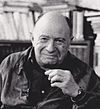
Unsourced — Primary work/page citation not yet verified in the QuotesCosmos archive. Per our Unnamed Sources & Verification Policy, quotes without confirmed primary editions are explicitly marked Unsourced while under editorial review.
What Herbert Marcuse Said About Others
Discover personal opinions Herbert Marcuse shared regarding contemporaries.
Herbert Marcuse on Mao Zedong
“There is more of Dewey than of Marx in all this.”

Unsourced — Primary work/page citation not yet verified in the QuotesCosmos archive. Per our Unnamed Sources & Verification Policy, quotes without confirmed primary editions are explicitly marked Unsourced while under editorial review.
Herbert Marcuse on Erich Fromm
“Fromm revives all the time-honored values of idealistic ethics as if nobody had ever demonstrated their conformist and repressive features. He speaks of the productive realization of the personality, of care, responsibility, and respect for one’s fellow men, of productive love and happiness – as if man could actually practice all this and still remain sane and full of “well-being” in a society which Fromm himself describes as one of total alienation, dominated by the commodity relations of the “market.” In such a society, the self-realization of the “personality” can proceed only on the basis of a double repression: first, the “purification” of the pleasure principle and the internalization of happiness and freedom; second, their reasonable restriction until they become compatible with the prevailing unfreedom and unhappiness. As a result, productiveness, love, responsibility become “values” only in so far as they contain manageable resignation and are practiced within the framework of socially useful activities (in other words, after repressive sublimation); and then they involve the effective denial of free productiveness and responsibility.”

Unsourced — Primary work/page citation not yet verified in the QuotesCosmos archive. Per our Unnamed Sources & Verification Policy, quotes without confirmed primary editions are explicitly marked Unsourced while under editorial review.
Quotes About Herbert Marcuse
Gain deeper perspective through quotes about Herbert Marcuse from others.
Peter Beilharz on Herbert Marcuse
“Critical theory was sometimes teased for its aristocratic components, its disinclination to praise popular culture, jazz or Americanism, its sometimes overwhelming sense of cultural pessimism, and all these sentiments echo the larger and older traditions of aristocratic radicalism, for which the old world, in general, was better than the brashness and shock of the new. The European critique of modernity was born as a critique of the mass, mass society, mass production, mass migration, the mass man, the image of life based on the factory, on its regimentation and yesmen, the conformism of following orders. This was also Marcuse’s anxiety into the 1960s – that the lucid or erotic components of being had been submerged into dull regimes of compliance, consumption, and getting on. Perhaps this was the moment when sociology began to shifts its focus from the realm of production to that of consumption. Gramsci had already anticipated the cultural turn in marxian thirty years earlier. Marcuse was not the only high-profile critical theorist, though the fact that he remained in the USA after Horkheimer and Adorno returned to Germany placed him strategically to be more significantly influential into the 1960s. More, he wrote in jeremiad form, unlike the laconic and dense Adorno, anticipating, in this sense, the later popularity of Zygmunt Bauman, another critical Cassandra figure. The second generation of critical theory became associated especially with the work and figure of Jürgen Habermas, who turned back to the inspiration of Kantian universalism. Where Marcuse saw systemic closure and frustration, Habermas saw possibilities for change, reform, and democratization. His early work drew together Marxian and Weberian themes and filaments, again seeking a critical theory with a practical or emancipatory intention in the manner of Marx.”
Unsourced — Primary work/page citation not yet verified in the QuotesCosmos archive. Per our Unnamed Sources & Verification Policy, quotes without confirmed primary editions are explicitly marked Unsourced while under editorial review.
Roxanne Dunbar-Ortiz on Herbert Marcuse
“His most accessible works-Reason and Revolution, One-Dimensional Man, and Eros and Civilization-synthesized the essence of the great nineteenth-century German thinkers-Hegel, Marx, and Freud. Every time I'd heard him speak at UCLA, Marcuse drew huge crowds and commanded rapt attention, speaking in a heavy German accent, somber and professorial...The San Diego authorities and the newly elected California governor, Ronald Reagan, did everything within legal limits to get Marcuse fired, and their terrorist kindred threatened his life and property. Marcuse never budged nor responded; he was a gift we may or may not have deserved.”

Unsourced — Primary work/page citation not yet verified in the QuotesCosmos archive. Per our Unnamed Sources & Verification Policy, quotes without confirmed primary editions are explicitly marked Unsourced while under editorial review.
Jane Slaughter on Herbert Marcuse
“To understand the scope and significance of women's involvement in radical political movements, we must have some idea of the contradictions and patterns of this participation as they have appeared in the past. The struggle of other women to define ideology, translate feminist consciousness into practice, and scale major obstacles provides us with a historical base by which we can more accurately assess the current potential of feminist radicalism and understand the real portent of Herbert Marcuse's observation that the "Women's Liberation movement today is perhaps the most important and potentially the most radical political movement we have"”
Unsourced — Primary work/page citation not yet verified in the QuotesCosmos archive. Per our Unnamed Sources & Verification Policy, quotes without confirmed primary editions are explicitly marked Unsourced while under editorial review.
Herbert Gintis on Herbert Marcuse
“A couple of years later I was an Assistant Professor and read Critique of Pure Tolerance. I quite hated it. It espoused a doctrine of the objective truth of what are in fact simply personal opinions with emotive value but no fact value. I also read Herbert Marcuse's One-Dimensional Man, which I also hated. I had lunch with Marcuse when he was lecturing in Cambridge, Ma. I quite liked Marcuse because his was capable of changing his mind, and was mentally vigorous at an advanced age (most of my colleagues ceased thinking beyond tenure). I told him that he and his critical studies comrades were true totalitarians. They hoped for a workers' revolution, after which they would be appointed Cultural Commisars by the Great Leader of the working class, and they would teach people what to think.”
Unsourced — Primary work/page citation not yet verified in the QuotesCosmos archive. Per our Unnamed Sources & Verification Policy, quotes without confirmed primary editions are explicitly marked Unsourced while under editorial review.
Friedrich Hayek on Herbert Marcuse
“Mr. Marcuse. . . . It’s the kind of Marxism which I dislike the most. It’s a combination of Marxism and Freudianism. I am equally opposed to both of the sources, and in its combined form I find it particularly repulsive.”

Unsourced — Primary work/page citation not yet verified in the QuotesCosmos archive. Per our Unnamed Sources & Verification Policy, quotes without confirmed primary editions are explicitly marked Unsourced while under editorial review.

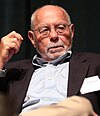
About Herbert Marcuse
Herbert Marcuse (July 19, 1898 – July 29, 1979) was a prominent German-American philosopher and sociologist of the Frankfurt School.