Link Copied!
Gilbert Murray Quotes (1866-1957)
Author

About Gilbert Murray
George Gilbert Aimé Murray, OM, FBA (2 January 1866 – 20 May 1957) was an Australian-born British classical scholar and public intellectual, with connections in many spheres. He was an outstanding scholar of the language and culture of Ancient Greece, perhaps the leading authority in the first half of the twentieth century. He is the basis for the character of Adolphus Cusins in his friend George Bernard Shaw's play Major Barbara, and also appears as the chorus figure in Tony Harrison's play Fram.
Best Gilbert Murray Quotes
Shortest
Earliest
Explore our curated collection of the most famous and impactful Gilbert Murray quotes.
“I do not think that war has much to with capitalism and socialism.”

“An old eagle, a blind eagle, who waits hungry and cold and still;
He seeks nothing, he fears nothing: he stands lone on a lonely hill.”
He seeks nothing, he fears nothing: he stands lone on a lonely hill.”

“I am pleased with the election result. Nearly all the educated people I meet are Liberal, but vote Conservative.”
“This service of civilization is our true work; the occupation that gives meaning to life. We need peace, inward and outward, because peace leaves us free to attend to it; while war—or, indeed, any violent hatred—interrupts and wrecks and perverts.”

“Of course I cannot work as I did. Still, there has never been a day, I suppose, when I have failed to give thought to the work for peace and for Hellenism. The one is a matter of life and death for all of us; the other of maintaining amid all the dust of modern industrial life our love and appreciation of eternal values.”

“There ought to be some sanction behind international law, and the League of Nations is there to supply it... The problem is not how to concentrate somewhere sufficient force to quell a peace-breaker—that already exists; it is to produce a general state of mind in which the possessors of force will really use it for maintaining the general peace and not merely for supporting their own interests.”

“[T]he Victorian Age... cared more for life than for thought; consequently it produced abundant and fine life, while its thought was comparatively unambitious and aimed mainly at serving the practical purposes of life. It cared intensely for morals and little for metaphysics; a good deal for religion and scarcely at all for theology... It had an immense faith, a faith in goodness, in duty, in the future of mankind.”
“First it is a question of International Law. The UN was intended to have a means of enforcing the law. It has no such means. Egypt and Israel have been breaking the law for 9 years without correction. Secondly, the Nasser danger is much more serious than a local friction. The real danger is we should be faced by a coalition of Arab, Muslim and anti-Western states, led nominally by Egypt but really by Russia. ... Such a danger, the Prime Minister saw, must be stopped.”

“It seems to me important that liberal feeling in England should keep fully in touch with the war...for the sake of the peace settlement afterwards. ... If we win, as seems on the whole probable, we must do our very best for a generous treatment of Germany. ... I think we ought also to go for a strengthening of the Concert and reducing armaments by treaty. Anyhow, whether it is practicable or not, it is enormously important not to have a mere grabbing or jingo settlement.”
“Is it pedantic, is it the mere result of my special education, that I fall back again upon Aristotle? He tells us that Happiness in the highest sense, or the true end of human life, is first activity, next unimpeded activity, and lastly unimpeded activity "according to virtue"; that is to say, on right lines and for good ends. Surely we want, both as individuals and as a community, to pursue that quest for the attainment or the creation of "a good life for man"; we want to get to that work unhindered and uncrippled, and therefore, apart from other reasons, we need above all things peace.”
“I am one of those many millions who believed, and believe still, that, amid all sorts of confusions and inconsistencies, the World War was on our part essentially a fight for justice in international relations, as against naked Machpolitik; an attempt, in Mr. Gladstone's words, to “establish public right as the common law of Europe.” If the League of Nations stands, the War will have been justified, or at least compensated; if it comes to nothing, our whole action will have been a series of vain cruelties and blunders.”
“I am always a little surprised at the common habit of attributing “the failure of the League” to small defects in the Covenant or to the timidities of the French and British Governments in 1931 and after; the primary cause was obviously the disunion of the Great Powers on whose union everything depended. America withdrew; Japan turned traitor and was too strong to coerce; Italy after a period of blackmail went over to the enemy. Whether Britain and France together might still have saved the situation is of course open to doubt; I am disposed to think they could, but one must not forget how great the difficulties were.”
“There was a re-birth of public spirit. Gentlemen ceased to take bribes. Justice became incorruptible... It has been observed that up to about 1820 the laws passed by Parliament had almost all been for the protection of the privileged few against the many; after that time they are predominantly for the protection of the nation as a whole against abuse and privilege. Instead of the ferocious defence of property, a spirit of sympathy and help to the oppressed begins to inspire legislation. The old revolutionary doctrine of the infinite perfectibility of mankind, which had set on fire the enthusiasm of Godwin, Shelley and Condorcet, passed in a milder and more reasonable form into the general imagination of the age.”

“There was the Temperance cause, a plain duty if there ever was one. ... There was the emancipation of women. ... There was Home Rule for Ireland. There was the protection of all who were, or were likely to be, oppressed: Russians, Egyptians, subject nations and coloured races and of course 'the poor' everywhere. I was more than ready to absorb this atmosphere. I had learnt philosophic radicalism from J. S. Mill and much the same faith in a more idealist and less critical form from Shelley.”

“As we get further away from the England of the nineteenth century, and see it separated from us by the great gulf of the war, we shall perhaps be better able to see it as it really was, to appreciate its extraordinary greatness, its peculiar faults and flaws, and to a remarkable degree its unity. Beyond question it was a very great age indeed. For Great Britain especially it marked the zenith of national success, the widest expansion over the world of British government, British commerce, British political thought, British morals, philosophy, science, poetry and prose literature. It was a time when Indian rajahs and Chinese mandarins learnt to play cricket and read Macaulay, as now they are learning baseball and frequenting the movies.”
“It is hard on many people, on naval and military circles, on Philistine newspapers, on smart society in London, just as it is hard on similar circles in Berlin, to have to give up their favourite dreams and admit themselves definitely defeated, defeated even in the Tory Cabinet, by dull middle-class pacifism. ... all parties are pledged to the League...all Prime Ministers and ex-Prime Ministers support it...no candidate for Parliament dares to oppose it openly.”
“[T]he action of Italy towards Abyssinia threatens us with a catastrophe. ... One member of the League is openly planning against another member, under the eyes of all Europe, aggression of the most extreme kind, and is claiming the right actually to prohibit any consideration of the matter by the League. If the League submits there is no law left between nations. The Covenant is gone. ... I do not see what will be left of the Covenant, or what will remain to show that the Great War was anything but a battle of kites and crows, if Signor Mussolini is allowed to set his will above the law and make war as if no League existed.”
“[T]he main work of life lies in carrying on worthily the great common task of civilization: to play one's due part in the enterprise of feeding some hundreds of millions of men, in seeing that they are protected against violence and fraud, that they have access to justice, and as far as may be to education, that they have some freedom to pursue life and happiness, and are not cut off altogether from the wonders and beauties of the world and the mind of man. To succeed in doing this is civilization: to fail is the defeat of civilization. For civilization is, ultimately, the process whereby a human society in search, as Aristotle puts it, of a "good life for man", gradually overcomes the obstacles, material and other, that stand in its way and makes man increasingly master of his environment.”

“Now the Victorian Age, or the nineteenth century as a whole, was a great moral reformer... It proclaimed that men, even courtiers and noblemen, ought not to be drunken or dissolute or even corrupt, that politics were really concerned with the welfare of the people, that the rich had duties towards the poor. The transition from George IV and his unpleasing brothers to the young Queen and the Prince Consort was typical of a much wider change. When Lord Palmerston was caught chasing a maid of honour into her bedroom, the excuse made for him was: "Your Majesty should remember that he is a very old gentleman and accustomed to the manners of the late Court".”
“Have you read Keynes on the Economic Consequences of the Peace Conference? I think it is important as giving in a clear and definite form the criticism of a Liberal-minded man who saw the proceedings from the inside... I can not help thinking that it really gives the scheme of a bold Liberal policy in foreign affairs. Aim, the re-integration of Europe, both political and economic. Method, the correction of the Versailles settlement by the L. of N. [I]t gives us a real fighting policy which has the further advantage of being right.”

“The advance in humanity and care for the alleviation of suffering is also, so far as I know, without a parallel: in England alone in this period we find the abolition of slavery—at the cost of £20,000,000 of public money willingly given: the sweeping reform of the old criminal law and the barbarous penal system which accompanied it... We find the reform in the treatment of lunatics; the laws against cruelty to children and to animals; the Factory Acts; the Married Women's Property Acts; the immense spread of education in all it stages, both by public authority and by private experiment; the beginnings of the care for public health; the...greatly decreased consumption of alcohol... [I]t was, of course, the great age of Liberalism.”

“In sum it seems to me that the Covenant, though not without certain ambiguities and loop-holes, is on the whole a wonderfully successful instrument, flexible, comprehensive, and exactly directed to the main evil which it was desired to cure. It does aim straight at the heart of the international anarchy; and it does so by a method which is calculated to stir up the very minimum of opposition. Its normal sanction is the public opinion of the world; its most effective weapon publicity. You cannot punish a nation; you cannot even coerce by force any moderately strong nation. But you can exert a very severe pressure on even the strongest to mend its ways by simply putting a question to its representative at the Assembly, or at one of the permanent Commissions, and publishing its reply.”
Gilbert Murray Quotes by Topic
Find exactly what you are looking for by browsing this categorized list of Gilbert Murray quotes by topic.
Gilbert Murray on Victorian era 4 quotes
“[T]he Victorian Age... cared more for life than for thought; consequently it produced abundant and fine life, while its thought was comparatively unambitious and aimed mainly at serving the practical purposes of life. It cared intensely for morals and little for metaphysics; a good deal for religion and scarcely at all for theology... It had an immense faith, a faith in goodness, in duty, in the future of mankind.”
Gilbert Murray on League of Nations 3 quotes
“It is hard on many people, on naval and military circles, on Philistine newspapers, on smart society in London, just as it is hard on similar circles in Berlin, to have to give up their favourite dreams and admit themselves definitely defeated, defeated even in the Tory Cabinet, by dull middle-class pacifism... all parties are pledged to the League...all Prime Ministers and ex-Prime Ministers support it...no candidate for Parliament dares to oppose it openly.”

What Gilbert Murray Said About Others
Discover personal opinions Gilbert Murray shared regarding contemporaries.
Gilbert Murray on John Galsworthy 2 quotes
“Pity for the unfortunate is, indeed, the main emotion roused by most of Galsworthy's works, but the only thing which really sweeps him away is mere sympathy with young love and beauty. Here, too, he never pretends that his young lovers have any especially admirable qualities; they long and they suffer, and that is enough.”

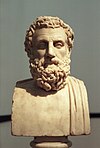
Gilbert Murray on Aeschylus
“He raised everything he touched to grandeur. The characters in his hands became heroic; the conflicts became tense and fraught with eternal issues.”
Gilbert Murray on Edward Grey, 1st Viscount Grey of Fallodon
Gilbert Murray on Gamal Abdel Nasser
“First it is a question of International Law. The UN was intended to have a means of enforcing the law. It has no such means. Egypt and Israel have been breaking the law for 9 years without correction. Secondly, the Nasser danger is much more serious than a local friction. The real danger is we should be faced by a coalition of Arab, Muslim and anti-Western states, led nominally by Egypt but really by Russia. ... Such a danger, the Prime Minister saw, must be stopped.”

Gilbert Murray on John Maynard Keynes
“Have you read Keynes on the Economic Consequences of the Peace Conference? I think it is important as giving in a clear and definite form the criticism of a Liberal-minded man who saw the proceedings from the inside... I can not help thinking that it really gives the scheme of a bold Liberal policy in foreign affairs. Aim, the re-integration of Europe, both political and economic. Method, the correction of the Versailles settlement by the L[eague] of N[ations.] [I]t gives us a real fighting policy which has the further advantage of being right.”
Gilbert Murray on James Frazer
“I remember the shock, the combined shock of interest and almost of horror, with which The Golden Bough burst upon classical scholars like me when it first appeared in 1890. Of course it was not quite our first introduction to anthropology. We knew something of Tylor and Andrew Lang and perhaps Mannhardt, perhaps even of Robertson Smith's sacred camel which had to be eaten alive before sunrise. But Frazer, for one thing, overpowered us with his mass of carefully ordered facts. We had heard of "the beastly devices of the heathen" but had not realised their great number and variety, had not understood the method which underlay their madness.”

Quotes About Gilbert Murray
Gain deeper perspective through quotes about Gilbert Murray from others.
Stanley Baldwin on Gilbert Murray
“In Athens and Rome...every ultimate problem was theirs, as it is ours, and the more you open your soul to their appeal the more profound your pity for stumbling humanity, the more eager your effort to bind together the family of man rather than to loosen it. It is no blind chance that has led one of our greatest scholars to devote his life to the ideal of the League of Nations. Rather it is his desire to make his contribution to redeeming the failure of those very Greeks whom he, more perhaps than any living man, has helped this modern world to understand.”
Correlli Barnett on Gilbert Murray 2 quotes
“Gilbert Murray...delivered a series of lectures in 1928 whose general burden was to affirm a passionate belief in the League of Nations, and yet which contained penetrating, even lethal, criticisms of it. He noted the weakness of conciliation as a means of solving international disputes... To solve this problem he proposed that all nations should agree to submit disputes to compulsory arbitration by the International Court, so that "if things came to the worst, the last resort would be Law and not Force". But here Murray was relying once more on belief in the power of parchment, for a determined and unscrupulous aggressor was hardly likely to honour its obligations to submit to arbitration when force offered more certain results... Murray ruled out the use of the most powerful and readily available armed forces at the disposal of the League... First disarm the French army and the Royal Navy, in order that all nations should be equally weak and then, wrote Murray, sanctions become both a genuine expression of the will of the community of nations and a safe and a necessary part of the Covenant. It was an argument of less than Murray's usual clarity.”
Viscount Cecil of Chelwood on Gilbert Murray
“I had got to know him very well as Vice-Chairman of the Executive Committee of the League of Nations Union. He was a most delightful colleague, charming as a companion and invaluable as an assistant.”
T. S. Eliot on Gilbert Murray 2 quotes
“[W]e need a number of educated poets who shall at least have opinions about Greek drama, and whether it is or is not of any use to us. And it must be said that Professor Gilbert Murray is not the man for this. Greek poetry will never have the slightest vitalizing effect upon English poetry if it can only appear masquerading as a vulgar debasement of the eminently personal idiom of Swinburne. These are strong words to use against the most popular Hellenist of his time; but we must witness of Professor Murray ere we die that these things are not otherwise but thus.”

Denis Healey on Gilbert Murray
“Gilbert Murray, just retired at Boar's Hill as Regius Professor of Greek, became a friend. As a young man, Bernard Shaw had taken him as the model for Adolphus Cusins, the hero of Major Barbara. A tall courtly Edwardian, with the exquisite diction of his period, he was an active Liberal, and a supporter of the League of Nations... All these men [Louis de Brouckere, Camille Huysmans, Martin Tranmael, Otto Renner, General Koerner, Leon Blum] had a serene humanity and a broad culture which is all too rare in modern politics. They were also gentlemen in the truest sense of the word. The only man I knew in Britain with a similar quality was Gilbert Murray.”
Hugh Lloyd-Jones on Gilbert Murray
“The Trojan Women powerfully depicts the horrors of war, and Murray assumed that Euripides meant it as a protest against atrocities committed by his own side in the war against Sparta and her allies that Athens was fighting at the time. This view still has some advocates; but those who are aware of the difference between a tragedy and a drame engagé see the play not as a protest against the behaviour of any actual persons, but as a portrayal of what the poet regards as a permanent feature of the human situation. This view of Euripides as a crusader for contemporary causes is eloquently expressed in Murray's book Euripides and his Age, published in 1913; the work is delightfully written, and (if you will forgive a personal reminiscence) did more than any other to make me want to be a scholar when I read it at the age of fourteen. But I now believe it to be almost totally misguided.”
R. B. McCallum on Gilbert Murray
“Dr. Murray was like Wilson a professor, a Liberal, an idealist... Because of the confusion of thought that has surrounded the word ‘pacifist’ he was often thought of as a non-resister, a believer in unilateral disarmament, whereas those who know him and have studied his speeches realize that he was from the first a believer in League action and in clear-sighted preparations for sanctions. Distinguished as his services have been, the label ‘doctrinaire’ has been affixed to his policies.”
Henry Nettleship on Gilbert Murray
“He is devoted to the study of literature; but, if I am not mistaken, this devotion is the expression, not merely of his taste and pleasure in reading, but of his whole moral nature. Classical education in his hands will not be a mere engine of literary culture, but a general training of the character and affections.”

About Gilbert Murray
George Gilbert Aimé Murray, OM, FBA (2 January 1866 – 20 May 1957) was an Australian-born British classical scholar and public intellectual, with connections in many spheres. He was an outstanding scholar of the language and culture of Ancient Greece, perhaps the leading authority in the first half of the twentieth century. He is the basis for the character of Adolphus Cusins in his friend George Bernard Shaw's play Major Barbara, and also appears as the chorus figure in Tony Harrison's play Fram.