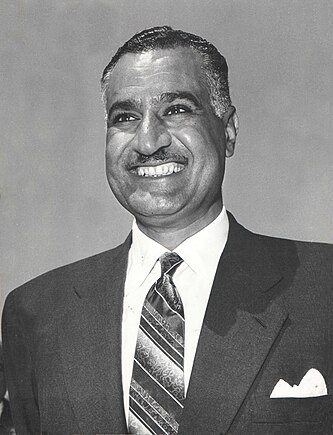
First it is a question of International Law. The UN was intended to have a means of enforcing the law. It has no such means. Egypt and Israel have been breaking the law for 9 years without correction. Secondly, the Nasser danger is much more serious than a local friction. The real danger is we should be faced by a coalition of Arab, Muslim and anti-Western states, led nominally by Egypt but really by Russia. ... Such a danger, the Prime Minister saw, must be stopped.
What It Means
This is a placeholder explanation generated by the low-overhead model. It interprets "First it is a question of International Law. The UN was intended to have a means of enforcing the law. It has no such means. Egypt and Israel have been breaking the law for 9 years without correction. Secondly, the Nasser danger is much more serious than a local friction. The real danger is we should be faced by a coalition of Arab, Muslim and anti-Western states, led nominally by Egypt but really by Russia. ... Such a danger, the Prime Minister saw, must be stopped." in the context of "Gilbert Murray, Letter to the editor of Time and Tide during the Suez Crisis (10 November 1956), quoted in Duncan Wilson, Gilbert Murray OM (1987), p. 393" to mean that wisdom is timeless.
Tags

About Gilbert Murray