Gilbert Murray on Victorian era
← Back to Gilbert Murray Profile
“[T]he Victorian Age... cared more for life than for thought; consequently it produced abundant and fine life, while its thought was comparatively unambitious and aimed mainly at serving the practical purposes of life. It cared intensely for morals and little for metaphysics; a good deal for religion and scarcely at all for theology... It had an immense faith, a faith in goodness, in duty, in the future of mankind.”
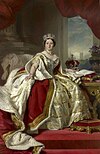
“Now the Victorian Age, or the nineteenth century as a whole, was a great moral reformer... It proclaimed that men, even courtiers and noblemen, ought not to be drunken or dissolute or even corrupt, that politics were really concerned with the welfare of the people, that the rich had duties towards the poor. The transition from George IV and his unpleasing brothers to the young Queen and the Prince Consort was typical of a much wider change. When Lord Palmerston was caught chasing a maid of honour into her bedroom, the excuse made for him was: "Your Majesty should remember that he is a very old gentleman and accustomed to the manners of the late Court".”
“There was a re-birth of public spirit. Gentlemen ceased to take bribes. Justice became incorruptible... It has been observed that up to about 1820 the laws passed by Parliament had almost all been for the protection of the privileged few against the many; after that time they are predominantly for the protection of the nation as a whole against abuse and privilege. Instead of the ferocious defence of property, a spirit of sympathy and help to the oppressed begins to inspire legislation. The old revolutionary doctrine of the infinite perfectibility of mankind, which had set on fire the enthusiasm of Godwin, Shelley and Condorcet, passed in a milder and more reasonable form into the general imagination of the age.”
“Whether or no man might be made perfect, he certainly might be made better and happier than he is; and the conscious pursuit of that object became an accepted source of inspiration to politics and literature. With it went the conception that the necessary condition of the pursuit was freedom: set man free, let him have room to move and external conditions which do not starve or cramp him, and human nature of itself will strive to rise higher. This spirit shows itself in almost all the best English fiction of the period, from romantics like the Brontës, and realists, like George Eliot, to satirists, like Dickens and Thackeray. It had been utterly lacking in Fielding and Smollett, and even in Jane Austen. It shows itself in the immense increase of charitable institutions, of religious missions, of societies for the education of the people. There is no question of hypocrisy. To suppose there is, is the mere petulance of jealously. Shelley's or Gladstone's love of moral improvement was just as genuine as Falstaff's love of sack. But an age of moral earnestness seems in our own day to have been succeeded by an age of relaxation; and one can see in, for instance, such a book as Mr. Strachey's Eminent Victorians that the moral earnestness of Gladstone or Dr. Arnold is felt by the author to be a hateful quality and not easily to be forgiven.”