















































































“Decline of the English Murder”
— George Orwell

Explore our curated collection of the most famous and impactful George Orwell quotes.
“Poverty is spiritual halitosis.”

“Beauty is meaningless until it is shared.”

“An earthquake is such fun when it is over.”

“Not to have a national anthem would be logical.”
“But it takes a war to make map-reading popular.”
“[E]ven stupidity is better than totalitarianism.”

“One's got to change the system, or one changes nothing.”

“Nationalism is power-hunger tempered by self-deception.”

“It is fatal to look hungry. It makes people want to kick you.”
“When you have no money your life is one long series of snubs.”

“To see what is in front of one's nose needs a constant struggle.”
“Men are only as good as their technical development allows them to be.”
“Fate seemed to be playing a series of extraordinarily unamusing jokes.”
“It is just thinkable that books may some day be written by machinery....”
“Orthodoxy, of whatever colour, seems to demand a lifeless, imitative style.”
“It would probably not be beyond human ingenuity to write books by machinery.”
“Antisemitism, for instance, is simply not the doctrine of a grown-up person.”

“I have always thought there might be a lot of cash in starting a new religion.”

“The outstanding, unmistakable mark of Dickens's writing is the unnecessary detail.”
“Ellis was one of those people who constantly nag others to echo their own opinions.”
“In reality it was the Communists above all others who prevented revolution in Spain.”

Find exactly what you are looking for by browsing this categorized list of George Orwell quotes by topic.
“Take away freedom of speech, and the creative faculties dry up.”

“Freedom is the freedom to say that two plus two make four. If that is granted, all else follows.”
“As with the Christian religion, the worst advertisement for Socialism is its adherents.”

“In my opinion, nothing has contributed so much to the corruption of the original idea of socialism as the belief that Russia is a socialist country and that every act of its rulers must be excused, if not imitated. And so for the last ten years, I have been convinced that the destruction of the Soviet myth was essential if we wanted a revival of the socialist movement.”
“The Spanish war and other events in 1936-7 turned the scale and thereafter I knew where I stood. Every line of serious work that I have written since 1936 has been written, directly or indirectly, against totalitarianism and for democratic Socialism, as I understand it. It seems to me nonsense, in a period like our own, to think that one can avoid writing of such subjects.”
“That the Party did not seek power for its own ends, but only for the good of the majority. That it sought power because men in the mass were frail, cowardly creatures who could not endure liberty or face the truth, and must be ruled over and systematically deceived by others who were stronger than themselves. That the choice for mankind lay between freedom and happiness, and that, for the great bulk of man- kind, happiness was better.”

“The heirs of the French, English, and American revolutions had partly believed in their own phrases about the rights of man, freedom of speech, equality before the law, and the like, and have even allowed their conduct to be influenced by them to some extent. But by the fourth decade of the twentieth century all the main currents of political thought were authoritarian. The earthly paradise had been discredited at exactly the moment when it became realizable.”
“Who controls the past controls the future: who controls the present controls the past.”

“Oceania was at war with Eurasia: therefore Oceania had always been at war with Eurasia. The enemy of the moment always represented absolute evil, and it followed that any past or future agreement with him was impossible... If the Party could thrust its hand into the past and say of this or that event, it never happened — that, surely, was more terrifying than mere torture and death? And if all others accepted the lie which the Party imposed -if all records told the same tale — then the lie passed into history and became truth. Who controls the past,' ran the Party slogan, 'controls the future: who controls the present controls the past. And yet the past, though of its nature alterable, never had been altered. Whatever was true now was true from everlasting to everlasting. It was quite simple. All that was needed was an unending series of victories over your own memory. 'Reality control', they called it: in Newspeak, 'doublethink'...”
“To see what is in front of one's nose needs a constant struggle.”
“Whoever tries to imagine perfection simply reveals his own emptiness.”
“We are in a strange period of history in which a revolutionary has to be a patriot and a patriot has to be a revolutionary.”
Discover personal opinions George Orwell shared regarding contemporaries.
“Kipling is the only English writer of our time who has added phrases to the language.”
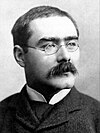
“Kipling is a jingo imperialist, he is morally insensitive and aesthetically disgusting. It is better to start by admitting that, and then to try to find out why it is that he survives while the refined people who have sniggered at him seem to wear so badly.”
“In the stupid early years of this century, the blimps, having at last discovered someone who could be called a poet and who was on their side, set Kipling on a pedestal, and some of his more sententious poems, such as ‘If’, were given almost biblical status. But it is doubtful whether the blimps have ever read him with attention, any more than they have read the Bible. Much of what he says they could not possibly approve. Few people who have criticized England from the inside have said bitterer things about her than this gutter patriot.”
“If Dickens were alive to-day he would make a trip to Soviet Russia and come back with a book rather like Gide's Retour de L'URSS.”

“In Oliver Twist, Hard Times, Bleak House, Little Dorrit, Dickens attacked English institutions with a ferocity that has never since been approached. Yet he managed to do it without making himself hated, and, more than this, the very people he attacked have swallowed him so completely that he has become a national institution himself. In its attitude towards Dickens the English public has always been a little like the elephant which feels a blow with a walking-stick as a delightful tickling. Before I was ten years old I was having Dickens ladled down my throat by schoolmasters in whom even at that age I could see a strong resemblance to Mr. Creakle, and one knows without needing to be told that lawyers delight in Sergeant Buzfuz and that Little Dorrit is a favourite in the Home Office. Dickens seems to have succeeded in attacking everybody and antagonizing nobody.”
“When one reads any strongly individual piece of writing, one has the impression of seeing a face somewhere behind the page. It is not necessarily the actual face of the writer. I feel this very strongly with Swift, with Defoe, with Fielding, Stendhal, Thackeray, Flaubert, though in several cases I do not know what these people looked like and do not want to know. What one sees is the face that the writer ought to have. Well, in the case of Dickens I see a face that is not quite the face of Dickens's photographs, though it resembles it. It is the face of a man of about forty, with a small beard and a high colour. He is laughing, with a touch of anger in his laughter, but no triumph, no malignity. It is the face of a man who is always fighting against something, but who fights in the open and is not frightened, the face of a man who is generously angry — in other words, of a nineteenth-century liberal, a free intelligence, a type hated with equal hatred by all the smelly little orthodoxies which are now contending for our souls.”
“Although no doubt he was shrewd enough in detecting dishonesty, he seems wherever possible to have believed that other people were acting in good faith and had a better nature through which they could be approached.”

“It is difficult to see how Gandhi's methods could be applied in a country where opponents of the regime disappear in the middle of the night and are never heard of again. Without a free press and the right of assembly, it is impossible not merely to appeal to outside opinion, but to bring a mass movement into being, or even to make your intentions known to your adversary.”
“One feels of him that there was much he did not understand, but not that there was anything that he was frightened of saying or thinking. I have never been able to feel much liking for Gandhi, but I do not feel sure that as a political thinker he was wrong in the main, nor do I believe that his life was a failure. ... One may feel, as I do, a sort of aesthetic distaste for Gandhi, one may reject the claims of sainthood made on his behalf (he never made any such claim himself, by the way), one may also reject sainthood as an ideal and therefore feel that Gandhi's basic aims were anti-human and reactionary: but regarded simply as a politician, and compared with the other leading political figures of our time, how clean a smell he has managed to leave behind!”
“I heard Mosley speak here on Sunday. It sickens one to see how easily a man of that type can win over and bamboozle a working class audience.”

“One would have had to look a long time to find a man more barren of ideas than Sir Oswald Mosley. He was as hollow as a jug. Even the elementary fact that Fascism must not offend national sentiment had escaped him. His entire movement was imitated slavishly from abroad, the uniform and the party programme from Italy and the salute from Germany, with the Jew-baiting tacked on as an afterthought, Mosley having actually started his movement with Jews among his most prominent followers.”
“Housman is a "country" poet. His poems are full of the charm of buried villages, the nostalgia of place-names, Clunton and Clunbury, Knighton, Ludlow, "on Wenlock Edge", "in summer time on Bredon", thatched roofs and the jingle of smithies, the wild jonquils in the pastures, the "blue, remembered hills".”

“At the beginning of the period I am speaking of, the years during and immediately after the war, the writer who had the deepest hold upon the thinking young was almost certainly Housman. Among people who were adolescent in the years 1910–25, Housman had an influence which was enormous and is now not at all easy to understand. In 1920, when I was about seventeen, I probably knew the whole of the Shropshire Lad by heart... these are the poems that I and my contemporaries used to recite to ourselves, over and over, in a kind of ecstasy.”
Gain deeper perspective through quotes about George Orwell from others.
“I often feel I will never pick up a book by Orwell again until I have read a frank discussion of the dishonesty and hysteria that mar some of his best work.”

“Writing is also a profession, and, at its best, an honourable one. It has been made honourable by those who have already been members of it. Whether you like it or not, every time you set pen to paper you’re staring at the same blank space that confronted Milton, Melville, Emily Bronte, Dostoevsky and George Eliot, George Orwell and William Faulkner and Virginia Woolf and William Carlos Williams, not to mention the latest hero, Gabriel Garcia Marquez.”

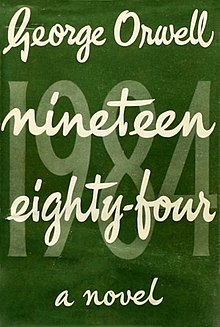
“He could not blow his nose without moralising on conditions in the handkerchief industry. This habit of mind informed everything he wrote. Animal Farm and 1984 are political novels, Homage to Catalonia, The Road to Wigan Pier and all his essays ask a cui bono and try to unseat the profit-makers, whoever they be. This ruling purpose is the secret of his best writing but far too evident in his worst. If we look dispassionately at his achievement, we notice the enormous preponderance of journalism in these four volumes.”

“What struck me in Orwell was his lack of historical sense and of psychological insight into political life, coupled with an acute, though narrow, penetration into some aspects of politics, and with an incorruptible firmness of opinion.”

Quotes attributed to George Orwell that are questionable.
“In a time of universal deceit, telling the truth is a revolutionary act.”
“Within any important issue, there are always aspects no one wishes to discuss.”
Quotes mistakenly credited to George Orwell.
“There are some ideas so absurd that only an intellectual could believe them.”
“The further a society drifts from truth, the more it will hate those who speak it.”
“To enforce the lies of the present, it is necessary to erase the truths of the past.”
“We have a hunger for something like authenticity, but are easily satisfied by an ersatz facsimile.”