Thomas Pynchon on George Orwell
← Back to George Orwell Profile
“Orwell in 1948 understood that despite the Axis defeat, the will to fascism had not gone away, that far from having seen its day it had perhaps not yet even come into its own — the corruption of spirit, the irresistible human addiction to power were already long in place, all well-known aspects of the Third Reich and Stalin's USSR, even the British Labour party — like first drafts of a terrible future.”
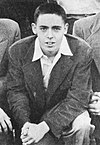
“In Burma and Paris and London and on the road to Wigan pier, and in Spain, being shot at, and eventually wounded, by fascists — he had invested blood, pain and hard labour to earn his anger, and was as attached to it as any capitalist to his capital. It may be an affliction peculiar to writers more than others, this fear of getting too comfortable, of being bought off.”
“The question remains, why end a novel as passionate, violent and dark as this one with what appears to be a scholarly appendix? The answer may lie in simple grammar. From its first sentence, "The Principles of Newspeak" is written consistently in the past tense, as if to suggest some later piece of history, post-1984, in which Newspeak has become literally a thing of the past — as if in some way the anonymous author of this piece is by now free to discuss, critically and objectively, the political system of which Newspeak was, in its time, the essence. Moreover, it is our own pre-Newspeak English language that is being used to write the essay. Newspeak was supposed to have become general by 2050, and yet it appears that it did not last that long, let alone triumph, that the ancient humanistic ways of thinking inherent in standard English have persisted, survived, and ultimately prevailed, and that perhaps the social and moral order it speaks for has even, somehow, been restored.”