Link Copied!
Frances Wright Quotes (1795-1852)
Writer
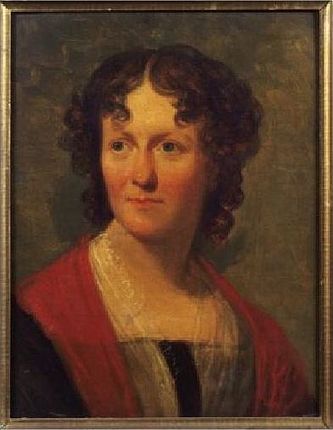


About Frances Wright
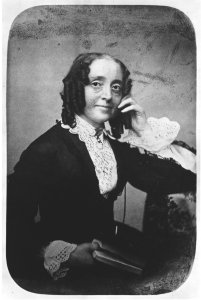
Frances Wright (September 6 1795 – December 13 1852), also widely known as Fanny Wright, was a Scotland-born lecturer, writer, feminist, abolitionist, and utopian, who became a U.S. citizen in 1825.
Best Frances Wright Quotes
Shortest
Earliest
Explore our curated collection of the most famous and impactful Frances Wright quotes.

“I have wedded the cause of human improvement, staked on it my fortune, my reputation and my life.”

“Let us unite on the safe and sure ground of fact and experiment, and we can never err; yet better, we can never differ.”

“It has already been observed that women, wherever placed, however high or low in the scale of cultivation, hold the destinies of human kind. Men will ever rise or fall to the level of the other sex.”
“Turn your churches into halls of science, and devote your leisure day to the study of your own bodies, the analysis of your own minds, and the examination of the fair material world which extends around you!”
“Be not afraid! In admitting a creator, refuse not to examine his creation; and take not the assertions of creatures like yourselves, in place of the evidence of your senses and the conviction of your understanding.”

“The political dismemberment of these once British colonies from the parent island, though involving a valuable principle, and many possible results, would scarcely merit a yearly commemoration, even in this country, had it not been accompanied by other occurrences more novel, and far more important.”
“Another revolution! Naples free and all of Italy in insurrection! How wonderful has been the march of the human mind in these last thirty years … so may it be till the last link of the chains of slavery is broken and the banner of freedom waves over the whole earth!”

“Oh! then, let us gird up our minds in courage, and compose them in peace. Let us cast aside fear and suspicion, suspend our jealousies and disputes, acknowledge the rights of others and assert our own. And oh! let us understand that the first and noblest of these rights is, the cultivation of our reason.”

“I dare say you marvel sometimes at my independent way of walking through the world just as if nature had made me of your sex instead of poor Eve's. Trust me, my beloved friend, the mind has no sex but what habit and education give it, and I who was thrown in infancy upon the world like a wreck upon the waters have learned, as well to struggle with the elements as any male child of Adam.”

“Opinions are not to be learned by rote, like the letters of an alphabet, or the words of a dictionary. They are conclusions to be formed, and formed by each individual in the sacred and free citadel of the mind, and there enshrined beyond the arm of law to reach, or force to shake; ay! and beyond the right of impertinent curiosity to violate, or presumptuous arrogance to threaten.”
“The great national and political revolution of '76 set the seal to the liberties of North America. And but for one evil, and that of immense magnitude, which the constitutional provision we have been considering does not fairly reach — I allude to negro slavery and the degradation of our coloured citizens — we could foresee for the whole of this magnificent country a certain future of uniform and peaceful improvement.”
“Is not an hereditary nobility inconsistent with liberty? I will ask more, is it not inconsistent with public virtue? Not only does it lodge authority with the unskillful but with those whose interest it is to abuse it. It does more – it degrades the minds of men, it corrupts their hearts and debases their understanding, leading them to attach honor and to yield respect to something else than talent and virtue.”
“We tax our ingenuity to draw nice distinctions. We are told of political liberty — of religious liberty — of moral liberty. Yet, after all, is there more than one liberty; and these divisions, are they not the more and the less of the same thing? The provision we have referred to in our political institutions, as framed in accordance with the principle inherent in ourselves, insures to us all of free action that statues can insure.”

“There is, in the institutions of this country, one principle, which, had they no other excellence, would secure to them the preference over those of all other countries. I mean — and some devout patriots will start — I mean the principle of change.
I have used a word to which is attached an obnoxious meaning. Speak of change, and the world is in alarm. And yet where do we not see change? What is there in the physical world but change? And what would there be in the moral world without change?”
I have used a word to which is attached an obnoxious meaning. Speak of change, and the world is in alarm. And yet where do we not see change? What is there in the physical world but change? And what would there be in the moral world without change?”

“However novel it may appear, I shall venture the assertion that until women assume the place in society which good sense and good feeling alike assign to them, human improvement must advance but feebly. It is in vain that we would circumscribe the power of one half of our race, and that half by far the most important and influential. If they exert it not for good they will for evil, if they advance not knowledge they will perpetuate ignorance. Let women stand where they may in the scale of improvement, their position decides that of the race.”
“Here, then, is the great beauty of American government. The simple machinery of representation carried through all its parts gives facility for its being moulded at will to fit with the knowledge of the age. If imperfect in any or all of its parts, it bears within it a perfect principle — the principle of improvement. And, let us observe, that this principle is all that we can ever know of perfection. Knowledge, and all the blessings which spring out of knowledge, can never be more than progressive; and whatsoever sets open the door does all for us — does every thing.”

“From the era which dates the national existence of the American people, dates also a mighty step in the march of human knowledge. And it is consistent with that principle in our conformation which leads us to rejoice in the good which befalls our species, and to sorrow for the evil, that our hearts should expand on this day; — on this day, which calls to memory the conquest achieved by knowledge over ignorance, willing co-operation over blind obedience, opinion over prejudice, new ways over old ways, when, fifty-two years ago, America declared her national independence, and associated it with her republican federation.”
“Americans no longer argue on the propriety of making all men soldiers, in order that their nation may be an object of terror to the rest of the world. They understand that the happiness of a people is the only rational object of a government, and the only object for which a people, free to choose, can have a government at all. They have, farther, almost excluded war as a profession, and reduced it from a system of robbery to one of simple defence. In so doing, they ought also to have laid aside all show of military parade, and all ideas of military glory. If they have not done so, it is that their reform in this matter is yet imperfect, and their ideas respecting it are confused.”

“The great error of the wisest known nations of antiquity, the Greeks and Romans, was the preference invariable given to the imagined interests of an imaginary existence called the state or country, and the real interests of the real existences, or human beings, upon whom, individually and collectively, their laws could alone operate. Another error was the opposition in which they invariably placed the interests of their own nation to the interests of all other nations; and a third and greater error, was the elevating into a virtue this selfish preference of their own national interests, under the name of patriotism. The moderns are growing a little wise on these matters, but they are still very ignorant.”

“Is there a thought can fill the human mind
More pure, more vast, more generous, more refined
Than that which guides the enlightened patriot's toll:
Not he, whose view is bounded by his soil;
Not he, whose narrow heart can only shrine
The land — the people that he calleth mine;
Not he, who to set up that land on high,
Will make whole nations bleed, whole nations die;
Not he, who, calling that land's rights his pride
Trampleth the rights of all the earth beside;
No: — He it is, the just, the generous soul!
Who owneth brotherhood with either pole,
Stretches from realm to realm his spacious mind,
And guards the weal of all the human kind,
Holds freedom's banner o'er the earth unfurl'd
And stands the guardian patriot of a world!”

“I must intreat your patience — your gentle hearing. I am not going to question your opinions. I am not going to meddle with your belief. I am not going to dictate to you mine. All that I say is, examine; enquire. Look into the nature of things. Search out the ground of your opinions, the for and the against. Know why you believe, understand what you believe, and possess a reason for the faith that is in you…
But your spiritual teachers caution you against enquiry — tell you not to read certain books; not to listen to certain people; to beware of profane learning; to submit your reason, and to receive their doctrines for truths. Such advice renders them suspicious counsellors. By their own creed, you hold your reason from their God. Go! ask them why he gave it.”
But your spiritual teachers caution you against enquiry — tell you not to read certain books; not to listen to certain people; to beware of profane learning; to submit your reason, and to receive their doctrines for truths. Such advice renders them suspicious counsellors. By their own creed, you hold your reason from their God. Go! ask them why he gave it.”
“The Virginians are said to pride themselves upon the peculiar tenderness with which they visit the sceptre of authority on their African vassals. As all those acquainted with the character of the Virginia planters, whether American or foreigners, appear to concur in bearing testimony of their humanity, it is probable that they are entitled to the praise which they claim. But in their position, justice should be held superior to humanity; to break the chains would be more generous than to gild them; and whether we consider the interests of the master or the slave, decidedly more useful. To give liberty to a slave before he understands its value is, perhaps, rather to impose a penalty than to bestow a blessing; but it is not clear to me that the southern planters are duly exerting themselves to prepare the way for that change in the condition of their black populations which they profess to think not only desirable but inevitable.”

Frances Wright Quotes by Topic
Find exactly what you are looking for by browsing this categorized list of Frances Wright quotes by topic.
Frances Wright on Liberty 4 quotes
“It is for Americans, more especially to nourish a nobler sentiment; one more consistent with their origin, and more conducive to their future improvement. It is for them more especially to know why they love their country, not because it is their country, but because it is the palladium of human liberty.”
Frances Wright on Change 2 quotes
“There is, in the institutions of this country, one principle, which, had they no other excellence, would secure to them the preference over those of all other countries. I mean — and some devout patriots will start — I mean the principle of change. I have used a word to which is attached an obnoxious meaning. Speak of change, and the world is in alarm. And yet where do we not see change? What is there in the physical world but change? And what would there be in the moral world without change?”
Frances Wright on Government
Frances Wright on Power
Frances Wright on An X among Ys, a Y among Xs
“I come to tell you this, and to advise you to shut the gates of your gardens forthwith, and to cease the harangues of a master, since you only pass for a philosopher among fools, and for a fool among philosophers.”
Frances Wright on Observation
“Surely it is time to examine into the meaning of words and the nature of things, and to arrive at simple facts, not received upon the dictum of learned authorities, but upon attentive personal observation of what is passing around us.”

Frances Wright on Opinion
Frances Wright on Naples
“Another revolution! Naples free and all of Italy in insurrection! How wonderful has been the march of the human mind in these last thirty years … so may it be till the last link of the chains of slavery is broken and the banner of freedom waves over the whole earth!”

Frances Wright on Cosmogony
“Man hath ever made a cosmogony in keeping with his views in physics; a scheme of government in keeping with his cosmogony; a theory of ethics in keeping with his government, and a code of law and theology in keeping with his ethics. Every perception of the human mind modifies human practice. Science is but the theory of art.'''”

Frances Wright on Caution
“Your spiritual teachers caution you against enquiry — tell you not to read certain books; not to listen to certain people; to beware of profane learning; to submit your reason, and to receive their doctrines for truths. Such advice renders them suspicious counsellors. By their own creed you hold your reason from their God. Go! ask them why he gave it.”
Frances Wright on Emulation
“...though it is by no means requisite that the American women should emulate the men in the pursuit of the whale, the felling of the forest, or the shooting of wild turkeys, they might, with advantage, be taught in early youth to excel in the race, to hit a mark, to swim, and in short to use every exercise which could impart vigor to their frames and independence to their minds. But I have dwelt enough upon this subject, and you will, perhaps, apprehend that I am about to subjoin a Utopian plan of national education: no, I leave this to the republic herself, and, wishing all success to her endeavours, I bid your farewell.”

Frances Wright on Reason
“I am not going to question your opinions. I am not going to meddle with your belief. I am not going to dictate to you mine. All that I say is, examine; enquire. Look into the nature of things. Search out the ground of your opinions, the for and the against. Know why you believe, understand what you believe, and possess a reason for the faith that is in you… But your spiritual teachers caution you against enquiry — tell you not to read certain books; not to listen to certain people; to beware of profane learning; to submit your reason, and to receive their doctrines for truths. Such advice renders them suspicious counsellors. By their own creed you hold your reason from their God. Go! ask them why he gave it.”
Frances Wright on Creed
“I am not going to question your opinions. I am not going to meddle with your belief. I am not going to dictate to you mine. All that I say is, examine; enquire. Look into the nature of things. Search out the ground of your opinions, the for and the against. Know why you believe, understand what you believe, and possess a reason for the faith that is in you… But your spiritual teachers caution you against enquiry — tell you not to read certain books; not to listen to certain people; to beware of profane learning; to submit your reason, and to receive their doctrines for truths. Such advice renders them suspicious counsellors. By their own creed you hold your reason from their God. Go! ask them why he gave it.”
Frances Wright on Belief
“I am not going to question your opinions. I am not going to meddle with your belief. I am not going to dictate to you mine. All that I say is, examine; enquire. Look into the nature of things. Search out the ground of your opinions, the for and the against. Know why you believe, understand what you believe, and possess a reason for the faith that is in you. ... But your spiritual teachers caution you against enquiry — tell you not to read certain books; not to listen to certain people; to beware of profane learning; to submit your reason, and to receive their doctrines for truths. Such advice renders them suspicious counsellors. By their own creed you hold your reason from their God. Go! ask them why he gave it.”
Quotes About Frances Wright
Gain deeper perspective through quotes about Frances Wright from others.
Catharine Beecher on Frances Wright 2 quotes
“The appropriate character of a woman demands delicacy of appearance and manners, refinement of sentiment, gentleness of speech, modesty in feeling and action, a shrinking from notoriety and public gaze, a love of dependence, and protection, aversion to all that is coarse and rude, and an instinctive abhorrence of all that tends to indelicacy and impurity, either in principles or actions. These are what are admired and sought for in a woman, and your sex demand and appreciate these qualities, as much as my own. With this standard of feeling and of taste, who can look without disgust and abhorrence upon such an one as Fanny Wright, with her great masculine person, her loud voice, her untasteful attire, going about unprotected, and feeling no need of protection, mingling with men in stormy debate, and standing up with bare-faced impudence, to lecture to a public assembly. And what are the topics of her discourse, that in some cases may be a palliation for such indecorum? Nothing better than broad attacks on all those principles that protect the purity, the dignity, and the safety of her sex. There she stands, with brazen front and brawny arms, attacking the safeguards of all that is venerable and sacred in religion, all that is safe and wise in law, all that is pure and lovely in domestic virtue. Her talents only make her the more conspicuous and offensive, her amiable disposition and sincerity, only make her folly and want of common sense the more pitiable, her freedom from private vices, if she is free, only indicates, that without delicacy, and without principles, she has so thrown off all feminine attractions, that freedom from temptation is her only, and shameful palladium. I cannot conceive any thing in the shape of a woman, more intolerably offensive and disgusting; and I believe that in eulogizing her, you did violence to your judgment and your taste, from a natural desire to make a prominent member in your party appear respectable.”
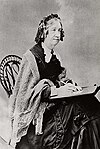
Orestes Brownson on Frances Wright
“It is far easier to educate for evil than for good, for children since the Fall take to evil as naturally as ducks take to water. The enemies of religion and society understand this perfectly well, and hence whenever in their power they seize upon the schools, and seek to control the education of the young. To accomplish Iheir purposes, they have only to exclude religion from the schools, under the plea of excluding sectarianism, and instead of teaching religion, teach as Frances Wright was accustomed to say, knowledge, and they may soon have a community whose thoughts and affections will be exclusively of the earth earthy. It is not without design that I have mentioned the name of Frances Wright, the favorite pupil of Jeremy Bentham, and famous infidel lecturer through our country, some twenty years ago; for I happen to know, what may not be known to you all, that she and her friends were the great movers in the scheme of godless education, now the fashion in our country. I knew this remarkable woman well, and it was my shame to share, for a time, many of her views, for which I ask pardon of God and of my countrymen. I was for a brief time in her confidence, and one of those selected to carry into execution her plans. The great object was to get rid of Christianity, and to convert our Churches into Halls of science. The plan was not to make open attacks on religion, although we might belabor the clergy and bring them into contempt where we could; but to establish a system of state, we said, national schools, from which all religion was to be excluded, in which nothing was to be taught but such knowledge as is verifiable by the senses, and to which all parents were to be compelled by law to send their children. Our complete plan was to take the children from their parents at the age of twelve or eighteen months, and to have them nursed, fed, clothed and trained in these schools at the public expense; but at any rate, we were to have godless schools for all the children of the country, to which the parents would be compelled by law to send them.”
Paulina Kellogg Wright Davis on Frances Wright
“To this heroic woman, who left ease, elegance, a high social circle of rich culture, and with true self-abnegation gave her life, in the country of her adoption, to the teachings of her highest idea of truth, it is fitting that we pay a tribute of just, though late, respect. Her writings are of the purest and noblest character, and whatever there is of error in them is easily thrown aside. The spider sucks poison from the same flower from which the bee gathers honey; let us therefore ask if the evil be not in ourselves before we condemn others. Women joined in the hue and cry against her, little thinking that men were building the gallows and making them the executioners. Women have crucified in all ages the redeemers of their own sex, and men mock them with the fact.”
Ellen DuBois on Frances Wright
“First articulated in 1792 by the English radical Mary Wollstonecraft, the doctrine of women's rights was brought to the United States in the 1820s by Frances Wright, a Scotswoman who gained great notoriety by her radical pronouncements on democracy, education, marriage, and labor. The threat that Wright's ideas represented to notions of respectable Christian womanhood can be appreciated by Catharine Beecher's horrified description of her: "There she stands, with brazen front and brawny arms, attacking the safeguards of all that is venerable and sacred in religion, all that is safe and wise in law, all that is pure and lovely in domestic virtue."n35 For several years, any woman who publicly advocated radical ideas was derisively called a "Fanny Wright woman.'”
Thomas Jefferson on Wright on Frances Wright
“The matter and manner of the dialogue is strictly ancient … the scenery and portraiture of the interlocutors are of higher finish than anything in that line left us by the ancients; and like Ossian, if not ancient, it is equal to the best morsels of antiqity.”
Gerda Lerner on Frances Wright 3 quotes
“Feminist writers, not trained historians, were the first to undertake a systematic attempt to approach the problem of women's role in American life and history. This took the form of feminist tracts, theoretical approaches, and compilations of woman's "contributions." The early compilers attacked the subject with a missionary zeal designed, above all, to right wrong. Their tendency was to praise anything women had done as a "contribution" and to include any women who had gained the slightest public attention in their numerous lists. Still, much positive work was done in simply recounting the history of the woman's rights movement and some of its forerunners and in discussing some of the women whose pioneering struggles opened opportunities to others. Feminist writers were hampered by a two-fold bias. First, they shared the middle-class, nativist, moralistic approach of the Progressives and tended to censure out of existence anyone who did not fit into this pattern. Thus we find that women like Frances Wright and Ernestine Rose received little attention because they were considered too radical. "Premature feminists" such as the Grimké sisters, Maria Weston Chapman, and Lydia Maria Child are barely mentioned.”

John Humphrey Noyes on Frances Wright
“Frances Wright, little known to the present generation, was really the spiritual helpmate and better half of the Owens, in the socialistic revival of 1826. Our impression is, not only that she was the leading woman in the communistic movement of that period, but that she had a very important agency in starting two other movements that had far greater success and are at this moment in popular favour, viz., Anti-Slavery and Woman's Rights. If justice were done, we are confident her name would figure high with those of Lundy, Garrison, and John Brown on the one hand, and with those of Abby Kelly, Lucy Stone and Anna Elizabeth Dickinson on the other.”
Robert Dale Owen on Frances Wright
“She was thoroughly versed in the literature of the day, was well informed on general topics, and spoke French and Italian fluently. She had travelled and resided for years in Europe, was an intimate friend of General Lafayette, and made the acquaintance of many leading reformers, Hungarian, Polish, and others, and was a thorough republican; indeed, an advocate of universal suffrage without regard to colour or sex.”
Ernestine Rose on Frances Wright 2 quotes
“Frances Wright was the first woman in this country who spoke on the equality of the sexes. She had indeed a hard task before her. The elements were entirely unprepared. She had to break up the time-hardened soil of conservatism, and her reward was sure — the same reward that is always bestowed upon those who are in the vanguard of any great movement. She was subjected to public odium, slander, and persecution. But these were not the only things she received. Oh, she had her reward — that reward of which no enemies could deprive her, which no slanders could make less precious — the eternal reward of knowing that she had done her duty.”

Elizabeth Cady Stanton on Frances Wright
“Women have crucified the Mary Wollstonecrafts, the Fanny Wrights, and the George Sands of all ages. Men mock us with the fact and say we are ever cruel to each other... If this present woman must be crucified, let men drive the spikes.”

Walt Whitman on Frances Wright 2 quotes
“In those days I frequented the anti-slavery halls, in New York — heard many of their speakers — people of all qualities, styles — always interesting, always suggestive. It was there I heard Fanny Wright … a woman of the noblest make-up whose orbit was a great deal larger than theirs — too large to be tolerated for long by them: a most maligned, lied-about character — one of the best in history though also one of the least understood. She had a varied career here and in France — married a damned scoundrel, lost her fortune, faced the world with her usual courage. Her crowning sorrow was when the infernal whelp who had been her husband tried in France, through the aid of a priest, to take from her her daughter, charging that the child needed to be protected from the danger of her mother's infidelistic teachings. Think of it! … The scoundrel, through the aid of the French law, which is of all law probably the least favorable to women, got nearly her whole fortune, perhaps the whole of it, so that at the last, when she needed five thousand dollars or so, she had to beg it of him, he even then making the concession reluctantly. But my remembrance of her all centers about New York. She spoke in the old Tammany Hall there, every Sunday, about all sorts of reforms. Her views were very broad — she touched the widest range of themes — spoke informally, colloquially. She published while there the Free Inquirer, which my daddy took and I often read. She has always been to me one of the sweetest of sweet memories: we all loved her: fell down before her: her very appearance seemed to enthrall us. I had a picture of her about here — it is probably somewhere in the house still: a sitting figure — graceful, deer-like: and her countenance! oh! it was very serene.”

Howard Zinn on Frances Wright
“Frances Wright of Scotland, an early feminist and utopian socialist, was invited by Philadelphia workingmen to speak on the Fourth of July 1829 to one of the first city-wide associations of labor unions in the United States. She asked if the Revolution had been fought "to crush down the sons and daughters of your country's industry under... neglect, poverty, vice, starvation, and disease...." She wondered if the new technology was not lowering the value of human labor, making people appendages to machines, crippling the minds and bodies of child laborers.”

About Frances Wright
Frances Wright (September 6 1795 – December 13 1852), also widely known as Fanny Wright, was a Scotland-born lecturer, writer, feminist, abolitionist, and utopian, who became a U.S. citizen in 1825.