Gerda Lerner on Frances Wright
← Back to Frances Wright Profile
“Feminist writers, not trained historians, were the first to undertake a systematic attempt to approach the problem of women's role in American life and history. This took the form of feminist tracts, theoretical approaches, and compilations of woman's "contributions." The early compilers attacked the subject with a missionary zeal designed, above all, to right wrong. Their tendency was to praise anything women had done as a "contribution" and to include any women who had gained the slightest public attention in their numerous lists. Still, much positive work was done in simply recounting the history of the woman's rights movement and some of its forerunners and in discussing some of the women whose pioneering struggles opened opportunities to others. Feminist writers were hampered by a two-fold bias. First, they shared the middle-class, nativist, moralistic approach of the Progressives and tended to censure out of existence anyone who did not fit into this pattern. Thus we find that women like Frances Wright and Ernestine Rose received little attention because they were considered too radical. "Premature feminists" such as the Grimké sisters, Maria Weston Chapman, and Lydia Maria Child are barely mentioned.”
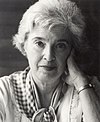
“Frances Wright, the first woman to engage in public lecturing in America, scandalized her contemporaries in a variety of ways. Not only did she advocate birth control, easy divorce and free love, but she allowed the latter to be practiced, even on an interracial basis, in the utopian community she had founded in Tennessee. Nashoba was to demonstrate the feasibility of the gradual emancipation of slaves, who earned their purchase price by manual labor in the community, while being educated for freedom. Frances Wright believed that these former slaves should be accorded the same sexual rights as other members of the community and she refused to disavow her fellow-utopians' actions, when a community diary, published in a reform journal during her absence, revealed incidents of interracial free love relationships, which deeply shocked abolitionist reformers outside the community. Moreover, she was actively involved in organizing the first labor party in the United States, the Workingman's Association and promoted within that group, during the 1828 and 1830 state election campaigns, the principle of public education for all children, starting at age two and in boarding schools. While women's liberation was not specifically listed as one of the expected benefits, she did mention that this scheme would equalize educational opportunities for workers' children, imbuing children of all classes with the egalitarian spirit that she regarded as the essential principle of American democracy.”
“Frances Wright appeared on the scene too soon to influence the first generation of feminists directly, although some of them had certainly heard of her activities. It is noteworthy that the first volume of History of Woman Suffrage features a tribute to Frances Wright, though only in her role as a public speaker. Latter-day feminists ignored her advanced ideas for sexual, moral, and educational reform.”