Link Copied!
Eugene Wigner Quotes (1902-1995)
Physicist

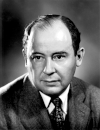
About Eugene Wigner
Eugene Paul Wigner (November 17, 1902 – January 1, 1995) was a Hungarian-American theoretical physicist who also contributed to mathematical physics. He received the Nobel Prize in Physics in 1963 "for his contributions to the theory of the atomic nucleus and the elementary particles, particularly through the discovery and application of fundamental symmetry principles."
Best Eugene Wigner Quotes
Shortest
Earliest
Explore our curated collection of the most famous and impactful Eugene Wigner quotes.
“The miracle of the appropriateness of the language of mathematics for the formulation of the laws of physics is a wonderful gift which we neither understand nor deserve.”
“In science, it is not speed that is the most important. It is the dedication, the commitment, the interest and the will to know something and to understand it — these are the things that come first.”
“A possible explanation of the physicist's use of mathematics to formulate his laws of nature is that he is a somewhat irresponsible person. As a result, when he finds a connection between two quantities which resembles a connection well-known from mathematics, he will jump at the conclusion that the connection is that discussed in mathematics simply because he does not know of any other similar connection.”

“A deep sense of humor and an unusual ability for telling stories and jokes endeared Johnny even to casual acquaintances. He could be blunt when necessary, but was never pompous. A mind of von Neumann's inexorable logic had to understand and accept much that most of us do not want to accept and do not even wish to understand. This fact colored many of von Neumann's moral judgments. "It is just as foolish to complain that people are selfish and treacherous as it is to complain that the magnetic field does not increase unless the electric field has a curl. Both are laws of nature." Only scientific intellectual dishonesty and misappropriation of scientific results could rouse his indignation and ire — but these did — and did almost equally whether he himself, or someone else, was wronged.”
Eugene Wigner Quotes by Topic
Find exactly what you are looking for by browsing this categorized list of Eugene Wigner quotes by topic.
Eugene Wigner on Machine
“... the construction of machines, the functioning of which he can foresee, constitutes the most spectacular accomplishment of the physicist. In these machines, the physicist creates a situation in which all the relevant coordinates are known so that the behavior of the machine can be predicted. Radars and nuclear reactors are examples of such machines.”

Eugene Wigner on Acceptance
“A mind of von Neumann's inexorable logic had to understand and accept much that most of us do not want to accept and do not even wish to understand. This fact colored many of von Neumann's moral judgments. … Only scientific intellectual dishonesty and misappropriation of scientific results could rouse his indignation and ire — but these did — and did almost equally whether he himself, or someone else, was wronged.”

Eugene Wigner on Initial condition
“The surprising discovery of Newton’s age is just the clear separation of laws of nature on the one hand and initial conditions on the other. The former are precise beyond anything reasonable; we know virtually nothing about the latter. ,,, … how can we ascertain that we know all the laws of nature relevant to a set of phenomena? If we do not, we would determine unnecessarily many initial conditions in order to specify the behavior of the object.”

Eugene Wigner on Concept
“... mathematics is the science of skillful operations with concepts and rules invented just for this purpose. The principal emphasis is on the invention of concepts. Mathematics would soon run out of interesting theorems if these had to be formulated in terms of the concepts which already appear in the axioms. Furthermore, whereas it is unquestionably true that the concepts of elementary mathematics and particularly elementary geometry were formulated to describe entities which are directly suggested by the actual world, the same does not seem to be true of the more advanced concepts, in particular the concepts which play such an important role in physics.”

What Eugene Wigner Said About Others
Discover personal opinions Eugene Wigner shared regarding contemporaries.
Eugene Wigner on John von Neumann 8 quotes
View all 8 quotes on John von Neumann →Eugene Wigner on Albert Einstein
“Einstein was a world-famous genius and people I knew used to remark, "You spend a good deal of time with Einstein. He has a perfect brain, doesn't he?" Well, I have never known what is meant by a "perfect brain." I do know that Einstein's mind was very human and had many defects. Einstein was far slower than Jancsi von Neumann to derive mathematical identities. His memory could be faulty, at least after 1933. And he was hardly interested in the details of physics. For a man like Edward Teller, developing the details of a physics problem was passionately important. For Einstein, it was not. In all spheres of life, Einstein's greatest pleasure was in finding, and later expressing, basic principles. But Einstein's understanding was deeper than even Jancsi von Neumann's. His mind was both more penetrating and more original than von Neumann's. And that is a very remarkable statement. Einstein took an extraordinary plea sure in invention. Two of his greatest inventions are the Special and General Theories of Relativity; and for all of Jancsi's brilliance, he never produced anything so original. No modern physicist has.”

About Eugene Wigner
Eugene Paul Wigner (November 17, 1902 – January 1, 1995) was a Hungarian-American theoretical physicist who also contributed to mathematical physics. He received the Nobel Prize in Physics in 1963 "for his contributions to the theory of the atomic nucleus and the elementary particles, particularly through the discovery and application of fundamental symmetry principles."
QuotesCosmos Cross-Civilizational Archive
Explore Related Wisdom Pillars, Worldviews & Canonical Works
Discover how humanity's greatest philosophers, sacred scriptures, and literary masterpieces address the core questions of existence.
30 Wisdom Pillars
22 Worldviews & Traditions
Canonical Books & Scriptures