Link Copied!
Ernest King Quotes (1878-1956)
King



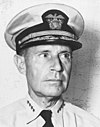


About Ernest King
Fleet Admiral Ernest Joseph King (23 November 1878 – 25 June 1956) was Commander in Chief, United States Fleet (COMINCH) and Chief of Naval Operations (CNO) during World War II. As COMINCH-CNO, he directed the United States Navy's operations, planning, and administration and was a member of the Joint Chiefs of Staff. He was the U.S. Navy's second most senior officer after Fleet Admiral William D. Leahy, and the second admiral to be promoted to five star rank. He served under Secretary of the Navy Frank Knox and later under James Forrestal.
Best Ernest King Quotes
Shortest
Earliest
Explore our curated collection of the most famous and impactful Ernest King quotes.




“To the Class of 1901, United States Naval Academy.”
“We knew what Nimitz was doing. He did the right thing, and we let him alone.”
“Don't tell them anything. When it's over, tell them who won.”


“Machines are as nothing without men. Men are as nothing without morale.”

“I'd say they started something at Pearl Harbor that they are not going to finish. We are going to win this war.”

“Well done, Frank Knox. We dedicate ourselves, one and all, to what surely would have been his last order- 'Carry On!'”
“I don't care how good they are. Unless they get a kick in the ass every six weeks, they'll slack off.”
“I'll never forgive the Army for not taking at least part of the blame for Pearl Harbor. That was why I didn't like Stimson.”
“CINCUS to Vandegrift for his flyers- Many happy returns Sunday and congratulations- Keep knocking them off.”
“It is no easy matter in a global war to have the right materials in the right places at the right times in the right quantities.”
“Do the best you can with what you have.
Do not worry about water that has gone over the dam.
Difficulties exist to be overcome.”
Do not worry about water that has gone over the dam.
Difficulties exist to be overcome.”

“The war has been variously termed a war of production and a war of machines. Whatever else it is, so far as the United States is concerned, it is a war of logistics.”

“a. Would it further threaten or cut Japanese lines of communications?
b. Would it contribute to the attainment of positions of readiness from which a full-scale offensive could be launched against Japan?”
b. Would it contribute to the attainment of positions of readiness from which a full-scale offensive could be launched against Japan?”
“Stalin knew just what it was he wanted when he came to Teheran, and he got it. Stalin is a stark realist, and there is no foolishness about him. He speaks briefly and directly to the point- not a wasted word.”

“While we contemplate with pride the accomplishments of the past twelve months- accomplishments without precedent in naval history- we must never forget that there is a long, tough and laborious road ahead.”
Ernest King Quotes by Topic
Find exactly what you are looking for by browsing this categorized list of Ernest King quotes by topic.
Ernest King on United States Naval Academy
“To the Class of 1901, United States Naval Academy.”

Ernest King on Chance
Ernest King on World War II
“We knew what Nimitz was doing. He did the right thing, and we let him alone.”

Ernest King on Decisions
“Any man facing a major decision acts, consciously or otherwise, upon the training and beliefs of a lifetime. This is no less true of a military commander than of a surgeon who, while operating, suddenly encounters an unsuspected complication. In both instances, the men must act immediately, with little time for reflection, and if they are successful in dealing with the unexpected it is upon the basis of past experience and training.”
Ernest King on Royal Navy
“The seeming helplessness of our cousins strikes me as amusing when it is not annoying. I am sure what they wish in their hearts is that we would haul down the Stars and Stripes and hoist the White Ensign in all our ships. What particularly irks me is their strong liking for mixed forces, which as you know approached anathema to me. I am willing to take over additional tasks- and we have done so- but I cannot be expected to agree to help them cling to tasks that they themselves say they are unable to do unless we lend them our ships and other forces. I think we have done enough for them in their Home Fleet.”

What Ernest King Said About Others
Discover personal opinions Ernest King shared regarding contemporaries.
Ernest King on Franklin D. Roosevelt 4 quotes
“The President and his party were on deck after luncheon watching the antiaircraft battery conduct practice fire at large black aerological balloons. Suddenly the battleship listed from the effect of full rudder, pulsed with flank speed, and the general alarm clanked loudly. All hands rushed to their battle stations, and there was considerable excitement until the cause of all this could be determined. King, on the bridge, turned to the commanding officer, and inquired: "Captain McCrea, what is the interlude?" It developed that the screening destroyer on the starboard bow, engaged at drill, had accidentally discharged a live torpedo directly at Iowa, which had, unfortunately but quite naturally, been used as the drill target. The torpedo missed, but exploded in the disturbed wake of Iowa with such a thud that many people thought the ship had been hit. That it did not run hot and straight saved the United States Navy the embarrassment of having torpedoed their Commander in Chief and the Joint Chiefs of Staff! King wished to relieve the commanding officer of the destroyer at once, but, to his great amazement, the President told him to forget it. Consequently no steps were taken.”

Ernest King on William D. Leahy 3 quotes
“During the closing days of 1944 King received the final promotion of his naval career. On 11 December the Congress passed a bill authorizing the appointment of four Fleet Admirals and four Generals of the Army. The President immediately named Leahy, King and Nimitz to the naval five-star rank (Halsey later became the fourth.), and Marshall, MacArthur, Eisenhower and Arnold to the corresponding grade in the Army. The Senate confirmed these appointments on 15 December 1944, and on 20 December- the third anniversary of his designation as Commander in Chief, United States Fleet- King took the oath of office as a Fleet Admiral in the United States Navy.”

Ernest King on William Halsey Jr. 2 quotes
“World War II gave King the opportunity of putting in practice another conviction. His earliest studies of the Napoleonic campaigns had indicated to him that the great weakness of the French military system of the period was that it required the detailed supervision of Napoleon. His belief that one must do the opposite, and train subordinates for independent action, had been confirmed and strengthened through his years of association with Admiral Mayo. During World War II King would jokingly maintain that he managed to keep well by "doing nothing that I can get anybody to do for me," but in all seriousness he could not have survived the four years of war without having made full use of the decentralization of authority into the hands of subordinate commanders, who were considered competent unless they proved themselves otherwise, and who were expected to think, decide, and act for themselves. Upon Nimitz in the Pacific, Edwards, Cooke and Horne in Washington, Ingersoll in the Atlantic, Stark in London, Halsey, Spruance, Kinkaid, Hewitt, Ingram and many other flag officers at sea, King relied with confidence and was not disappointed.”

Ernest King on Joseph Stalin
“Stalin knew just what it was he wanted when he came to Teheran, and he got it. Stalin is a stark realist, and there is no foolishness about him. He speaks briefly and directly to the point- not a wasted word.”

Ernest King on Winston Churchill
“In King's view, there could have been no finer comrades-in-arms for the President and the Joint Chiefs of Staff than the Prime Minister and the British Chiefs of Staff. King both respected and enjoyed Mr. Churchill. The two men were similar in their entire frankness and their determination in pursuing given thoughts and courses of action. From time to time they collided, but basically they understood one another.”

Ernest King on George VI of the United Kingdom
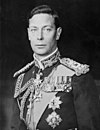
“During his stay in London King was presented to King George VI at Buckingham Palace. His Majesty, wearing the uniform of an admiral of the fleet, received King in a sitting room where he was at work on papers. Whiskey or tea was offered, and as King had given up spirits for the duration of the war, he gladly accepted the tea, which was ready. The King reminisced agreeably about his cruises in the Royal Navy, and asked the admiral about his own with such tact that the audience, in retrospect, resembled a chat between a couple of old sailors.”
Ernest King on Bernard Montgomery, 1st Viscount Montgomery of Alamein
“King greatly enjoyed a luncheon with Mr. Churchill, who had invited him to meet Field Marshal Montgomery, whom he had not previously known. King felt that what Montgomery said made very good sense, and noted that he was not only very firm in all matters of military business, but equally firm in his personal disinclination to either smoke or drink. It is true that his beret was somewhat dramatic, but hardly more so than MacArthur's gold embroidered cap and corncob pipe or Patton's two pearl-handled pistols. Within the United States Navy, Halsey and King's old friend Jonas Ingram could hardly have been considered restrained in their style. Although King's own taste did not run to such personal exuberance, he was not necessarily surprised to find it in military commanders whose chiefs were as colorful as President Roosevelt and Mr. Churchill.”
Quotes About Ernest King
Gain deeper perspective through quotes about Ernest King from others.
Allegedly made by one of King on Ernest King
“He is the most even-tempered person in the United States Navy. He is always in a rage.”
Biographical Notes on King on Ernest King
“FLEET ADMIRAL ERNEST JOSEPH KING, USN. Born Ohio 1878. Annapolis Class of 1901. As Lt. Comdr., assigned first command, DD Terry, 1914. Awarded Navy Cross, 1916, for service as Assistant Chief of Staff to the Commander-in-Chief, Atlantic Fleet. Promoted to Comdr., 1917, Capt., 1922. Commanded Submarine Base, New London, 1923-1926,; USS Lexington, 1930-2. Served as Chief, Bureau of Aeronautics, 1933-6. Promoted Rear Admiral, 1939. In Feb. 1941, became Commander-in-Chief, Atlantic Fleet. Appointed Commander-in-Chief, U.S. Fleet, Dec. 1941, and Chief of Naval Operations, 1942. On Dec. 20, 1944, achieved newly established highest rank, Fleet Admiral. Awarded 3 DSM's, numerous other decorations, American and foreign.”
Clay Blair on Ernest King
“In the wake of the Pearl Harbor disaster, President Roosevelt made sweeping changes in the navy high command. When word of these changes reached the submarine force, there were cheers. The key people, it seemed, were all submariners. First, and most important, Roosevelt named Admiral Ernest Joseph King, Jr., to the post of Commander in Chief, United States Fleet, and Chief of Naval Operations, replacing Admiral Stark. King had commanded the Submarine Base at New London and a division of S-boats and had played a key role in salvaging two sunken submarines in the 1920s, the S-51 and the S-4. Although King had never commanded a submarine, he wore the dolphin insignia plus his aviator's wings. Second, King appointed former submariner Chester Nimitz to replace Kimmel (and Pye) as Commander in Chief, Pacific Fleet. After his submarine service before and during World War I, Nimitz had established the Submarine Base at Pearl Harbor and then commanded a division of early fleet boats, including Barracuda, Bass, and Bonita. King's staff in Washington was laced with submariners. For his deputy chief of staff he named Richard Edwards, then commanding Submarines Atlantic. Edwards, who would eventually become King's right arm, had commanded a squadron of fleet boats, and the Submarine Base at New London and had helped Lockwood fight for the Tambor class before the General Board in 1938. For his operations officer, King picked Francis Stuart ("Frog") Low, another submariner. Later, King appointed one-time submariner Charles Maynard ("Savvy") Cooke to be Assistant Chief of Staff for War Plans.”
Walter R. Borneman on Ernest King 3 quotes
“Diplomacy, tact, and forbearance were not words to be associated with Ernest King, even at a young age. When his mother once scolded him for expressing his dislike in front of the hostess, seven-year-old Ernest held his ground. "It's true," he insisted, "I don't like it." Absolute candor, no matter how rude or insulting, became his trademark. "If I didn't agree," King later reminisced, "I said so."”
Omar Bradley on Ernest King
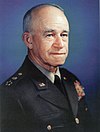
“In a caravan of recon cars we serpentined through traffic that churned the Normandy roads into a trail of choking white dust. It parched our throats, watered our eyes, and chalked King's neat blues. From Omaha we turned toward Isigny, past the dry, malodorous tidal basin at Grandcamp-les-Bains where the enemy had destroyed a dozen fishing craft and damaged the tidal gates. From offshore a salvo echoed across the beach as the battleship Texas lobbed its broadsides into the Carentan flats where the enemy had withdrawn behind that city. After having so persistently badgered the Navy for capital ships in the bombardment, I was anxious that King see the effects of his big guns in the streets of Isigny. Hansen had parked two armored cars in the village square to cover our party with their guns. With General Marshall, King, Arnold, and Eisenhower bunched together in three open cars, an enemy sniper could have won immortality as a hero of the Reich.”
Alan Brooke on Ernest King
“King on the other hand is a shrewd and somewhat swollen headed individual. His vision is mainly limited to the Pacific, and any operation calculated to distract from the force available in the Pacific does not meet with his support or approval. He does not approach the problems from a worldwide war point of view, but instead with one biased entirely in favour of the Pacific. Although he pays lip service to the fundamental policy that we must defeat Germany and then turn on Japan, he fails to apply it in any problems connected with the war.”
Robin Brodhurst on Ernest King
“Betty Stark, known to the more junior officers of the Joint Staff Mission as "Tugboat Annie," was an easy man to get on with. Ernie King on the other hand was a difficult man to like. He had recently become Commander-in-Chief US Fleet and was effectively in charge of the day to day running of the US Navy, leaving the grand strategy to stark. This arrangement did not really work, and in March Stark moved to London as Commander-in-Chief US Naval Forces Europe, while King became both C-in-CUS and CNO. Nobody ever found King an easy man. He appeared prejudiced against all things British, but was probably better described as a ferocious Americanophile. He considered that any deployment of American forces in Europe, or, worse, North Africa was wasted as it detracted from the main theatre of the US Navy, the Pacific. His biggest dislikes were mixing US and Royal Navy ships in a combined force, or allowing US Navy ships to serve under foreign, especially British, command.”
Thomas B. Buell on Ernest King 4 quotes
“In a period of one month- March 1942- King had inspired and advocated the plans and strategy that would govern the entire course of the war in the Pacific.”
James F. Dunnigan on Ernest King
“King's role in the war was indispensable. He not only oversaw the expansion of the Navy, but he was also involved in plotting military strategy, directing the antisubmarine effort (he created the Tenth Fleet, a paper organization with himself at its head, to coordinate the antisubmarine war in the Atlantic), and helping coordinate American strategy and operations with those of the Allies. King retired in late 1945, shortly after promotion to five-star rank. For several years thereafter he served as an adviser to the Secretary of the Navy and to the President.”
Carlo D'Este on Ernest King 2 quotes
“The major problem facing the Allies in 1942 was to agree on what they would do, and when and where they would do it. No plan had yet been drawn up by Eisenhower's directorate for the employment of assault landing craft for the coming conflicts in Europe and Japan. Although he would later be overruled, a stubborn Ernie King pursued a Pacific-first strategy that favored the navy.”
Richard S. Edwards on Ernest King
“[It was Admiral King's] custom to encourage free and uninhibited debate until he had absorbed all points of view. He would then come forward with a clear-cut scheme, usually so obviously applicable as to cause all concerned to wonder why they had not thought of it themselves.”
Dwight D. Eisenhower on Ernest King 5 quotes
“I also went to see Admiral King. He was a naval officer of the frightening type, abrupt, decisive, and frequently blunt as to frighten his subordinates. In our conversation he stressed the point that the venture on which I was going to Britain would mark the first deliberate attempt by the American fighting services to set up a unified command in the field for a campaign of indefinite length. He assured me that he would do everything within his power to sustain my status of actual "commander" of American forces assigned to me. He said that he wanted no foolish talk about my authority depending upon "co-operation and paramount interest." He insisted that there should be single responsibility and authority and he cordially invited me to communicate with him personally at any time that I thought there might be intentional or unintentional violation of this concept by the Navy.”

Misattributed Quotes
Quotes mistakenly credited to Ernest King
“""Admiral, asked McCrea, "is this story true that I hear about?" "Well, John, I don't know," replied King, deadpan. "Which story is it?" "They tell me," McCrea went on, "you were heard to say recently, 'Yes, damn it, when they get in trouble they send for the sons of bitches.'" King couldn't help but smile. "No, John, I didn't say it. But I will say this: If I had thought of it, I would have said it.""”
About Ernest King
Fleet Admiral Ernest Joseph King (23 November 1878 – 25 June 1956) was Commander in Chief, United States Fleet (COMINCH) and Chief of Naval Operations (CNO) during World War II. As COMINCH-CNO, he directed the United States Navy's operations, planning, and administration and was a member of the Joint Chiefs of Staff. He was the U.S. Navy's second most senior officer after Fleet Admiral William D. Leahy, and the second admiral to be promoted to five star rank. He served under Secretary of the Navy Frank Knox and later under James Forrestal.
QuotesCosmos Cross-Civilizational Archive
Explore Related Wisdom Pillars, Worldviews & Canonical Works
Discover how humanity's greatest philosophers, sacred scriptures, and literary masterpieces address the core questions of existence.
30 Wisdom Pillars
22 Worldviews & Traditions
Canonical Books & Scriptures