Link Copied!
Ernest Flagg Quotes (1857-1947)
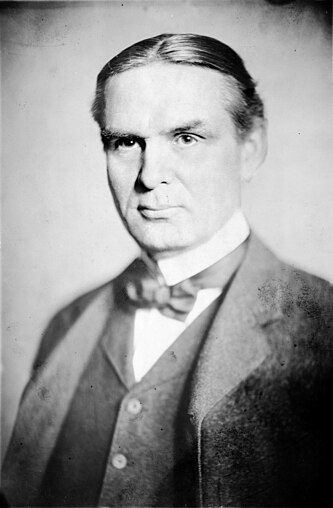
About Ernest Flagg
Ernest Flagg (February 6, 1857 – April 10, 1947) was a noted American architect in the Beaux-Arts style. He was also an advocate for urban reform and social responsibility in architecture.
Best Ernest Flagg Quotes
Shortest
Earliest
Explore our curated collection of the most famous and impactful Ernest Flagg quotes.
“The object of this work is to improve the design and construction of small houses while reducing their cost.”
“There have always seemed to the writer sound reasons for using the module system in architectural design.”
“Greek art was extremely simple and direct; both in design and construction the Greek mind abhorred complicaton.”
“A master in art need not go into the highways and byways for affects; he knows the straight course and follows it.”

“For more than two thousand years architectural design by the use of a modulus, except in the case of the classic orders, had been a lost art.”
“While it is not hard to suggest improvements on common methods of design and construction, it is very hard to introduce them.”
“1st. Saving of time, trouble, and money in the preparation of plans by the module system, and the standardization of parts and methods.”

“Refinement. While the possession of this quality is due, in the first instance, to education, it is also largely a matter of temperament.”
“Instead of the dormers, skylights... are easier to make and operate, need no double sash, cost less, and some may prefer their appearance.”

“Dormers may easily lose, in winter, the credit they gained in summer. ...If, however, they are properly made and securely closed in cold weather, this will not happen.”
“Certain combinations of dimensions produce harmonious results, but since the time of the ancient Greeks no system of design, consistently base on that knowledge, has been formulated.”
“Beauty is largely dependent on fitness, and fitting methods are usually the most convenient and economical; therein, indeed, to a great extent, lies their very fitness.”
“One of the best ways to economize in building is to economize on ugliness. ...Nothing can be greater service in avoiding ugliness than a knowledge of the principles of design.”

“Variety. ...Movement, contrast, and accent all contribute to variety... the spice of life... Monotony and dryness are lurking enemies which may be vanquished by variety.”
“The chief difficulty in designing small houses is to avoid an excessive appearance of height. ...the ridge-dormer or its equivalent, the ridge skylight, would open a whole new field of opportunity...”


“In the human figure as it approaches perfection... is contained the sure guide for the determination of all true principles of design. ...it was because the ancient Greeks... realized this truth that they excelled all others in art.”
“The Greeks were men of sense; if they used the system they did so for a purpose, as artists rather than mathematicians and imperceptible irregularities could not affect that purpose.”

“When, in architecture, one uses a fixed unit and combinations of it, to produce harmony, the effect should be most striking and apparent... as it is in music by the measured beat and in poetry by the cadence and rhythm.”

Ernest Flagg Quotes by Topic
Find exactly what you are looking for by browsing this categorized list of Ernest Flagg quotes by topic.
Ernest Flagg on Design 4 quotes
“One of the best ways to economize in building is to economize on ugliness. ...Nothing can be greater service in avoiding ugliness than a knowledge of the principles of design.”

Ernest Flagg on Art 2 quotes
“A master in art need not go into the highways and byways for affects; he knows the straight course and follows it. ...With dignity and simplicity come repose... the natural state of one at home in his surroundings and sure of his ground.”

Ernest Flagg on Beauty
“The most economical way of obtaining good results is to apply the great, fundamental principles of art; and depend on them for beauty, rather than upon the use of either applied ornament or more expensive materials.”
Ernest Flagg on Architecture
“When, in architecture, one uses a fixed unit and combinations of it, to produce harmony, the effect should be most striking and apparent... as it is in music by the measured beat and in poetry by the cadence and rhythm.”
Ernest Flagg on Middle Ages
“I have chosen the middle ages because, in spite of many diversities, they have a certain great stamp of unity, and, above all, of simplicity. The Englishman of the twelfth century had much more in common with the Frenchman and the German of his day than is the case now. They were all one in one faith, and all acknowledged one supreme spiritual head. The papal court was a common meeting place for the best intellects from all lands. There was one common language for all formal interchange of thought. There was one great system which separated all Europe into classes, and made all the members of a given class akin. A nation... had little influence on its neighbour, mingled seldom in that neighbour's quarrels.”
Quotes About Ernest Flagg
Gain deeper perspective through quotes about Ernest Flagg from others.
Mardges Bacon on Ernest Flagg
“Inevitably Le Corbusier's large-scale housing was associated with the more visionary aspects of his planning and deemed unacceptable to pragmatic housing reformers. That association formed a sixth barrier. On one hand, the Radiant City, like his urban visions of the 1920s, was linked to a tradition of utopian planning that thrived in America during the 1920s and early 1930s. Such projects and proposals by Raymond Hood, Richard Neutra, Kocher and Ziegler, Wallace Harrison, Hugh Ferriss, Harvey Wiley Corbett, Ernest Flagg, and others enjoyed wide circulation. On the other hand, what separated the Radiant City (and Le Corbusier's projects of the 1920s) from many of its American visionary counterparts was his radical treatment of urban infrastructure and his advocacy of cooperative ownership, thus mandating not only material changes in the structure of the city but also political changes in a free-market economy that historically promoted individual property rights.”
Peter Collins on Ernest Flagg
“Few architects tried to emulate this honest and enthusiastic attempt to use the concrete itself as a decorative feature, and the more reinforced concrete frame structures became common, the more customary it was to hide the skeleton within a covering of brick... In 1905 Ernest Flagg, one of the most brilliant Beaux-Arts trained American architects of the day, had complained bitterly when a thirty per cent rise in building costs obliged him to substitute a reinforced concrete skeleton for the masonry construction of the Naval Academy Chapel at Annapolis, carefully modeled on the Dome of the Invalides in Paris.”
Taylor Baldwin Kiland on Ernest Flagg
“Ernest Flagg, the renowned twentieth-century architect, built the "new" Naval Academy in the early 1900s and infused a sense of grandeur into the Yard—physical structures befitting the training ground for the world's preeminent Navy. ...It is now recognized as Flagg's most monumental accomplishment.”
Marcus Whiffen on Ernest Flagg
“In 1908 the architect Ernest Flagg proposed that street facades should be limited to 100 feet and towers should be permitted to rise to an unlimited height above them so long as they occupied no more than twenty-five percent of the site, a provision that was eventually adopted by the city code. Flagg wanted to "Parisianize" New York with even cornice lines yet allow for a "diadem of towers"; his own Singer Building (1908) shows what he meant.”
About Ernest Flagg
Ernest Flagg (February 6, 1857 – April 10, 1947) was a noted American architect in the Beaux-Arts style. He was also an advocate for urban reform and social responsibility in architecture.
QuotesCosmos Cross-Civilizational Archive
Explore Related Wisdom Pillars, Worldviews & Canonical Works
Discover how humanity's greatest philosophers, sacred scriptures, and literary masterpieces address the core questions of existence.
30 Wisdom Pillars
22 Worldviews & Traditions
Canonical Books & Scriptures