Link Copied!
Ernest Becker Quotes (1924-1974)
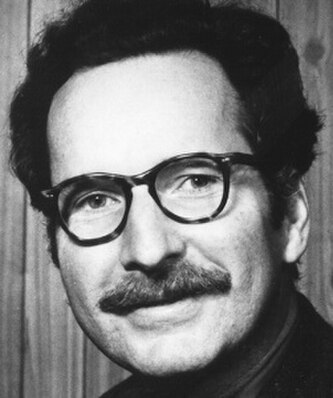


About Ernest Becker
Ernest Becker (27 September 1924 – 6 March 1974) was an American cultural anthropologist and interdisciplinary thinker, noted for his 1974 Pulitzer Prize-winning book, The Denial of Death.
Best Ernest Becker Quotes
Shortest
Earliest
Explore our curated collection of the most famous and impactful Ernest Becker quotes.
“[We are] gods with anuses.”
“All religions fall far short of their own ideals.”
“It is fateful and ironic how the lie we need in order to live dooms us to a life that is never really ours.”
“Man cannot endure his own littleness unless he can translate it into meaningfulness on the largest possible level.”
“Beyond a given point man is not helped by more "knowing", but only by living and doing in a partly self-forgetful way.”

“Better guilt than the terrible burden of freedom and responsibility,; especially when the choice comes too late in life for one to be able to start over again.”

“No wonder that historically art and psychosis have had such an intimate relationship, that the road to creativity passes so close to the madhouse and often detours or ends there.”

“The irony of man's condition is that the deepest need is to be free of the anxiety of death and annihilation; but it is life itself which awakens it, and so we must shrink from being fully alive.”
“The key to the creative type is that he is separated out of the common pool of shared meanings. There is something in his life experience that makes him take in the world as a problem; as a result he has to make personal sense out of it.”

“With the truth, one cannot live. To be able to live one needs illusions, not only outer illusions such as art, religion, philosophy, science and love afford, but inner illusions which first condition the outer [i.e., a secure sense of one’s active powers, and of being able to count on the powers of others].”
“Everything cultural is fabricated and given meaning by the mind, a meaning that was not given by physical nature. Culture is in this sense “supernatural,” and all systematizations of culture have in their end the same goal: to raise men above nature to assure them that in some ways their lives count more than merely physical things count.”
“In the mysterious way in which life is given to us in evolution on this planet, it pushes in the direction of its own expansion. We don’t understand it simply because we don’t know the purpose of creation; we only feel life straining in ourselves and see it thrashing others about as they devour each other. Life seeks to expand in an unknown direction for unknown reasons.”

“I have reached far beyond my competence and have probably secured for good a reputation for flamboyant gestures. But the times still crowd me and give me no rest, and I see no way to avoid ambitious synthetic attempts; either we get some kind of grip on the accumulation of thought or we continue to wallow helplessly, to starve amidst plenty. So I gamble with science and write.”
“Our heroic projects that are aimed at destroying evil have the paradoxical effect of bringing more evil into the world. Human conflicts are life and death struggles—my gods against your gods, my immortality project against your immortality project. The root of humanly caused evil is not man’s animal nature, not territorial aggression, or innate selfishness, but our need to gain self-esteem, deny our mortality, and achieve a heroic self-image.”

“It was Adler who saw that low self-esteem was the central problem of mental illness. When does the person have the most trouble with his self-esteem? Precisely when his heroic transcendence of his fate is most in doubt, when he doubts his own immortality, the abiding value of his life; when he is not convinced that his having lived really makes any cosmic difference. From this point of view we might well say that mental illness represents styles of bogging-down in the denial of creatureliness.”

“Existence, for all organismic life, is a constant struggle to feed—a struggle to incorporate whatever other organisms they can fit into their mouths and press down their gullets without choking. Seen in these stark terms, life on this planet is a gory spectacle, a science-fiction nightmare in which digestive tracts fitted with teeth at one end are tearing away at whatever flesh they can reach, and at the other end are piling up the fuming waste excrement as they move along in search of more flesh.”

“What does it mean to be a self-conscious animal? The idea is ludicrous, if it is not monstrous. It means to know that one is food for worms. This is the terror: to have emerged from nothing, to have a name, consciousness of self, deep inner feelings, an excruciating inner yearning for life and self-expression—and with all this yet to die. It seems like a hoax, which is why one type of cultural man rebels openly against the idea of God. What kind of deity would create such complex and fancy worm food?”
“The characteristics the modern mind prides itself on are precisely those of madness. There is no one more logical than the lunatic, more concerned with the minutiae of cause and effect. Madmen are the greatest reasoners we know, and that trait is one of the accompaniments of their undoing. All their vital processes are shrunken into the mind. What is the one thing they lack that sane men possess? The ability to be careless, to disregard appearances, to relax and laugh at the world. They can’t unbend, can’t gamble their whole existence, as did Pascal, on a fanciful wager. They can’t do what religion has always asked: to believe in a justification of their lives that seems absurd.”

“Maslow was too broad-minded and sober to imagine that being-cognition did not have an underside; but he didn’t go far enough toward pointing out what a dangerous underside it was—that it could undermine one’s whole position in the world. It can’t be overstressed, one final time, that to see the world as it really is is devastating and terrifying. It achieves the very result that the child has painfully built his character over the years in order to avoid: it makes routine, automatic, secure, self-confident activity impossible. It makes thoughtless living in the world of men an impossibility. It places a trembling animal at the mercy of the entire cosmos and the problem of the meaning of it.”

“We have become victims of our own art. We touch people on the outsides of their bodies, and they us, but we cannot get at their insides and cannot reveal our insides to them. This is one of the great tragedies of our interiority—it is utterly personal and unrevealable. Often we want to say something unusually intimate to a spouse, a parent, a friend, communicate something of how we are really feeling about a sunset, who we really feel we are—only to fall strangely and miserably flat. Once in a great while we succeed, sometimes more with one person, less or never with others. But the occasional breakthrough only proves the rule. You reach out with a disclosure, fail, and fall back bitterly into yourself.”
“What I have tried to do in this brief introduction is to suggest that the problem of heroics is the central one of human life, that it goes deeper into human nature than anything else because it is based on organismic narcissism and on the child’s need for self-esteem as the condition for his life. Society itself is a codified hero system, which means that society everywhere is a living myth of the significance of human life, a defiant creation of meaning. Every society thus is a “religion” whether it thinks so or not: Soviet “religion” and Maoist “religion” are as truly religious as are scientific and consumer “religion,” no matter how much they may try to disguise themselves by omitting religious and spiritual ideas from their lives.”

“Yet, at the same time, as the Eastern sages also knew, man is a worm and food for worms. This is the paradox: he is out of nature and hopelessly in it; he is dual, up in the stars and yet housed in a heart-pumping, breath-gasping body that once belonged to a fish and still carries the gill-marks to prove it. His body is a material fleshy casing that is alien to him in many ways—the strangest and most repugnant way being that it aches and bleeds and will decay and die. Man is literally split in two: he has an awareness of his own splendid uniqueness in that he sticks out of nature with a towering majesty, and yet he goes back into the ground a few feet in order blindly and dumbly to rot and disappear forever. It is a terrifying dilemma to be in and to have to live with.”

“Freud never abandoned his views because they were correct in their elemental suggestiveness about the human condition—but not quite in the sense that he thought, or rather, not in the framework which he offered. Today we realize that all the talk about blood and excrement, sex and guilt, is true not because of urges to patricide and incest and fears of actual physical castration, but because all these things reflect man’s horror of his own basic animal condition, a condition that he cannot—especially as a child—understand and a condition that—as an adult—he cannot accept. The guilt that he feels over bodily processes and urges is “pure” guilt: guilt as inhibition, as determinism, as smallness and boundness. It grows out of the constraint of the basic animal condition, the incomprehensible mystery of the body and the world.”
Ernest Becker Quotes by Topic
Find exactly what you are looking for by browsing this categorized list of Ernest Becker quotes by topic.
Ernest Becker on Philosophical pessimism 10 quotes
“Beyond a given point man is not helped by more "knowing", but only by living and doing in a partly self-forgetful way.”

Ernest Becker on Wild animal suffering 2 quotes
“Existence, for all organismic life, is a constant struggle to feed—a struggle to incorporate whatever other organisms they can fit into their mouths and press down their gullets without choking. Seen in these stark terms, life on this planet is a gory spectacle, a science-fiction nightmare in which digestive tracts fitted with teeth at one end are tearing away at whatever flesh they can reach, and at the other end are piling up the fuming waste excrement as they move along in search of more flesh.”

Ernest Becker on Contradiction
“...Erich Fromm wondered why most people did not become insane in the face of the existential contradiction between a symbolic self, that seems to give man infinite worth in a timeless scheme of things, and a body that is worth about 98¢.”
Quotes About Ernest Becker
Gain deeper perspective through quotes about Ernest Becker from others.
Sam Keen on Ernest Becker

Jeff Schimel on Ernest Becker 2 quotes
“Most animals experience fear only when faced with an imminent threat. However, because humans are born helpless and dependent with the ability to be self-aware and think about the future, from early childhood on, humans have a unique proneness to anxiety in the absence of an imminent threat. Becker saw this anxiety as ultimately existential and deriving from the conflict between survival desires and the reality of being a little kid that can be crushed in an instant without the protection of adult caregivers. Stephen Jay Gould notes that this knowledge of vulnerability and mortality may be the most important human spandrel, an inadvertent by-product of the evolution of the frontal lobes of the brain. This by-product creates the problem of the ever-present potential for anxiety. And anxiety often interferes with effective thought and action.”
Jeff Schimel et al. on Ernest Becker 2 quotes
“The crux of the terror management answer to the question, "Why do people need self-esteem?" is that self-esteem functions to shelter people from deeply rooted anxiety inherent in the human condition. Self-esteem is a protective shield designed to control the potential for terror that results from awareness of the horrifying possibility that we humans are merely transient animals groping to survive in a meaningless universe, destined only to die and decay. From this perspective, then, each individual human’s name and identity, family and social identifications, goals and aspirations, occupation and title, are humanly created adornments draped over an animal that, in the cosmic scheme of things, may be no more significant or enduring than any individual potato, pineapple, or porcupine. But it is this elaborate drapery that provides us with the fortitude to carry on despite the uniquely human awareness of our mortal fate.”
About Ernest Becker
Ernest Becker (27 September 1924 – 6 March 1974) was an American cultural anthropologist and interdisciplinary thinker, noted for his 1974 Pulitzer Prize-winning book, The Denial of Death.
QuotesCosmos Cross-Civilizational Archive
Explore Related Wisdom Pillars, Worldviews & Canonical Works
Discover how humanity's greatest philosophers, sacred scriptures, and literary masterpieces address the core questions of existence.
30 Wisdom Pillars
22 Worldviews & Traditions
Canonical Books & Scriptures