Link Copied!
Eric Kandel Quotes (1929-)


About Eric Kandel
Eric Richard Kandel (born November 7, 1929) is an Austrian-American neuropsychiatrist and recipient of the 2000 Nobel Prize in Physiology or Medicine, shared with Arvid Carlsson and Paul Greengard. His research entails the physiological basis of memory storage in neurons.
Best Eric Kandel Quotes
Shortest
Earliest
Explore our curated collection of the most famous and impactful Eric Kandel quotes.
“Nothing is more stimulating for self-education than working in a new area.”
“Science may explain aspects of art but it will not replace the inspiration that art evokes...”

“The function of the modern artist was not to convey beauty, but to convey new truths.”
“What biological processes enable me to review my own history with such emotional vividness?”

“The history of Austrian culture and scholarship in the modern era largely paralleled the history of Austrian Jewry.”

“My hope is that the difference in the three generations' attitudes may signal a lessening of anti-Semitism in Austria.”

“The intellectual life of turn-of-the-century Vienna is in my blood: my heart beats in three-quarter time.”

“The firing of individual nerve cells involved in perceptual and motor processing is modified by attention and decision making.”

“One of the characteristic features of Viennese life at this time was the continual, easy interaction of artists, writers, and thinkers with scientists.”

“We did not realize that the hippocampus is concerned with perception of the environment and therefore represents multisensory experience...”
“Exceptionally good memory exhibited by some people may stem from genetic differences in CREB-2 that limit the activity of this repressor protein in relation to CREB-1.”

“It is much more meaningful and enjoyable to read the scientific literature about experiments you are involved in yourself than to read about science in the abstract.”

“Each sensory system first analyzes and deconstructs, then restructures the raw, incoming information to its own built-in connections and rules—shades of Immanuel Kant.”
“We now understand that every mental state and every mental disorder is a disorder of brain function. Treatments work by altering the structure and function of the brain.”
“The overarching ideas that have influenced my work and fueled my interest in conscious and unconscious memory derive from a perspective on mind that psychiatry and psychoanalysis opened up for me.”

“The fact that a gene must be switched on to form a long-term memory shows clearly that genes are not simply determinants of behavior but are also responsive to environmental stimulation, such as learning.”
“The Modernist reaction to the Enlightenment came in the aftermath of the Industrial Revolution, whose brutalizing effects revealed that modern life had not become... mathematically perfect...”
“Aspects of visual perception—motion, depth, form, and color—are segregated from one another and conveyed in separate pathways in the brain, where they are brought together and coordinated into a unified perception.”
“The same CREB switch is important for many forms of implicit memory in a variety of other species, from bees to mice to people.”
“Having been trained in history and the humanities, where one learns early on how depressing life can be, I am delighted to have ultimately switched to biology, where a delusional optimism still abounds.”
“What strategy does the brain use to read itself out? That question, which is central to the unitary nature of conscious experience, remains one of the many unresolved mysteries of the new science of mind.”

Eric Kandel Quotes by Topic
Find exactly what you are looking for by browsing this categorized list of Eric Kandel quotes by topic.
Eric Kandel on Age of Enlightenment 2 quotes
“The Modernist reaction to the Enlightenment came in the aftermath of the Industrial Revolution, whose brutalizing effects revealed that modern life had not become... mathematically perfect...”

Eric Kandel on Unification in science and mathematics 2 quotes
“Giacomo Rizzolatti... calls these "mirror neurons" and suggests that they provide the first insight into imitation, identification, empathy, and possibly the ability to mime vocalization—the mental processes intrinsic to human interaction. Vilayanur Ramachandran has found evidence of comparable neurons in the premotor cortex of people. ...one can see a whole new area of biology opening up... that can give us a sense of what makes us social, communicating beings. An ambitious undertaking of this sort might... teach us something about the factors that give rise to tribalism, which is so often associated with fear, hatred, and intolerance of outsiders.”
Eric Kandel on Mind–body problem 2 quotes
“Prior to Brenda Milner's discoveries, many behaviorists and some cognitive psychologists had followed the lead of Freud and Skinner and abandoned biology as a useful guide to the study of learning and memory. They had done so not because they were dualists, like Descartes, but because they thought that biology was unlikely to play a significant role in studies of learning in the near future. Indeed, Lashley's influential work made it seem that the biology of learning was essentially incomprehensible. ...Milner's work changed all that. Her discoveries that certain regions of the brain are necessary for some forms of memory provided the first evidence of where different memories are processed and stored. But the question of how memory is stored remained unanswered, and it fascinated me.”
Eric Kandel on Art
“The function of the modern artist was not to convey beauty, but to convey new truths.”
Eric Kandel on Truth
“The function of the modern artist was not to convey beauty, but to convey new truths.”

Eric Kandel on Industrial Revolution
“The Modernist reaction to the Enlightenment came in the aftermath of the Industrial Revolution, whose brutalizing effects revealed that modern life had not become... mathematically perfect...”

Eric Kandel on Memory
“For all of us, explicit memory makes it possible to leap across space and time and conjure up events and emotional states that have vanished into the past yet somehow continue to live in our minds.”
Eric Kandel on Attention
Eric Kandel on Science
“The life of a biological scientist in the United States is a life of discussion and debate—it is the Talmudic tradition writ large. ...The egalitarian structure of American science encourages this camaraderie. ...this would not—could not—have taken place in the Austria, the Germany, the France, or perhaps even the England of 1955.”

Eric Kandel on Egalitarianism
“The life of a biological scientist in the United States is a life of discussion and debate—it is the Talmudic tradition writ large. ...The egalitarian structure of American science encourages this camaraderie. ...this would not—could not—have taken place in the Austria, the Germany, the France, or perhaps even the England of 1955.”

Eric Kandel on Mental process
“In the near future, neurobiology will address a matter of more general and fundamental importance: the biology of human mental processes. ...Psychology and psychiatry can illuminate and define for biology the mental functions that need to be studied if we are to have a meaningful and sophisticated understanding of the biology of the human mind.”
Eric Kandel on History of science
“The Copernican revolution... revealed that the earth is not the center of the universe... The second, the Darwinian revolution... revealed that we are not created divinely or uniquely but instead evolved from simpler animals by a process of natural selection. The third great revolution, the Freudian revolution of Vienna 1900, revealed that we do not consciously control our own actions but are instead driven by unconscious motives. This... later led to the idea that human creativity... stems from conscious access to underlying, unconscious forces.”

Eric Kandel on Consciousness
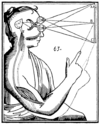
“René Descartes developed the idea that human beings have a dual nature: they have a body... of material substance, and a mind, which derives from the spiritual nature of the soul. ... It is remarkable to reflect that these seventeenth century ideas were still current in the 1980s. Karl Popper... and John Eccles... espoused dualism all their lives. They agreed with Aquinas that the soul is immortal and independent of the brain. Gilbert Ryle... referred to the notion of the soul as "the ghost in the machine." Today, most philosophers of mind agree that what we call consciousness derives from the physical brain, but some disagree with Crick as to whether it can ever be approached scientifically. A few, such as Colin McGinn, believe that consciousness cannot be studied... At the other extreme, philosophers such as Daniel Dennett deny that there is any problem at all. Dennett argues much as... John Hughlings Jackson did... that consciousness is not a distinct operation of the brain; rather it is a combined result of computational workings of higher-order areas of the brain... Philosophers such as John Searle and Thomas Nagel take a middle position, holding that consciousness is a discrete set of biological processes... very complex and... more than the sum of their parts.”

What Eric Kandel Said About Others
Discover personal opinions Eric Kandel shared regarding contemporaries.
Eric Kandel on Jacques Monod 4 quotes
“Jacques Monod... published a paper entitled "Genetic Regulatory Mechanisms in the Synthesis of Protein." Using bacteria as a model system, they made the remarkable discovery that genes can be regulated—that is, they can be switched on and off like a water faucet.”

Eric Kandel on Sigmund Freud 3 quotes
“The third great revolution, the Freudian revolution of Vienna 1900, revealed that we do not consciously control our own actions but are instead driven by unconscious motives. This... later led to the idea that human creativity... stems from conscious access to underlying, unconscious forces.”

Eric Kandel on Immanuel Kant 2 quotes
“Each sensory system first analyzes and deconstructs, then restructures the raw, incoming information to its own built-in connections and rules—shades of Immanuel Kant.”

Eric Kandel on Ludwig van Beethoven
“A brain scan may reveal the neural signs of depression, but a Beethoven symphony reveals what that depression feels like. Both perspectives are necessary if we are to fully grasp the nature of mind, yet they are rarely brought together.”
Eric Kandel on Friedrich Nietzsche
“The realization that our mental functioning is largely irrational was arrived at by several thinkers at the same time, including Friedrich Nietzsche, ... Freud, who was much influenced by both Darwin and Nietzsche ... was its most profound and articulate exponent.”

Eric Kandel on Leonardo da Vinci
“Much as Leonardo da Vinci and other Renaissance artists used the revelations of human anatomy to help them depict the body more accurately and compellingly, so, too, many contemporary artists may create new forms of representation in response to revelations about how the brain works.”

Quotes About Eric Kandel
Gain deeper perspective through quotes about Eric Kandel from others.
Kelly Lambert on Eric Kandel 2 quotes
“In the early 1960s, Kandel made the bold decision to conduct research on an unlikely animal, the large sea snail Aplysia californica. Kandel found this invertebrate attractive for neuroscience research because it has fewer and larger neurons than more traditional laboratory animals. This simple neural system would subsequently serve as an invaluable model for understanding the cellular basis of learning.”
About Eric Kandel
Eric Richard Kandel (born November 7, 1929) is an Austrian-American neuropsychiatrist and recipient of the 2000 Nobel Prize in Physiology or Medicine, shared with Arvid Carlsson and Paul Greengard. His research entails the physiological basis of memory storage in neurons.
QuotesCosmos Cross-Civilizational Archive
Explore Related Wisdom Pillars, Worldviews & Canonical Works
Discover how humanity's greatest philosophers, sacred scriptures, and literary masterpieces address the core questions of existence.
30 Wisdom Pillars
22 Worldviews & Traditions
Canonical Books & Scriptures