Link Copied!
Eckhart Tolle Quotes (1948-)
Writer





















































-100px.jpg)









-100px.jpg)

















About Eckhart Tolle
Eckhart Tolle (born Ulrich Leonard Tölle on 16 February 1948) is a German / Canadian spiritual teacher, motivational speaker, and writer.
Best Eckhart Tolle Quotes
Shortest
Earliest
Explore our curated collection of the most famous and impactful Eckhart Tolle quotes.
“Presence is a state of inner spaciousness.”

“What you react to in others, you strengthen in yourself.”
“The now is inseparable from who you are at the deepest level.”
“Nonresistance is the key to the greatest power in the universe.”


“Right now we are being given the experience we need to raise our consciousness.”

“When you accept everything for what it is without labels you are outside of your ego.”
“Suffering has a noble purpose: the evolution of the consciousness and the burning up of the ego.”

“When you don't cover up the world with words and labels, a sense of the miraculous returns to your life.”
“All the things that truly matter - beauty, love, creativity, joy, inner peace - arise from beyond the mind.”

“Being spiritual has nothing to do with what you believe and everything to do with your state of consciousness.”
“What a liberation to realize that the "voice in my head" is not who I am. Who am I then? The one who sees that.”
“How wonderful to go beyond wanting and fearing in your relationships. Love does not want or fear anything. (Ch 8)”
“To recognize one’s own insanity, is of course, the arising of sanity, the beginning of healing and transcendence.”
“To be free of time is to be free of the psychological need of past for your identity and future for your fulfillment.”
“Every outer purpose is doomed to “fail” sooner or later, simply because it is subject to the law of impermanence of all things.”


“Whatever you accept completely will take you to peace, including the acceptance that you cannot accept, that you are in resistance. (Ch 6)”

“The habitual and reactive “no” strengthens the ego. “Yes” weakens it. Your form identity, the ego, cannot survive surrender. (Ch 6)”
“The greatest achievement of humanity is not its works of art, science, or technology, but the recognition of its own dysfunction, its own madness.”

“The more shared past there is in a relationship, the more present you need to be; otherwise, you will be forced to relive the past again and again.”

“Listen to people's stories and they all could be entitled "Why I Cannot Be At Peace Now" The ego doesn't know that your only opportunity for being at peace is now.”

“How do you let go of attachment to things? Don't even try. It's impossible. Attachment to things drops away by itself when you no longer seek to find yourself in them.”
“Because we live in such a mind-dominated culture, most modern art, architecture, music, and literature are devoid of beauty, of inner essence, with very few exceptions.”

“...the ego's need to be periodically in conflict with something or someone in order to strengthen its sense of separation between me and the other, without which it cannot survive. (Ch 8)”

“Microorganisms are at work. Molecules are rearranging themselves. So death isn’t to be found anywhere. There is only the metamorphosis of life forms. What can you learn from this? (Ch 9)”

“When you listen to a thought, you are aware not only of the thought but also of yourself as the witness of the thought. A new dimension of consciousness has come in. p. 17”
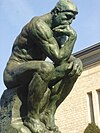
“The mind is incessantly looking not only for food for thought; it is looking for food for its identity, its sense of self. This is how the ego comes into existence and continuously re-creates itself.”

“Meister Eckhart, the thirteenth-century spiritual teacher, summed it all up beautifully: "Time is what keeps the light from reaching us. There is no greater obstacle to God than time."”
“The reason why you don't put your hand in the fire is not because of fear, it's because you know you'll get burned. You don't need fear to avoid an unnecessary danger, just a minimum of intelligence and common sense.”

“If her past were your past, her pain your pain, her level of consciousness your level of consciousness, you would think and act exactly as she does. With this realization comes forgiveness, compassion, peace. (Ch 8)”
“The interconnectedness of all things: Buddhists have always known it and physicists now confirm it. Nothing that happens is an isolated event, it only appears to be. The more we judge and label it, the more we isolate it.”
“How quick we are to form an opinion of a person, to come to a conclusion about them. It is satisfying to the egoic mind to label another human being, to give them a conceptual identity, to pronounce righteous judgment upon them.”
“Wherever you look, you will find death as well as life. Upon closer scrutiny, however, you will discover that the decomposing tree trunk and rotting leaves not only give birth to new life, but are full of life themselves. (Ch 9)”

“Collective human consciousness and life on our planet are intrinsically connected. “A new heaven” is the emergence of a transformed state of human consciousness, and “a new earth” is its reflection in the physical realm.”
“The wholeness of life becomes fragmented through our thinking. Yet the totality of life has brought this event about. It is part of the web of interconnectedness that is the cosmos. This means whatever is could not be otherwise. (Ch 10)”
“When you walk though a forest that has not been tamed and interfered with by man, you will see not only abundant life around you, but you will also encounter fallen trees and decaying trunks, rotting leaves and decomposing matter at every step. (Ch 9)”
“We depend on nature not only for our physical survival. We also need nature to show us the way home, the way out of the prison of our own minds. We got lost in doing, thinking, remembering, anticipating–lost in a maze of complexity and a world of problems.”

“In the distant past, this recognition already came to a few individuals. A man called Gautama Siddhartha, who lived 2,600 years ago in India, was perhaps the first who saw it with absolute clarity. Later the title Buddha was conferred upon him. Buddha means “the awakened one.””
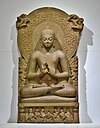
“This book itself is a transformational device that has come out of the arising new consciousness. The ideas and concepts presented here may be important, but they are secondary. They are no more than signposts pointing toward awakening. As you read, a shift takes place within you.”
“The Now is also central to the teaching of Sufism, the mystical branch of Islam. Sufis have a saying: "The Sufi is the son of time present." And Rumi, the great poet and teacher of Sufism, declares: "Past and future veil God from our sight; burn up both of them with fire."”

“We could say that the totality, life wants the sapling to become a tree, but the sapling doesn't see itself as separate from life and so wants nothing for itself. It is one with what life wants. That's why it isn't worried or stressed. And, if it has to die prematurely, it dies with ease.....”
“How often each day, if you were to verbalize your inner reality at that moment, would you have to say, “I don't want to be where I am?” What does it feel like when you don't want to be where you are–the traffic jam, your place of work, the airport lounge, the people you are with? (Ch 6)”
“Whenever you bring your attention to anything natural, anything that has come into existence without human intervention, you step out of the prison of conceptualized thinking and, to some extent, participate in the state of connectedness with Being in which everything natural still exists. (Ch 7)”
“Can you see that this “I” is fleeting, a temporary formation, like a wave pattern on the surface of the water? Who is it that sees this? Who is it that is aware of the fleetingness of your physical and psychological form? I am. This is the deeper “I” that has nothing to do with past and future.”
“In most cases, we cannot begin to understand what role a seemingly senseless event may have within the totality of the cosmos but recognizing its inevitability within the vastness of the whole can be the beginning of an inner acceptance of what is and thus a realignment with the wholeness of life. (Ch 10)”
“The primary cause of unhappiness is never the situation but your thoughts about it. Be aware of the thoughts you are thinking. Separate them from the situation, which is always neutral. There is the situation or the fact, and here are my thoughts about it. Life isn't as serious as the mind makes it out to be.”
“Something of its essence then transmits itself to you. You can sense how still it is, and in doing so the same stillness arises within you. You sense how deeply it rests in Being–completely at one with what it is and where it is. In realizing this, you too come to a place of rest deep within yourself. (Ch 7)”
“Finding that dimension frees you and the world from the suffering you inflict on yourself and others when the mind-made “little me” is all you know and runs your life. Love, joy, creative expansion, and lasting inner peace cannot come into your life except through that unconditioned dimension of consciousness. (Ch 2)”

“Whenever you meet anyone, no matter how briefly, do you acknowledge their being by giving them your full attention, or are you reducing them to a means to an end, a mere function or role. What is the quality of your relationship with the cashier at the supermarket, the parking attendant, the repair man, the customer? (Ch 8)”

“The good news is that you can free yourself from your mind. This is the only true liberation. You can take the first step right now.... You'll soon realize: there is the voice, and here I am listening to it, watching it. This I am realization, this sense of your own presence, is not a thought. It arises from beyond the mind.”

“You do not become good by trying to be good, but by finding the goodness that is already within you and allowing that goodness to emerge. If peace is really what you want, then choose peace. The moment that judgement stops through acceptance of what it is, you are free of the mind. You have made room for love, for joy, for peace.”
“If there is no joy, ease, or lightness in what you are doing, it does not necessarily mean that you need to change what you are doing. It may be sufficient to change the how. “How” is always more important than “what.” See if you can give much more attention to the doing than to the result that you want to achieve through it.”

“It is true, of course, that some places are good places to walk out of–and sometimes that may well be the most appropriate thing for you to do. In many cases, however, walking out is not an option. In all those cases, the “I don't want to be here” is not only useless but also dysfunctional. It makes you and others unhappy. (Ch 6)”
“The Truth is far more all-encompassing than the mind could ever comprehend. No thought can encapsulate the Truth. At best, it can point to it. For example, it can say: “All things are intrinsically one.” That is a pointer, not an explanation. Understanding these words means feeling deep within you the truth to which they point. (Ch 2)”

“When you think or speak about yourself, when you say, “I,” what you usually refer to is “me and my story.” This is the “I” of your likes and dislikes, fears and desires, the “I” that is never satisfied for long. It is a mind-made sense of who you are, conditioned by the past and seeking to find its fulfillment in the future.”
“Most people's lives are run by desire and fear. Desire is the need to add something to yourself in order to be yourself more fully. All fear is the fear of losing something, and thereby become diminished and be less. These two movements obscure the fact that being cannot be given or taken away. Being in its fullness is already within you, now. (Ch 5)”
“The greater part of human pain is unnecessary. It is self created as long as the unobserved mind runs your life....The pain that you create now is always some form of non acceptance, some form of unconscious resistance to what is. On the level of thought, the resistance is some form of judgment. On the emotional level, it is some form of negativity. p. 25”
“Confusion, anger, depression, violence, and conflict arise when humans forget who they are. Yet how easy it is to remember the truth and thus return home: I am not my thoughts, emotions, sense perceptions, and experiences. I am not the content of my life. I am Life. I am the space in which all things happen. I am consciousness. I am the Now. I Am. (Ch 4)”
“Do you really need to mentally label every sense perception and experience? Do you really need to have a reactive like/dislike relationship with life where you are in almost continuous conflict with situations and people? Or is that just a deep seated mental habit that can be broken? Not by doing anything, but by allowing this moment to be as it is. (Ch 7)”
“The more unconscious individuals, groups, or nations are, the more likely it is that egoic pathology will assume the form of physical violence. Violence is a primitive but still very widespread way in which the ego attempts to assert itself, to prove itself right or another wrong. With very unconscious people, arguments can easily lead to physical violence.”
“Whenever you are able, have a “look” inside yourself to see whether you are unconsciously creating conflict between the inner and the outer, between your external circumstances at that moment–where you are, who you are with, or what you are doing–and your thoughts and feelings. Can you feel how painful it is to internally stand in opposition to what is?”
“People believe themselves to be dependent on what happens to them for their happiness. They don't realize that what happens is the most unstable thing in the universe. It changes constantly. They look upon the present moment as either marred by something that has happened and shouldn't have or as deficient because of something that has not happened but should have.”
“A true spiritual teacher does not have anything to teach in the conventional sense of the word, does not have anything to give or add to you, such as new information, beliefs, or rules of conduct. The only function of such a teacher is to help you remove that which separates you from the truth of who you already are and what you already know in the depth of your being.”
“The great Zen master Rinzai, in order to take his students' attention away from time, would often raise his finger and slowly ask: "What, at this moment, is lacking?" A powerful question that does not require an answer on the level of the mind. It is designed to take your attention deeply into the Now. A similar question in the Zen tradition is this: "If not now, when?" p. 38”

“I have little use for the past and rarely think about it; however, I would briefly like to tell you how I came to be a spiritual teacher and how this book came into existence. Until my thirtieth year, I lived in a state of almost continuous anxiety interspersed with periods of suicidal depression. It feels now as if I am talking about some past lifetime or somebody else's life. Introduction”
“There is an aliveness in you that you can feel with your Being, not just in the head. Every cell is alive in that presence in which you don't need to think. Yet, in that state, if thought is required for some practical purpose, it is there. The mind can still operate, and it operated beautifully when the greater intelligence that you are uses it and expresses itself through it. (Ch 2)”

“By knowing yourself as the awareness in which phenomenal existence happens, you become free of dependency on phenomena and free of self seeking in situations, places, and conditions. In other words, what happens or doesn't happen is not that important anymore. Things lose their heaviness, their seriousness. A playfulness comes into your life. You recognize this world as a cosmic dance, the dance of form. (Ch 5)”

“If your destination, or the steps you are going to take in the future, take up so much of your attention that they become more important to you than the step you are taking now, then you completely miss the journey’s inner purpose, which has nothing to do with where you are going or what you are doing, but everything to do with how. It has nothing to do with future but everything to do with the quality of your consciousness at this moment.”

“Don't seek happiness. If you seek it, you won't find it, because seeking is the antithesis of happiness."Don't seek happiness. If you seek it, you won't find it, because seeking is the antithesis of happiness. Happiness is ever elusive, but freedom from unhappiness is attainable now, by facing what is rather than making up stories about it. Unhappiness covers up your natural state of wellbeing and inner peace, the source of true happiness." c.p60.”
“Do you need more knowledge? Is more information going to save the world, or faster computers, more scientific or intellectual analysis? Is it not wisdom that humanity needs most at this time? But what is wisdom and where is it to be found? Wisdom comes with the ability to be still. Just look and just listen. No more is needed. Being still, looking, and listening activates the non-conceptual intelligence within you. Let stillness direct your words and actions. (Ch 1)”

“Where there is anger, there is always pain underneath. Or when a dark mood comes upon you and you start getting into a negative mind-pattern and thinking how dreadful your life is, your thinking has become aligned with the pain-body, and you have become unconscious and vulnerable to the pain-body's attack. "Unconscious," the way that I use the word here, means to be identified with some mental or emotional pattern. It implies a complete absence of the watcher. p. 29-30”
“All the misery on the planet arises due to a personalized sense of me or us. That covers up the essence of who you are. When you are unaware of that inner essence, in the end, you always create misery. It's as simple as that. When you don't know who you are, you create a mind-made self as a substitute for your beautiful, divine being and cling to that fearful and needy self. Protecting and enhancing that false sense of self then becomes your primary motivating force. (Ch 5)”

“The possibility of such a transformation has been the central message of the great wisdom teachings of humankind. The messengers—Buddha, Jesus, and others, not all of them known—were humanity's early flowers. They were precursors, rare and precious beings. A widespread flowering was not yet possible at that time, and their message became largely misunderstood and often greatly distorted. It certainly did not transform human behavior, except in a small minority of people.”

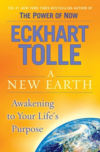
“The inspiration for the title of this book came from a Bible prophecy that seems more applicable now than at any other time in human history. It occurs in both the Old and the New Testament and speaks of the collapse of the existing world order and the arising of “a new heaven and a new earth." We need to understand here that heaven is not a location but refers to the inner realm of consciousness. This is the esoteric meaning of the word, and this is also its meaning in the teachings of Jesus.”
“The human condition: Lost in thought Most people spend their entire life imprisoned within the confines of their own thoughts. They never go beyond a narrow, mind-made, personalized sense of self that is conditioned by the past. In you, as in each human being, there is a dimension of consciousness far deeper than thought. It is the very essence of who you are. We may call it presence, awareness, the unconditioned consciousness. In the ancient teachings, it is the Christ within, or your Buddha nature.”
“To let go of judgment does not mean that you don’t see what they do. It means that you recognize their behavior as a form of conditioning, and you see it and accept it as that. You don’t construct an identity out of it for that person.
That liberates you as well as the other person from identification with conditioning, with form, with mind. That liberates you as well as the other person from identification with conditioning, with form, with mind. The ego then no longer runs your relationships. (Ch 8)”
That liberates you as well as the other person from identification with conditioning, with form, with mind. That liberates you as well as the other person from identification with conditioning, with form, with mind. The ego then no longer runs your relationships. (Ch 8)”
“Teachings that pointed the way beyond the dysfunction of the human mind, the way out of the collective insanity, were distorted and became themselves part of the insanity.
And so religions, to a large extent, became divisive rather than unifying forces. Instead of bringing about an ending of violence and hatred through a realization of the fundamental oneness of all life, they brought more violence and hatred, more divisions between people as well as between different religions and even within the same religion.”
And so religions, to a large extent, became divisive rather than unifying forces. Instead of bringing about an ending of violence and hatred through a realization of the fundamental oneness of all life, they brought more violence and hatred, more divisions between people as well as between different religions and even within the same religion.”
“Just as the ancient sutras, the writings contained within this book are sacred and have come out of a state of consciousness we may call stillness. Unlike those ancient sutras, however, they don’t belong to any one religion or spiritual tradition, but are immediately accessible to the whole of humanity. There is also an added sense of urgency here. The transformation of human consciousness is no longer a luxury, so to speak, available only to a few isolated individuals, but a necessity if humankind is not to destroy itself. (intro)”
“Every human being has been conditioned to think and behave in certain ways– conditioned genetically as well as by their childhood experiences and their cultural environment. That is not who they are, but that is who they appear to be. When you pronounce judgment upon someone, you confuse those conditioned mind patterns with who they are. To do that is in itself a deeply conditioned and unconscious pattern. You give them a conceptual identity, and that false identity becomes a prison not only for the other person but also for yourself. (Ch 8)”

“On the surface it seems that the present moment is only one of many, many moments. Each day of your life appears to consist of thousands of moments where different things happen. Yet if you look more deeply, is there not only one moment, ever? Is life ever not this moment? This one moment, now, is the only thing you can never escape from. The one constant factor in your life. No matter what happens. No matter how much your life changes. One thing is certain. Its always now. Since there is no escape from the now, why not welcome it, become friendly with it.”

“Is humanity ready for a transformation of consciousness, an inner flowering so radical and profound that compared to it the flowering of plants, no matter how beautiful, is only a pale reflection? Can human beings lose the density of their conditioned mind structures and become like crystals or precious stones, so to speak, transparent to the light of consciousness? Can they defy the gravitational pull of materialism and materiality and rise above identification with form that keeps the ego in place and condemns them to imprisonment within their own personality?”
“Be the ever-alert guardian of your inner space. You need to be present enough to be able to watch the pain-body directly and feel its energy. It then cannot control your thinking. The moment your thinking is aligned with the energy field of the painbody, you are identified with it and again feeding it with your thoughts....For example, if anger is the predominant energy vibration of the pain-body and you think angry thoughts, dwelling on what someone did to you or what you are going to do to him or her, then you have become unconscious, and the pain-body has become "you."”

“Instead of "watching the thinker," you can also create a gap in the mind stream simply by directing the focus of your attention into the Now. Just become intensely conscious of the present moment. This is a deeply satisfying thing to do. In this way, you draw consciousness away from mind activity and create a gap of no-mind in which you are highly alert and aware but not thinking. This is the essence of meditation. In your everyday life, you can practice this by taking any routine activity that normally is only a means to an end and giving it your fullest attention, so that it becomes an end in itself.”
“As you listen to the thought, you feel a conscious presence - your deeper self - behind or underneath the thought, as it were. The thought then loses its power over you and quickly subsides, because you are no longer energizing the mind through identification with it. This is the beginning of the end of involuntary and compulsive thinking. When a thought subsides, you experience a discontinuity in the mental stream - a gap of "no-mind." At first, the gaps will be short, a few seconds perhaps, but gradually they will become longer. When these gaps occur, you feel a certain stillness and peace inside you.”
“You think that your attention is in the present moment when it's actually taken up completely by time. You cannot be both unhappy and fully present in the Now. What you refer to as your "life" should more accurately be called your "life situation." It is psychological time: past and future. Certain things in the past didn't go the way you wanted them to go. You are still resisting what happened in the past, and now you are resisting what is. Hope is what keeps you going, but hope keeps you focused on the future, and this continued focus perpetuates your denial of the Now and therefore your unhappiness. p. 43”
“Even if the voice is relevant to the situation at hand, it will interpret it in terms of the past. This is because the voice belongs to your conditioned mind, which is the result of all your past history as well as of the collective cultural mind-set you inherited. So you see and judge the present through the eyes of the past and get a totally distorted view of it. It is not uncommon for the voice to be a person's own worst enemy. Many people live with a tormentor in their head that continuously attacks and punishes them and drains them of vital energy. It is the cause of untold misery and unhappiness, as well as of disease.”
“What was the point in continuing to live with this burden of misery? Why carry on with this continuous struggle? I could feel that a deep longing for annihilation, for nonexistence, was now becoming much stronger than the instinctive desire to continue to live. “I cannot live with myself any longer.” This was the thought that kept repeating itself in my mind. Then suddenly I became aware of what a peculiar thought it was. “Am I one or two? If I cannot live with myself, there must be two of me: the ‘I’ and the ‘self’ that ‘I’ cannot live with.” “Maybe,” I thought, “only one of them is real.” Introduction”
“Equating the physical body with "I," the body that is destined to grow old, wither, and die, always leads to suffering. To refrain from identifying with the body doesn't mean that you no longer care for it. If it is strong, beautiful, or vigorous, you can appreciate those attributes—while they last. You can also improve the body's condition through nutrition and exercise. If you don't equate the body with who you are, when beauty fades, vigor diminishes, or the body becomes incapacitated, this will not affect your sense of worth or identity in any way. In fact, as the body begins to weaken, the light of consciousness can shine more easily.”

“The form of this book can be seen as a revival for the present age of the oldest form of recorded spiritual teachings: the sutras of ancient India. Sutras are powerful pointers to the truth in the form of aphorisms or short sayings, with little conceptual elaboration. The Vedas and Upanishads are the early sacred teachings recorded in the form of sutras, as are the words of the Buddha. The sayings and parables of Jesus, too, when taken out of their narrative context, could be regarded as sutras, as well as the profound teachings contained in the Tao Te Ching, the ancient Chinese book of wisdom. The advantage of the sutra form lies in its brevity... (intro)”
“If you come to a spiritual teacher — or this book — looking for stimulating ideas, theories, beliefs, intellectual discussions, then you will be disappointed. This is not a book to be read from cover to cover and then put away. Live with it, pick it up frequently, and more importantly, put it down frequently, or spend more time holding it than reading it. Many readers will feel naturally inclined to stop reading after each entry, to pause, reflect, become still. It is always more helpful and more important to stop reading than to continue reading. Allow the book to do its work, to awaken you from the old grooves of your repetitive and conditioned thinking. (intro)”

“Many things in your life matter but only one thing matters absolutely. It matters whether you succeed or fail in the eyes of the world. It matters whether you are healthy or not healthy, whether you are educated or not educated. It matters whether you are rich or poor. It certainly makes a difference in your life. Yes, all these things matter, relatively speaking. But they don't matter absolutely. There is something that matters more than any of those things and that is finding the essence of who your are beyond that short-lived entity, that short-lived personalized sense of self. You find peace not by rearranging the circumstances of your life but by realizing who you are at the deepest level. (Ch 5)”
“For this companion volume to A New Earth, I selected passages from the original book that felt particularly suitable for inspirational or meditative reading. For this reason I do not recommend that you read this book straight through from cover to cover. It would be far more beneficial to read, at the most, one chapter at a time, stopping at and perhaps rereading whatever passages elicit an inner response. Then let the words sink in and sense the truth to which they point, which is, of course, already within you. It can also be helpful to open the book at random occasionally, read one page or just one passage and let the words point the way to that dimension deep within that is beyond words, beyond thought. The truth to which the words point, the timeless dimension of consciousness, cannot be arrived at through discursive thought and conceptual understanding.”

“When someone goes to the doctor and says, "I hear a voice in my head," he or she will most likely be sent to a psychiatrist. The fact is that, in a very similar way, virtually everyone hears a voice, or several voices, in their head all the time: the involuntary thought processes that you don't realize you have the power to stop. Continuous monologues or dialogues. You have probably come across "mad" people in the street incessantly talking or muttering to themselves. Well, that's not much different from what you and all other "normal" people do, except that you don't do it out loud. The voice comments, speculates, judges, compares, complains, likes, dislikes, and so on. The voice isn't necessarily relevant to the situation you find yourself in at the time; it may be reviving the recent or distant past or rehearsing or imagining possible future situations. Here it often imagines things going wrong and negative outcomes; this is called worry. p. 16”
“Nobody knows the exact figure because records were not kept, but it seems certain that during a three hundred year period between three and five million women were tortured and killed by the “Holy Inquisition,“ an institution founded by the Roman Catholic Church to suppress heresy. This sure ranks together with the Holocaust as one of the darkest chapters in human history. It was enough for a woman to show a love for animals, walk alone in the fields or woods, or gather medicinal plants to be branded a witch, then tortured and burned at the stake. The sacred feminine was declared demonic, and an entire dimension largely disappeared from human experience. Other cultures and religions, such as Judaism, Islam, and even Buddhism, also suppressed the female dimension, although in a less violent way. Women's status was reduced to being child bearers and men's property. Males who denied the feminine even within themselves were now running the world, a world that was totally out of balance. The rest is history or rather a case history of insanity... The female form is less rigidly encapsulated than the male, has greater openness and sensitivity toward other lifeforms, and is more attuned to the natural world... If the balance between male and female energies had not been destroyed on our planet, the ego's growth would have been greatly curtailed. We would not have declared war on nature, and we would not be so completely alienated from our Being.”

Eckhart Tolle Quotes by Topic
Find exactly what you are looking for by browsing this categorized list of Eckhart Tolle quotes by topic.
Eckhart Tolle on Ego 19 quotes
“Because the ego was never as deeply rooted in woman, it is losing its hold on women more quickly than on men.”
Eckhart Tolle on Consciousness 19 quotes
“If a word doesn't work for you anymore, then drop it and replace it with one that does work. If you don't like the word sin, then call it unconsciousness or insanity. That may get you closer to the truth, the reality behind the word, than a long-misused word like sin, and leaves little room for guilt.”
Eckhart Tolle on Enlightenment (spiritual) 18 quotes
“If a word doesn't work for you anymore, then drop it and replace it with one that does work. If you don't like the word sin, then call it unconsciousness or insanity. That may get you closer to the truth, the reality behind the word, than a long-misused word like sin, and leaves little room for guilt.”
-100px.png)
Eckhart Tolle on Depression 16 quotes
“The greater part of human pain is unnecessary. It is self created as long as the unobserved mind runs your life.”

Eckhart Tolle on Mind 16 quotes
“The greater part of human pain is unnecessary. It is self created as long as the unobserved mind runs your life.”
What Eckhart Tolle Said About Others
Discover personal opinions Eckhart Tolle shared regarding contemporaries.
Eckhart Tolle on Buddha 4 quotes
“Spiritual realization is to see clearly that what I perceive, experience, think, or feel is ultimately not who I am, that I cannot find myself in all those things that continuously pass away. The Buddha was probably the first human being to see this clearly, and so anata (no self) became one of the central points of his teaching.”
Eckhart Tolle on Albert Einstein 2 quotes
“This illusory sense of self (the ego) is what Albert Einstein, who had deep insights not only in to the reality of space and time but also into human nature, referred to as "an optical illusion of consciousness."”

Eckhart Tolle on Ramana Maharshi
“Certain teachings at the heart of Hinduism perhaps come closest to seeing this dysfunction as a form of collective mental illness. They call it maya, the veil of delusion. Ramana Maharshi, one of the greatest Indian sages, bluntly states: “The mind is maya.””

Eckhart Tolle on Politicians
“The ego may be clever, but it is not intelligent. Cleverness pursues its own little aims. Intelligence sees the larger whole in which all things are connected. Cleverness is motivated by self interest, and it is extremely shortsighted. Most politicians and businesspeople are clever. Very few are intelligent. Whatever is attained through cleverness is shortlived and always turns out to be eventually self defeating. Cleverness divides; intelligence unites.”

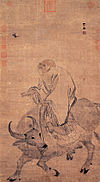
Eckhart Tolle on Laozi
“The greatest achievement of humanity is not its works of art, science, or technology, but the recognition of its own dysfunction, its own madness. In the distant past, this recognition already came to a few individuals. A man called Gautama Siddhartha, who lived 2,600 years ago in India, was perhaps the first who saw it with absolute clarity. Later the title Buddha was conferred upon him. Buddha means “the awakened one.” At about the same time, another of humanity's early awakened teachers emerged in China. His name was Lao Tzu. He left a record of his teaching in the form of one of the most profound spiritual books ever written, the Tao Te Ching. To recognize one's own insanity, is of course, the arising of sanity, the beginning of healing and transcendence.”
About Eckhart Tolle
Eckhart Tolle (born Ulrich Leonard Tölle on 16 February 1948) is a German / Canadian spiritual teacher, motivational speaker, and writer.