Link Copied!
Douglas Hofstadter Quotes (1945-)
Author, Mathematician, Scientist

About Douglas Hofstadter
Douglas Hofstadter (born February 15, 1945) is a mathematician, cognitive scientist, and Pulitzer Prize winning author.
Best Douglas Hofstadter Quotes
Shortest
Earliest
Explore our curated collection of the most famous and impactful Douglas Hofstadter quotes.
“Irrationality is the square root of all evil.”

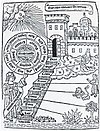
“Reality includes creating every real connection and reference.”

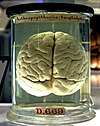
“If the meanings of true and false were switched, this sentence wouldn't be false.”




“The "Strange Loop" phenomenon occurs whenever, by moving upwards (or downwards) through levels of some hierarchial system, we unexpectedly find ourselves right back where we started.”


“The proverbial German phenomenon of the verb-at-the-end about which droll tales of absentminded professors who would begin a sentence, ramble on for an entire lecture, and then finish up by rattling off a string of verbs by which their audience, for whom the stack had long since lost its coherence, would be totally nonplussed, are told, is an excellent example of linguistic recursion.”
“Solomon: Your entry in Wikipedia says that your work has inspired many students to begin careers in computing and artificial intelligence.
Hofstadter: I have no interest in computers. The entry is filled with inaccuracies, and it kind of depresses me.
Solomon: So fix it.
Hofstadter: The next day someone will fix it back.”
Hofstadter: I have no interest in computers. The entry is filled with inaccuracies, and it kind of depresses me.
Solomon: So fix it.
Hofstadter: The next day someone will fix it back.”
“One of the basic tenets of Zen Buddhism is that there is no way to characterize what Zen is. No matter what verbal space you try to enclose Zen in, it resists, and spills over. It might seem, then, that all efforts to explain Zen are complete wastes of time. But that is not the attitude of Zen masters and students. For instance, Zen koans are a central part of Zen study, verbal though they are. Koans are supposed to be "triggers" which, though they do not contain enough information in themselves to impart enlightenment, may possibly be sufficient to unlock the mechanisms inside one's mind that lead to enlightenment. But in general, the Zen attitude is that words and truth are incompatible, or at least that no words can capture truth.”
“I am not shooting at immortality through my books, no. Nor do I think Chopin was shooting at immortality through his music. That strikes me as a very selfish goal, and I don't think Chopin was particularly selfish. I would also say that I think that music comes much closer to capturing the essence of a composer's soul than do a writer's ideas capture the writer's soul. Perhaps some very emotional ideas that I express in my books can get across a bit of the essence of my soul to some readers, but I think that Chopin's music probably does a lot better job (and the same holds, of course, for many composers). I personally don't have any thoughts about "shooting for immortality" when I write. I try to write simply in order to get ideas out there that I believe in and find fascinating, because I'd like to let other people be able share those ideas. But intellectual ideas alone, no matter how fascinating they are, are not enough to transmit a soul across brains. Perhaps, as I say, my autobiographical passages — at least some of them — get tiny shards of my soul across to some people. But such autobiographical story-telling is not nearly as effective a means of soul-transmission as is living with someone you love for many years of your lives, and sharing profound life goals with them — that's for sure!”

Douglas Hofstadter Quotes by Topic
Find exactly what you are looking for by browsing this categorized list of Douglas Hofstadter quotes by topic.
Douglas Hofstadter on Fugue 2 quotes
“A fugue is like a canon, in that it is usually based on one theme which gets played in different voices and different keys, and occasionally at different speeds or upside down or backwards. However, the notion of fugue is much less rigid than that of canon, and consequently it allows for more emotional and artistic expression.”
Douglas Hofstadter on Lisp (programming language)
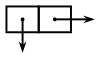
“One of the most important and fascinating of all computer languages is Lisp (standing for "List Processing"), which was invented by John McCarthy around the time Algol was invented.”
Douglas Hofstadter on ALGOL
“One of the most important and fascinating of all computer languages is Lisp (standing for "List Processing"), which was invented by John McCarthy around the time Algol was invented.”
Douglas Hofstadter on Harpsichord
“The piano had been developed in the first half of the eighteenth century as a modification of the harpsichord. The problem with the harpsichord was that pieces could only be played at a rather uniform loudness—there was no way to strike one note more loudly than its neighbors.”

Douglas Hofstadter on Combinatorics
“The result of a counting process is independent of the way in which it is done. This is really an assumption about what counting is. It would be senseless to try to prove it, because it is so basic; either you see it or you don't—but in the latter case, a proof won't help you a bit.”

Douglas Hofstadter on Dualism
Douglas Hofstadter on Common sense
“Consider the very roots of our ability to discern truth. Above all (or perhaps I should say "underneath all"), common sense is what we depend on – that crazily elusive, ubiquitous faculty we all have to some degree or other.... If we apply common sense to itself over and over again, we wind up building a skyscraper. The ground floor of the structure is the ordinary common sense we all have, and the rules for building news floors are implicit in the ground floor itself. However, working it all out is a gigantic task, and the result is a structure that transcends mere common sense.”

Douglas Hofstadter on Open individualism
“[L]et's not lose track of the purpose of all this imagery, which is to suggest helpful ways of imagining what a human soul's essence is. If we map each tree (or nucleus) in the crystal lattice onto a particular human brain, then in the tight-binding model (which corresponds to the caged-bird metaphor), each brain would possess a unique soul, represented by the cloud of timid butterflies that hover around it and it alone. By contrast, if we think of a metal, then the cloud is spread out across the whole lattice — which is to say, shared equally among all the trees (or nuclei). No tree is privileged. In this image, then (which is close to Daniel Kolak's view in I Am You), each human soul floats among all human brains, and its identity is determined not by its location but by the undulating global pattern it forms.”
What Douglas Hofstadter Said About Others
Discover personal opinions Douglas Hofstadter shared regarding contemporaries.
Douglas Hofstadter on János Bolyai
“In 1823, non-Euclidean geometry was discovered simultaneously, in one of those inexplicable coincidences, by a Hungarian mathematician, Janos (or Johann) Bolyai, aged twenty-one, and a Russian mathematician, Nikolai Lobachevsky, aged thirty. And, ironically, in that same year, the great French mathematician Adrien-Marie Legendre came up with what he was sure was a proof of Euclid's fifth postulate, very much along the lines of Saccheri. Incidentally, Bolyai's father, Farkas (or Wolfgang) Bolyai, a close friend of the great Gauss, invested much effort in trying to prove Euclid's fifth postulate.”
About Douglas Hofstadter
Douglas Hofstadter (born February 15, 1945) is a mathematician, cognitive scientist, and Pulitzer Prize winning author.
QuotesCosmos Cross-Civilizational Archive
Explore Related Wisdom Pillars, Worldviews & Canonical Works
Discover how humanity's greatest philosophers, sacred scriptures, and literary masterpieces address the core questions of existence.
30 Wisdom Pillars
22 Worldviews & Traditions
Canonical Books & Scriptures