Link Copied!
Dorothy Ray Healey Quotes (1914-1930)
Actor, Activist, Leader




About Dorothy Ray Healey
Dorothy Ray Healey September 22, 1914 – August 6, 2006) was a long-time activist in the Communist Party USA, from the late 1920s to the 1970s, and later became a national vice-chair of the Democratic Socialists of America. In the 1930s, she was one of the first union leaders to advocate for the rights of Chicanos and blacks as factory and field workers.
Best Dorothy Ray Healey Quotes
Shortest
Earliest
Explore our curated collection of the most famous and impactful Dorothy Ray Healey quotes.
“Our dream ticket would have been one consisting of Martin Luther King and Benjamin Spock, linking the issues of civil rights and peace.”
“You've got to accompany any demand for privatization with worker and community control. It shouldn't only be the worker, it should be the worker and the community participating together.”



“The challenge for American socialists will be to come up with ways to make use of modified market principles and coordinated (rather than "central") planning to guide decision making under circumstances vastly different than those faced by the pioneers of 1917. (p 252)”
“Daytime meetings and the demand for child care facilities would open enormous doors for women. Again, we have to judge how many unions are really on the cutting edge of such issues-not how much lip service they can give-but how many issues they really make into significant contractual questions in collective bargaining.”
“It seems to be that Lincoln's definition of democracy, "Government of the people, by the people, and for the people," is as good a summary as any of an essential element of the kind of socialism I would like to see established in the United States. Socialist democracy means democracy in the economic as well as in the political sphere.”

“Few histories that have been written about the labor movement in the 1930s have focused on the intensity of the employer violence against the labor movement. Employers in the United States have historically been far more violent in their repression of the labor movement than employers in any other Western country. There was far more solidaritv between workers who were on strike, far more awareness of the meaning of the slogan "an injury to one is an injury to all."”
“you have to look at the differences that exist among women and figure out how to organize to diminish the differences, to transcend the differences, to have policies that overcome them. That's very difficult, it means constant thinking, and studied awareness of what the realities are. It's not a short-term struggle, it's not meant for people who are going to fight today and run away and do something else tomorrow. It's a long-term struggle that requires tenacity and courage.”
“Hitler's triumph made terribly clear the danger of our earlier notions, as well as the very stark differences between a fascist regime and "bourgeois democracy" as represented by someone like Franklin Delano Roosevelt. By the mid-1930s the issue of anti-fascism permeated all our mass work. In countries like France and Spain where big socialist movements existed, Communists sought to unite the Left into antifascist united fronts. In the United States we sought to work with the socialists, and we also began to reevaluate our earlier, highly critical assessment of the New Deal.”
“Corporations couldn't care less about welfare-community welfare, the nation's welfare. In the absence of any countervailing pressure, I don't see any way they can be held accountable. The public must be educated to understand that the most fateful decisions in their lives are being made not by politicians sitting in Congress whom they can watch and see, but by corporate executives who make the major decisions affecting their lives-whether they will have jobs, whether their children will have jobs, where they are going to live, whether they are going to live in a healthy atmosphere. Until people in great numbers start to understand the significance of the corporate decisions made privately, I don't see much likelihood of any important regulation of them.”
“My concept of what it meant to be a revolutionary was based on a montage of the organizers from the Sinclair novels, along with my childhood memories from Denver. I also began to read an enormous amount of history around this time. I was very taken with Charles Beard-at that point his writings seemed to me to represent great Marxist truths because he talked about the things that high school history never talked about, the underlying economic motives of history makers. I read everything he and his wife Mary Beard wrote. I had started reading Marx and Lenin, but at that point I think Walt Whitman and Henry David Thoreau had more effect on me. What I responded to in my readings were emotional rather than theoretical questions. I was developing a hatred of the brutality of the existing economic system, a hatred of the impersonal degradation of human beings. That's what moved me as a teenager, and stayed with me.”

“As she explained to Joel Gardner a few months after she had resigned from the Communist Party: “If I were to write a book, I'd make the title of the book... a phrase out of the Communist song "The International." . . . The phrase goes, "No more tradition's chains shall bind us." Well, I would make the title of my book "Tradition's Chains Have Bound Us," because my argument would be that just as... capitalism operates through the false consciousness that it gives the majority of people who aren't able to perceive the reality of their own lives..., so the same thing happens with Marxists. . . . They, too, substitute a false consciousness for a real consciousness . . . . A real revolutionary party [has] to be able to constantly keep alive that challenging, questioning and probing of the real scene around it. . . . Our theory never will quite match the reality, but at least one strives to approximate it, to see what is the substance, and not just the form. (p 13)”

“my loyalties are to a vision of socialism, not to a particular organization. There's a phrase I've always liked in the revolutionary anthem "The International." It goes, "No more tradition's chains shall bind us." As Communists we argued that the survival of capitalism depended on the false consciousness of the majority of the people who weren't able to perceive the reality of their own lives. Ironically, the Communists also found themselves bound by "tradition's chains," and substituted a false consciousness for a real understanding of the world around them. The challenge that faces the Left in the future-if it is to have a future-is to base itself on the knowledge of what collective action by human beings can mean, rather than on faith in the infallibility of either its dogma or its leaders. If I were allowed just one piece of advice to give a new generation as to how to sustain a life-long commitment, I would suggest the cultivation of those two essential virtues of a good revolutionary, patience and irony. (p 254)”
“Socialist politics should mean more not less debate; socialist democracy will involve an ongoing debate over all the important issues confronting the nation. Genuine democratic debate requires a genuinely free press. My travels to Eastern Europe and the Soviet Union convinced me of the necessity for the independence of the mass media from state and Party control. Most people did not believe what they read in the official press or saw or heard on radio or television. Their daily lives belied the "official" facts. A socialist America should not only ensure a free press, it should guarantee as well something that does not exist today under capitalism, and that is the widest possible access to popular communication for individuals and groups. Real democracy is impossible unless people know the facts behind proposed policies, unless they hear all the relevant arguments pro and con-which is something that our own corporate-dominated media has almost as little interest in promoting as the Party-dominated media in the pre-glasnost Soviet Union. (p 252)”

“People must have a channel through which they can express themselves if there is to be any hope that they will transcend the sense of powerlessness and apathy encouraged by our dominant ideological myths. Jesse Jackson's Rainbow Coalition has come closest in recent times to serving as this kind of channel. One could see a glimmer of the possibilities for the future, watching the young people who were Jesse Jackson delegates at the Democratic conventions in 1984 and 1988. Many had never participated in any political movement before, and you could see how the Jackson campaign had opened things up for them and gave a whole new dimension to their lives. The Rainbow Coalition has had its share of internal problems, but it has been far more successful than any of the more explicitly ideological groups on the Left in teaching people to give an affirmative answer to the old Biblical question, "Am I my brothers [and sisters] keeper?" One keeps oneself only by keeping others. That means we have to learn to look upon the societies of this world as things which have been created by humans and which are therefore subject to being changed for the better by humans. (p 254)”
“I won't see socialism in my lifetime; I don't know if my son will see it in his, or even my grandchildren in theirs. There is no way to foretell what kind of political developments and issues will galvanize a future generation to turn towards socialism. The model I embraced in my youth, the vision of a vanguard party of the working class seizing power in the midst of a great social and political crisis like the one that had overtaken Russia in 1917, is no longer relevant. But I still believe that working people must be at the center of any real movement for socialism, for they are the majority for whose well-being that government "of, by, and for the people" should be concerned. Ultimately I have faith that people, given the understanding of how they can help bring it about, want to live in a better world. People can change the world, but they can't do it as individuals alone. They have to join with others to do it. One thing I have not changed my views on over the years is the belief that organization is the key to winning victories for social change. That's why it was such a tragedy that so little in the way of organized radicalism survived the collapse of the New Left. (p 252)”

“(Today labor is often looked at as merely an arbiter for wages and benefits. Do you think labor leaders today have defined the mission of the labor movement too narrowly?) That is not new, that was started under Samuel Gompers who said that the purpose of the labor movement was "a fair day's pay for a fair day's work." But you can't separate the worker and the community. I think it is a survival question. The labor movement must awaken in its ranks and leadership a broader awareness. Workers need to understand what causes the export of jobs so they can unite to prohibit the export of jobs to places that do not allow workers to organize to get decent working conditions. The leadership must recognize that without that, the labor movement is cutting its own throat. It's not a question of abstract protectionism-it's a question of protecting both the foreign worker and the American worker. Even the United Auto Workers (UAW) has recognized there has to be a global approach to the problems of the automobile industry, that it can't be solved country by country. Workers have to be organized because the corporate interests are already organized-multinationals are far more class-conscious than the workers have been.”
“The great irony of the McCarthy period is that we did almost as much damage to ourselves, in the name of purifying our ranks, as Joe McCarthy and J. Edgar Hoover and all the other witch-hunters combined were able to do. One of the most catastrophically stupid things we ever did was to choose this moment to launch an internal campaign against white chauvinism. (In the Party we tended to use the term "white chauvinism" instead of racism.) The campaign was initiated by Pettis Perry and Betty Gannett in 1949. [...] However, with the white chauvinism campaign of 1949-1953, what had been a legitimate concern turned into an obsession, a ritual act of self-purification that did nothing to strengthen the Party in its fight against racism and was manipulated by some Communist leaders for ends which had nothing to do with the ostensible purpose of the whole campaign. Once an accusation of white chauvinism was thrown against a white Communist, there was no defense. Debate was over. By the very act of denying the validity of the charge, you only proved your own guilt. [...] In Los Angeles alone we must have expelled two hundred people on charges of white chauvinism, usually on the most trivial of pretexts. People would be expelled for serving coffee in a chipped coffee cup to a Black or serving watermelon at the end of dinner. (pp.125ff)”

Dorothy Ray Healey Quotes by Topic
Find exactly what you are looking for by browsing this categorized list of Dorothy Ray Healey quotes by topic.
Dorothy Ray Healey on Black Panther Party 2 quotes
“I admired the personal courage and commitment of individual Black Panthers I got to know, but I was not a fan of their politics. With the Panthers you found this curious mixture of selfless dedication and some of the worst aspects of street culture. They maintained discipline in their party "with a stick," as their own phrase had it. In Los Angeles they would run classes every Saturday in "political education" in which their members had to memorize sections of Mao's little red book. If they failed to memorize their assignment, they were beaten up. The same thing would happen if they failed to sell their weekly quota of their party newspaper. The Panthers picked up the Maoist slogan "All power grows out of the barrel of a gun" and made an ideological fetish out of it. That phrase has to be one of the stupidest things Mao ever said, because what power really grows out of is the organized consciousness of millions of people. At some point guns may become important tactically in the revolutionary process in some countries, but that isn't where power comes from-and a good thing, too, because revolutionaries are always going to be outgunned by the forces defending the old order.”

Dorothy Ray Healey on Cuba
“In the 1960s the Soviet Union had little or no appeal to young people-Black or white-as a model of revolution or of a desirable socialist society. It seemed old, staid, repressive, even counter-revolutionary to young activists. The Cuban revolution, however, had an enormous appeal.”

Dorothy Ray Healey on Soviet Union
“In the 1960s the Soviet Union had little or no appeal to young people-Black or white-as a model of revolution or of a desirable socialist society. It seemed old, staid, repressive, even counter-revolutionary to young activists. The Cuban revolution, however, had an enormous appeal.”

Dorothy Ray Healey on Republican Party (United States)
“The Republican primary battles in California in 1962 foreshadowed the Goldwater presidential nomination of 1964, just as Goldwater's campaign led to Reagan's rise to power, first in California and then in national politics. Three Republican congressional nominees in 1962 publicly identified themselves as members of the Birch Society. All three went down to defeat in the fall election, as did Richard Nixon in his race for the governor's seat against the incumbent Democrat Pat Brown (which prompted Nixon's famous promise to the press, later reneged on, that "You won't have Dick Nixon to kick around any more"). On the surface, liberals had much to cheer about in those results, but in fact they marked an ominous new development. From here on, in order to win a Republican primary in California, a candidate would have to satisfy the ideological demands of the far Right.”

What Dorothy Ray Healey Said About Others
Discover personal opinions Dorothy Ray Healey shared regarding contemporaries.
Dorothy Ray Healey on Upton Sinclair 2 quotes
“My concept of what it meant to be a revolutionary was based on a montage of the organizers from the Sinclair novels, along with my childhood memories from Denver.”

Dorothy Ray Healey on Barry Goldwater 2 quotes
“The central fact that must be recognized in any discussion of political tactics today is that Goldwater's nomination in 1964 pushed all politics to the right.... The Ultra Right is working for a political realignment on its terms, based upon the appeal to hysterical anti-Communism and to the "white backlash."”

Dorothy Ray Healey on Eldridge Cleaver
Dorothy Ray Healey on Martin Luther King Jr.
“Our dream ticket would have been one consisting of Martin Luther King and Benjamin Spock, linking the issues of civil rights and peace.”

Dorothy Ray Healey on Benjamin Spock
“Our dream ticket would have been one consisting of Martin Luther King and Benjamin Spock, linking the issues of civil rights and peace.”

Dorothy Ray Healey on George Jackson (activist)
Dorothy Ray Healey on Adolf Hitler
“Hitler's triumph made terribly clear the danger of our earlier notions, as well as the very stark differences between a fascist regime and "bourgeois democracy" as represented by someone like Franklin Delano Roosevelt. By the mid-1930s the issue of anti-fascism permeated all our mass work.”

Dorothy Ray Healey on Claudia Jones
“The Supreme Court handed down its decision in the Foley Square case on June 4, 1951. Just over two weeks later FBI agents in New York rounded up such "second string" leaders as Elizabeth Gurley Flynn, Pettis Perry, and Claudia Jones. After that we knew it couldn't be long before the arrests came in other places.”

Dorothy Ray Healey on Cesar Chavez
“I was very impressed with Cesar Chavez's grasp of organizing strategy. He started organizing around small fruit to start with, where there was a semipermanent work force. That gave the union continuity. These workers didn't move around to follow the different crops. You didn't start fresh every time there was a strike.”
Dorothy Ray Healey on John Steinbeck
“There was one New Deal agency that proved helpful to us in the fields, and that was the Farm Security Administration. The FSA administered a system of migrant labor camps in California. When I read about the Joads arriving at the temporary safe haven of the "government camp" in The Grapes of Wrath, I knew exactly what they felt like.”
Dorothy Ray Healey on Abraham Lincoln
“It seems to be that Lincoln's definition of democracy, "Government of the people, by the people, and for the people," is as good a summary as any of an essential element of the kind of socialism I would like to see established in the United States. Socialist democracy means democracy in the economic as well as in the political sphere.”

Dorothy Ray Healey on Charles A. Beard
“I began to read an enormous amount of history around this time. I was very taken with Charles Beard-at that point his writings seemed to me to represent great Marxist truths because he talked about the things that high school history never talked about, the underlying economic motives of history makers. I read everything he and his wife Mary Beard wrote.”

Dorothy Ray Healey on Mary Ritter Beard
“I began to read an enormous amount of history around this time. I was very taken with Charles Beard-at that point his writings seemed to me to represent great Marxist truths because he talked about the things that high school history never talked about, the underlying economic motives of history makers. I read everything he and his wife Mary Beard wrote.”

Dorothy Ray Healey on Samuel Gompers
“(Today labor is often looked at as merely an arbiter for wages and benefits. Do you think labor leaders today have defined the mission of the labor movement too narrowly?) That is not new, that was started under Samuel Gompers who said that the purpose of the labor movement was "a fair day's pay for a fair day's work." But you can't separate the worker and the community.”
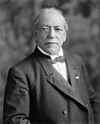
Dorothy Ray Healey on Joseph Stalin
“One of the stories they told me during my visit concerned the fate of German Communists, many of them Jewish, who had been in exile in the Soviet Union in the late 1930s. As a sort of perverse good-will gesture, Stalin handed these German Communists over to the Gestapo after the signing of the Nazi-Soviet Pact. They were, of course, immediately sent to concentration camps.”

Dorothy Ray Healey on Ronald Reagan
“When Reagan was nominated in 1966 by the Republicans it marked a qualitative turn for the worse in California and national politics. Now the Right was not simply an organized force within a major party but had actually gained control. Johnson's landslide victory over Goldwater in 1964 had not discouraged the ultra-Right, but only increased its determination to dig in for the long haul.”

Dorothy Ray Healey on Henry David Thoreau
“I had started reading Marx and Lenin, but at that point I think Walt Whitman and Henry David Thoreau had more effect on me. What I responded to in my readings were emotional rather than theoretical questions. I was developing a hatred of the brutality of the existing economic system, a hatred of the impersonal degradation of human beings. That's what moved me as a teenager, and stayed with me.”
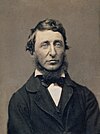
Dorothy Ray Healey on Walt Whitman
“I had started reading Marx and Lenin, but at that point I think Walt Whitman and Henry David Thoreau had more effect on me. What I responded to in my readings were emotional rather than theoretical questions. I was developing a hatred of the brutality of the existing economic system, a hatred of the impersonal degradation of human beings. That's what moved me as a teenager, and stayed with me.”

Dorothy Ray Healey on Bettina Aptheker
“One particularly poignant aspect of the debate within the American CP's National Committee was that it pitted Bettina Aptheker, who denounced the invasion, against her own father, Herbert Aptheker. Bettina was one of the liveliest of the young people who rose to prominence in the Party in the 1960s, and also one of the warmest human beings I've ever met. She adored her father, so it could not have been easy for her to oppose him that day.”

Dorothy Ray Healey on Franklin D. Roosevelt
“Hitler's triumph made terribly clear the danger of our earlier notions, as well as the very stark differences between a fascist regime and "bourgeois democracy" as represented by someone like Franklin Delano Roosevelt. By the mid-1930s the issue of anti-fascism permeated all our mass work. In countries like France and Spain where big socialist movements existed, Communists sought to unite the Left into antifascist united fronts. In the United States we sought to work with the socialists, and we also began to reevaluate our earlier, highly critical assessment of the New Deal.”

Dorothy Ray Healey on Mao Zedong
“In Los Angeles they [the Black Panthers would run classes every Saturday in "political education" in which their members had to memorize sections of Mao's little red book. If they failed to memorize their assignment, they were beaten up. The same thing would happen if they failed to sell their weekly quota of their party newspaper. The Panthers picked up the Maoist slogan "All power grows out of the barrel of a gun" and made an ideological fetish out of it. That phrase has to be one of the stupidest things Mao ever said, because what power really grows out of is the organized consciousness of millions of people. At some point guns may become important tactically in the revolutionary process in some countries, but that isn't where power comes from-and a good thing, too, because revolutionaries are always going to be outgunned by the forces defending the old order.”

Quotes About Dorothy Ray Healey
Gain deeper perspective through quotes about Dorothy Ray Healey from others.
Bettina Aptheker attributed p on Dorothy Ray Healey 2 quotes
“The late Elizabeth Gurley Flynn, a longtime CPUSA official, once remarked that Healey was a good leader in her District but was afflicted with a psychosis when she attended national meetings, because she insisted on challenging the leadership. FBI memorandum, August 6, 1969. I had seen many women in the Party who worked very hard and were intelligent and developed theoretically and politically, but I hadn't seen anyone with quite Dorothy's energy and charisma. I do remember very clearly certain Party conventions that I was at in the sixties where I saw her as the "embattled female." It was like this sea of cigar smoke, and she smoked these little cigarillos, and there was something about that, her being little, and she'd barge into these circles of men conversing on something or other, whatever caucus it was, she'd barge in there, and I just loved it. I thought that was great, just great. I didn't care what she said.”
Angela Davis on Dorothy Ray Healey
“The knowledge I gained about the Che-Lumumba Club did not satisfy me completely, because I had little firsthand knowledge of the larger Party. Kendra and Franklin, therefore, introduced me to some of the white comrades. I began to pay visits to Dorothy Healey, who was then the District Organizer of Southern California. We had long, involved discussions-sometimes arguments-about the Party, its role within the movement, its potential as the vanguard party of the working class; its potential as the party that would lead the United States from its present, backward, historically exploitative stage to a new epoch of socialism. I immensely enjoyed these discussions with Dorothy and felt that I was learning a great deal from them, regardless of whether I ultimately decided to become a Communist myself.”

Roxanne Dunbar-Ortiz Outlaw Woman on Dorothy Ray Healey
“Dorothy Healey, a 1930s communist union organizer of the migrant workers and head of the southern California region of the Communist Party for two decades, including the four years I lived in L.A., recounted the 1938 cotton strike and celebrated the militancy and solidarity of the Okie cotton pickers, hardly mentioning that the strike was lost, or that two decades later, the children of the pickers were serving as L.A. police officers or were active in the John Birch Society. Furthermore, Dorothy and other Communist Party people perceived the 1930s Okie migrants as responsive to the Communist Party.”
Roxanne Dunbar-Ortiz on Dorothy Ray Healey
“A successful teach-in on campus during that fall of 1966 helped raise consciousness, although only a small percentage of students and faculty were involved. Noam Chomsky and Herbert Marcuse were the main speakers, but there were dozens more, and the event went on for fourteen hours, with thousands crowded into the student union cafeteria. I was distressed that none of the speakers were women. Dorothy Healey of the Communist Party was scheduled to speak but the Progressive Labor Party people-the Maoists-disrupted her presentation. That was my first personal encounter with infighting on the Left.”

Barbara Ehrenreich blurb for on Dorothy Ray Healey
“one of the American left's most brilliant and fearless women-a pioneer in the '30s and role model for activists in the '90s.”
Robbie Lieberman on Dorothy Ray Healey
“To me she represented what was most appealing about the Old Left — commitment, dedication, selflessness...In devoting herself to working for peace, and against economic and racial inequality, she provided a fantastic model for the rest of us. I will always remember her fondly.”
Vicki L. Ruiz on Dorothy Ray Healey
“Beginning in 1937, UCAPAWA-CIO offered hope. Four decades later, I asked Dorothy Ray Healey to recall her most rewarding experience as a labor organizer. Her answer: "To watch the disappearance or at least the diminishing of bigotry... watching all those Okies and Arkies and that bigotry and small-mindedness-all their lives they'd been on a little farm in Oklahoma; probably they had never seen a Black or a Mexicano. And you'd watch in the process of a strike how those white workers soon saw that those white cops were their enemies and that the Black and Chicano workers were their brothers."”
article on Dorothy Ray Healey
““She was a heartfelt revolutionary of her time,” Donna Wilkinson, the widow of national civil liberties leader Frank Wilkinson, told The Times on Monday. “She was always so fiercely partisan for working people. Yes, of course, she cared about war and peace and women’s issues, but she was always concerned about working people.””
About Dorothy Ray Healey
Dorothy Ray Healey September 22, 1914 – August 6, 2006) was a long-time activist in the Communist Party USA, from the late 1920s to the 1970s, and later became a national vice-chair of the Democratic Socialists of America. In the 1930s, she was one of the first union leaders to advocate for the rights of Chicanos and blacks as factory and field workers.
QuotesCosmos Cross-Civilizational Archive
Explore Related Wisdom Pillars, Worldviews & Canonical Works
Discover how humanity's greatest philosophers, sacred scriptures, and literary masterpieces address the core questions of existence.
30 Wisdom Pillars
22 Worldviews & Traditions
Canonical Books & Scriptures