Link Copied!
Derrick Jensen Quotes (1960-)
Author, Activist

About Derrick Jensen
Derrick Jensen (born 19 December 1960) is an American author and environmental activist who lives in Northern California.
Best Derrick Jensen Quotes
Shortest
Earliest
Explore our curated collection of the most famous and impactful Derrick Jensen quotes.



“From the beginning, this culture - civilization - has been a culture of occupation.”

“I quit work two weeks later--having sold another eighty of my hours--and knew I could never again work a regular job.”
“If we wish to stop the atrocities, we will need to understand and change the social and economic conditions that cause them.”
“To believe Christianity stands in opposition to slavery is at best to think anachronistically and at worst to not understand Christianity.”

“If any thing can be predicated as universally true of uncultivated man, it is that he will not labour beyond what is absolutely necessary to maintain his existence.”
“From the perspective of those who are entitled, the problems begin when those they despise do not go along with--and have the power and wherewithal to not go along with--the perceived entitlement.”
“Perception creates behavior. Perception encourages behavior. And because this institution--this artifice--continues to socially reinforce patterns of perception and behavior, if this behavior is destructive, it may not be a bad idea to eliminate or curtail the institution.”

“We are members of the most destructive culture ever to exist. Our assault on the natural world, on indigenous and other cultures, on women, on children, on all of us through the possibility of nuclear suicide and other means--all these are unprecedented in their magnitude and ferocity.”
“In order for us to maintain our way of living, we must, in a broad sense, tell lies to each other, and especially to ourselves. It is not necessary that the lies be particularly believable. The lies act as barriers to truth. These barriers to truth are necessary because without them many deplorable acts would become impossibilities.”
“I sat at the computer at work, debugging. I was bored. It was afternoon. I was twenty-two. It was June. Along the front range of the Rocky Mountains in Colorado, thunderheads move in almost every afternoon between May and early July. They materialize, darken the day, spit a few drops, open the sky with lightning, then disappear like so many dreams.”
“I remember staring at the computer screen--light green letters on dark--then at the clock, and finally at my outstretched fingers held a foot in front of my face. And then it dawned on me: selling the hours of my life was no different from selling my fingers one by one. We've only so many hours, so many fingers; when they're gone, they're gone for good.”

“Given the current levels of violence by this culture against both humans and the natural world, however, it's not possible to speak of reductions in population and consumption that do not involve violence and privation, not because the reductions themselves would necessarily involve violence, but because violence and privation have become the default of our culture.”
“Jeanette [Armstrong, "a traditional Okanagan Indian"] said, 'Attitudes about the species communication are the primary difference between western and indigenous philosophies. Even the most progressive western philosophers still generally believe that listening to the land is a metaphor.' She paused, then continued emphatically, 'It's not a metaphor. It's how the world is.'”

“I've always wanted to blow up dams in order to save salmon, sturgeon, and other creatures whose lives depend on wild and living rivers. But that's not right. We need to blow up dams for the rivers themselves, so they can be again the rivers they once were, forever, the rivers they still want to be, the rivers they themselves are struggling and fighting to once again become.”

“A very poor kid came up to me after a talk and said 'I want to go blow up a factory.' I asked how old he was and he said 17. I said 'have you ever had sex?' He said 'no.' I said 'just remember if you get caught you aren't going to have sex for twenty years at least.' That's not saying that one person having sex is worth the salmon. I'm not saying it's a reason not to act, I'm saying don't be stupid.”
“I thought that, given the system of rewards central to our economic system, in which profit maximization is valued above all else and specifically above life, it is probably just as irresistible to the owners of capital (human or otherwise) to exploit workers (and the land): "Nothing personal," they say as they load their property onto the ship bound for the Middle Passage, "but a man's gotta turn a dime."”

“Civilization is based on a clearly defined and widely accepted yet often unarticulated hierarchy. Violence done by those higher on the hierarchy to those lower is nearly always invisible, that is, unnoticed. When it is noticed, it is fully rationalized. Violence done by those lower on the hierarchy to those higher is unthinkable, and when it does occur is regarded with shock, horror, and the fetishization of the victims.”
“Slavery was a central concern of governance form the time of the first nation-state. The Code of Hammurabi, the earliest known set of laws for governing an empire, prescribed death for anyone who harbored a fugitive or otherwise helped a slave to escape. The relationship between the law and bondage goes back even farther: Indeed, the oldest extant legal documents don't concern the sale of land, houses, or even animals, but slaves.”
“Is it possible to talk about fundamental social change without asking ourselves questions we too often refuse to ask, such as 'What if those in power are murderous? What if they're not willing to listen to reason at all? Should we continue to approach them nonviolently? . . . When is violence an appropriate means to stop injustice?' But with the world dying - or rather being killed - we no longer have the luxury to change the subject or delete the question. It's a question that won't go away.”

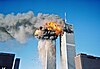
“I've never written this before in public, but my first thought on September 11 when I heard someone was attacking the World Trade Center is, 'Ah, so now it begins. Someone is finally fighting back. Given the terror that the United States routinely inflicts on people (including nonhumans, of course) the world over (and of course now a couple of years later the United States calls these programs of systematic terror 'Shock and Awe'), I'm surprised it didn't happen long ago. The poor have been very patient and long suffering, more patient and long suffering than anyone could ever expect.' That is what I thought.”

“I want to bring down civilization. It's really clear that civilization is killing the planet. I’m interested in living in a world that has more wild salmon every year than the year before. A world that has more migratory songbirds every year than the year before. A world that has less dioxins and flame retardants in mothers' breast milk. A world not being destroyed. A world where krill populations aren’t collapsing. A world where there are not dead zones in the oceans. A world not being systematically dismantled. I want to live in a world that is not being killed. I will do whatever it takes to get there.”

Derrick Jensen Quotes by Topic
Find exactly what you are looking for by browsing this categorized list of Derrick Jensen quotes by topic.
Derrick Jensen on Hope 3 quotes
“When we realize the degree of agency we actually do have, we no longer have to "hope" at all. We simply do the work.”

Derrick Jensen on Violence 2 quotes
“People often say that violence accomplishes nothing, that it's ineffective. Violence is dreadfully effective. That's why those in power use it.”
Derrick Jensen on Despise
“From the perspective of those who are entitled, the problems begin when those they despise do not go along with — and have the power and wherewithal to not go along with – the perceived entitlement.”

Derrick Jensen on Terrorism
“Civilization is based on a clearly defined and widely accepted yet often unarticulated hierarchy. Violence done by those higher on the hierarchy to those lower is nearly always invisible, that is, unnoticed. When it is noticed, it is fully rationalized. Violence done by those lower on the hierarchy to those higher is unthinkable, and when it does occur is regarded with shock, horror, and the fetishization of the victims.”
Derrick Jensen on Civilization
“Civilization is based on a clearly defined and widely accepted yet often unarticulated hierarchy. Violence done by those higher on the hierarchy to those lower is nearly always invisible, that is, unnoticed. When it is noticed, it is fully rationalized. Violence done by those lower on the hierarchy to those higher is unthinkable, and when it does occur is regarded with shock, horror, and the fetishization of the victims.”

About Derrick Jensen
Derrick Jensen (born 19 December 1960) is an American author and environmental activist who lives in Northern California.
QuotesCosmos Cross-Civilizational Archive
Explore Related Wisdom Pillars, Worldviews & Canonical Works
Discover how humanity's greatest philosophers, sacred scriptures, and literary masterpieces address the core questions of existence.
30 Wisdom Pillars
22 Worldviews & Traditions
Canonical Books & Scriptures