Link Copied!
David Graeber Quotes (1961-2020)
Author





About David Graeber
David Rolfe Graeber (February 12, 1961 – September 2, 2020) was an American anthropologist and anarchist who was a Reader in Social Anthropology at Goldsmiths. In addition to his academic work, Graeber has a history of both direct and indirect involvement in political activism, including membership in the labor union Industrial Workers of the World, a role in protests against the World Economic Forum in New York City in 2002, and support for the 2010 UK student protests movement. He is co-founder of the Anti-Capitalist Convergence.
Best David Graeber Quotes
Shortest
Earliest
Explore our curated collection of the most famous and impactful David Graeber quotes.
“We are the 99%.”

“Exchange is all about equivalence.”


“It's as if someone were out there making up pointless jobs just for the sake of keeping us all working.”



“The ultimate, hidden truth of the world is that it is something that we make, and could just as easily make differently.”
“Hell is a collection of individuals who spend their time working on a task they don't like and are not especially good at.”

“It is the secret scandal of capitalism that at no point has it been organized primarily around free labor.”

“One might even say that it's one of the scandals of capitalism that most capitalist firms, internally, operate communistically.”
“What is a debt, anyway? A debt is just the perversion of a promise. It is a promise corrupted by both math and violence.”


“Before we can apply the tools of anthropology to reconstruct the real history of money, we need to understand what's wrong with the conventional account.”

“Even a modest Basic Income program could become a stepping-stone toward the most profound transformation of all: to unlatch work from livelihood entirely.”
“Nowadays, nobody talks about bureaucracy. But in the middle of the last century, particularly in the late sixties and early seventies, the word was everywhere.”


“Medieval corporations owned property, and they often engaged in complex financial arrangements, but in no case were they profit-seeking enterprises in the modern sense.”

“Indeed, India has become notorious as a country in which a very large part of the working population is laboring in effective debt peonage to a landlord or other creditor.”
David Graeber Quotes by Topic
Find exactly what you are looking for by browsing this categorized list of David Graeber quotes by topic.
David Graeber on Basic income 3 quotes
“It's as if someone were out there making up pointless jobs just for the sake of keeping us all working.”

David Graeber on Military 2 quotes
“Meanwhile, the U.S. debt remains, as it has been since 1790, a war debt; the United States continues to spend more on its military than do all other nations on earth put together, and military expenditures are not only the basis of the government's industrial policy; they also take up such a huge proportion of the budget that by many estimations, were it not for them, the United States would not run a deficit at all.”

David Graeber on Debt
“What is debt anyway? A debt is just the perversion of a promise. It is a promise corrupted by both math and violence."”
David Graeber on Anthropology
“Before we can apply the tools of anthropology to reconstruct the real history of money, we need to understand what's wrong with the conventional account.”
David Graeber on Anarchism
“Most of all, anarchism is just a matter of having the courage to take the simple principles of common decency that we all live by, and to follow them through to their logical conclusions.”

David Graeber on Direct action
“In its essence direct action is the insistence, when faced with structures of unjust authority, on acting as if one is already free. One does not solicit the state. One does not even necessarily make a grand gesture of defiance. Insofar as one is capable, one proceeds as if the state does not exist.”

David Graeber on Communist society
“"Communist society"; in the sense of a society organized exclusively on that single principle—could never exist. But all social systems, even economic systems like capitalism, have always been built on top of a bedrock of actually-existing communism. ... In fact, communism is the foundation of all human sociability. It is what makes society possible.”

David Graeber on Policy
“"Policy" is the negation of politics; policy is by definition something concocted by some form of elite, which presumes it knows better than others how their affairs are to be conducted. By participating in policy debates the very best one can achieve is to limit the damage, since the very premise is inimical to the idea of people managing their own affairs.”

David Graeber on Economics
“Presented with the prospect of its own eternity, capitalism-or anyway, financial capitalism-simply explodes. Because if there's no end to it, there's absolutely no reason not to generate credit-that is, future money-infinitely. Recent events would certainly seem to confirm this. The period leading up to 2008 was one in which many began to believe that capitalism really was going to be around forever; at the very least, no one seemed any longer to be able to imagine an alternative. The immediate effect was a series of increasingly reckless bubbles that brought the whole apparatus crashing down.”
David Graeber on Economic growth
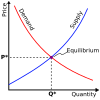
“Keynes himself had in his day been known to make some fairly radical noises, for instance, calling for the complete elimination of that class of people who lived off other people's debts—"the euthanasia of the rentier," as he put it—though all he really meant by this was their elimination through a gradual reduction of interest rates. As in much of Keynesianism, this was much less radical than it first appeared. Actually, it was thoroughly in the great tradition of political economy, hearkening back to Adam Smith's ideal of a debtless utopia but especially David Ricardo's condemnation of landlords as parasites, their very existence inimical to economic growth.”
David Graeber on Bureaucracy
“Everyone knows how compromised the idea of bureaucracy as a meritocratic system is. The first criterion of loyalty to any organization is therefore complicity. Career advancement is not based on merit but on a willingness to play along with the fiction that career advancement is based on merit, or with the fiction that rules and regulations apply to everyone equally, when in fact they are often deployed as an instrument of arbitrary personal power. ... As whole societies have come to represent themselves as giant credentialized meritocracies, rather than as systems of predatory extraction, we bustle about, trying to curry favor by pretending we actually believe it to be true.”
David Graeber on Success
“Everyone knows how compromised the idea of bureaucracy as a meritocratic system is. The first criterion of loyalty to any organization is therefore complicity. Career advancement is not based on merit but on a willingness to play along with the fiction that career advancement is based on merit, or with the fiction that rules and regulations apply to everyone equally, when in fact they are often deployed as an instrument of arbitrary personal power. ... As whole societies have come to represent themselves as giant credentialized meritocracies, rather than as systems of predatory extraction, we bustle about, trying to curry favor by pretending we actually believe it to be true.”

What David Graeber Said About Others
Discover personal opinions David Graeber shared regarding contemporaries.
David Graeber on Jared Diamond
“Guns, Germs, and Steel pushed geography as an academic discipline into the debates of economic historians in much the same way that Graeber intends for anthropology.”

Quotes About David Graeber
Gain deeper perspective through quotes about David Graeber from others.
Mike Beggs on David Graeber
“Graeber is no Braudel. The latter’s epic history of the rise of capitalism (with the luxury, it must be said, of covering just four centuries in three volumes) also takes a pointillistic approach, but is full of actual data, diagrams, and maps, organized to give us a real sense of the material conditions of life and the operations of economic networks. Graeber stays almost entirely within the domain of “moral universes” and discourse. We don’t get a sense of just how the moral economy of
Merrie England was undermined, except that the powers-that-were didn’t get it, didn’t like it, and imposed their own morality somehow. He engages very selectively with the literature on the “rise of capitalism” — how else to explain his portrayal of the news that sophisticated banking and finance long predated the rise of the factory system and wage labor as if it were a challenge to all preconceptions? This “peculiar paradox” has been a commonplace of the Marxian literature since Marx.”
Brad DeLong on David Graeber
“Not everything Graeber writes is wrong—some of it is right, and some of it is quite good. But nothing David Graeber writes is trustable.”
David Glasner on David Graeber
“What Graeber chooses to ignore is that banks do not operate magically; they make loans and create deposits in seeking to earn profits; their decisions are not magical, but are oriented toward making profits. Whether they make good or bad decisions is debatable, but the debate isn’t about a magical process; it’s a debate about theory and evidence. Graeber describe how he thinks that economists think about how banks create money, correctly observing that there is a debate about how that process works, but without understanding those differences or their significance.”
Daniel Kuehn on David Graeber
“It’s really important for people to understand that Graeber is like James Lindsay or Helen Pluckrose or Peter Boghossian when it comes to engaging with economics. I make no judgement of his other work but he’s not a good faith commenter on the field.”
Devon Price ‘’Unmasking Autism on David Graeber
“Processing and investigating disability benefit cases is incredibly costly. It is for this reason that writer and anthropologist David Graeber suggested in the book Bullshit Jobs that it would be far less expensive and far more socially just to simply provide a baseline, universal basic income to all people, with no strings attached. While replacing all social welfare programs with universal basic income is probably not a wise move, based on the available data, a less restrictive, more generous approach to providing disability benefits would clearly improve disabled people's quality of life.”
John Quiggin on David Graeber
“So, if we had the kind of disciplinary modesty richly merited by our performance as a profession over the past few years, economists would recognise that we owe an intellectual debt to Graeber. From now on, we can treat money primarily as a store of value, and stop worrying about how it works as a medium of exchange.”
Noah Smith on David Graeber 2 quotes
“I am now angry at myself for paraphrasing the book, and trying to put theses into Graeber's mouth, because this is such a rambling, confused, scattershot book that I am doing you a disservice by making it seem more coherent than it really is. The problem of extreme disorganization is dramatically worsened by the way that Graeber skips merrily back and forth from things he appears to know quite a lot about to things he obviously knows nothing about. One sentence he'll be talking about blood debts and "human economies" in African tribes (cool!), and the next he'll be telling us that Apple Computer was started by dropouts from IBM (false!). There are a number of glaring instances of this. The worst is not when Graeber delivers incorrect facts (who cares where Apple's founders had worked?), it's when he uncritically and blithely makes assertions that one could only accept if one has extremely strong leftist mood affiliation.”
Scott Sumner on David Graeber
“There are lots of excellent heterodox critiques of economics, but almost all are provided by economists. I presume this is true of other fields as well. If a problem were obvious enough to be spotted by outsiders, chances are it would already be the subject of dispute within the field. An anthropologist named David Graeber provides an excellent example of what goes wrong when you don’t understand the field you are criticizing.”
About David Graeber
David Rolfe Graeber (February 12, 1961 – September 2, 2020) was an American anthropologist and anarchist who was a Reader in Social Anthropology at Goldsmiths. In addition to his academic work, Graeber has a history of both direct and indirect involvement in political activism, including membership in the labor union Industrial Workers of the World, a role in protests against the World Economic Forum in New York City in 2002, and support for the 2010 UK student protests movement. He is co-founder of the Anti-Capitalist Convergence.
QuotesCosmos Cross-Civilizational Archive
Explore Related Wisdom Pillars, Worldviews & Canonical Works
Discover how humanity's greatest philosophers, sacred scriptures, and literary masterpieces address the core questions of existence.
30 Wisdom Pillars
22 Worldviews & Traditions
Canonical Books & Scriptures