Link Copied!
David Eugene Smith Quotes (1860-1944)
King, Mathematician
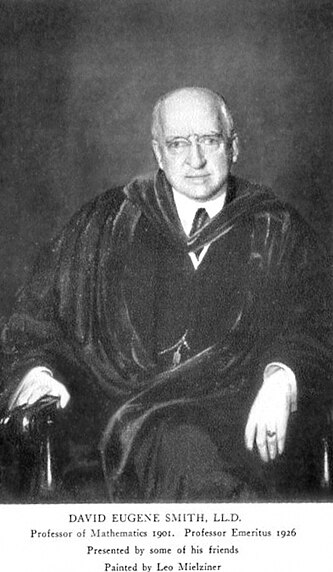
About David Eugene Smith
David Eugene Smith (January 21, 1860 – July 29, 1944) was an American mathematician, educator, and editor.
Best David Eugene Smith Quotes
Shortest
Earliest
Explore our curated collection of the most famous and impactful David Eugene Smith quotes.
“He... gave thirteen forms of the cubic which have positive roots, these having already been given by Omar Kayyam.”
“Vieta: 1QC - 15QQ + 85C - 225Q + 274N, aequator 120. Modern form”
“The excellent work of Tropfke is an example of the tendency to break away from the mere chronological recital of facts.”

“The Arabs contributed nothing new to the theory, but al-Khowârizmî (c. 825) states the usual rules, and the same is true of his successors.”


“Vieta (c. 1590) rejected the name "algebra" as having no significance in the European languages, and proposed to use the word "analysis," and it is probably to his influence that the popularity of this term in connection with higher algebra is due.”

“The field of mathematics is now so extensive that no one can [any] longer pretend to cover it, least of all the specialist in any one department. Furthermore it takes a century or more to weigh men and their discoveries, thus making the judgment of contemporaries often quite worthless.”
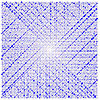
“Among his [ John Wallis'] interesting discoveries was the relation
one of the early values of π involving infinite products.”
one of the early values of π involving infinite products.”
“The first epoch-making algebra to appear in print was the Ars Magna of Cardan (1545). This was devoted primarily to the solution of algebraic equations. It contained the solution of the cubic and biquadratic equations, made use of complex numbers, and in general may be said to have been the first step toward modern algebra.”
“The law which asserts that the equation X = 0, complete or incomplete, can have no more real positive roots than it has changes of sign, and no more real negative roots than it has permanences of sign, was apparently known to Cardan; but a satisfactory statement is possibly due to Harriot (died 1621) and certainly to Descartes.”

“The fact that arithmetic and geometry took such a notable step forward... was due in no small measure to the introduction of Egyptian papyrus into Greece. This event occurred about 650 B.C., and the invention of printing in the 15th century did not more surely effect a revolution in thought than did this introduction of writing material on the northern shores of the Mediterranean Sea just before the time of Thales.”
“Although Cardan reduced his particular equations to forms lacking a term in , it was Vieta who began with the general formand made the substitution thus reducing the equation to the formHe then made the substitution or which led to the forma sextic which he solved as a quadratic.”
“In 1673 he wrote his great work De Algebra Tractatus; Historicus & Practicus, of which an English edition appeared in 1685. In this there is seen the first serious attempt in England to write on the history of mathematics, and the result shows a wide range of reading of classical literature of the science. This work is also noteworthy because it contains the first of an effort to represent the imaginary number graphically by the method now used. The effort stopped short of success but was an ingenious beginning.”
“Grégoire de Saint-Vincent... was a Jesuit, taught mathematics in Rome and Prag (1629-1631), and was afterwards called to Spain by Phillip IV as tutor to his son... He wrote two works on geometry [Principia Matheseos Univerales (1651); Exercitationum Mathematicarum Libri quinque (1657)], giving in one of them the quadrature of the hyperbola referred to its asymptotes, and showing that as the area increased in arithmetic series the abscissas increased in geometric series.”
“Aside from Cauchy, the greatest contributory to the theory [of determinants] was Carl Gustav Jacob Jacobi. With him the word "determinant" received its final acceptance. He early used the functional determinant which Sylvester has called the Jacobian, and in his famous memoirs in Crelle's Journal for 1841 he considered these forms as well as that class of alternating functions which Sylvester has called alternants.”
“In the work of Vieta the analytic methods replaced the geometric, and his solutions of the quadratic equation were therefore a distinct advance upon those of his predecessors. For example, to solve the equation he placed for . He then hadHe now let whence and this gave
and”
and”
“His writings include works on mechanics, sound, astronomy, the tides, the laws of motion, the Torricellian tube, botany, physiology, music, the calendar (in opposition to the Gregorian reform), geology, and the compass,—a range too wide to allow of the greatest success in any of the lines of his activity. He was also an ingenious cryptologist and assisted the government in deciphering diplomatic messages.”
“More than any of his predecessors Plato appreciated the scientific possibilities of geometry. .. By his teaching he laid the foundations of the science, insisting upon accurate definitions, clear assumptions, and logical proof. His opposition to the materialists, who saw in geometry only what was immediately useful to the artisan and the mechanic is... clear. ...That Plato should hold the view... is not a cause for surprise. The world's thinkers have always held it. No man has ever created a mathematical theory for practical purposes alone. The applications of mathematics have generally been an afterthought.”
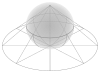
“It is difficult to say who it is who first recognized the advantage of always equating to zero in the study of the general equation. It may very likely have been Napier, for he wrote his De Arte Logistica before 1594, and in this there is evidence that he understood the advantage of this procedure. Bürgi also recognized the value of making the second member zero, Harriot may have done the same, and the influence of Descartes was such that the usage became fairly general.”
“Wallis was in sympathy with Greek mathematics and astronomy, editing parts of the works of Archimedes, Eutocius, Ptolemy, and Aristarchus; but at the same time he recognized the fact that the analytic method was to replace the synthetic, as when he defined a conic as a curve of the second degree instead of as a section of a cone, and treated it by the aid of coordinates.”
“1. The human mind is so constructed that it must see every perception in a time-relation—in an order—and every perception of an object in a space-relation—as outside or beside our perceiving selves.
2. These necessary time-relations are reducible to Number, and they are studied in the theory of number, arithmetic and algebra.
3. These necessary space-relations are reducible to Position and Form, and they are studied in geometry.
Mathematics, therefore, studies an aspect of all knowing, and reveals to us the universe as it presents itself, in one form, to mind. To apprehend this and to be conversant with the higher developments of mathematical reasoning, are to have at hand the means of vitalizing all teaching of elementary mathematics.”

“The problem of the biquadratic equation was laid prominently before Italian mathematicians by Zuanne de Tonini da Coi, who in 1540 proposed the problem, "Divide 10 parts into three parts such that they shall be continued in proportion and that the product of the first two shall be 6." He gave this to Cardan with the statement that it could not be solved, but Cardan denied the assertion, although himself unable to solve it. He gave it to Ferrari, his pupil, and the latter, although then a mere youth, succeeded where the master had failed. ...This method soon became known to algebraists through Cardan's Ars Magna, and in 1567 we find it used by Nicolas Petri [of Deventer].”

David Eugene Smith Quotes by Topic
Find exactly what you are looking for by browsing this categorized list of David Eugene Smith quotes by topic.
David Eugene Smith on History of mathematics 5 quotes
“The excellent work of Tropfke is an example of the tendency to break away from the mere chronological recital of facts.”

David Eugene Smith on Abstraction (mathematics) 2 quotes
“[W]hile we put number into objects, on the other hand we derive our idea of number only from the presence of the world external to the mind. We see a group of people, and we begin by making an abstraction ("people"), and we say, "Here are ten people"—thus calling them all by the one abstract name, even though the individuals be very different. "A careful observation shows us, however, that there are no objects exactly alike; but by a mental operation of which we are quite unconscious, although it holds within itself the entire secret of mathematical abstraction, we take in objects which seem to be alike, rejecting for the time being their differences. Here is to be found the source of calculation." So the idea of number is generated in the mind by the sense perception of a group of things supposed to be alike.”
David Eugene Smith on Π
“Among his [John Wallis'] interesting discoveries was the relation frac{4}{pi} = frac32cdotfrac34cdotfrac54cdotfrac56cdotfrac76cdotfrac78cdots one of the early values of π involving infinite products.”
David Eugene Smith on Ancient Greek mathematics
“More than any other of his predecessors Plato appreciated the scientific possibilities of geometry... By his teaching he laid the foundation of the science, insisting upon accurate definitions, and logical proof. His opposition to the materialists, who saw in geometry only what was immediately useful to the artisan and the mechanic, is made clear by Plutarch in his Life of Marcellus... "Plato's indignation at it and his invections against it as the mere corruption and annihilation of the one good geometry, which was thus shamefully turning its back upon the unembodied objects of pure intelligence."”

David Eugene Smith on Mathematical proof
“More than any other of his predecessors Plato appreciated the scientific possibilities of geometry... By his teaching he laid the foundation of the science, insisting upon accurate definitions, and logical proof. His opposition to the materialists, who saw in geometry only what was immediately useful to the artisan and the mechanic, is made clear by Plutarch in his Life of Marcellus... "Plato's indignation at it and his invections against it as the mere corruption and annihilation of the one good geometry, which was thus shamefully turning its back upon the unembodied objects of pure intelligence."”
David Eugene Smith on Negative number
“William Frend (1757-1841) whose daughter Sophia Elizabeth became De Morgan's wife (1837) ...came under De Morgan's definition of a true paradoxer, carrying on a zealous warfare for what he thought right. As a result of his Address to the Inhabitants of Cambridge 1787 and... he was deprived of his tutorship in 1788. A little later he was banished from Cambridge because of his denunciation of the abuses of the Church and his condemnation of the liturgy. His eccentricity is seen in his declining to use negative quantities in the operations of algebra. He finally became an actuary at London and was prominent in radical associations. He was a mathematician of ability, having been second wrangler and having nearly attained the first place, and he was also an excellent scholar in Latin Greek and Hebrew.”

David Eugene Smith on Number
“In a rough way we may summarize the conclusions of the writers to whom reference has chiefly been made, as follows: 1. Let the child learn to count things, thus getting the notion of number. These things are, for the purpose of counting, considered alike, and they may be single objects or groups. 2. Let him acquire the number series, exercising with it beyond the circle of actually counted things. 3. In the learning of symbols it does not seem to be a matter of moment as to whether these are given with the first presentation of number or not. They must, however, be acquired soon. 4. Unconsciously and gradually the child will acquire the idea (never expressed to him in words) of the one-to-one correspondence of number, name, symbol, and thereafter the pure concept of number will play a small part in his arithmetical calculations. 5. The ratio idea of number should be introduced early, and applied in the work with fractions.”
What David Eugene Smith Said About Others
Discover personal opinions David Eugene Smith shared regarding contemporaries.
David Eugene Smith on Muhammad ibn Mūsā al-Khwārizmī 2 quotes
“[T]here is a possibility that some of the works ascribed to Sened ibn 'Alī are really works of Al-KhowarazmI, whose name immediately precedes his.”
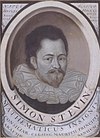
David Eugene Smith on Simon Stevin
“Stevin (1585): 3② + 4 egales à 2① + 4. Modern form: 3 x^2 + 4 = 2x + 4.”
David Eugene Smith on Girard Desargues
“One of the first important steps to be taken in modern times... was due to Desargues. In a work published in 1639 Desargues set forth the foundation of the theory of four harmonic points, not as done today but based on the fact that the product of the distances of two conjugate points from the center is constant. He also treated the theory of poles and polars, although not using these terms.”

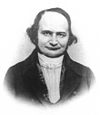
David Eugene Smith on Carl Gustav Jacob Jacobi
“Aside from Cauchy, the greatest contributory to the theory [of determinants] was Carl Gustav Jacob Jacobi. With him the word "determinant" received its final acceptance. He early used the functional determinant which Sylvester has called the Jacobian, and in his famous memoirs in Crelle's Journal for 1841 he considered these forms as well as that class of alternating functions which Sylvester has called alternants.”
David Eugene Smith on Gregory St. Vincent
“Grégoire de Saint-Vincent... was a Jesuit, taught mathematics in Rome and Prag (1629-1631), and was afterwards called to Spain by Phillip IV as tutor to his son... He wrote two works on geometry [Principia Matheseos Univerales (1651); Exercitationum Mathematicarum Libri quinque (1657)], giving in one of them the quadrature of the hyperbola referred to its asymptotes, and showing that as the area increased in arithmetic series the abscissas increased in geometric series.”

David Eugene Smith on Richard Dedekind
“Julius Wilhelm Richard Dedekind stands out as one of the most prominent contributors of the 19th century to the theory of algebraic numbers. He wrote various important memoirs on the binomial equation and on the theory of modular and Abelian functions, but is best known for his treatises Was sind und was sollen die Zahlen? (1888) and Stetigkeit und irrationale Zahlen (1872). In the latter work he set forth his idea of the Schnitt (cut) in relation to irrational numbers,—an idea he had in mind as early as 1858.”

Quotes About David Eugene Smith
Gain deeper perspective through quotes about David Eugene Smith from others.
Menso Folkerts on David Eugene Smith
“Johannes Tropfke... described the history of those individual parts of mathematics that he believed were most important for mathematics as taught in secondary schools. He intended his history to inform teachers about the origin of special problems, terms, and methods in school mathematics. ...Tropfke's approach to the history of mathematics at this time was new and even now is not yet out of date. The only comparable work is the second volume of D.E Smith's History of Mathematics... which gives far less detailed information.”
About David Eugene Smith
David Eugene Smith (January 21, 1860 – July 29, 1944) was an American mathematician, educator, and editor.
QuotesCosmos Cross-Civilizational Archive
Explore Related Wisdom Pillars, Worldviews & Canonical Works
Discover how humanity's greatest philosophers, sacred scriptures, and literary masterpieces address the core questions of existence.
30 Wisdom Pillars
22 Worldviews & Traditions
Canonical Books & Scriptures