Link Copied!
Daniel J. Boorstin Quotes (1914-2004)
Author, Director

About Daniel J. Boorstin
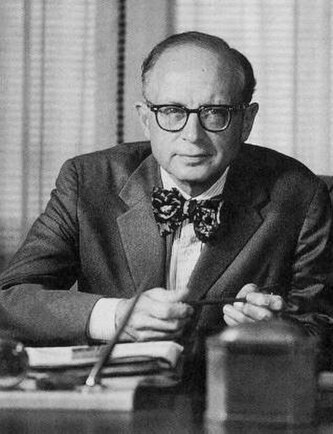
Daniel J. Boorstin (1 October 1914 – 28 February 2004) was an American historian, professor, attorney, and author. He served as the director of the Smithsonian’s National Museum of American History in 1969-1973 and was the Librarian of Congress from 1975 to 1987. His book trilogy, The Americans: The Colonial Experience, The National Experience, and The Democratic Experience received the Bancroft Prize, the Pulitzer Prize, and the Francis Parkman Prize. In 1989, the Medal for Distinguished Contribution to American Letters was bestowed upon him.
Best Daniel J. Boorstin Quotes
Shortest
Earliest
Explore our curated collection of the most famous and impactful Daniel J. Boorstin quotes.

“The Republic of Technology where we will be living is a feedback world.”

“I write to discover what I think. After all, the bars aren't open that early.”

“The image, more interesting than its original, has become the original. The shadow has become the substance.”
“Technology is so much fun but we can drown in our technology. The fog of information can drive out knowledge.”


“The institutional scene in which American man has developed has lacked that accumulation from intervening stages which has been so dominant a feature of the European landscape.”
“We suffer primarily not from our vices or our weaknesses, but from our illusions. We are haunted, not by reality, but by those images we have put in their place.”
“While the easiest way in metaphysics is to condemn all metaphysics as nonsense, the easiest way in morals is to elevate the common practice of the community into a moral absolute.”


“The news leak is a pseudo‑event par excellence. In its origin and growth, the leak illustrates another axiom of the world of pseudo‑events: pseudo‑events produce more pseudo‑events.”
“As individuals and as a nation, we now suffer from social narcissism. The beloved Echo of our ancestors, the virgin America. has been abandoned. We have fallen in love with our own image, with images of our making, which turn out to be images of ourselves.”

“Jeffersonian isolationism expressed an essentially cosmopolitan spirit. The Jeffersonian was determined — even at the expense of separating himself from the rest of the globe, and even though he be charged with provincial selfishness — to preserve America as an uncontaminated laboratory.”
“Jefferson refused to pin his hopes on the occasional success of honest and unambitious men; on the contrary, the great danger was that philosophers would be lulled into complacence by the accidental rise of a Franklin or a Washington. Any government which made the welfare of men depend on the character of their governors was an illusion.”
“Pseudo‑events do, of course, increase our illusion of grasp on the world, what some have called the American illusion of omnipotence. Perhaps, we come to think, the world’s problems can really be settled by “statements,” by “Summit” meetings, by a competition of “prestige,” by overshadowing images, and by political quiz shows.”

“In the age of pseudo‑events it is less the artificial simplification than the artificial complication of experience that confuses us. Whenever in the public mind a pseudo‑event competes for attention with a spontaneous event in the same field, the pseudo‑event will tend to dominate. What happens on television will overshadow what happens off television.”

“Celebrity-worship and hero-worship should not be confused. Yet we confuse them every day, and by doing so we come dangerously close to depriving ourselves of all real models. We lose sight of the men and women who do not simply seem great because they are famous but are famous because they are great. We come closer and closer to degrading all fame into notoriety.”
“These creators, makers of the new, can never become obsolete, for in the arts there is no correct answer. The story of discoverers could be told in simple chronological order, since the latest science replaces what went before. But the arts are another story — a story of infinite addition. We must find order in the random flexings of the imagination.”

“The variety of minds served the economy of nature in many ways. The Creator, who designed the human brain for activity, had insured the restlessness of all minds by enabling no single one to envisage all the qualities of the creation. Since no one by himself could aspire to a serene knowledge of the whole truth, all men had been drawn into an active, exploratory and cooperative attitude.”
Daniel J. Boorstin Quotes by Topic
Find exactly what you are looking for by browsing this categorized list of Daniel J. Boorstin quotes by topic.
Daniel J. Boorstin on Pythagoreanism 2 quotes
“In Copernicus' time Pythagoreans still believed that the only way to truth was by mathematics.”
Daniel J. Boorstin on Fame
Daniel J. Boorstin on Travel
“The traveler was active; he went strenuously in search of people, of adventure, of experience. The tourist is passive; he expects interesting things to happen to him. He goes "sightseeing."”

Daniel J. Boorstin on Tourism
“The traveler was active; he went strenuously in search of people, of adventure, of experience. The tourist is passive; he expects interesting things to happen to him. He goes 'sight-seeing'.”

Daniel J. Boorstin on Supreme Court of the United States
“Every generation, while finding its own uses for the Court, has preserved the Court as a symbol of the need for limits and for continuity in a nation of novelties. The Supreme Court thus become the American political conscience, a kind of secular papacy, a new search in every generation for what the more large-minded and more foresighted of the Founders might have meant if they were alive. It is the Great Remembrancer of our foundations.”

Daniel J. Boorstin on Books
“After Gutenberg, realms of everyday life once ruled and served by Memory would be governed by the printed page. ...A man could now refer to the rules of grammar, the speeches of Cicero, and texts of theology, canon law, and morality without storing them in himself. The printed book... [was] superior in countless ways to the internal invisible warehouse in each person. ...When they were equipped with indexes, as ...sometimes ...by the sixteenth century, then the only essential feat of Memory was to remember the order of the alphabet. Before the end of the eighteenth century the... index... had become standard. The technology of Memory retrieval... played a much smaller role in the higher realms of... knowledge. Spectacular feats of Memory became mere stunts.”

Daniel J. Boorstin on Memory
“After Gutenberg, realms of everyday life once ruled and served by Memory would be governed by the printed page. ...A man could now refer to the rules of grammar, the speeches of Cicero, and texts of theology, canon law, and morality without storing them in himself. The printed book... [was] superior in countless ways to the internal invisible warehouse in each person. ...When they were equipped with indexes, as ...sometimes ...by the sixteenth century, then the only essential feat of Memory was to remember the order of the alphabet. Before the end of the eighteenth century the... index... had become standard. The technology of Memory retrieval... played a much smaller role in the higher realms of... knowledge. Spectacular feats of Memory became mere stunts.”
What Daniel J. Boorstin Said About Others
Discover personal opinions Daniel J. Boorstin shared regarding contemporaries.
Daniel J. Boorstin on Louis L'Amour 2 quotes
“Louis gives us a lesson — too seldom offered by academic or professional critics — in open-mindedness and literary charity. And he encourages us, too, to become Wandering Readers, joining his search for the joys and surprises in the pages of books.”
Daniel J. Boorstin on William Blackstone
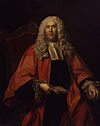
“In the history of American institutions, no other book — except the Bible — has played so great a role as Blackstone's Commentaries on the Laws of England. Before the American Revolution, according to Edmund Burke, it had sold nearly as many copies in the colonies as in England. Even without Blackstone, the Americans surely would have fought their Revolution and doubtless would have preserved English institutions in America. But the convenient appearance of the Commentaries within the decade before the Declaration of Independence made it much easier for Americans to see what they were preserving; and made it feasible to perpetuate those institutions in remote villages without trained lawyers or law libraries. From Blackstone we can learn even more about what the American colonists were defending than by reading the violent tracts of Thomas Paine.”
Misattributed Quotes
Quotes mistakenly credited to Daniel J. Boorstin
“The cities of Italy are now deluged with droves of these creatures [tour groups], for they never separate, and you see them, forty in number, pouring along a street with their director — now in front, now at the rear, circling them like a sheep dog — and really the process is as like herding as may be.”
About Daniel J. Boorstin
Daniel J. Boorstin (1 October 1914 – 28 February 2004) was an American historian, professor, attorney, and author. He served as the director of the Smithsonian’s National Museum of American History in 1969-1973 and was the Librarian of Congress from 1975 to 1987. His book trilogy, The Americans: The Colonial Experience, The National Experience, and The Democratic Experience received the Bancroft Prize, the Pulitzer Prize, and the Francis Parkman Prize. In 1989, the Medal for Distinguished Contribution to American Letters was bestowed upon him.
QuotesCosmos Cross-Civilizational Archive
Explore Related Wisdom Pillars, Worldviews & Canonical Works
Discover how humanity's greatest philosophers, sacred scriptures, and literary masterpieces address the core questions of existence.
30 Wisdom Pillars
22 Worldviews & Traditions
Canonical Books & Scriptures