Link Copied!
Daniel Ellsberg Quotes (1931-2023)
King
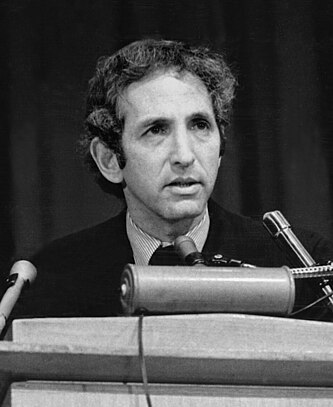
About Daniel Ellsberg
Daniel Ellsberg (April 7, 1931 – June 16, 2023) was a United States military analyst who, while employed by the RAND Corporation, released in 1971 the Pentagon Papers, a top-secret Pentagon study of US government decision-making about the Vietnam War, to The New York Times and other newspapers.
Best Daniel Ellsberg Quotes
Shortest
Earliest
Explore our curated collection of the most famous and impactful Daniel Ellsberg quotes.
“That was a documentary!”
“We weren't on the wrong side. We are the wrong side.”

“The American public was lied to [about the Vietnam War] month by month by each of these five administrations [Truman, Eisenhower, Kennedy, Johnson, Nixon]. It's a tribute to the American public that their leaders perceived that they had to be lied to. It's no tribute to us that it was so easy to fool the public.”
“Chelsea Manning is again acting heroically in the name of press freedom, and it’s a travesty that she has been sent back to jail for refusing to testify to a grand jury. An investigation into WikiLeaks for publishing is a grave threat to all journalists’ rights, and Chelsea is doing us all a service for fighting it. She has already been tortured, spent years in jail, and has suffered more than enough. She should be released immediately.”
“I took that opportunity to tell him something that, er, I had long thought of telling somebody that was about to enter the world of really high secrecy. And I said, 'Henry, you're about to get a lot of clearance higher than top secret that you did not know existed. That's going to have a sequence of effects on you. First, a great exhilaration that you're getting all this amazing information that you didn't know even existed. And the next phase is you'll feel like a fool for not having known about any of this. but that won't last long. Fairly soon, you'll come to think that everyone else is foolish. What would this expert be telling me if he knew what I knew? So in the end, you stop listening to them.”
“The question really arises is it a republic if you can keep it, question have we kept it? And the answer is no! No we have not kept it. Since 2001 we have in effect an elected monarchy. And ah, meaning a country which Nixon's view 'when a president does it, it is legal'. The president says it's not illegal. That is the attitude long after Nixon of John Yoo, who was the advisor to George W. Bush, of David Addington, Bush Cheney's legal advisor. Essentially there are no limits on presidential power except those which he chooses to put on himself. Obama following on, has in effect decriminalized torture which is as illegal and criminal as anything can be under international law and domestic law, a number of domestic laws and international laws, which we have ratified to investigate, and follow-up if there is any credible charge. Obama has chosen not to investigate or indict any higher up for that process of torture.”

Daniel Ellsberg Quotes by Topic
Find exactly what you are looking for by browsing this categorized list of Daniel Ellsberg quotes by topic.
Daniel Ellsberg on Cuban Missile Crisis 3 quotes
“Later, Robert McNamara would reveal something of his state of mind on October 27, “the Saturday before the Sunday in which Khrushchev announced withdrawal of the missiles … and a U-2 was shot down … I remember leaving the White House at the end of that Saturday. It was a beautiful fall day. And thinking that might well be the last sunset I saw. You couldn’t tell what was going to follow.” Could I have been that far off in my own belief that nuclear war was extremely unlikely? Could they have been right? The answer to both is yes—though for different reasons than most of them supposed. The fact is that on Saturday, October 27, 1962, a chain of events was in motion that might have come close to ending civilization. How close? A handbreadth. That is despite the fact, as I have come to believe, that both leaders, Khrushchev and Kennedy, were determined to avoid armed conflict—that both, in fact, were prepared to settle on the other’s terms, if necessary, rather than go to war. And yet they each hoped, by threatening war, to achieve a better bargain. For the sake of a better deal they both were willing to postpone by hours or days the settlement that each was willing to make. And meanwhile, during those hours, their subordinates (unaware that they were supporting a pure bluff in a game of bargaining) were taking military actions that could unleash an unstoppable train of events, ultimately pulling the trigger on a Doomsday Machine.”
Daniel Ellsberg on Bombs 2 quotes
“And if I had been fully aware how commonly—particularly in the B-29 raids over Japan—we were imitating Nazi terror bombing practices, how would I have reacted? I don’t really know. Perhaps any concerns would have been quieted by the thoughts that they had started the war and the bombing of cities, that retaliation was fair and necessary, and that anything that would help win a war against such atrocious foes was justified. Those same thoughts might have reassured me about the use of atomic bombs on Japan, as they did for most Americans, if it hadn’t been for an unusual classroom experience I had had in the last year of the war.”

Daniel Ellsberg on Totalitarianism 2 quotes
“My awareness of postwar foreign policy really began with this announcement of the Truman Doctrine in the spring of 1947, my junior year of high school. Truman proposed U.S. readiness to support “free peoples” anywhere from the imposition of “totalitarian regimes,” a phrase he used four times in his speech. The phrase conveyed an essential equivalence between Communism and Nazism, and between Stalin and Hitler. It implied that the challenge we faced in World War II had not really ended in 1945. As a child of that war, and trusting Western leadership, I accepted that definition of the challenge and at sixteen, too young to have taken part in the earlier campaign, I was ready to rise to it. As I followed the news in subsequent years about the Communist coup in Czechoslovakia in 1948, the Berlin blockade later that spring, the Stalinist regimes and political trials in Russia and Eastern Europe, and later the North Korean attack, I came gradually to accept all the Cold War premises and attitudes.”

Daniel Ellsberg on War
“I knew years before the Pentagon Papers came out that the Americans were being lied in to an essentially hopeless war. I’m not proud of the fact that it didn’t occur to me that my oath of office, which was to support the Constitution, called on me to put that information out and say, ‘64, when the war might have been avoided. But I certainly am glad that I finally came aware of what my real responsibilities were there. And I did put it out years later. At times, at that time, which published it, the “Times,” and the 18 other newspapers, which defied President Nixon’s injunctions and did put it out, were in the position of Julian Assange is in now.”
Daniel Ellsberg on President of the United States
“The question really arises is it a republic if you can keep it, question have we kept it? And the answer is no! No we have not kept it. Since 2001 we have in effect an elected monarchy. And ah, meaning a country which [Richard] Nixon's view "when a president does it, it is legal". The president says it's not illegal. That is the attitude long after Nixon of John Yoo, who was the advisor to George W. Bush, of David Addington, Bush Cheney's legal advisor. Essentially there are no limits on presidential power except those which he chooses to put on himself. Obama following on, has in effect decriminalized torture which is as illegal and criminal as anything can be under international law and domestic law, a number of domestic laws and international laws, which we have ratified to investigate, and follow-up if there is any credible charge. Obama has chosen not to investigate or indict any higher up for that process of torture.”

Daniel Ellsberg on Manhattan Project
“Much, I imagined, like members of a religious order would, I shared with my colleagues a sense of brotherhood, living and working with others for a transcendent cause. In fact, those former Manhattan Project scientists who stayed on in weapons work, as well as their successors at the nuclear weapons labs, are often described by others (not admiringly) as a secular priesthood. In part that’s a matter of their knowledge of secrets of the universe, arcana not to be shared with the laity: the sense of being an insider, the seductions of secrecy, to be counseling men of power. An article on the new “military intellectuals” likened RAND consultants in Washington and the Pentagon, moving invisibly across bureaucratic boundaries opaque to others, to the Jesuits of old Europe, moving between courts, serving as confessors to kings. But above all, precisely in my early missile-gap years at RAND and as a consultant in Washington, there was our sense of mission, the burden of believing we knew more about the dangers ahead, and what might be done about them, than did the generals in the Pentagon or SAC, or Congress or the public, or even the president. It was an enlivening burden.”
Daniel Ellsberg on Watergate scandal
“It turned out eventually that President Nixon had secretly been informed that I had copied material beyond the Pentagon Papers from his own National Security Council. He plausibly feared that I could reveal and document his secret threats to North Vietnam of escalations, including nuclear attacks, aiming essentially to win the war. To avert my possible exposure of his secret demands and threats—which had already prolonged the war for two years, widened it to Cambodia and Laos, and which would ultimately add twenty thousand American names to the Vietnam Memorial—he had set in motion a variety of criminal steps to keep me silent about his secret policy. These crimes against me—including warrantless wiretaps, burglary of my former psychoanalyst’s office seeking blackmail material, illegal use of the CIA, and an abortive effort to “totally incapacitate” me—when they were revealed, were a critical part of the impeachment proceedings that led to Nixon’s resignation, which made the war endable nine months later. Since these same crimes would have tainted a second prosecution for distribution of the Pentagon Papers, the Boston grand jury was abruptly terminated, and the second trial was averted.”

Daniel Ellsberg on Atomic bombings of Hiroshima and Nagasaki
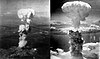
“It was a hot August day in Detroit. I was standing on a downtown street corner, looking at the front page of the Detroit News in a news rack. A streetcar rattled by on the tracks as I read the headline: a single American bomb had destroyed a Japanese city. My first thought: “I know exactly what that bomb was.” It was the U-235 bomb we had discussed in school and written papers about the previous fall. I thought: We got it first. And we used it. On a city. I had a sense of dread, a feeling that something very dangerous for humanity had just happened. A feeling, new to me as an American, at fourteen, that my country might have made a terrible mistake. I was glad when the war ended nine days later, but it didn’t make me think that my first reaction on August 6 was wrong. I felt uneasy in the days ahead, about the triumphal tone in Harry Truman’s voice on the radio—flat and Midwestern as always, but unusually celebratory—as he exulted over our success in the race for the bomb and its effectiveness over Japan. This suggested, for me, that our leaders didn’t have the full picture, didn’t grasp the significance of the precedent they had set and the sinister implications for the future. Unlikely thoughts for a fourteen-year-old American boy to have had the week the war ended? Yes, if he hadn’t been in Mr. Patterson’s social studies class the previous fall.”
Daniel Ellsberg on Classified information
“That possibility was the basic need for this rigmarole, and why only the first letters of the code words “Talent” (for U-2 photography) and “Keyhole” (for the reconnaissance satellite program and photos) were to be mentioned in a public place, where they might be overheard. Elaborate as it sounds, this two-phone-call routine was something I practiced many times in later years before talking with someone whose access was not known to me. Procedures like this—and the sanction of being summarily cut off from access, involvement, and advancement by violating them—kept a vast amount of information relevant to government decision-making (“higher than Top Secret,” SCI) secret from the public, Congress, and most of the government, along with foreigners and enemies, for long periods of time; they were proof against leaks for decades and generations, even when information was known to hundreds or thousands of individuals cleared for it. The cliché that “everything leaks; it all comes out in the New York Times eventually” is emphatically not true, above all for sensitive compartmented information. It’s a cover story, designed both to hide and sustain the effectiveness of the overall secrecy system. (Edward Snowden was the first ever to expose a large amount of SCI, including massively unconstitutional and criminal dragnet surveillance of American citizens and others in the world without probable cause for suspicion. Many thousands of NSA employees had known for a decade of that mass surveillance and its criminality. Not one other had disclosed it. Snowden is currently in exile, probably for life.)”

What Daniel Ellsberg Said About Others
Discover personal opinions Daniel Ellsberg shared regarding contemporaries.
Daniel Ellsberg on Edward Snowden 2 quotes
“He's a fugitive, not as Secretary Kerry says from justice — he's a fugitive from injustice. He has no chance of a fair, just trial in this country.”

Daniel Ellsberg on Curtis LeMay 2 quotes
“Precisely to compensate for an impression of inexperience after the events of the last few months, Kennedy just then named as chief of staff of the Air Force General Curtis LeMay, the man with the toughest militarist image in the armed services. This despite the fact that a number of observers, including Robert Kennedy, would report incidents when certain military men—LeMay above all—would give Kennedy the impression that they were essentially insane, madly reckless, or out of touch with reality. (These included, the next year, LeMay’s strongly worded advice on the Sunday morning in 1962 when Khrushchev announced he was dismantling his missiles in Cuba that the president should go ahead and attack Cuba anyway.) Yet it was Kennedy who had named LeMay as chief of staff of the Air Force on June 30, 1961, and kept him there.”

Daniel Ellsberg on Dwight D. Eisenhower
“As I discovered in my command and control research in the late fifties, President Eisenhower had secretly delegated authority to initiate nuclear attacks to his theater commanders under various circumstances, including the outage of communications with Washington (a daily occurrence in the Pacific) or a presidential incapacitation (which Eisenhower suffered twice). And with his authorization, they had in turn delegated this initiative, under comparable crisis conditions, to subordinate commanders. To my surprise, after I had alerted the Kennedy White House to this policy and its dangers, President Kennedy continued it (rather than reverse the decision of the “great commander” who had preceded him). So did Presidents Johnson, Nixon, and Carter. So, almost certainly, has every subsequent president to this day, even though in the past several decades there may have been at least nominal “devolution” to some civilian outside Washington. This delegation has been one of our highest national secrets.”

Daniel Ellsberg on Harry S. Truman
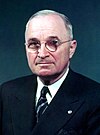
“By the time I prepared to enter college, I was beginning to see myself, as I did for many years afterward, as a Truman Democrat: a liberal Cold Warrior, pro-labor and anti-Communist, like Senators Hubert Humphrey and Henry Jackson and like my Detroit hero Walter Reuther of the United Auto Workers. I admired Truman’s action in sending bombers filled with coal and food instead of weapons to resupply the people in Berlin during the Soviet blockade that began the month of my high school graduation. I supported his response two years later to naked Communist aggression in Korea. And I especially appreciated his decision to keep Korea a limited, conventional war, rejecting General Douglas MacArthur’s recommendations to expand the war to China and to use nuclear weapons. Believing in the policy, I was prepared to go to Korea myself, though I had no eagerness for it. After accepting student deferments until I finished Harvard and then for a year’s graduate fellowship at Cambridge University, I felt an obligation to take the place that others had filled for me. On my return from Cambridge, I volunteered for officer candidate school in the Marine Corps in the fall of 1953; the first opening was the following spring.”
Daniel Ellsberg on Hillary Clinton
“As candidate in 2016, now President Donald J. Trump repeatedly asserted his unwillingness to take nuclear first-use threats “off the table” in any conflict, including with ISIS, or in Europe. (He also said that he would be “the last to use nuclear weapons”—unless, evidently, he were the first.) In the first debate of the presidential campaign, he was asked: “On nuclear weapons, President Obama reportedly considered changing the nation’s long-standing policy [i.e., changing it to no-first-use]. Do you support the current policy?” Given two minutes to answer, Trump said, among other things: “I would like everybody to end it, just get rid of it. But I would certainly not do first strike. I think that once the nuclear alternative happens, it’s over. At the same time, we have to be prepared. I can’t take anything off the table.” In her two minutes, Hillary Clinton managed not to repeat Trump’s words about the table, or to respond to the question at all except to “reassure our allies … that we have mutual defense treaties and we will honor them.” But clearly if she had been pressed, the former secretary of state would have given substantially the same answer as Trump did in all his interviews. Our mutual defense treaties have never excluded U.S. first use of nuclear weapons. (As a candidate in 2008, rebuking Senator Barack Obama for saying he would not use nuclear weapons against Pakistan, she said that no president should ever say what weapons he or she would or would not use.)”

Daniel Ellsberg on Edward Teller
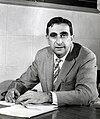
“The physicist Edward Teller, known as the “father of the H-bomb,” went further to deny that omnicide—a concept he derided—was remotely feasible. In answer to a question I posed to him as late as 1982, he said emphatically it was “impossible” to kill by any imaginable use of thermonuclear weapons that he had co-invented “more than a quarter of the earth’s population.” At the time, I thought of this assurance, ironically, as his perception of “the glass being three-quarters full.” (Teller was, along with Kahn, Henry Kissinger, and the former Nazi missile designer Wernher von Braun, one of Kubrick’s inspirations for the character of Dr. Strangelove.) And Teller’s estimate was closely in line with what the JCS actually planned to do in 1961, though a better estimate (allowing for the direct effects of fire, which JSC calculations have always omitted) would have been closer to one-third to one-half of total omnicide. But the JCS were mistaken in 1961, and so was Herman Kahn in 1960, and so was Teller in 1982. Nobody’s perfect. Just one year after Teller had made this negative assertion (at a hearing of the California state legislature which we both addressed, on the Bilateral Nuclear Weapons Freeze Initiative), the first papers appeared on the nuclear-winter effects of smoke injected into the stratosphere by firestorms generated by a thousand or more of the fifty thousand existing H-bombs used on cities. Contrary to Kahn and Teller, an American Doomsday Machine already existed in 1961—and had for years—in the form of pre-targeted bombers on alert in the Strategic Air Command (SAC), soon to be joined by Polaris submarine-launched missiles. Although this machine wasn’t likely to kill outright or starve to death literally every last human, its effects, once triggered, would come close enough to that to deserve the name Doomsday.”
Daniel Ellsberg on Robert McNamara
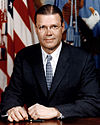
“In early July, Alain Enthoven had arranged for me to have a brief luncheon with McNamara, to discuss my work on the guidance to the JCS on the war plan, which he had already approved and sent to the Chiefs. We ate at his desk, in his office. It was scheduled to last only half an hour, but it went on nearly an hour longer. I told him about the astonishing answers the JCS had given to the questions I had drafted in the name of the president, in particular about the effects they anticipated on our own European allies from their planned attacks on the Sino-Soviet bloc. I’d had no prior intention to bring up my own strongly heretical view on first use, but midway through our talk, he raised the issue himself. There was no such thing as limited nuclear war in Europe, he said. “It would be total war, total annihilation, for the Europeans!” He said this with great passion, belying his reputation as a cold, computer-like efficiency expert. Moreover, he thought it was absurd to suppose that a supposedly “limited use” would remain limited to Europe, that it would not quickly trigger general nuclear war between the United States and Soviet Union, to disastrous effect. I’ve never had a stronger sense in another person of a kindred awareness of this situation and intensity of his concern to change it. Thirty years later, McNamara revealed in his memoir In Retrospect that he had secretly advised President Kennedy, and after him President Johnson, that under no circumstances whatever should they ever initiate nuclear war. He didn’t tell me that, but it was implicit in everything he had said at this lunch. There is no doubt in my mind that he did give that advice, and that it was the right advice. Yet it directly contradicted the mad “assurances” on U.S. readiness for first use he felt compelled to give repeatedly to NATO officials (including speeches I drafted for him) throughout his years in office, as the very basis for our leadership in the alliance.”
About Daniel Ellsberg
Daniel Ellsberg (April 7, 1931 – June 16, 2023) was a United States military analyst who, while employed by the RAND Corporation, released in 1971 the Pentagon Papers, a top-secret Pentagon study of US government decision-making about the Vietnam War, to The New York Times and other newspapers.
QuotesCosmos Cross-Civilizational Archive
Explore Related Wisdom Pillars, Worldviews & Canonical Works
Discover how humanity's greatest philosophers, sacred scriptures, and literary masterpieces address the core questions of existence.
30 Wisdom Pillars
22 Worldviews & Traditions
Canonical Books & Scriptures