Link Copied!
Daniel Dennett Quotes (1942-2024)
Philosopher, Writer, Scientist











About Daniel Dennett
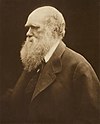
Daniel Clement Dennett III (March 28, 1942 – April 19, 2024) was an American atheist philosopher, writer, and cognitive scientist whose research centered on the philosophy of mind, philosophy of science, and philosophy of biology, particularly as those fields relate to evolutionary biology.
Best Daniel Dennett Quotes
Shortest
Earliest
Explore our curated collection of the most famous and impactful Daniel Dennett quotes.
“Biology is Engineering”



“Not a single one of the cells that compose you knows who you are, or cares.”
“Philosophers' Syndrome: mistaking a failure of the imagination for an insight into necessity.”


“A prosthetically enhanced imagination is still liable to failure, especially if it is not used with sufficient rigor.”
“We really have to think of reasoning the way we think of romance, it takes two to tango. There has to be a communication.”

“The utility of a thought experiment is inversely proportional to the size of its departures from reality.”

“Go ahead and believe in God, if you like, but don't imagine that you have been given any grounds for such a belief by science.”
“A philosopher is someone who says, "We know it's possible in practice; we're trying to work out if it's possible in principle!"”
“Animals are not just herbivores or carnivores. They are, in the nice coinage of the psychologist George Miller, informavores.”
“Every human mind you've ever looked at … is a product not just of natural selection but of cultural redesign of enormous proportions.”
“Experience teaches...that there is no such thing as a thought experiment so clearly presented that no philosopher can misinterpret it...”
“Philosophy — in every field of inquiry — is what you have to do until you figure out what questions you should have been asking in the first place.”

“The middle ground, roughly halfway between poetry and mathematics, is where philosophers can make their best contributions, I believe, yielding genuine clarifications of deeply puzzling problems.”

“..the point of a randomizing device like a coin flip, [is] to make the result uncontrollable by making it sensitive to so many variables that no feasible, finite list of conditions can be singled out as the cause.”
“[T]here are no forces on this planet more dangerous to us all than the fanaticisms of fundamentalism, of all species: Protestantism, Catholicism, Judaism, Islam, Hinduism, and Buddhism, as well as countless smaller infections.”

“[I]n all mammalian species that have so far been carefully studied, the rate at which their members engage in the killing of conspecifics is several thousand times greater than the highest homicide rate in any American city.”
“As Akins observes, it is not the point of our sensory systems that they should detect "basic" or "natural" properties of the environment, but that they should serve our "narcissistic" purposes in staying alive; nature doesn't build epistemic engines.”
“When comparing the time scales of genetic and cultural evolution, it is useful to bear in mind that we today — every one of us — can easily understand many ideas that were simply unthinkable by the geniuses in our grandparents' generation!”
“It is not "scientism" to concede the objectivity and precision of good science, any more than it is history worship to concede that Napoleon did once rule in France and the Holocaust actually happened. Those who fear the facts will forever try to discredit the fact-finders.”
Daniel Dennett Quotes by Topic
Find exactly what you are looking for by browsing this categorized list of Daniel Dennett quotes by topic.
Daniel Dennett on Philosophy of mind 2 quotes
“Not a single one of the cells that compose you knows who you are, or cares.”
Daniel Dennett on Biology
“Biology is Engineering.”

Daniel Dennett on Existentialism
“If Nietzsche is the father of existentialism, then perhaps Darwin deserves the title of grandfather.”
Daniel Dennett on Life
Daniel Dennett on Meaning of life
Daniel Dennett on Nature versus nurture
“Every human mind you've ever looked at … is a product not just of natural selection but of cultural redesign of enormous proportions.”

Daniel Dennett on God is dead
“Friedrich Nietzsche saw—through the mists of his contempt for all things English—an even more cosmic message in Darwin: God is dead. If Nietzsche is the father of existentialism, then perhaps Darwin deserves the title of grandfather.”
Daniel Dennett on Salmon
“The salmon swimming upstream to spawn may be wily in a hundred ways, but she cannot even contemplate the prospect of abandoning her reproductive project and deciding instead to live out her days studying coastal geography or trying to learn Portuguese.”

Daniel Dennett on Mind
“The juvenile sea squirt wanders through the sea searching for a suitable rock or hunk of coral to cling to and make its home for life. For this task, it has a rudimentary nervous system. When it finds its spot and takes root, it doesn't need its brain anymore so it eats it! (It's rather like getting tenure.)”

Daniel Dennett on Anticipation
“The task of the mind is to produce future, as the poet Paul Valery once put it. A mind is fundamentally an anticipator, an expectation-generator. It mines the present for clues, which it refines with the help of the materials it has saved from the past, turning them into anticipations of the future. And then it acts, rationally, on the basis of those hard-won anticipations.”

Daniel Dennett on Agronomy
“The fundamental core of contemporary Darwinism, the theory of DNA-based reproduction and evolution, is now beyond dispute among scientists. It demonstrates its power every day, contributing crucially to the explanation of planet-sized facts of geology and meteorology, through middle-sized facts of ecology and agronomy, down to the latest microscopic facts of genetic engineering.”

Daniel Dennett on Division of labor
“Surely just about everybody has faced a moral dilemma and secretly wished, "If only somebody — somebody I trusted — could just tell me what to do!" Wouldn't this be morally inauthentic? Aren't we responsible for making our own moral decisions? Yes, but the virtues of "do it yourself" moral reasoning have their limits, and if you decide, after conscientious consideration, that your moral decision is to delegate further moral decisions in your life to a trusted expert, then you have made your own moral decision. You have decided to take advantage of the division of labor that civilization makes possible and get the help of expert specialists.”
What Daniel Dennett Said About Others
Discover personal opinions Daniel Dennett shared regarding contemporaries.
Daniel Dennett on Thomas Kuhn 2 quotes
“Kuhn’s book has been misread and misused in many quarters; Kuhn’s excellent points are not as radical as many like to believe.”

Daniel Dennett on Friedrich Nietzsche 2 quotes
“Friedrich Nietzsche saw—through the mists of his contempt for all things English—an even more cosmic message in Darwin: God is dead. If Nietzsche is the father of existentialism, then perhaps Darwin deserves the title of grandfather.”

Daniel Dennett on Christopher Hitchens
“So only atheists are in a comfortable position to cast the first stone, and Christopher Hitchens, in "God Is Not Great," relishes the role. He has the credentials, as both a combative journalist and a surprisingly erudite literary scholar, and he wants to break the diplomacy barrier and expose the preposterous presumptions and ignoble machinations that stain the history of all religions, bringing discredit that tends to get magnified over the years by a persistent pattern of coverup, veils of illusion, and denial of one design or another. These efforts at obfuscation are quite transparent under Hitchens' s merciless scrutiny, and the results are often quite comical.”
Daniel Dennett on John Rawls
“The key innovation in Rawl's scenario, designed to ensure that undue selfishness among the participants in this exercise in reflection cancels itself out, is what he calls the "veil of ignorance". Everyone gets to vote on a favored design of society, but when you decide which society you would be happy to live in and give your allegiance to, you vote without knowing your particular role or niche in it will be. You may be a senator or a surgeon or a street sweeper or a soldier; you don't get to find out until after you have voted. Choosing from behind the veil of ignorance ensures that people will give due consideration to the likely effects, the costs and benefits, for all the citizenry, including those worse off.”
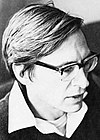
Daniel Dennett on Anatol Rapoport
“The social psychologist and game theorist Anatol Rapoport (creator of the winning Tit-for-Tat strategy in Robert Axelrod's legendary prisoner’s dilemma tournament) once promulgated a list of rules for how to write a successful critical commentary on an opponent's work. First, he said, you must attempt to re-express your opponent's position so clearly, vividly and fairly that your opponent says “Thanks, I wish I’d thought of putting it that way.” Then, you should list any points of agreement (especially if they are not matters of general or widespread agreement), and third, you should mention anything you have learned from your opponent. Only then are you permitted to say so much as a word of rebuttal or criticism.”
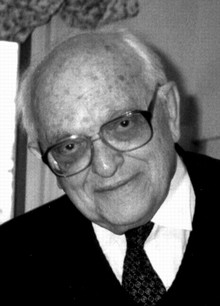
Daniel Dennett on Ludwig Wittgenstein
“Some will say that in the longer run, Wittgenstein's legacy will prove to be the more valuable. Perhaps it will. Wittgenstein, like any other charismatic thinker, continues to attract fanatics who devote their life to disagreeing with one another (and, presumably, with my brief summary) about the ultimate meaning of his words. These disciples cling myopically to their Wittgenstein, not realizing that there are many great Wittgensteins to choose from. My hero is the one who showed us new ways of being suspicious of our own convictions when confronting the mysteries of the mind. The fact remains that one's first exposure to either the Tractatus or Philosophical Investigations is a liberating and exhilarating experience. Here is a model of thinking so intense, so pure, so self-critical that even its mistakes are gifts.”

Daniel Dennett on Alfred Jules Ayer
“Friends were anxious to learn if I had had a near-death experience, and if so, what effect it had had on my longstanding public atheism. Had I had an epiphany? Was I going to follow in the footsteps of Ayer (who recovered his aplomb and insisted a few days later "what I should have said is that my experiences have weakened, not my belief that there is no life after death, but my inflexible attitude towards that belief"), or was my atheism still intact and unchanged? Yes, I did have an epiphany. I saw with greater clarity than ever before in my life that when I say "Thank goodness!" this is not merely a euphemism for "Thank God!" (We atheists don't believe that there is any God to thank.) I really do mean thank goodness! There is a lot of goodness in this world, and more goodness every day, and this fantastic human-made fabric of excellence is genuinely responsible for the fact that I am alive today. It is a worthy recipient of the gratitude I feel today, and I want to celebrate that fact here and now.”
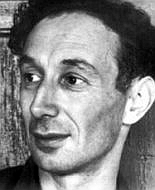
Daniel Dennett on Richard Dawkins
“A psychologist colleague, on reading a draft of this essay, asked if The Selfish Gene is considered required reading in any philosophy graduate program. Certainly specialists in the philosophy of science or philosophy of biology would be expected to have read it, but what about students of epistemology or philosophy of mind or language? We philosophers are a somewhat conservative lot, loath to grant that anybody but a professional philosopher could write something worthy of entry into the canon. If you put The Selfish Gene on the required reading list, just which ‘classic’ would you bump from the list to make room for it? I have seen enough philosophy students enthusiastically tell me how they were transformed by reading the book to judge that it pulls its weight and then some, so yes, I put Dawkins’ book alongside classics by such non-philosophers as Turing and Kuhn as essential thinking tools for any student of philosophy. In addition to everything else they will learn from it, they will discover that it is actually possible to write arguments that are both rigorous and a joy to read. That discovery, if enough philosophers took it to heart, could transform our discipline.”

Quotes About Daniel Dennett
Gain deeper perspective through quotes about Daniel Dennett from others.
George Gilder on Daniel Dennett
“Here we encounter what the atheist and philosopher Daniel Dennet calls the "universal solvent" of natural selection. With its reductionist acids it breaks down all larger systems into components and elements and blends, removing purpose, structure, teleology, and creativity.”
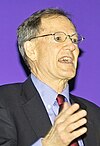
Sam Harris on the delusion of Free Will on Daniel Dennett
“The disagreement between Dan and myself is essentially this. We're living in a world where most people believe in Atlantis and they believe in the underwater kingdom and they read Plato closely, trying to figure out where it was. And I want to say Atlantis doesn't exist, it didn't exist, people are confused about Atlantis. Dan wants to say that Atlantis is really Sicily, and he'll give a whole argument about why Sicily answers to many of the claims that people are making about Atlantis. And I want to say, "No, they're still talking about being underwater. Sicily doesn't do that." And he says, "But Sicily is a great place and there's reasons to visit, and let's talk about Sicily." And when he and I argue about this, he begins to respond to me as though I'm saying Sicily doesn't exist. And so there's a fair amount of talking past one another in these kinds of debates. Of course Sicily exists, but the people who are talking about an underwater kingdom are, at the very least, confused, and that's the situation we're in with free will.”
Jaron Lanier on Daniel Dennett
“Only a zombie like Dennett could write a book called "Consciousness Explained" that doesn't address consciousness at all. Only zombies could respond with a book called "Dennett and His Critics" which doesn't criticize Dennett at all.”

David Pearce on Daniel Dennett
“In mainstream academia, formal models of mind and a priori philosophising have triumphed over the experimental method in the investigation of consciousness. Daniel Dennett ... , for instance, would scarcely be earning a good living on the American academic-philosophy gravy-train if he'd ever dropped some acid; but he'd know a great deal more about the philosophy of mind.”
About Daniel Dennett
Daniel Clement Dennett III (March 28, 1942 – April 19, 2024) was an American atheist philosopher, writer, and cognitive scientist whose research centered on the philosophy of mind, philosophy of science, and philosophy of biology, particularly as those fields relate to evolutionary biology.
QuotesCosmos Cross-Civilizational Archive
Explore Related Wisdom Pillars, Worldviews & Canonical Works
Discover how humanity's greatest philosophers, sacred scriptures, and literary masterpieces address the core questions of existence.
30 Wisdom Pillars
22 Worldviews & Traditions
Canonical Books & Scriptures