Link Copied!
Daniel Defoe Quotes (1660-1731)
Writer














About Daniel Defoe
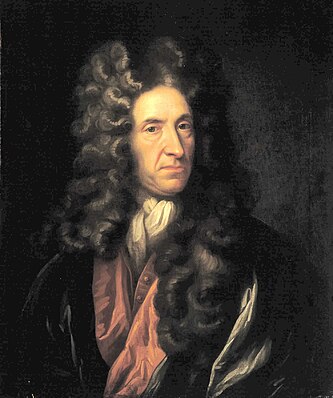
Daniel Defoe (13 September 1660 - 24 April 1731), was an English writer, journalist and spy, who gained enduring fame for his novel Robinson Crusoe.
Best Daniel Defoe Quotes
Shortest
Earliest
Explore our curated collection of the most famous and impactful Daniel Defoe quotes.

“For justice is the end of government.”


“For Englishmen are ne'er contented long.”

“What is one man's safety is another man's destruction.”

“All men would be tyrants if they could.”


“The art of war, which I take to be the highest perfection of human knowledge.”
“Wise men affirm it is the English way
Never to grumble till they come to pay.”
Never to grumble till they come to pay.”


“And of all plagues with which mankind are cursed,
Ecclesiastic tyranny's the worst.”
Ecclesiastic tyranny's the worst.”
“The best of men cannot suspend their fate:
The good die early, and the bad die late.”
The good die early, and the bad die late.”
“The best of men cannot suspend their fate;
The good die early, and the bad die late.”
The good die early, and the bad die late.”
“The grand contention's plainly to be seen,
To get some men put out, and some put in.”
To get some men put out, and some put in.”
“From this amphibious ill-born mob began
That vain, ill-natured thing, an Englishman.”
That vain, ill-natured thing, an Englishman.”
Daniel Defoe Quotes by Topic
Find exactly what you are looking for by browsing this categorized list of Daniel Defoe quotes by topic.
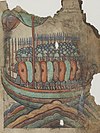
Daniel Defoe on Vikings 2 quotes
“Norwegian pirates, buccaneering Danes, Whose red-haired offspring ev’rywhere remains.”
Daniel Defoe on Jury
“Make every private Sentinel, every Musquetier, both Judge, Jury, and Executioner.”

Daniel Defoe on Soldiers
“Make every private Sentinel, every Musquetier, both Judge, Jury, and Executioner.”

Daniel Defoe on Judgment
“Make every private Sentinel, every Musquetier, both Judge, Jury, and Executioner.”

Daniel Defoe on Law
“Make every private Sentinel, every Musquetier, both Judge, Jury, and Executioner.”

Daniel Defoe on Civil war
“The Civil Wars, the common purgative, Which always use to make the nation thrive,”
Daniel Defoe on Ancestors
Daniel Defoe on Courtiers
Daniel Defoe on Red hair
“Norwegian pirates, buccaneering Danes, Whose red-haired offspring ev’rywhere remains,”

Daniel Defoe on Tyranny
What Daniel Defoe Said About Others
Discover personal opinions Daniel Defoe shared regarding contemporaries.
Daniel Defoe on Women
“Why then should women be denied the benefits of instruction? If knowledge and understanding had been useless additions to the sex, God almighty would never have given them capacities.”

Quotes About Daniel Defoe
Gain deeper perspective through quotes about Daniel Defoe from others.
Amicus on Daniel Defoe
Henry Brougham on Daniel Defoe
“That Robertson, however, had carefully studied the best writers, with a view to acquire genuine Anglicism, cannot be doubted. He was intimately acquainted with Swift's writings; indeed, he regarded him as eminently skilled in the narrative art. He had the same familiarity with Defoe, and had formed the same high estimate of his historical powers. I know, that when a Professor in another University consulted him on the best discipline for acquiring a good narrative style, previous to drawing up John Bell of Antermony's Travels across Russia to Tartary and the Chinese Wall, the remarkable advice he gave him was to read Robinson Crusoe carefully; and when the Professor was astonished, and supposed it was a jest, the historian said he was quite serious: but if Robinson Crusoe would not help him, or he was above studying Defoe, then he recommended Gulliver's Travels.”
Willa Cather on Daniel Defoe
“Defoe is a writer of ready invention but no imagination—with none of the personal attributes which, fused together somehow, make imagination. His narrative runs smoothly, evenly, convincingly; the best thing about it is his vigorous, unornamented English. There is a strong weave in the sentences as they follow each other that gives pleasure to the eye, as the feel of good hand-woven linen does to the fingertips. But after a while one demands something more. There is never a change of tempo, never a modulation of voice, or a quickening of sympathy.”
Hubert Damisch on Daniel Defoe
“The allegory does not come from nowhere; a certain culture offers it to us, imposes it on us for its own purposes, fictively reducing us to the condition of being completely cut off in order to force us—even while dazzling us with its own "riches"—to judge our needs, our productions, our values, our cultural heritage, by the sole light of necessity. Robinson's adventure takes its place in the economic history of the West at the precise moment when the relation between the rates of population growth and those of good supplies inverted itself, the latter finally surpassing the former: Robinson is the man for whom population, or reproduction, is not an issue, at least in its natural, biological form; he's the producer who has to know about nothing but his own sustenance.”
Charles Gildon on Daniel Defoe
“[Robinson Crusoe is] fam'd from Tuttle Street to Limehouse-hole. There is not an old Woman, that can go the Price of it, but buys thy ‘Life and Adventures,’ and leaves it as a Legacy with the ‘Pilgrim's Progress’, the ‘Practice of Piety,’ and ‘God's Revenge against Murther,’ to her Posterity.”
Pierre Macherey on Daniel Defoe
“In relation to eighteenth-century English mercantilism Moll Flanders, travelling from London to the American colonies, born in Newgate and familiar with high and low society, reveals as much as Robinson Crusoe: in her path social relations, class conflicts and the growth of capital appear in a cruder light. For this reason it has been called one of the earliest realist novels. Moll Flanders is also poor, economically destitute, though in a less romantic fashion – born in poverty, the daughter of a temporarily reprieved thief; and if her destiny appears instrumental by the meditations of providence, this is because it embodies an absolute authority of explanation or of accusation. A prostitute, a spouse, a pickpocket, a proprietor, always accompanied by continuously catalogued commodities (which have a value whatever their source), she is the eloquent, simple critic of love, commerce and marriage, those basic categories of the society which – by special privilege – she knows only from below. Social relations appear to her as things, because she deals with them directly, and not by intermediaries as others do. Like Crusoe she reveals; but, like him, she escapes from the imaginary to become the site of the only reality.”
Maximillian E. Novak on Daniel Defoe
“So far as I can tell, no narrator in realistic prose fiction before H. F. [the narrator of A Journal of the Plague Year] reveals this type of general sympathy for the human condition. I do not find it in those fictions of Defoe influenced by picaresque models. In Moll Flanders and Colonel Jack there is too much of a concern with self and individual experience to have the kind of combination of sympathy and detachment to be found in H. F. And the same may said of "poor Robinson Crusoe," as the parrot calls Defoe's castaway. Crusoe obviously has to teach his parrot to repeat that self-pitying title. Like Fielding's humane historian, H. F. resists all temptation to blame and scold. He is the invention of a moment in English history when Defoe wanted to spread feelings of hope and charity. In the process, he set a pattern for fictional narrators that has been central to the development of the novel.”
Pat Rogers on Daniel Defoe
“Daniel Defoe's Tour thro' the Whole Island of Great Britain has long been recognized as a key book of its age. It has been lauded by the most eminent historians as a prime source of understanding for Britain in the eighteenth century (indeed, for understanding the birth of the modern, on a global scale), and remains one of the most-quoted works in general surveys of the period.”
John J. Richetti on Daniel Defoe
“Roxana adds feminist ideology to Moll's praxis. But instead of violently appropriating the masculine like Mrs. Manley's grotesque Zarah, she aspires to a new category and actually declares that her ultimate ambition lies in a powerful androgyny. When an eminent merchant proposes marriage, she refuses in the name of liberty: "and seeing Liberty seem'd to be the Men's Property, I wou'd be a Man-Woman; for as I was born free, I wou'd die so". Roxana has a fully articulated ideology of freedom which grasps very clearly the central problem that she solves in her book, the loss of self attendant upon being merely a woman.”
Richard Wilmer Rowan on Daniel Defoe
“Daniel Defoe is one of the great professionals in all these centuries of secret service, a discreet giant among the legions of straining, posturing and boastfully "confiding" amateurs. Defoe, be it known, was in himself almost a complete secret service during the reign of the last Stuart sovereign of Britain; and he is our strongly endorsed candidate for everybody's "favorite secret agent" of these annals.”
George Starr on Daniel Defoe
“Used on a more limited scale, these schemes of balance can seem impressively artless, especially when they bring to an aphoristic point a loosely strung series of thoughts or events: one celebrated example is Moll's summary of the joint career of two fellow criminals: "In short, they robb'd together, lay together, were taken together, and at last were hang'd together." My object, however, is not to vindicate Defoe's endeavors toward stylistic balance and formality, let alone to maintain that they are the most common or distinctive feature of his prose, but simply to suggest, by calling attention to their existence, that immethodical homespun garrulity is not Defoe's only style.”
Leslie Stephen on Daniel Defoe
“Defoe's writings are of the highest value as an historical indication of the state of the middle and lower classes of his time.”

Anthony Trollope on Daniel Defoe
“Robinson Crusoe did not deal with love. Defoe's other stories, which are happily forgotten, are bad in their very essence. Roxana is an accurate example of what a bad book may be. It relates the adventures of a woman thoroughly depraved, and yet for the most part successful, -- is intended to attract by licentiousness, and puts off till the end the stale scrap of morality which is brought in as a salve to the conscience of the writer. Putting aside Robinson Crusoe, which has been truly described as an accident, Defoe's teaching as a novelist has been altogether bad.”
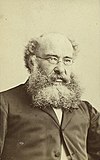
Ian Watt on Daniel Defoe
“The accidents of history, then, treated Defoe fortunately, although he courted them as no other writer has done, and deserves his reward. They impelled him to a step which was decisive in the history of the novel. His blind and almost purposeless concentration on the actions of his heroes and heroines, and his unconscious and unreflective mingling of their thoughts and his about the inglorious world in which they both exist, made possible the expression of many motives and themes which could not, perhaps, have come into the tradition of the novel without Defoe's shock tactics: motives such as economic egoism and social alienation; and themes such as the conflicts between old and new sets of values as they are manifested in daily life. Very few writers have created for themselves both a new subject and a new literary form to embody it. Defoe did both. In his somewhat monocular concentration on making his matter seem absolutely convincing, there was much he did not see. But what is left out is probably the price for what is so memorably and unprecedentedly put in.”
About Daniel Defoe
Daniel Defoe (13 September 1660 - 24 April 1731), was an English writer, journalist and spy, who gained enduring fame for his novel Robinson Crusoe.
QuotesCosmos Cross-Civilizational Archive
Explore Related Wisdom Pillars, Worldviews & Canonical Works
Discover how humanity's greatest philosophers, sacred scriptures, and literary masterpieces address the core questions of existence.
30 Wisdom Pillars
22 Worldviews & Traditions
Canonical Books & Scriptures