Link Copied!
Cynthia Ozick Quotes (1928-)
Writer, Novelist
About Cynthia Ozick
Cynthia Ozick (born April 17, 1928) is a Jewish American short story writer, novelist, and essayist.
Best Cynthia Ozick Quotes
Shortest
Earliest
Explore our curated collection of the most famous and impactful Cynthia Ozick quotes.
“Real apprenticeship is ultimately always to the self.”
“Like twinned with unlike is beauty's shock. And beauty...is eternal.”
“It is useless either to hate or to love truth - but it should be noticed.”

“He who cries, "What do I care about universality? I only know what is in me," does not know even that.”
“We are so placid that the smallest tremor of objection is taken as a full-scale revolution. ("Justice to Feminism")”

“To imagine the unimaginable is the highest use of the imagination. I no longer think of imagination as a thing to be dreaded.”


“What we think we are surely going to do, we don't do; and what we never intended to do, we may one day notice that we have done, and done, and done. (Forward)”
“It seems to me that more can be found about a writer in any single sentence in a work of fiction, say, than in five or ten full-scale biographies. Or interviews!”
“"If you're alone too much," Persky said, "you think too much." "Without a life," Rosa answered, "a person lives where they can. If all they got is thoughts, that's where they live."”
“The insight that the largest, deepest, widest imaginative faculty of all is what you need to be a monotheist teaches me that you simply cannot be a Jew if you repudiate the imagination.”

“(What moves you most in a work of literature?) Language as the well of image and feeling. Nabokov rather than Hemingway. If less is more, it is nevertheless also loss. And the easy vernacular is deprivation.”

“(And about your favorite poem.) “Dover Beach,” by Matthew Arnold. And running neck-and-neck, Shelley’s “Ozymandias” and Auden’s “September 1, 1939.” All are cutting-edge images of the 21st century so far.”
“Wars, invented and organized by the highest available consciousnesses (do the worms go to war? do the fish? do the paramecia?), are the planet's chief source and cause of torment. ("The Biological Premises of Our Sad Earth-Speck")”
“I don't think one writes for immortality. I think beginning writers always think they will have fame. But if fame — which is power — is what you want, then you'll get it, probably. But it's not something necessary to want or need.”

“The lower imagination, the weaker, falls into the proliferation of images. My hope is someday to be able to figure out a connection between the work of monotheism-imagining and the work of story-imagining. Until now I have thought of these as enemies.”
Cynthia Ozick Quotes by Topic
Find exactly what you are looking for by browsing this categorized list of Cynthia Ozick quotes by topic.
Cynthia Ozick on Warsaw
“Cultivation, old civilization, beauty, history! Surprising turnings of streets, shapes of venerable cottages, lovely aged eaves, unexpected and gossamer turrets, steeples, the gloss, the antiquity! Gardens. Whoever speaks of Paris has never seen Warsaw. [...] Whoever yearns for an aristocratic sensibility, let him switch on the great light of Warsaw.”

Cynthia Ozick on Israel
“"I think the word is intractable. I blame the lack of live and let live. And which side is it coming from more than the other side? I think it is coming from people who call other people infidels. That's how it strikes me." Was she moved the first time she went to Israel? "Yes. Probably not like my father, who was simply swept away. He couldn't get over that he had ascended Mount Zion. I don't see any solution here. I'm despairing. That's where I stand."”

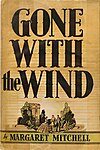
Cynthia Ozick on Gone with the Wind (novel)
“there was a time when a new novel came out — let's take Saul Bellow — and it was a public event. And really, it wasn't just an elitist hobby. I remember — this goes way, way back into my early childhood — when Gone with the Wind was published, the world was whirling around this novel. I remember walking to school and seeing shopkeepers sitting outside their shops reading Gone with the Wind. This was an event. It changed people's minds. Maybe I have a yearning for that, though I don't see it would ever happen again. On the other hand, didn't we see that with Downton Abbey? So maybe it isn't all lost.”
Cynthia Ozick on Downton Abbey
“there was a time when a new novel came out — let's take Saul Bellow — and it was a public event. And really, it wasn't just an elitist hobby. I remember — this goes way, way back into my early childhood — when Gone with the Wind was published, the world was whirling around this novel. I remember walking to school and seeing shopkeepers sitting outside their shops reading Gone with the Wind. This was an event. It changed people's minds. Maybe I have a yearning for that, though I don't see it would ever happen again. On the other hand, didn't we see that with Downton Abbey? So maybe it isn't all lost.”

What Cynthia Ozick Said About Others
Discover personal opinions Cynthia Ozick shared regarding contemporaries.
Cynthia Ozick on William Dean Howells 2 quotes
“William Dean Howells (who ought to be venerated at least as much as Willa Cather, if not more)”

Cynthia Ozick on William H. Gass
“I am actively drawn to essays, and am right now immersed in “Life Sentences,” a 2012 collection by William Gass (our most accomplished living American essayist, hands down).”
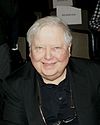
Cynthia Ozick on Havelock Ellis
“1919...Henri Bergson, Karl Barth, Ernst Cassirer, Havelock Ellis, Karl Jaspers, John Maynard Keynes, Rudolf Steiner—indelible figures—were all active in their various spheres.”
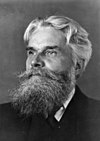
Cynthia Ozick on John Maynard Keynes
“1919...Henri Bergson, Karl Barth, Ernst Cassirer, Havelock Ellis, Karl Jaspers, John Maynard Keynes, Rudolf Steiner—indelible figures—were all active in their various spheres.”
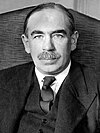
Cynthia Ozick on Karl Barth
“1919...Henri Bergson, Karl Barth, Ernst Cassirer, Havelock Ellis, Karl Jaspers, John Maynard Keynes, Rudolf Steiner—indelible figures—were all active in their various spheres.”
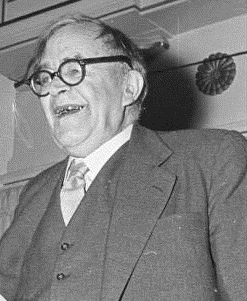
Cynthia Ozick on Karl Jaspers
“1919...Henri Bergson, Karl Barth, Ernst Cassirer, Havelock Ellis, Karl Jaspers, John Maynard Keynes, Rudolf Steiner—indelible figures—were all active in their various spheres.”

Cynthia Ozick on Rudolf Steiner
“1919...Henri Bergson, Karl Barth, Ernst Cassirer, Havelock Ellis, Karl Jaspers, John Maynard Keynes, Rudolf Steiner—indelible figures—were all active in their various spheres.”

Cynthia Ozick on Henri Bergson
“1919...Henri Bergson, Karl Barth, Ernst Cassirer, Havelock Ellis, Karl Jaspers, John Maynard Keynes, Rudolf Steiner—indelible figures—were all active in their various spheres.”

Quotes About Cynthia Ozick
Gain deeper perspective through quotes about Cynthia Ozick from others.
Emma Brockes commenting on Cynthia Ozick
“She is the master of the casual, searing image; in a department store in Foreign Bodies, a woman is ambushed by "floating tongues of perfume". During an awkward conversation between two people "a stillness blundered between them." In Heir to the Glimmering World, Professor Mitwisser, a Jewish exile from Nazi Germany, has eyes "acutely blue . . . I was shocked by their waver of bewilderment – like heat vibrating across a field."”
Dara Horn on Cynthia Ozick
“Cynthia Ozick is one of America’s greatest living writers. What makes her work breathtaking is its unvarying subject, a single idea that encompasses all that marks American life, Jewish tradition and every other challenge to the world as it is: ambition.”

Alicia Ostriker Forward on Cynthia Ozick
“Cynthia Ozick, in her landmark feminist essay "Notes Toward Finding the Right Question," has strikingly if shockingly-lamented the exclusion of women from the tradition of Jewish learning and creativity as "one of the cruelest events in Jewish history."”
About Cynthia Ozick
Cynthia Ozick (born April 17, 1928) is a Jewish American short story writer, novelist, and essayist.
QuotesCosmos Cross-Civilizational Archive
Explore Related Wisdom Pillars, Worldviews & Canonical Works
Discover how humanity's greatest philosophers, sacred scriptures, and literary masterpieces address the core questions of existence.
30 Wisdom Pillars
22 Worldviews & Traditions
Canonical Books & Scriptures