Link Copied!
Chester Barnard Quotes (1886-1961)
Author
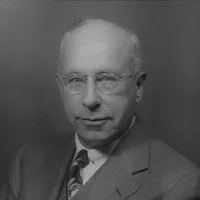


About Chester Barnard
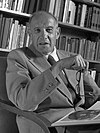
Chester Irving Barnard (November 7, 1886 – June 7, 1961) was an American business executive, public administrator, and the author of pioneering work in management theory and organizational studies.
Best Chester Barnard Quotes
Shortest
Earliest
Explore our curated collection of the most famous and impactful Chester Barnard quotes.

“Planning is one of the many catchwords whose present popularity is roughly proportionate to the obscurity of its definition.”

“At a crisis in my youth he taught me the wisdom of choice: To try and fail is at least to learn; to fail to try is to suffer the inestimable loss of what might have been.”
“The individual is a single, unique, independent, isolated, whole thing, embodying innumerable forces and materials past and present which are physical, biological, and social factors.”

“Executive processes are specialized functions in what we know as organizations. If these functions are to be adequately described, the description must be in terms of the nature of the organization itself.”

“It is important at this point to make clear that every coöperative purpose has in the view of each coöperating person two aspects which we will call (a) the coöperative and (b) the subjective aspect, respectively.”
“More than the topography and cartography of organization would be necessary to understand the executive functions; a knowledge of the kinds and qualities of the forces at work and the manner of their operation would also be needed.”

“Formally this work is divided into four parts, but in a sense it consists of two short treatises. One is an exposition of a theory of cooperation and organization and constitutes the first half of the book. The second is a study of the functions and of the methods of operation of executives in formal organizations.”
“When a condition of honesty and sincerity is recognized to exist, errors of judgment, defects of ability, are sympathetically endured. They are expected. Employees don’t ascribe infallibility to leaders or management. What does disturb them is insincerity and the appearance of insincerity when the facts are not in their possession.”
“When a specific desired end is attained we shall say that the action is "effective." When the unsought consequences of the action are more important than the attainment of the desired end and are dissatisfactory, effective action, we shall say, is "inefficient." When the unsought consequences are unimportant or trivial, the action is "efficient.”

“The making of decisions, as everyone knows from personal experience, is a burdensome task. Offsetting the exhilaration that may result from correct and successful decision and the relief that follows the termination of a struggle to determine issues is the depression that comes from failure, or error of decision, and the frustration which ensues from uncertainty.”
“The overvaluation of the apparatus of communication and administration is opposed to leadership and the development of leaders. It opposes leadership whose function is to promote appropriate adjustment of ends and means to new environmental conditions, because it opposes change either of status in general or of established procedures and habitual routine. This overvaluation also discourages the development of leaders by retarding the progress of the abler men and by putting an excessive premium on routine qualities.”

“An organization can secure the efforts necessary to its existence, then, either by the objective inducements it provides or by changing states of mind. It seems to me improbable that any organization can exist as a practical matter which does not employ both methods in combination. In some organizations the emphasis is on the offering of objective incentives — this is true of most industrial organizations. In others the preponderance is on the state of mind — this is true of most patriotic and religious organizations.”
“Prestige, competitive reputation, social philosophy, social standing, philanthropic interests, combativeness, love of intrigue, dislike of friction, technical interest, Napoleonic dreams, love of accomplishing useful things, desire for regard of employees, love of publicity, fear of publicity – a long catalogue of non-economic motives actually condition the management of business, and nothing but the balance sheet keeps these non-economic motives from running wild. Yet without all these incentives, I think most business would be a lifeless failure.”

“An organization comes into being when (1) there are persons able to communicate with each other (2) who are willing to contribute action (3) to accomplish a common purpose. The elements of an organization are therefore (1) communication; (2) willingness to serve; and (3) common purpose. These elements are necessary and sufficient conditions initially, and they are found in all such organizations. The third element, purpose, is implicit in the definition. Willingness to serve, and communication, and the interdependence of the three elements in general, and their mutual dependence in specifie cooperative systems, are matters of experience and observation.”

“An organization is a subordinate system of a specific larger system, the cooperative system, whose components are physical, biological, and personal systems. The relations with other organizations... are outside this specific cooperative system. Other organizations are a part of the social environment of the organization. It is for this reason I have used the phrase "complex of organizations" rather than "system." Usually the most significant relationships of a unit organization are those with the specific cooperative system of which it is a part. It is this system which primarily and on the whole in most instances determines the chief conditions of the organization's existence.”

“It is in the nature of a leader’s work that he should be a realist and should recognize the need for action, even when the outcome cannot be foreseen, but also that he should be idealist and in the broadest sense pursue goals some of which can only be attained in a succeeding generation of leaders. Many leaders when they reach the apex of their powers have not long to go, and they press onward by paths the ends of which they will not themselves reach. In business, in education, in government, in religion, again and again, I see men who, I am sure, are dominated by this motive, though unexpressed, and by some queer twist of our present attitudes often disavowed. Yet, ‘Old men [and old women] plant trees’... to shape the present for the future by the surplus of thought and purpose which we now can muster seems the very expression of the idealism which underlies such social coherence as we presently achieve, and without this idealism we see no worthy meaning in our lives, our institutions, or our culture.”

“The fine art of executive decision consists in not deciding questions that are not now pertinent, in not deciding prematurely, in not making decision that cannot be made effective, and in not making decisions that others should make. Not to decide questions that are not pertinent at the time is uncommon good sense, though to raise them may be uncommon perspicacity. Not to decide questions prematurely is to refuse commitment of attitude or the development of prejudice. Not to make decisions that cannot be made effective is to refrain from destroying authority. Not to make decisions that others should make is to preserve morale, to develop competence, to fix responsibility, and to preserve authority.
From this it may be seen that decisions fall into two major classes, positive decisions - to do something, to direct action, to cease action, to prevent action; and negative decisions, which are decisions not to decide. Both are inescapable; but the negative decisions are often largely unconscious, relatively nonlogical, "instinctive," "good sense." It is because of the rejections that the selection is good.”
From this it may be seen that decisions fall into two major classes, positive decisions - to do something, to direct action, to cease action, to prevent action; and negative decisions, which are decisions not to decide. Both are inescapable; but the negative decisions are often largely unconscious, relatively nonlogical, "instinctive," "good sense." It is because of the rejections that the selection is good.”
Chester Barnard Quotes by Topic
Find exactly what you are looking for by browsing this categorized list of Chester Barnard quotes by topic.
Chester Barnard on Effectiveness 2 quotes
“Effectiveness relates to the accomplishment of the cooperative purpose which is social and non-personal in character. Efficiency relates to the satisfaction of individual motives and is personal in character.”
Chester Barnard on Organization
“An organization comes into being when (1) there are persons able to communicate with each other (2) who are willing to contribute action (3) to accomplish a common purpose. The elements of an organization are therefore (1) communication; (2) willingness to serve; and (3) common purpose. These elements are necessary and sufficient conditions initially, and they are found in all such organizations. The third element, purpose, is implicit in the definition. Willingness to serve, and communication, and the interdependence of the three elements in general, and their mutual dependence in specifie cooperative systems, are matters of experience and observation.”
Chester Barnard on Decision-making
“The fine art of executive decision consists in not deciding questions that are not now pertinent, in not deciding prematurely, in not making decision that cannot be made effective, and in not making decisions that others should make. Not to decide questions that are not pertinent at the time is uncommon good sense, though to raise them may be uncommon perspicacity. Not to decide questions prematurely is to refuse commitment of attitude or the development of prejudice. Not to make decisions that cannot be made effective is to refrain from destroying authority. Not to make decisions that others should make is to preserve morale, to develop competence, to fix responsibility, and to preserve authority.
From this it may be seen that decisions fall into two major classes, positive decisions - to do something, to direct action, to cease action, to prevent action; and negative decisions, which are decisions not to decide. Both are inescapable; but the negative decisions are often largely unconscious, relatively nonlogical, "instinctive," "good sense." It is because of the rejections that the selection is good.”
Quotes About Chester Barnard
Gain deeper perspective through quotes about Chester Barnard from others.
Herbert Simon on Chester Barnard
“To the late Chester I. Barnard I owe a special debt: first, for his book, Functions of the Executive, which exerted a major influence on my thinking about administration. Secondly, for the extremely careful critical review he gave the preliminary version of this book; and finally for his Foreword to the first edition.”
Kenneth Andrews on Chester Barnard
“The Functions of the Executive remains today, as it has been since its publication, the most thought-provoking book on organization and management ever written by a practicing executive.”
Peter Drucker on Chester Barnard
“Before World War II management was the concern of a tiny band of “true believers,” mostly consultants and professors. Very few practicing managers paid any attention, though Alfred P. Sloan at General Motors, Robert E. Wood at Sears, Roebuck, and Chester Barnard at the American Telephone Company—to mention some prominent Americans—were significant exceptions. But even Barnard’s colleagues at the Telephone Company showed no interest in what they considered his hobby. Few managers at that time would have even realized that they practiced management; and concern with management as a field of study, as a discipline, and as a social function was practically nonexistent.”
Charles Perrow on Chester Barnard
“In 1938... a business executive with academic talents named Chester Barnard proposed the first new theory of organizations: Organizations are cooperative systems, not the products of mechanical engineering. He stressed natural groups within the organization, upward communication, authority from below rather than from above, and leaders who functioned as a cohesive force. With the spectre of labor unrest and the Great Depression upon him, Barnard's emphasis on the cooperative nature of organizations was well-timed.”
Oliver Williamson on Chester Barnard
“Barnard inspired some of the very best work in organization theory that followed.”
Dick Scott on Chester Barnard
“One can list on the fingers of one hand the truly influential organizational scholars working prior to 1950. They include: Max Weber, Frederick Winslow Taylor, Henri Fayol, Elton Mayo, and Chester I Barnard. Of these, the two paying most attention to the sociological aspects of organizations were Weber and Barnard.”
Andrea Gabor on Chester Barnard
“Chester Barnard was best known as the author of The Functions of the Executive, perhaps the 20th century’s most influential book on management and leadership. Barnard offers a systems approach to the study of organization, which contains a psychological theory of motivation and behavior, a sociological theory of cooperation and complex inter−dependencies, and an ideology based on a meritocracy.”
About Chester Barnard
Chester Irving Barnard (November 7, 1886 – June 7, 1961) was an American business executive, public administrator, and the author of pioneering work in management theory and organizational studies.
QuotesCosmos Cross-Civilizational Archive
Explore Related Wisdom Pillars, Worldviews & Canonical Works
Discover how humanity's greatest philosophers, sacred scriptures, and literary masterpieces address the core questions of existence.
30 Wisdom Pillars
22 Worldviews & Traditions
Canonical Books & Scriptures