Link Copied!
Charles Lindbergh Quotes (1902-1974)
Author, Activist, Inventor
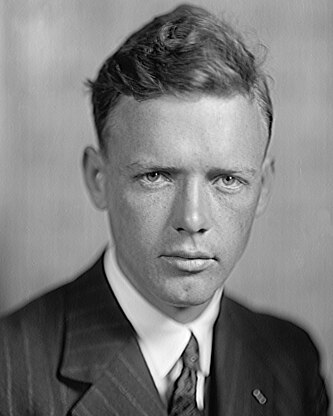





About Charles Lindbergh
Charles Augustus Lindbergh II (4 February 1902 – 26 August 1974) was an American aviator, author, inventor, military officer, explorer, and social activist who piloted the first solo non-stop flight across the Atlantic Ocean in 1927. An isolationist prior to the US entry into World War II, and in later years an environmental activist, he was the husband of Anne Morrow Lindbergh.
Best Charles Lindbergh Quotes
Shortest
Earliest
Explore our curated collection of the most famous and impactful Charles Lindbergh quotes.
“Real freedom lies in wildness, not in civilization.”


“If I had to choose, I would rather have birds than airplanes.”

“I have seen the science I worshiped, and the aircraft I loved, destroying the civilization I expected them to serve.”
“I owned the world that hour as I rode over it... free of the earth, free of the mountains, free of the clouds, but how inseparably I was bound to them.”
“What kind of man would live where there is no danger? I don't believe in taking foolish chances. But nothing can be accomplished by not taking a chance at all.”

“Here was a place where men and life and death had reached the lowest form of degradation. How could any reward in national progress even faintly justify the establishment and operation of such a place? ”
“Aviation has struck a delicately balanced world, a world where stability was already giving way to the pressure of new dynamic forces, a world dominated by a mechanical, materialist, Western European civilization.”

“Shall we now give up the independence we have won, and crusade abroad in a utopian attempt to force our ideas on the rest of the world; or shall we use air power, and the other advances of modern warfare, to guard and strengthen the independence of our nation?”

“Our ideals, laws and customs should be based on the proposition that each generation, in turn, becomes the custodian rather than the absolute owner of our resources and each generation has the obligation to pass this inheritance on to the future.”

“It was a love of the air and sky and flying, the lure of adventure, the appreciation of beauty. It lay beyond the descriptive words of men — where immortality is touched through danger, where life meets death on equal plane; where man is more than man, and existence both supreme and valueless at the same time.”

“The three most important groups who have been pressing this country toward war are the British, the Jewish, and the Roosevelt Administration. Instead of agitating for war, Jews in this country should be opposing it in every way, for they will be the first to feel its consequences. Their greatest danger to this country lies in their large ownership and influence in our motion pictures, our press, our radio and our government.”

“The pressure for war is high and mounting. The people are opposed to it, but the Administration seems to have ‘the bit in its teeth’ and is hell-bent on its way to war. Most of the Jewish interests in the country are behind war, and they control a huge part of our press and radio and most of our motion pictures. There are the ‘intellectuals’ and the ‘Anglophiles,’ and the British agents who are allowed free rein, the international financial interests, and many others.”
“Aviation seems almost a gift from heaven to those Western nations who were already the leaders of their era, strengthening their leadership, their confidence, their dominance over other peoples. It is a tool specially shaped for Western hands, a scientific art which others only copy in a mediocre fashion; another barrier between the teeming millions of Asia and the Grecian inheritance of Europe — one of those priceless possessions which permit the White race to live at all in a pressing sea of Yellow, Black, and Brown.”
“The forces of Hannibal, Drake and Napoleon moved at best with the horses' gallop or the speed of wind on sail. Now, aviation brings a new concept of time and distance to the affairs of men. It demands adaptability to change, places a premium on quickness of thought and speed of action.
Military strength has become more dynamic and less tangible. A new alignment of power has taken place, and there is no adequate peacetime measure for its effect on the influence of nations. There seems no way to agree on the rights it brings to some and takes from others.”
Military strength has become more dynamic and less tangible. A new alignment of power has taken place, and there is no adequate peacetime measure for its effect on the influence of nations. There seems no way to agree on the rights it brings to some and takes from others.”

“In some future incarnation from our life stream, we may even understand the reason for our existence in forms of earthly life. The growing knowledge of science does not refute man's intuition of the mystical. Whether outwardly or inwardly, whether in space or in time, the farther we penetrate the unknown, the vaster and more marvelous it becomes. Only in the twentieth century do we realize that space is not empty, that it is packed with energy; it may be existence's source. Then, if space has produced existence and the form of man, can we deduce from it a form for God?”

“Walked to Bill Castle's home at 6:00 — about ten minutes from the Anchorage. Fulton Lewis was the only other person there. The three of us had dinner together and discussed the European situation and the action this country should take if war breaks out over there. We are disturbed about the effect of the Jewish influence in our press, radio and motion pictures. It may become very serious. Lewis told us of one instance where the Jewish advertising firms threatened to remove all their advertising from the Mutual system if a certain feature were permitted to go on the air. The threat was powerful enough to have the feature removed.”

“I grow aware of various forms of man and of myself. I am form and I am formless, I am life and I am matter, mortal and immortal. I am one and many — myself and humanity in flux. I extend a multiple of ways in experience in space. I am myself now, lying on my back in the jungle grass, passing through the ether between satellites and stars. My aging body transmits an ageless life stream. Molecular and atomic replacement change life's composition. Molecules take part in structure and in training, countless trillions of them. After my death, the molecules of my being will return to the earth and sky. They came from the stars. I am of the stars.”

“Air power is new to all our countries. It brings advantages to some and weakens others; it calls for readjustment everywhere.
If only there were some way to measure the changing character of men, some yardstick to reapportion influence among the nations, some way to demonstrate in peace the strength of arms in war. But with all of its dimensions, its clocks, and weights, and figures, science fails us when we ask a measure for the rights of men. They cannot be judged by numbers, by distance, weight, or time; or by counting heads without a thought of what may lie within. Those intangible qualities of character, such as courage, faith, and skill, evade all systems, slip through the bars of every cage. They can be recognized, but not measured.”
If only there were some way to measure the changing character of men, some yardstick to reapportion influence among the nations, some way to demonstrate in peace the strength of arms in war. But with all of its dimensions, its clocks, and weights, and figures, science fails us when we ask a measure for the rights of men. They cannot be judged by numbers, by distance, weight, or time; or by counting heads without a thought of what may lie within. Those intangible qualities of character, such as courage, faith, and skill, evade all systems, slip through the bars of every cage. They can be recognized, but not measured.”
Charles Lindbergh Quotes by Topic
Find exactly what you are looking for by browsing this categorized list of Charles Lindbergh quotes by topic.
Charles Lindbergh on Science 3 quotes
“Science intensifies religious truth by cleansing it of ignorance and superstition.”

Charles Lindbergh on Civilization
“Real freedom lies in wildness, not in civilization.”
Charles Lindbergh on Wilderness
“In wilderness I sense the miracle of life, and behind it our scientific accomplishments fade to trivia.”

Charles Lindbergh on Distance
Charles Lindbergh on Time
Charles Lindbergh on Life
Charles Lindbergh on Overpopulation
Charles Lindbergh on Environmentalism
“As Earth's most messy, destructive and defective animal, man's record gives him little cause for pride. Our present intellectual superiority is no guarantee of great wisdom or survival power in our genes.”

Charles Lindbergh on Advice
Charles Lindbergh on Silhouette
Charles Lindbergh on Generation
“Our ideals, laws and customs should be based on the proposition that each generation, in turn, becomes the custodian rather than the absolute owner of our resources and each generation has the obligation to pass this inheritance on to the future.”
Charles Lindbergh on Wind
“How long can men thrive between walls of brick, walking on asphalt pavements, breathing the fumes of coal and of oil, growing, working, dying, with hardly a thought of wind, and sky, and fields of grain, seeing only machine-made beauty, the mineral-like quality of life. This is our modern danger — one of the waxen wings of flight. It may cause our civilization to fall unless we act quickly to counteract it, unless we realize that human character is more important than efficiency, that education consists of more than the mere accumulation of knowledge.”

Quotes About Charles Lindbergh
Gain deeper perspective through quotes about Charles Lindbergh from others.
A. Scott Berg on Charles Lindbergh 3 quotes
“Lindbergh's arrival in Paris became the defining moment of his life, that event on which all his future actions hinged — as though they were but a predestined series of equal but opposite reactions, fraught with irony... In the spring of 1927, Lindbergh had been too consumed by what he called "the single objective of landing my plane at Paris" to have considered its aftermath. "To plan beyond that had seemed an act of arrogance I could not afford," he would later write. Even if he had thought farther ahead, however, he could never have predicted the unprecedented global response to his arrival. By that year, radio, telephones, radiographs, and the Bartlane Cable Process could transmit images and voices around the world within seconds. What was more, motion pictures had just mastered the synchronization of sound, allowing dramatic moments to be preserved in all their glory and distributed worldwide. For the first time all of civilization could share as one the sights and sounds of an event — almost instantaneously and simultaneously. And in this unusually good-looking, young aviator — of apparently impeccable character — the new technology found its first superstar. The reception in Paris was only a harbinger of the unprecedented worship people would pay Lindbergh for years. Without either belittling or aggrandizing the importance of his flight, he considered it part of the continuum of human endeavor, and that he was, after all, only a man. The public saw more than that... Universally admired, Charles Lindbergh became the most celebrated living person ever to walk the earth.”
John W. Dower on Charles Lindbergh 3 quotes
“No source, however, captures the war hates and war crimes of this merciless struggle more soberly than Charles Lindbergh's diary. For over four months in mid-1944, Lindbergh lived and flew as a civilian observer with U.S. forces based in New Guinea, and as the weeks passed he became deeply troubled, not by the willingness to kill on the part of the soldiers, which he accepted as an inherent part of the war, but by the utter contempt in which Allied fighting men held their Japanese adversaries. The famous "Lone Eagle," whose isolationist sentiments had placed him among the conservative opponents of President Roosevelt's policies, really hearkened back to what [J. Glenn Gray] has called the more chivalrous tradition of the professional militarist, who accepts the necessity of war while maintaining respect for his adversaries, recognizing courage as courage and duty as duty, irrespective of the uniform worn. Lindbergh found no such sentiments among the Allied forces in the Pacific, where officers and enlisted men alike saw the enemy simply as animals and "yellow sons of bitches," and his detailed journal may be the most forthright firsthand account available of the "other" side of the Pacific War.”
Niall Ferguson on Charles Lindbergh
“In fact a de facto state of war between Germany and the United States had existed since September 11, 1941, when Roosevelt had authorized American naval commanders who encountered German vessels to fire at them 'on sight'. This was possible because the tide of American public opinion had been running against the Axis powers, despite the best efforts of isolationists like Senator Hiram W. Johnson, neutralists like the lawyer and legal historian Charles Warren and crypto-fascists like the aviator Charles Lindbergh. Ordinary Americans did not want war. Many believed they had been duped into the last war by the machinations of British imperialists and North-Eastern business interests. They were strongly attracted to the neutralists' idea that by prohibiting military supplies or loans to combatant countries Congress could avoid another such entanglement. But they supported American rearmament from as early as 193 6. They clearly favoured Britain over Germany from 1938 onwards. Above all, Americans did not want to see an Axis victory - and by September 1939 a majority of voters saw that this was best insured against by supplying arms and material to Britain. The German victories of 1940 caused that view to spread. There was public support, too, for the sanctions imposed on Japan which set the course for Pearl Harbor.”

Anne Morrow Lindbergh on Charles Lindbergh 2 quotes
“Charles is life itself — pure life, force, like sunlight — and it is for this that I married him and this that holds me to him — caring always, caring desperately what happens to him and whatever he happens to be involved in.”

Philip Roth on Charles Lindbergh
“No one I know of has foreseen an America like the one we live in today. No one (except perhaps the acidic H. L. Mencken, who famously described American democracy as “the worship of jackals by jackasses”) could have imagined that the 21st-century catastrophe to befall the U.S.A., the most debasing of disasters, would appear not, say, in the terrifying guise of an Orwellian Big Brother but in the ominously ridiculous commedia dell’arte figure of the boastful buffoon. How naïve I was in 1960 to think that I was an American living in preposterous times! How quaint! But then what could I know in 1960 of 1963 or 1968 or 1974 or 2001 or 2016? ... However prescient The Plot Against America might seem to you, there is surely one enormous difference between the political circumstances I invent there for the U.S. in 1940 and the political calamity that dismays us so today. It's the difference in stature between a President Lindbergh and a President Trump. Charles Lindbergh, in life as in my novel, may have been a genuine racist and an anti-Semite and a white supremacist sympathetic to Fascism, but he was also — because of the extraordinary feat of his solo trans-Atlantic flight at the age of 25 — an authentic American hero 13 years before I have him winning the presidency. ... Trump, by comparison, is a massive fraud, the evil sum of his deficiencies, devoid of everything but the hollow ideology of a megalomaniac.”

New Jersey Attorney General David P. Wilentz on Charles Lindbergh
“The people of England are about finished with him. Americans are beginning to feel the same way, and the halo of hero worship around Lindbergh's head is getting pretty well tarnished.”
About Charles Lindbergh
Charles Augustus Lindbergh II (4 February 1902 – 26 August 1974) was an American aviator, author, inventor, military officer, explorer, and social activist who piloted the first solo non-stop flight across the Atlantic Ocean in 1927. An isolationist prior to the US entry into World War II, and in later years an environmental activist, he was the husband of Anne Morrow Lindbergh.
QuotesCosmos Cross-Civilizational Archive
Explore Related Wisdom Pillars, Worldviews & Canonical Works
Discover how humanity's greatest philosophers, sacred scriptures, and literary masterpieces address the core questions of existence.
30 Wisdom Pillars
22 Worldviews & Traditions
Canonical Books & Scriptures