Link Copied!
Charles Lamb Quotes (1775-1834)
Poet, King


















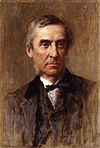















About Charles Lamb
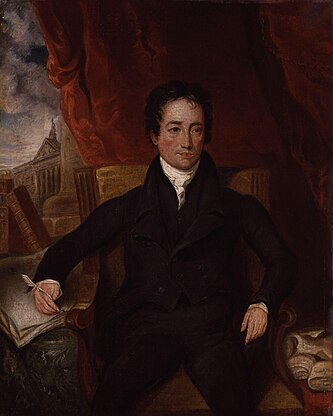
Charles Lamb (10 February 1775 – 27 December 1834) was an English essayist and poet, best known for his Essays of Elia and for the children's book Tales from Shakespeare, which he produced along with his sister, Mary Lamb.
Best Charles Lamb Quotes
Shortest
Earliest
Explore our curated collection of the most famous and impactful Charles Lamb quotes.
“I have no ear.”
“Neat, not gaudy.”


“It argues an insensibility.”
“Not if I know myself at all.”

“Fanny Kelly's divine plain face.”

“Presents, I often say, endear absents.”
“I have something more to do than to feel.”
“He is no lawyer who cannot take two sides.”
“And half had staggered that stout Stagirite.”
“Gone before
To that unknown and silent shore.”
To that unknown and silent shore.”
“The flouting infidel doth mock when Christians cry”
“Riches are chiefly good because they give us time.”

“For thy sake, tobacco, I
Would do anything but die.”
Would do anything but die.”

“A clear fire, a clean hearth, and the rigor of the game.”

Charles Lamb Quotes by Topic
Find exactly what you are looking for by browsing this categorized list of Charles Lamb quotes by topic.
Charles Lamb on Children 2 quotes
“A child's a plaything for an hour.”

Charles Lamb on Journalism 2 quotes
“Newspapers always excite curiosity. No one ever lays one down without a feeling of disappointment.”

Charles Lamb on Absence 2 quotes
“Your absence of mind we have borne, till your presence of body came to be called in question by it.”
Charles Lamb on Epitaphs 2 quotes
“I conceive disgust at these impertinent and misbecoming familiarities inscribed upon your ordinary tombstone.”

Charles Lamb on Eating 2 quotes
“He hath a fair sepulchre in the grateful stomach of the judicious epicure—and for such a tomb might be content to die.”
Charles Lamb on Tales from Shakespeare 2 quotes
“Mary is just stuck fast in All's Well that Ends Well. She complains of having to set forth so many female characters in boys' clothes. She begins to think Shakespeare must have wanted imagination! I, to encourage her (for she often faints in the prosecution of her great work), flatter her with telling how well such and such a play is done. But she is stuck fast, and I have been obliged to promise to assist her.”

Charles Lamb on Style
“Neat, not gaudy.”
Charles Lamb on Knowledge
“Not if I know myself at all.”

What Charles Lamb Said About Others
Discover personal opinions Charles Lamb shared regarding contemporaries.
Charles Lamb on Edward Fairfax
“I have lit upon Fairfax's 'Godfrey of Bullen,' for half-a-crown. Rejoice with me.”
Charles Lamb on Percy Bysshe Shelley
Charles Lamb on Philip Sidney
“In the sweetly constituted mind of Sir Philip Sidney, it seems as if no ugly thought or unhandsome meditation could find a harbour. He turned all that he touched into images of honour and virtue.”

Charles Lamb on Samuel Taylor Coleridge
“His face when he repeats his verses hath its ancient glory, an Arch angel a little damaged ... Coleridge is absent but 4 miles, & the neighbourhood of such a man is as exciting as the presence of 50 ordinary Persons.”

Charles Lamb on John Ford (dramatist)
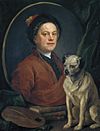
Charles Lamb on William Hogarth
“[T]he matchless Election Entertainment... [i]n that inimitable print (which in my judgment as far exceeds the more known and celebrated March to Finchley as the best comedy exceeds the best farce that ever was written) let a person look till he be saturated... when he shall have sufficiently admired this wealth of genius, let him fairly say what is the result left on his mind. Is it an impression of the vileness and worthlessness of his species? or is it not the general feeling which remains, after the individual faces have ceased to act sensibly upon his mind, a kindly one in favour of his species? was not the general air of the scene wholesome? did it do the heart hurt to be among it? Something of a riotous spirit, to be sure, is there, some worldly-mindedness in some of the faces, a Dodingtonian smoothness which does not promise any superfluous degree of sincerity in the fine gentleman who has been the occasion of calling so much good company together: but is not the general cast of expression in the faces, of the good sort? do they not seem cut out of the good old rock, substantial English honesty?”
Charles Lamb on George Chapman
“Of all the English Play-writers, Chapman perhaps approaches nearest to Shakspeare in the descriptive and didactic, in passages which are less purely dramatic. Dramatic Imitation was not his talent. He could not go out of himself, as Shakspeare could shift at pleasure, to inform and animate other existences, but in himself he had an eye to perceive and a soul to embrace all forms. He would have made a great Epic Poet, if, indeed, he has not abundantly shown himself to be one; for his Homer is not so properly a Translation as the Stories of Achilles and Ulysses re-written. The earnestness and passion which he has put into every part of these poems would be incredible to a reader of mere modern translations. His almost Greek zeal for the honour of his heroes is only paralleled by that fierce spirit of Hebrew bigotry, with which Milton, as if personating one of the Zealots of the old law, clothed himself when he sate down to paint the acts of Samson against the Uncircumcised. The great obstacle to Chapman's Translations being read is their unconquerable quaintness. He pours out in the same breath the most just and natural and the most violent and forced expressions. He seems to grasp whatever words come first to hand during the impetus of inspiration, as if all other must be inadequate to the divine meaning. But passion (the all in all in Poetry) is everywhere present, raising the low, dignifying the mean, and putting sense into the absurd. He makes his readers glow, weep, tremble, take any affection which he pleases, be moved by words, or in spite of them, be disgusted and overcome their disgust. I have often thought that the vulgar misconception of Shakspeare, as of a wild irregular genius "in whom great faults are compensated by great beauties," would be really true applied to Chapman.”

Quotes About Charles Lamb
Gain deeper perspective through quotes about Charles Lamb from others.
Letter from Samuel Taylor Coleridge on Charles Lamb
“Surely it is a matter of joy, that your faith in Jesus has been preserved; the Comforter that should relieve you is not far from you. But as you are a Christian, in the name of that Saviour, who was filled with bitterness and made druken with wormwood, I conjre you to have recourse in frequent prayer to 'his God and your God,' the God of mercies, and father of all comfort. Your poor father is, I hope, almost senseless of the calamity; the unconscious instrument of Divine Providence knows it not, and your mother is in heaven.”
Walter Levin. on Charles Lamb
“Oaths fell from his mouth with a gentleness and sweetness which the blessings of other men cannot reach. His essays of Elia are full of this bright humour, this tender criticism. A ripple of tender laughter rips through them, just broke here and there by a sob.”
About Charles Lamb
Charles Lamb (10 February 1775 – 27 December 1834) was an English essayist and poet, best known for his Essays of Elia and for the children's book Tales from Shakespeare, which he produced along with his sister, Mary Lamb.
QuotesCosmos Cross-Civilizational Archive
Explore Related Wisdom Pillars, Worldviews & Canonical Works
Discover how humanity's greatest philosophers, sacred scriptures, and literary masterpieces address the core questions of existence.
30 Wisdom Pillars
22 Worldviews & Traditions
Canonical Books & Scriptures