Link Copied!
Charles Babbage Quotes (1791-1871)
Philosopher, Mathematician
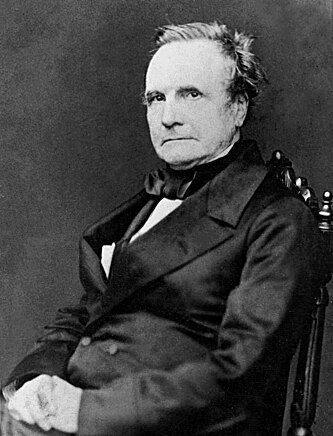
About Charles Babbage
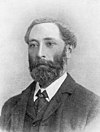
Charles Babbage (26 December, 1791 – 18 October, 1871) was an English mathematician and analytical philosopher who originated the idea of a programmable computer. Ada Lovelace worked for him.
Best Charles Babbage Quotes
Shortest
Earliest
Explore our curated collection of the most famous and impactful Charles Babbage quotes.
“The whole of arithmetic now appeared within the grasp of mechanism.”

“Errors using inadequate data are much less than those using no data at all.”
“The errors which arise from the absence of facts are far more numerous and more durable than those which result from unsound reasoning respecting true data.”
“It is difficult to estimate the misery inflicted upon thousands of persons, and the absolute pecuniary penalty imposed upon multitudes of intellectual workers by the loss of their time, destroyed by organ-grinders and other similar nuisances.”

“We have already mentioned what may, perhaps, appear paradoxical to some of our readers, — that the division of labour can be applied with equal success to mental as to mechanical operations, and that it ensures in both the same economy of time.”
“The Church has been reproached with endeavouring to appropriate to itself all those professorships in our Universities which are connected with science: it is however certain that the larger portion of these ill-remunerated offices have been filled by clergymen.”
“The triumph of the industrial arts will advance the cause of civilization more rapidly than its warmest advocates could have hoped, and contribute to the permanent prosperity and strength of the country far more than the most splendid victories of successful war.”

“As soon as an Analytical Engine exists, it will necessarily guide the future course of the science. Whenever any result is sought by its aid, the question will then arise — by what course of calculation can these results be arrived at by the machine in the shortest time?”
“The object of the present volume is to point out the effects and the advantages which arise from the use of tools and machines ;—to endeavour to classify their modes of action ;—and to trace both the causes and the consequences of applying machinery to supersede the skill and power of the human arm.”
“If we define a miracle as an effect of which the cause is unknown to us, then we make our ignorance the source of miracles! and the universe itself would be a standing miracle. A miracle might be perhaps defined more exactly as an effect which is not the consequence or effect of any known laws of nature.”
“On two occasions I have been asked, — "Pray, Mr. Babbage, if you put into the machine wrong figures, will the right answers come out?" In one case a member of the Upper, and in the other a member of the Lower, House put this question. I am not able rightly to apprehend the kind of confusion of ideas that could provoke such a question.”

“The successful construction of all machinery depends on the perfection of the tools employed; and whoever is a master in the arts of tool-making possesses the key to the construction of all machines... The contrivance and construction of tools must therefore ever stand at the head of the industrial arts.”
“It is therefore not unreasonable to suppose that some portion of the neglect of science in England, may be attributed to the system of education we pursue. A young man passes from our public schools to the universities, ignorant of almost every branch of useful knowledge; and at these latter establishments … classical and mathematical pursuits are nearly the sole objects proposed to the student's ambition.”

“Mr. Herschel ... brought with him the calculations of the computers, and we commenced the tedious process of verification. After a time many discrepancies occurred, and at one point these discordances were so numerous that I exclaimed, "I wish to God these calculations had been executed by steam," to which Herschel replied, "It is quite possible."”
“If this were true, the population of the world would be at a stand-still. In truth, the rate of birth is slightly in excess of death. I would suggest that the next edition of your poem should read: “Every moment dies a man, every moment 1 1/16 is born.” Strictly speaking, the actual figure is so long I cannot get it into a line, but I believe the figure 1 1/16 will be sufficiently accurate for poetry.”

“The true value of the Christian religion rests, not upon speculative views of the Creator, which must necessarily be different in each individual, according to the extent of the knowledge of the finite being, who employs his own feeble powers in contemplating the infinite : but it rests upon those doctrines of kindness and benevolence which that religion claims and enforces, not merely in favour of man himself but of every creature susceptible of pain or of happiness.”

“The establishment of "The Times" newspaper is an example, on a large scale, of a manufactory in which the division of labour, both mental and bodily, is admirably illustrated, and in which also the effect of domestic economy is well exemplified. It is scarcely imagined, by the thousands who read that paper in various quarters of the globe, what a scene of organized activity the factory presents during the whole night, or what a quantity of talent and mechanical skill is put in action for their amusement and information.”
“There is nothing in the nature of a miracle that should render it incredible: its credibility depends upon the nature of the evidence by which it is supported. An event of extreme probability will not necessarily command our belief unless upon a sufficiency of proof; and so an event which we may regard as highly improbable may command our belief if it is sustained by sufficient evidence. So that the credibility or incredibility of an event does not rest upon the nature of the event itself, but depends upon the nature and sufficiency of the proof which sustains it.”

“Propose to any Englishman any principle, or any instrument, however admirable, and you will observe that the whole effort of the English mind is directed to find a difficulty, a defect, or an impossibility in it. If you speak to him of a machine for peeling a potato, he will pronounce it impossible; if you peel a potato with it before his eyes, he will declare it useless because it will not slice a pineapple. Impart the same principle or show the same machine to an American or to one of our Colonists and you will observe that the whole effort of his mind is to find some new application of the principle, some new use for the instrument.”
“Machinery of a very beautiful kind has been contrived for copying accurately, on a reduced or an enlarged scale, both medals and statues. The Venus de Medici itself could not be justly excluded from a purely industrial exhibition, if, placed in the centre of a series diminishing on the one side to a statuette of a foot high, and increasing on the other to a figure double her own height. Such a series, though fairly introduced as an illustration of industrial art, would, indeed, itself be highly interesting to the fine arts, as exhibiting the effect of change of magnitude, when the proportions remain identical.”
“The first application of this principle [of the division of labor] must have been made in a very early stage of society; for it must soon have been apparent that more comforts and conveniences could be acquired by one man restricting his occupation to the art of making bows, another to that of building houses, a third boats, and so on. This division of labor Into trades was not, however, the result of an opinion that the general riches of the community would be increased by such an arrangement: but it must have arisen from the circumstances, of each individual so employed discovering that he himself could thus make a greater profit of his labour than by pursuing more varied occupations.”
“It appears to me, that any explanation of the cheapness of manufactured articles, as consequent upon the division of labour, would be incomplete if the following principle were omitted to be stated.
That the master manufacturer, by dividing the work to be executed into different processes, each requiring different degrees of skill or of force, can purchase exactly that precise quantity of both which is necessary for each process; whereas, if the whole work were executed by one workman, that person must possess sufficient skill to perform the most difficult, and sufficient strength to execute the most laborious, of the operations into which the art is divided.”
That the master manufacturer, by dividing the work to be executed into different processes, each requiring different degrees of skill or of force, can purchase exactly that precise quantity of both which is necessary for each process; whereas, if the whole work were executed by one workman, that person must possess sufficient skill to perform the most difficult, and sufficient strength to execute the most laborious, of the operations into which the art is divided.”

“There remains a third source from which we arrive at the knowledge of the existence of a supreme Creator, namely, from an examination of his works. Unlike transmitted testimony, which is weakened at every stage, this evidence derives confirmation from the progress of the individual as well as from the advancement of the knowledge of the race.
Almost all thinking men who have studied the laws which govern the animate and the inanimate world around us, agree that the belief in the existence of one Supreme Creator, possessed of infinite wisdom and power, is open to far less difficulties than the supposition of the absence of any cause, or of the existence of a plurality of causes.”
Almost all thinking men who have studied the laws which govern the animate and the inanimate world around us, agree that the belief in the existence of one Supreme Creator, possessed of infinite wisdom and power, is open to far less difficulties than the supposition of the absence of any cause, or of the existence of a plurality of causes.”
“Mill, in speaking of Hume's celebrated principle, "that nothing is credible which is contradictory to experience, or at variance with the laws of nature," calls it a very plain and harmless proposition, being, in effect, nothing more than that whatever is contradictory to a complete induction is incredible. Admit the existence of a Deity, and the possibility of a miracle is the natural consequence. No doubt our examination of the evidence which sustains an unusual phenomenon should be most carefully conducted; but we must not measure the credibility or incredibility of an event by the narrow sphere of our own experience, nor forget that there is a Divine energy which overrides what we familiarly call the laws of nature.”

Charles Babbage Quotes by Topic
Find exactly what you are looking for by browsing this categorized list of Charles Babbage quotes by topic.
Charles Babbage on Organization 2 quotes
“The establishment of "The Times" newspaper is an example, on a large scale, of a manufactory in which the division of labour, both mental and bodily, is admirably illustrated, and in which also the effect of domestic economy is well exemplified. It is scarcely imagined, by the thousands who read that paper in various quarters of the globe, what a scene of organized activity the factory presents during the whole night, or what a quantity of talent and mechanical skill is put in action for their amusement and information.”

Charles Babbage on Knowledge worker
“We have already mentioned what may, perhaps, appear paradoxical to some of our readers, — that the division of labour can be applied with equal success to mental as to mechanical operations, and that it ensures in both the same economy of time.”
Charles Babbage on Industrial design
“The triumph of the industrial arts will advance the cause of civilization more rapidly than its warmest advocates could have hoped, and contribute to the permanent prosperity and strength of the country far more than the most splendid victories of successful war.”

Charles Babbage on Civilization
“The triumph of the industrial arts will advance the cause of civilization more rapidly than its warmest advocates could have hoped, and contribute to the permanent prosperity and strength of the country far more than the most splendid victories of successful war.”
Charles Babbage on Computers
“On two occasions, I have been asked [by members of Parliament], "Pray, Mr. Babbage, if you put into the machine wrong figures, will the right answers come out?"...I am not able rightly to apprehend the kind of confusion of ideas that could provoke such a question.”

Charles Babbage on Programming
“On two occasions I have been asked, – "Pray, Mr. Babbage, if you put into the machine wrong figures, will the right answers come out?" In one case a member of the Upper, and in the other a member of the Lower House put this question. I am not able rightly to apprehend the kind of confusion of ideas that could provoke such a question.”

Charles Babbage on Population
“If this were true, the population of the world would be at a stand-still. In truth, the rate of birth is slightly in excess of death. I would suggest that the next edition of your poem should read: “Every moment dies a man, every moment 1 1/16 is born.” Strictly speaking, the actual figure is so long I cannot get it into a line, but I believe the figure 1 1/16 will be sufficiently accurate for poetry.”
Charles Babbage on History of science
“The more man inquires into the laws which regulate the material universe, the more he is convinced that all its varied forms arise from the action of a few simple principles. These principles themselves converge, with accelerating force, towards some still more comprehensive law to which all matter seems to be submitted. Simple as that law may possibly be, it must be remembered that it is only one amongst an infinite number of simple laws: that each of these laws has consequences at least as extensive as the existing one, and therefore that the Creator who selected the present law must have foreseen the consequences of all other laws.”

Charles Babbage on Unification in science and mathematics
“The more man inquires into the laws which regulate the material universe, the more he is convinced that all its varied forms arise from the action of a few simple principles. These principles themselves converge, with accelerating force, towards some still more comprehensive law to which all matter seems to be submitted. Simple as that law may possibly be, it must be remembered that it is only one amongst an infinite number of simple laws: that each of these laws has consequences at least as extensive as the existing one, and therefore that the Creator who selected the present law must have foreseen the consequences of all other laws.”
Charles Babbage on Division of labor
“The first application of this principle must have been made in a very early stage of society; for it must soon have been apparent that more comforts and conveniences could be acquired by one man restricting his occupation to the art of making bows, another to that of building houses, a third boats, and so on. This Division of labor into trades was not, however, the result of an opinion that the general riches of the community would be increased by such an arrangement: but it must have arisen from the circumstances, of each individual so employed discovering that he himself could thus make a greater profit of his labour than by pursuing more varied occupations.”

Charles Babbage on Cost
“There are in the Exhibition some beautiful examples of such lace amongst the productions of other countries as well as of our own. They are made by the united labour of many women. The cost of a piece of lace will consist of:
# The remuneration to the artist who designs the pattern.
# The cost of the raw material.
# The cost of the labour of a large number of women working on it for many months.
Let us compare this with the cost of a piece of statuary, which is undoubtedly of a much higher class of art ; it will consist of:
# The remuneration to the artist who makes the model.
# The cost of the raw material.
# The cost of labour, by assistants in cutting the block to the pattern of the model.
# Finishing the statue by the artist himself.
In lace making the skill of the artist is required only for the production of the first example. Every succeeding copy is made by mere labour: each copy may be considered as an individual, and will cost the same amount of time.
In sculpture the three first processes are quite analogous to those in lace-making. But the fourth process requires the taste and judgment of the artist. It is this which causes it to retain its rank amongst the fine arts, whilst lacemaking must still be classed amongst the industrial.”

What Charles Babbage Said About Others
Discover personal opinions Charles Babbage shared regarding contemporaries.
Quotes About Charles Babbage
Gain deeper perspective through quotes about Charles Babbage from others.
Ada Lovelace on Charles Babbage
“We may say most aptly that the Analytical Engine weaves algebraical patterns just as the Jacquard-loom weaves flowers and leaves.”

W. W. Rouse Ball on Charles Babbage
“Babbage was one of the founders of the Cambridge Analytical Society whose purpose he stated was to advocate "the principles of pure d-ism as opposed to the dof-age of the university.”
About Charles Babbage
Charles Babbage (26 December, 1791 – 18 October, 1871) was an English mathematician and analytical philosopher who originated the idea of a programmable computer. Ada Lovelace worked for him.
QuotesCosmos Cross-Civilizational Archive
Explore Related Wisdom Pillars, Worldviews & Canonical Works
Discover how humanity's greatest philosophers, sacred scriptures, and literary masterpieces address the core questions of existence.
30 Wisdom Pillars
22 Worldviews & Traditions
Canonical Books & Scriptures