Link Copied!
Catherine Breshkovsky Quotes (1844-1934)
Revolutionary

About Catherine Breshkovsky
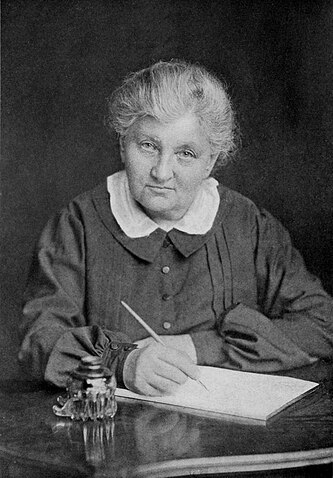
Yekaterina Konstantinovna Breshko-Breshkovskaya (née Verigo; born 25 January O.S. 13 January 1844 – 12 September 1934), better known as Catherine Breshkovsky, was a major figure in the Russian socialist movement, a Narodnik, and later one of the founders of the Socialist Revolutionary Party. She has been described as Russia's first female political prisoner. She spent over four decades in prison and Siberian exile for peaceful opposition to Tsarism, acquiring, in her latter years, international stature as a political prisoner. Also popularly known as 'babushka', Breshkovsky was the grandmother of the Russian Revolution.
What Catherine Breshkovsky Said About Others
Discover personal opinions Catherine Breshkovsky shared regarding contemporaries.
Catherine Breshkovsky on Jane Addams 2 quotes
View all 2 quotes on Jane Addams →Catherine Breshkovsky on Lucy Stone 2 quotes
“I remember always how beautiful and how heavenly sweet and splendid was our best woman, Lucy Stone, the ornament of the human race.”
Catherine Breshkovsky on Robert M. La Follette Sr.
“La Follette's autobiography is beautiful, - a splendid man.”

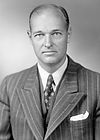
Catherine Breshkovsky on George F. Kennan
“The Great Siberian Road has been feelingly described by Mr. Kennan.”
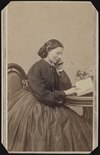
Catherine Breshkovsky on Clara Barton
“for my part, I think never was given such an excellent answer on the suffrage question as was given by Clara Barton, that majestic and wonderful woman.”
Quotes About Catherine Breshkovsky
Gain deeper perspective through quotes about Catherine Breshkovsky from others.
Source on Catherine Breshkovsky 11 quotes
“"My father helped me to think," she says. "He was a man of broad, liberal ideas. We read together many books of science and travel. Social science absorbed me. By sixteen I had read much of Voltaire, Rousseau, and Diderot, and I knew the French Revolution by heart. I spoke French from babyhood, and my German governess had taught me German; and at that time the world's best thought was not garbled by the Russian censorship. Fired by such ideas, I saw the poor, degraded slaves around me, and longed to set them free. At first I believed that freedom could be reached without a radical change of government. No revolutionary spirit had yet been kindled. It was the first great era of the Liberals. The emancipation of the serfs was soon to take place; so too the introduction of trial by jury; and these promised reforms sent a social impulse sweeping through Russia. I was thrilled by the glad news. Filled with young enthusiasm, I opened a little school near our estate. I found the peasant an abject, ignorant creature, who did not understand even the meagre rights he already had. He could think only of his mud hut and his plot of ground. As for the government, he knew only that in peace he must pay money; in war, lives. The new rumors had kindled his old heart-deep hope of freedom. The twenty peasants in my school, like the millions in Russia, suspected that the proclamation had been hidden, and often went to the landowners demanding their freedom. At last the manifesto emancipating the serfs arrived." This was in 1861, when Catherine was seventeen. (from article by Abraham Cahan, p16-7)”
June on Catherine Breshkovsky 2 quotes
“It is necessary to illuminate, to enlighten the minds of a nation that is ready to grasp knowledge; a nation that has been forcibly deprived of all teaching. For there are only a few thousand fortunate persons who were able to get an education in the small number of schools that did not in any way meet the needs of a population of 170,000,000.”

Alice Stone Blackwell on Catherine Breshkovsky
“Madame Breshkovsky's whole life has fulfilled the words that she once wrote to an American friend: "We ought to elevate the people's psychology by our own example, and give them the idea of a purer life by making them acquainted with better morals and higher ideals; to call out their best feelings and strongest principles. We ought to tell the truth, not fearing to displease our hearers; and be always ready to confirm our words by our deeds." (330)”
Abraham Cahan Yiddish language article translated into English on Catherine Breshkovsky
“The impression that she made in private was even deeper than that left by her public speeches. Kellogg Durland wrote in the Boston Transcript: "To look upon the face of this silver-haired apostle is like receiving a benediction. Her outward and inward calm are superb. Her hands are beautiful in their delicacy and refinement, despite the years in Siberia. Her voice is low and sweet, her smile winning and childlike. Only her eyes betray the sufferings of the years. In repose her face is strong like iron. The shadows of her eyes speak of deepest pathos.”
Emma Goldman on Catherine Breshkovsky 2 quotes
“She gave the impression of a Russian peasant woman, except for her large grey eyes, expressive of wisdom and understanding, eyes remarkably youthful for a woman of sixty-two. Ten minutes in her presence made me feel as if I had known her all my life; her simplicity, the tenderness of her voice, and her gestures, all affected me like the balm of a spring day…Her first appearance in New York was at Cooper Union and proved the most inspiring manifestation I had seen for years. Babushka, who had never before had a chance to face such a vast gathering, was somewhat nervous at first. But when she got her bearings, she delivered a speech that swept her audience off its feet. The next day the papers were practically unanimous in their tributes to the grand old lady. They could afford to be generous to one whose attack was levelled against far-off Russia instead of their own country. But we welcomed the attitude of the press because we knew that publicity would arouse interest in the cause Babushka had come to plead. Subsequently she spoke in French at the Sunrise Club before the largest assembly in the history of that body. I acted as interpreter, as I did also at most of the private gatherings arranged for her. [...] Often after the late gatherings Babushka would come with me to my flat to spend the night. It was amazing to see her run up the five flights with an energy and vivacity that put me to shame. "Dear Babushka," I once said to her, "how have you been able to keep your youth after so many years of prison and exile?" "And how did you manage to retain yours, living in this soul-destroying, materialistic country?" she returned. Her long exile had never been stagnant; it was always rejuvenated by the stream of politicals passing through. "I had much to inspire and sustain me," she said; "but what have you in a country where idealism is considered a crime, a rebel an outcast, and money the only god?" I had no answer except that it was the example of those who had gone before, herself included, and the ideal we had chosen that gave us courage to persevere. The hours with Babushka were among the richest and most precious experiences of my propaganda life.”


About Catherine Breshkovsky
Yekaterina Konstantinovna Breshko-Breshkovskaya (née Verigo; born 25 January O.S. 13 January 1844 – 12 September 1934), better known as Catherine Breshkovsky, was a major figure in the Russian socialist movement, a Narodnik, and later one of the founders of the Socialist Revolutionary Party. She has been described as Russia's first female political prisoner. She spent over four decades in prison and Siberian exile for peaceful opposition to Tsarism, acquiring, in her latter years, international stature as a political prisoner. Also popularly known as 'babushka', Breshkovsky was the grandmother of the Russian Revolution.
QuotesCosmos Cross-Civilizational Archive
Explore Related Wisdom Pillars, Worldviews & Canonical Works
Discover how humanity's greatest philosophers, sacred scriptures, and literary masterpieces address the core questions of existence.
30 Wisdom Pillars
22 Worldviews & Traditions
Canonical Books & Scriptures